Gandhara art is one of the most notable artistic traditions in South Asia and is practiced in Pakistan. This unique style of Buddhist art originated in the ancient Gandhara region and blended creative elements from Greek, Roman, Central Asian, and South Asian cultures with regional religious themes. Its sculptures, carved reliefs, and architectural embellishments provide important insights into the region’s cultural interactions and Buddhist past.
Gandhara art continues to play an important role in Pakistan’s cultural and archeological heritage. While museums in Taxila, Lahore, Peshawar, and Swat preserve outstanding collections of Buddhist sculptures and ancient artifacts, archeological sites reveal the origins of these artistic traditions. History aficionados, academics, and overseas visitors can learn about Pakistan’s contribution to Buddhist art and legacy by visiting Gandhara.
What Is Gandhara Art?
An ancient Buddhist artistic tradition known as Gandhara art flourished in the northwest of the Indian subcontinent, especially in what is now northern Pakistan and certain areas of eastern Afghanistan. The Peshawar Valley, Taxila, and Swat were its principal centers.
The practice flourished under the Kushan rulers, particularly under King Kanishka, and dates back to the early years of the common period. Gandharan artists created sculptures and reliefs that depicted the Buddha, Bodhisattvas, and important events from Buddhist teachings and traditions.
Although the history of early Buddha images also includes the creative heritage of Mathura, one of its most important contributions was the creation of human-form representations of the Buddha.
Gandhara art is especially well-known for combining Buddhist symbolism with classical artistic influences. Its sculptures were an important part of Buddhist religious expression and had an impact on artistic traditions throughout Central and East Asia.
To understand the wider historical background, explore TIP’s guide to the Gandhara civilization in Pakistan.
Distinctive Features of Gandhara Buddhist Sculptures
Gandharan sculptures are renowned for their realistic human figures, elaborate clothing, expressive expressions, and well carved ornate ornaments. These features distinguish the tradition from several other forms of ancient Buddhist art.
Some defining characteristics include:
- Realistic facial features: Buddha and Bodhisattva images frequently have peaceful looks, well-defined noses, and meticulously modeled faces.
- Flowing robes: Sculptors reflected traditional artistic influences by depicting intricate folds and draperies.
- Detailed hairstyles: Several sculptures feature intricate head decorations, topknots, and wavy hair.
- Narrative reliefs: The Buddha’s birth, enlightenment, teaching, and eventual death are all shown in stone panels.
- Decorative motifs: The region’s cultural exchanges are reflected in columns, architectural details, and floral designs.
Gray schist, a stone ideal for intricate carving, was first used extensively by artists. Later centuries saw a rise in the popularity of stucco, which enabled sculptors to create larger figures and intricate architectural details.
Gandhara sculptures are useful for comprehending Buddhist sculpture history and the evolution of religious art in ancient South Asia because of these creative qualities. TIP’s article on Pakistan’s Buddhist, Sikh, Hindu and Islamic heritage provides further context on the country’s diverse cultural traditions.
Famous Gandhara Buddhist Sculptures to Know
Sculptures that showcase the Gandhara tradition’s creative talent and religious themes are kept in Pakistan’s museums. Some are especially noteworthy for their historical relevance and artistry.
Fasting Buddha: This sculpture, which is among the most well-known specimens of Gandharan art, shows Siddhartha Gautama at his time of extreme austerity before enlightenment. It is an amazing example of ancient sculpture because of its intricate portrayal of the human body.
Buddha in Meditation:Buddhist principles of discipline, wisdom, and spiritual awareness are reflected in these sculptures, which show the Buddha in a contemplative pose.
Bodhisattva Figures: In these depictions, enlightened beings are linked to compassion and the desire to assist others in achieving enlightenment. They frequently have ornate attire and decorations.
Buddha Life-Story Reliefs:Important moments in the Buddha’s life, including as his birth, renunciation, enlightenment, first sermon, and Mahaparinirvana, are shown in carved panels.
When seen as a whole, these pieces show how sculptors conveyed religious stories and Buddhist teachings. Visitors can explore these masterpieces and their historical background through TIP’s Buddhist heritage trail in Pakistan.
Where Can You See Gandhara Art in Pakistan?
The historical setting where Gandhara art originated is preserved at a number of archeological sites in Pakistan. Visitors can comprehend the relationship between Buddhist sculptures, monasteries, and historic religious societies at these sites.
Taxila, Punjab: Taxila was a significant hub for Buddhist scholarship and creative endeavors. Mohra Moradu, Jaulian Monastery, and Dharmarajika Stupa are examples of its archeological landscape. The Taxila Museum is located in the area as well.
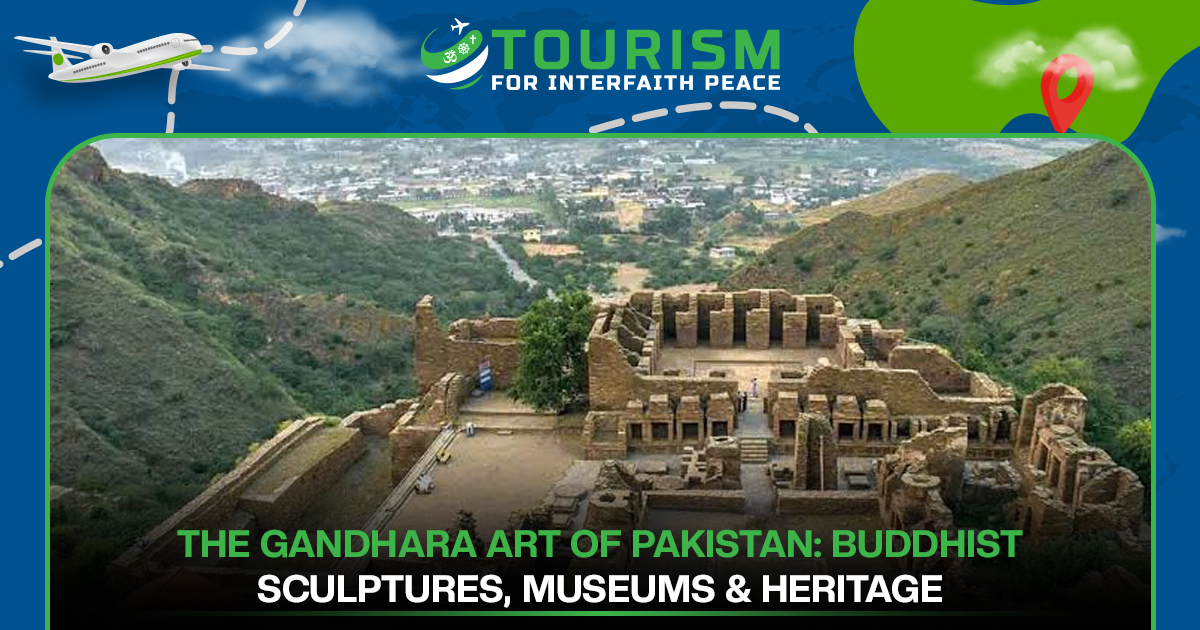
Takht-i-Bahi, Khyber Pakhtunkhwa: One of the best-preserved Buddhist monastery structures in Pakistan is this UNESCO World Heritage Site. Stupas, meditation cells, courtyards, and other monastic buildings are among its remnants.
Swat Valley, Khyber Pakhtunkhwa: Swat, which has historically been connected to the ancient Uddiyana region, is home to significant Buddhist artifacts, such as the Butkara Stupa and other archeological sites.
These destinations provide a closer look at the religious and artistic environment that supported Gandharan craftsmanship. Travellers can learn more about their locations and historical importance through TIP’s guide to Pakistan’s important religious heritage sites.
Important Museums Displaying Gandhara Art in Pakistan
Museums play a vital role in preserving Buddhist sculptures, documenting archaeological discoveries, and making ancient artwork accessible to visitors.
| Museum | Location | Notable collection |
| Taxila Museum | Taxila, Punjab | Stone and stucco sculptures, relic caskets, inscriptions, and Buddhist artefacts |
| Peshawar Museum | Peshawar, KP | Gandharan sculptures, Buddhist artwork, coins, and archaeological objects |
| Swat Museum | Saidu Sharif, Swat | Buddhist sculptures and archaeological discoveries from the Swat region |
| Lahore Museum | Lahore, Punjab | Gandhara Gallery, Fasting Buddha, narrative reliefs, and Bodhisattva figures |
| Islamabad Museum | Islamabad | Archaeological collections, including sculptures associated with Gandhara |
The Taxila Museum is especially important since hundreds of artifacts from archeological sites throughout the Taxila Valley are on display in its collection.
Peshawar Museum is well known for its Gandharan collection and vast collection of Buddhist artwork. Its artifacts and sculptures aid tourists in comprehending the creative and theological past of the area.
Swat Museum preserves artifacts found at Buddhist archeological sites throughout the valley, providing information about the historical significance of the region.
Lahore Museum has a separate Gandhara Gallery with sculptures depicting significant moments from Buddhist traditions including the renowned Fasting Buddha.
Islamabad Museum furthermore features artifacts from the Gandhara civilization’s archeology, making it a destination for tourists interested in ancient Buddhist art.
Before making travel plans, visitors should confirm information regarding museum opening hours, exhibitions, and access arrangements. TIP encourages heritage exploration through its article on how to explore Pakistan’s heritage.
Why Gandhara Art Matters to Pakistan’s Cultural Heritage
Gandhara art is not just an archeological topic. It symbolizes a significant time of cross-cultural contact during which traders, artists, and religious groups all contributed to the flow of ideas across different areas.
Its impact was not limited to the ancient Gandhara region. Through networks that connected South Asia with Central Asia and other regions of Asia, Buddhist creative traditions evolved and spread.
Preserving this heritage is important because it:
- Protects valuable archaeological and artistic evidence.
- Helps researchers understand ancient religious traditions.
- Highlights Pakistan’s historical connections with other Asian cultures.
- Creates opportunities for educational and cultural tourism.
- Encourages appreciation of the country’s diverse heritage.
In addition to helping local communities, responsible tourism can raise public awareness of conservation. TIP promotes this approach through interfaith tourism and the exploration of Pakistan’s religious heritage.
Tips for Exploring Gandhara Art and Museums
By combining museum visits with archeological sites, visitors interested in Gandhara art can enhance the significance of their trip.
Consider these practical suggestions:
- Start with the Taxila Museum to understand the sculptures and artefacts recovered from nearby sites.
- Visit Jaulian, Dharmarajika, and Mohra Moradu to explore the archaeological context.
- Include Peshawar Museum or Swat Museum when planning a wider Gandhara heritage journey.
- Hire knowledgeable local guides for historical and archaeological explanations.
- Check museum schedules, ticket arrangements, and site access before travelling.
- Avoid touching sculptures, climbing on ancient structures, or disturbing archaeological remains.
A deeper comprehension of Gandharan artistic traditions can be obtained by combining museums and archeological sites. For visitors planning a wider cultural journey, TIP’s guide to visiting religious sites in Pakistan provides additional travel guidance.
Conclusion
Gandhara art, which reflects the creative accomplishments and religious customs of ancient Buddhist communities, is one of Pakistan’s most priceless cultural legacies. Its architectural remnants, narrative reliefs, and sculptures show a unique fusion of regional ingenuity and global artistic influences.
Pakistan provides many possibilities to learn about this amazing history, from the archeological environment of Taxila and the monasteries of Takht-i-Bahi to the collections of Peshawar, Swat, Lahore, and Taxila museums.
Visitors can enjoy Gandhara art while promoting awareness, preservation, and cultural understanding through responsible heritage tourism. In order to promote education, cross-cultural dialog, and enduring interfaith harmony, Tourism for Interfaith Peace (TIP) invites visitors to learn about Pakistan’s religious and historical legacy. ,
FAQ
1. What is Gandhara art?
Northwestern South Asia gave rise to the ancient Buddhist artistic tradition known as Gandhara art. It is renowned for fusing artistic elements from Greece, Rome, Central Asia, and South Asia with Buddhist religious themes.
2. Where can I see Buddhist sculptures in Pakistan?
Gandhara art is an ancient Buddhist artistic form that originated in Northwestern South Asia. It is well known for combining Buddhist religious themes with artistic aspects from Greece, Rome, Central Asia, and South Asia.
3. Which museums display Gandhara artefacts?
The Taxila Museum, Peshawar Museum, Swat Museum, Lahore Museum, and Islamabad Museum are important museums that house Gandhara artifacts.
4. What is Gandhara art famous for?
Gandhara art is renowned for its lifelike sculptures of Buddha and Bodhisattvas, intricate stone reliefs, flowing garments, expressive facial features, and fusion of South Asian and classical creative forms.
5. What materials were used to create Gandhara sculptures?
Gandharan artists frequently employed stucco and schist stone. Terracotta and other materials were frequently utilized for ornamental items and sculptures.
6. Which is the most famous Gandhara sculpture in Pakistan?
One of the most well-known specimens of Gandharan sculpture is the Fasting Buddha in the Lahore Museum, which is renowned for its intricate depiction of Siddhartha Gautama.
7. When did Gandhara art flourish?
Gandhara art flourished, especially under Kushan patronage, in the early years of the common era. In succeeding years, its artistic traditions persisted in many forms.
8. Why is Gandhara art important to Buddhist history?
Gandhara art contributed to the creation and dissemination of Buddhist doctrines. Its narrative panels and sculptures had an impact on Buddhist creative traditions throughout Asia.