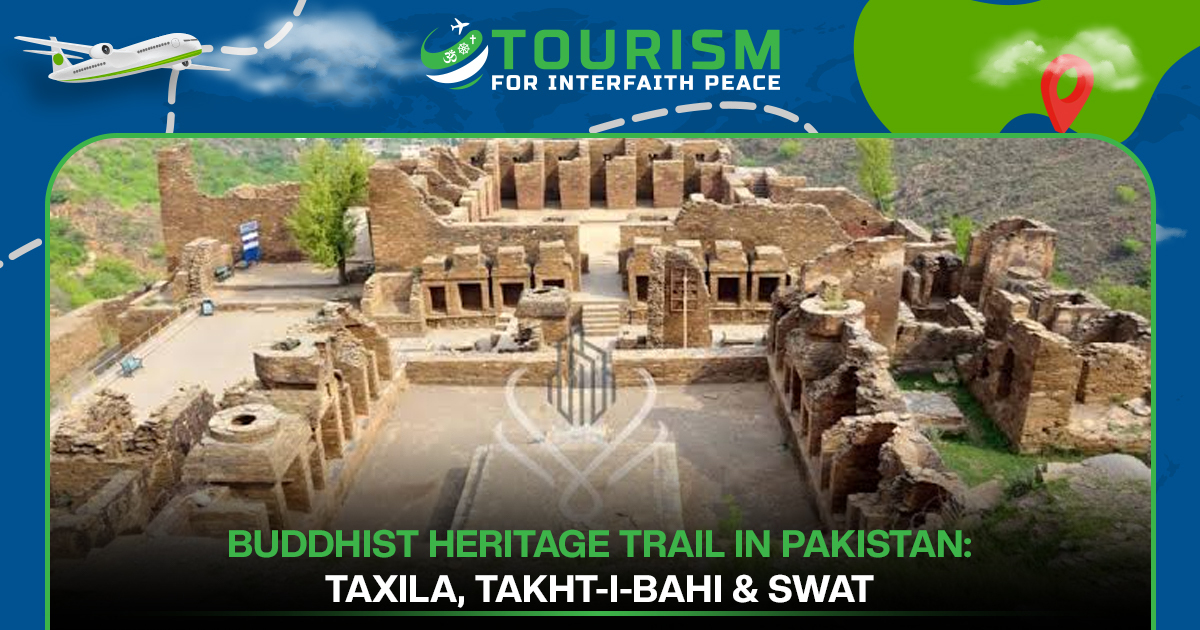
| Pakistan’s best-known Buddhist heritage sites lie in the northwest, in the ancient region of Gandhara. Taxila (Punjab) and Takht-i-Bahi (Khyber Pakhtunkhwa) are UNESCO World Heritage Sites, inscribed in 1980, and Swat holds major Buddhist archaeological remains. Confirm hours and local conditions before you travel. |
Many visitors to Pakistan overlook one of its deepest stories: the Buddhist heritage of ancient Gandhara. Across the northwest, stupas and monasteries still stand where monks once lived and studied, and where sculptors produced some of the most influential Buddhist art in Asia. This trail links three places that tell that story well: Taxila, Takht-i-Bahi and the valley of Swat.
For anyone exploring the Buddhist heritage sites Pakistan has to offer, they make a practical starting point. Taxila is also among the most reachable Buddhist sites near Islamabad.
Where Are the Buddhist Heritage Sites in Pakistan?
Most of the country’s Buddhist remains lie in the northwest, across the Potohar plateau of Punjab and the districts of Khyber Pakhtunkhwa. Taxila sits west of Islamabad and Rawalpindi. Takht-i-Bahi stands in Mardan district on the road toward Swat, and the Swat valley lies further north. UNESCO inscribed Taxila and Takht-i-Bahi in 1980. Swat’s sites are not among Pakistan’s six inscribed World Heritage Sites.
| Site | Province | UNESCO status | Buddhist highlights |
|---|---|---|---|
| Taxila | Punjab | World Heritage Site, 1980 (ref. 139) | Dharmarajika, Jaulian, Mohra Moradu |
| Takht-i-Bahi and Sahr-i-Bahlol | Khyber Pakhtunkhwa | World Heritage Site, 1980 (ref. 140) | Hilltop monastic complex and fortified city remains |
| Swat valley | Khyber Pakhtunkhwa | Not inscribed | Butkara I, Panr, Saidu Sharif, Jahanabad rock carving |
Gandhara Civilization and Its Buddhist Heritage
Gandhara was an ancient region centred on the Peshawar valley and reaching Taxila and Swat. It sat on routes that later formed part of the Silk Road, so traders, ideas and artists moved through it. Buddhist monasteries and stupas multiplied here under rulers including the Mauryans and the Kushans. That is the link between Gandhara civilization and Buddhist heritage: the region became a major centre of Buddhist life and art.
Gandhara art and architecture
The Metropolitan Museum of Art describes Gandharan sculpture as joining Buddhist subjects with Hellenistic styling. Early work was carved in grey schist, and stucco became common as monasteries expanded. Look for stupas, which are domed monuments that often held relics, small votive stupas around them and monastic quarters arranged around courtyards.
Taxila Buddhist Ruins: A Crossroads of Empires
Taxila’s valley holds settlements from several periods, including Bhir Mound, Sirkap and Sirsukh, alongside Buddhist monasteries. UNESCO inscribed Taxila in 1980. According to UNESCO, most of its stupas and monasteries date from the 1st to 5th century CE, while Dharmarajika is linked to Emperor Ashoka in the 3rd century BCE.
Which Taxila sites should visitors prioritise?
- Dharmarajika Stupa: the Department of Archaeology and Museums notes the tradition that it rests on an older Ashokan stupa.
- Jaulian: a hilltop monastery with Kushan-period foundations, about 7 km from the Taxila Museum.
- Mohra Moradu: a main stupa, votive stupa and monastery, built in the 2nd century CE and renovated in the 4th and 5th.
- Taxila Museum: its core collection comes from the valley’s excavated sites, which makes it a useful first stop.
Takht-i-Bahi Monastery: Why It Matters
Takht-i-Bahi, meaning “Throne of Origins”, was founded in the early 1st century CE on a hilltop. UNESCO says its high position helped it escape successive invasions, leaving it exceptionally well preserved. Visitors can read the layout of a monastic community, including a kitchen and refectory area and an assembly hall.
About 5 km away, Sahr-i-Bahlol preserves the walls of a small fortified city from the same period, though UNESCO notes that urban expansion endangers it. The stone sculptures found at Takht-i-Bahi were moved to Peshawar Museum, so a museum visit completes the picture.
How can visitors travel to Takht-i-Bahi?
UNESCO places the ruins near Takht-i-Bahi village, about 15 km from Mardan on the main road to Swat. Visitors usually arrive by road through Mardan. Confirm opening hours, tickets and access with the Khyber Pakhtunkhwa archaeology department before you travel.
Swat Buddhist Archaeological Sites
Swat, known in antiquity as Uddiyana, was another major centre of Gandhara civilization. Butkara I, a stupa and monastery the Department of Archaeology and Museums dates to the 1st to 5th century CE, was excavated between 1956 and 1962 by the Italian Archaeological Mission with Pakistani archaeologists. The mission also worked at Panr I, Saidu Sharif I, Barikot and Udegram.
In Jahanabad, a 7th-century rock carving of the Buddha was damaged in 2007 and later conserved by Khyber Pakhtunkhwa’s archaeology department with the Italian mission. The Swat Museum in Saidu Sharif displays finds from the valley’s Buddhist sites.
What Architectural and Archaeological Features Can Tourists See?
Expect stupa bases and domes, votive stupas, monastery cells around courtyards and carved reliefs. Stucco reliefs decorate the monasteries at Mohra Moradu and Jaulian, and National Geographic notes a portico of Ionic columns showing Greek influence at Taxila’s Jandial temple. Swat adds large rock carvings to the mix.
How to Plan a Buddhist Heritage Tour in Pakistan
A Gandhara civilization tour works best in two legs. Start with Taxila, which is reachable by road from Islamabad and Rawalpindi and suits a day visit. Treat Takht-i-Bahi and Swat as a separate northern leg, since both lie in Khyber Pakhtunkhwa.
- Check current travel advisories and local conditions for each district.
- Confirm hours, tickets and photography rules with the Department of Archaeology and Museums or provincial departments.
- Hire a licensed local guide for historical context.
- Wear sturdy shoes for hillside ruins and stay on marked paths.
Why Visit and Preserve Pakistan’s Buddhist Heritage?
These sites are among the most significant historical places in Pakistan. For international tourists, they place Pakistan within the Silk Road and Gandhara world. For domestic visitors, they are heritage close to home.
They are also fragile. UNESCO’s own reports note that sudden surges of visitors can stress ruined structures, and in October 2025 it approved USD 49,139 in assistance for conservation work at Takht-i-Bahi. Careful cultural tourism Pakistan can support that work when visitors follow site rules.
Start Your Buddhist Heritage Trail
Buddhist heritage tourism in Pakistan rewards curiosity and preparation. A morning at the Taxila Museum and Jaulian, a climb to Takht-i-Bahi and a day among Swat’s stupas add up to a clear picture of Gandhara’s reach. Verify visiting details with official sources, travel respectfully and plan the route in stages.
Follow Tourism for Interfaith Peace for more cultural and heritage travel guides, and see for yourself what the Buddhist heritage sites Pakistan preserves.
Frequently Asked Questions
Where are Buddhist heritage sites located in Pakistan?
Mostly in the northwest: Taxila in Punjab, and Takht-i-Bahi and the Swat valley in Khyber Pakhtunkhwa. This is the region historically known as Gandhara.
Is Takht-i-Bahi a UNESCO World Heritage Site?
Yes. UNESCO inscribed the Buddhist Ruins of Takht-i-Bahi and Neighbouring City Remains at Sahr-i-Bahlol in 1980.
What can visitors see in Taxila?
Buddhist sites such as Dharmarajika Stupa, Jaulian and Mohra Moradu, plus earlier city sites and the Taxila Museum. UNESCO inscribed Taxila in 1980.
How far is Takht-i-Bahi from Mardan?
UNESCO places the ruins about 15 km from Mardan on the main road to Swat.
Can Taxila be visited as a day trip from Islamabad?
Taxila lies west of Islamabad and Rawalpindi, so many visitors plan it as a day trip. Check opening hours with the Department of Archaeology and Museums first.