Punjab is home to some of Pakistan’s most significant religious and cultural attractions. From ancient Hindu temples and Sikh gurdwaras to mosques from the Mughal era and Sufi shrines, the area offers visitors an opportunity to explore centuries of spiritual heritage and cultural variety.
In Punjab, religious tourism provides pilgrims, foreign tourists, and history buffs with an insightful way to discover the region’s diverse religious customs. Taking a well-planned heritage tour of Punjab, which links several important locations, allows visitors to discover Sikh and Hindu heritage alongside Islamic and Sufi landmarks.
This guide highlights significant religious places in Punjab, provides a suggested itinerary, and offers practical advice for planning a respectful and rewarding journey. Tourism for Interfaith Peace (TIP) supports heritage tourism that promotes intercultural understanding, religious tolerance, and community partnerships.
Why Is Punjab Important for Religious Tourism?
Punjab is important in the religious history of South Asia. It features well-known Sufi shrines, historic Islamic structures, and significant Hindu pilgrimage destinations. It has a direct connection to Sikhism’s founder, Guru Nanak.
These locations illustrate the region’s numerous religious traditions and the communities that have shaped its cultural identity over time. Many are still in use as places of worship, even though several are recognized for their architectural, historical, and archeological significance.
Visitors can explore several aspects of Punjab’s religious heritage:
- Sikh heritage: Gurdwaras associated with Sikh Gurus and important pilgrimage traditions.
- Hindu heritage: Historic temples, sacred ponds, and religious destinations.
- Sufi heritage: Shrines connected with influential Sufi saints and spiritual traditions.
- Islamic heritage: Historic mosques, religious monuments, and centres of learning.
Exploring these destinations offers a broader understanding of Punjab’s cultural landscape. TIP highlights this diversity through its guide to Pakistan’s Buddhist, Sikh, Hindu and Islamic heritage.
Hasan Abdal: Begin With Gurdwara Panja Sahib
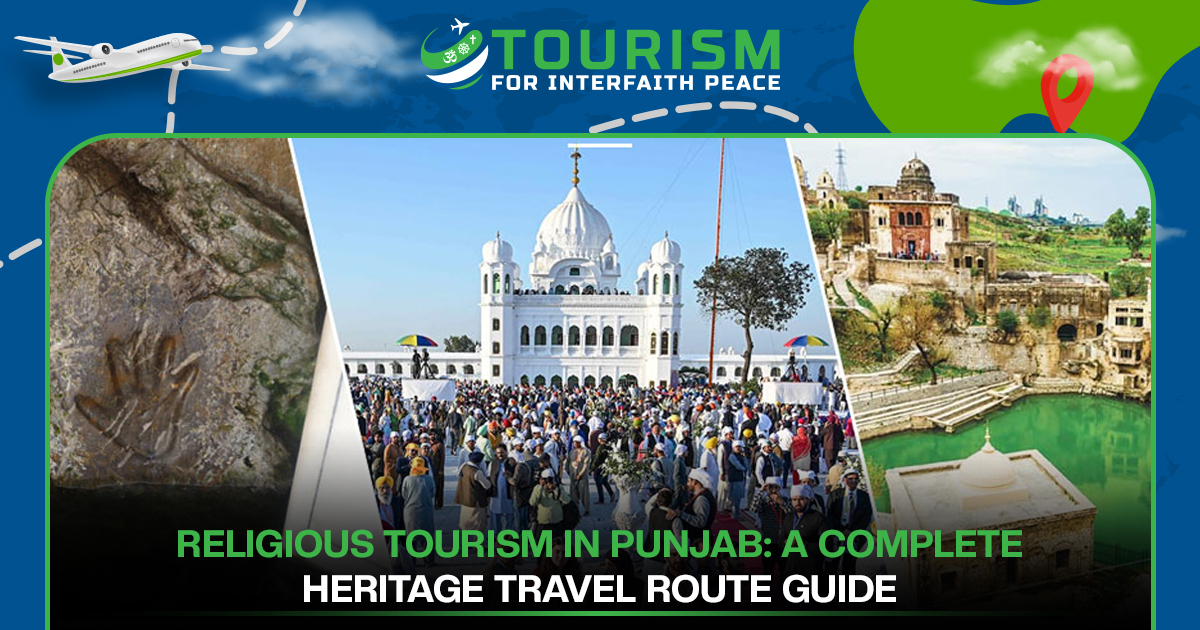
Hasan Abdal is an essential starting point for those interested in Sikh heritage. The town is home to Gurdwara Panja Sahib, one of the most significant Sikh pilgrimage sites in Pakistan.
The gurdwara is associated with Guru Nanak and holds significant religious value for Sikh people. Its unusual location and spiritual significance attract pilgrims, particularly during important religious holidays like Baisakhi.
Examine the gurdwara complex, learn about its historical significance, and observe the devotees’ practices. Since the site is an active place of worship, visitors should follow its norms and dress modestly.
For travellers interested in exploring more Sikh pilgrimage destinations across Pakistan, TIP offers a guide to Sikh pilgrimage sites, including Nankana Sahib and Panja Sahib.
Chakwal: Discover the Katas Raj Temples
The next destination is the Katas Raj Temples, which are located near Chakwal in the Salt Range. This ancient Hindu temple complex is one of Punjab’s most famous representations of Hindu religious history.
The complex features several temples arranged around the sacred pond known as Katas. Because it is associated with Hindu religious traditions and mythology, it attracts tourists who are fascinated by its architecture, spiritual significance, and historical history.
Explore the temple structures, see the intricate architecture, and learn about the local religious traditions. Before departing, visitors should clarify their current plans because access to particular locations may vary.
Katas Raj is an important stop for anyone exploring Hindu heritage in Pakistan. TIP provides further information about the country’s notable Hindu religious destinations in its guide to Hindu temples in Pakistan.
Lahore: Explore Sikh and Mughal-Era Heritage
Lahore is a necessary stop on a religious heritage tour across Punjab. The city offers visitors an opportunity to learn about every aspect of its architectural and religious history through the preservation of significant Sikh and Islamic buildings.
Notable sites include:
Gurdwara Dera Sahib: The martyrdom of Guru Arjan Dev, the fifth Sikh Guru, is associated with this important Sikh temple near Lahore Fort.
Samadhi of Maharaja Ranjit Singh: This historic monument honors Maharaja Ranjit Singh, the founder of the Sikh Empire.
Badshahi Mosque: A famous mosque from the Mughal era that is well-known for its historical significance, expansive courtyard, and stunning design.
Wazir Khan Mosque: Recognised for its colourful tilework, frescoes, and distinctive architectural design.
When considered collectively, these locations shed light on Lahore’s religious and cultural development. Verify the opening hours, prayer times, and photography policies of any active religious sites before visiting. TIP further explores the country’s diverse spiritual history in its article on Pakistan’s religious heritage, history, and culture.
Nankana Sahib and Kartarpur: Visit Significant Sikh Pilgrimage Sites
Nankana Sahib is one of the most important sites in Punjab for Sikh religious tourism. Gurdwara Janam Asthan is the primary pilgrimage place, and Guru Nanak was born there.
The district is home to several gurdwaras associated with Sikh heritage. Visitors can learn about Guru Nanak’s life, teachings, and spiritual legacy while taking in the local religious customs.
Another choice for visitors is the Gurdwara Darbar Sahib in Kartarpur, which is located in the Narowal area. The site is especially important to Sikh pilgrims since it is associated with the last years of Guru Nanak.
To enter Kartarpur, particularly through the corridor arrangements for Indian pilgrims, there are several qualification and entrance procedures. Foreign visitors should confirm the most recent visa requirements, access arrangements, and operational status with official authorities before making travel plans.
For practical guidance on organising a pilgrimage itinerary, visitors can explore TIP’s article on planning a religious pilgrimage trip to Pakistan.
Pakpattan and Multan: Experience Punjab’s Sufi Heritage
A thorough religious heritage trip should include Punjab’s important Sufi shrines. The region has a strong tradition of Sufi scholarship, spiritual teachings, and shrine-based practices.
Pakpattan is home to a shrine dedicated to Baba Fariduddin Ganjshakar, one of the most significant Sufi saints in South Asia. The shrine attracts devotees and visitors who are curious about his spiritual teachings and legacy. .
Multan, a famous Sufi center renowned for its unique shrines and religious architecture, can be reached by continuing the trek. Important locations consist of:
- Shrine of Shah Rukn-e-Alam.
- Shrine of Bahauddin Zakariya.
- Shrine of Shah Shams Tabrez.
These landmarks illustrate Multan’s long-standing spiritual nature. Visitors can observe local devotional practices, discover the saints associated with them, and take in their architecture while respecting the rites of devotees.
TIP encourages travellers to discover these traditions through meaningful cultural exchange and responsible travel. Its article on Pakistan’s religious heritage and interfaith tourism offers further insight.
Suggested Seven-Day Religious Heritage Route in Punjab
Travellers can combine several destinations into one extended journey. The following itinerary offers a suggested route covering Sikh, Hindu, Islamic, and Sufi heritage.
| Day | Destination | Main attractions |
| Day 1 | Hasan Abdal | Gurdwara Panja Sahib |
| Day 2 | Chakwal | Katas Raj Temples |
| Day 3 | Lahore | Gurdwara Dera Sahib, Samadhi of Maharaja Ranjit Singh, Badshahi Mosque |
| Day 4 | Nankana Sahib | Gurdwara Janam Asthan and other historic gurdwaras |
| Day 5 | Kartarpur | Gurdwara Darbar Sahib, subject to access arrangements |
| Day 6 | Pakpattan | Shrine of Baba Farid |
| Day 7 | Multan | Major Sufi shrines and historic religious landmarks |
Depending on individual preferences, site accessibility, available transportation, and trip duration, this route may be changed. Travelers with limited time may focus on Hasan Abdal, Katas Raj, Lahore, and Nankana Sahib, while those interested in Sufi heritage may go farther to Pakpattan and Multan.
TIP promotes heritage tourism as a way to connect visitors with Pakistan’s cultural and religious history. Travellers can learn more about its heritage tourism initiatives.
Essential Travel Tips for Visiting Religious Places in Punjab
International visitors can have a comfortable and respectful historical journey when they plan beforehand. Prior to leaving, think about the following:
- Check entry requirements:Verify the terms of the visa and whether certain locations need prior authorization.
- Arrange local guidance: Select informed advisors who are conversant with both guest etiquette and religious history.
- Dress appropriately: When it is customary to cover your head, dress modestly and bring a scarf.
- Respect religious practices: Avoid interrupting prayers, ceremonies, or other activities.
- Follow photography rules: Before taking pictures of worshipers, get their consent and be mindful of any limitations.
- Plan transportation: Plan dependable intercity transportation, especially for locations outside of large cities.
- Check seasonal conditions: Consider weather, religious festivals, site opening hours, and current travel advisories.
Responsible tourism enables tourists to respect the communities that maintain and protect sacred sites while also appreciating them.
Conclusion
Punjab is home to a very diversified range of Sikh gurdwaras, Hindu temples, Mughal-era mosques, and Sufi shrines. A heritage path connecting Hasan Abdal, Katas Raj, Lahore, Nankana Sahib, Kartarpur, Pakpattan, and Multan provides an important introduction to the region’s religious diversity.
Religious tourism in Punjab can promote historical preservation, local economic development, and communal understanding. Tourism for Interfaith Peace (TIP) encourages tourists to visit these places responsibly, politely, and with knowledge in order to transform historical trips into opportunities for long-lasting interfaith collaboration.
FAQ
1. Which religious places should tourists visit in Punjab?
Among the important sites are the Sufi shrines of Pakpattan and Multan, the Katas Raj Temples in Chakwal, Gurdwara Panja Sahib in Hasan Abdal, Gurdwara Dera Sahib in Lahore, and Gurdwara Janam Asthan in Nankana Sahib.
2. Can Sikh and Hindu heritage sites be visited on one trip?
Yes. Tourists can visit Sikh locations like Hasan Abdal, Lahore, and Nankana Sahib as well as Hindu historical sites like Katas Raj Temples in a single Punjab itinerary.
3. What is the most important Sikh pilgrimage site in Punjab?
Yes. Tourists can visit Sikh locations like Hasan Abdal, Lahore, and Nankana Sahib as well as Hindu historical sites like Katas Raj Temples in a single Punjab itinerary.
4. Which Hindu temples are worth visiting in Punjab?
The Katas Raj Temples in Chakwal, which are renowned for their sacred pond and temple complex, are among the most well-known Hindu cultural attractions in Punjab.
5. How many days are needed for a religious heritage tour of Punjab?
A targeted journey that passes through Hasan Abdal, Katas Raj, Lahore, and Nankana Sahib can take four to five days. If you include Pakpattan and Multan, the trip could take up to seven days.
6. Can international tourists visit Sikh gurdwaras in Punjab?
In fact, a lot of gurdwaras accept foreign visitors, however there are some site-access rules, security precautions, and visa requirements.
7. Are permits required to visit religious places in Punjab?
Each destination has different requirements. While some pilgrimage sites or restricted regions may require prior authorization or cooperation, other sites have standard visitation procedures.
8. What is the best time to visit religious heritage sites in Punjab?
Traveling around Punjab is frequently more comfortable from October to March due to the relatively cooler temperatures. Travelers should consider the availability of lodging and religious calendars when planning a festival-related vacation.
9. How can tourists arrange a guided religious heritage tour in Punjab?
Travelers can contact seasoned local tour operators or groups such as Tourism for Interfaith Peace (TIP) to discuss destinations, guides, transportation, and itinerary preparations.
10. Why is religious tourism important for Punjab?
Religious tourism promotes cultural exchange, aids in heritage preservation, provides openings for local businesses, and helps communities of different religious origins appreciate one another.