Introduction
A traveler can stand inside a gurdwara, a Buddhist stupa, or a Sufi shrine and see only architecture. Or they can stand in the same spot and understand why that architecture exists, who still prays there, and what it means to the community that maintains it. The difference between those two experiences is almost never the site itself. It is the person narrating it.
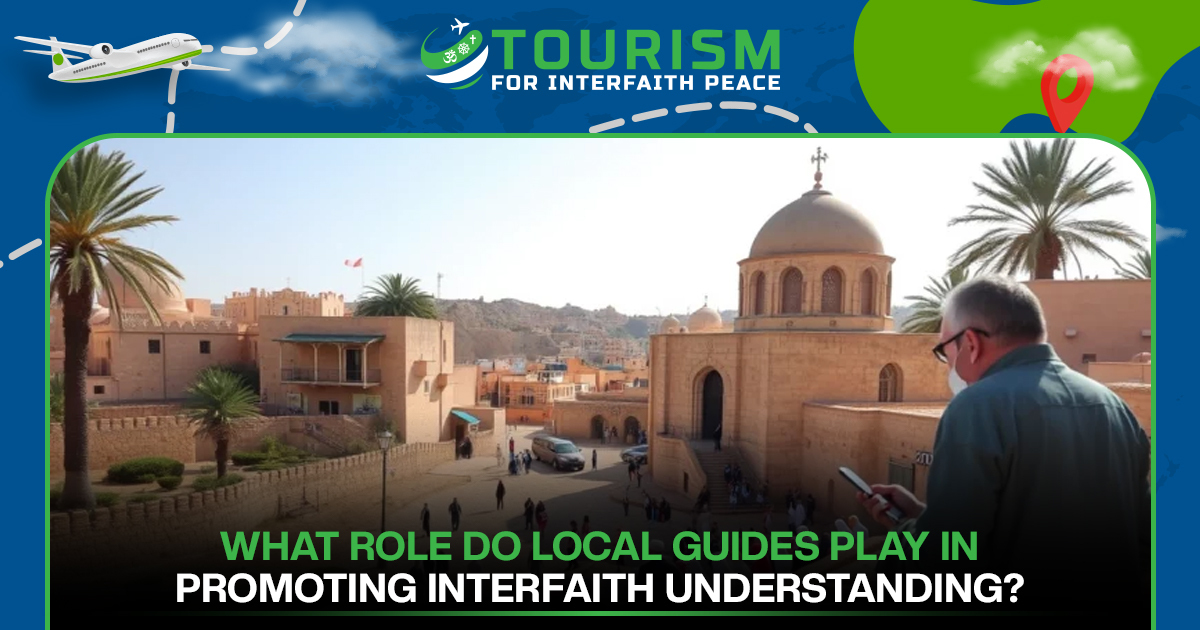
Local guides’ interfaith understanding work has quietly become one of the most consequential, least discussed roles in cultural diplomacy. Long before policy frameworks or interfaith dialogues bring communities into formal contact, a local guide has already done the work of translation, context, and trust-building, one tour group at a time. This piece examines what that role actually involves, why it matters more than most tourism strategy documents acknowledge, and what it will take to support and professionalize it.
| A monument can sit in silence for a thousand years. It takes a guide to make it speak to someone who has never believed what it represents. |
Who Are Local Guides in Interfaith Tourism Context?
In interfaith tourism, a local guide is rarely just someone who recites dates and facts. They are usually drawn from or deeply embedded in the community connected to the site, whether that is a caretaker family at a Sufi shrine, a Sikh community member at a gurdwara, or a Buddhist heritage scholar working the Gandhara trail. That proximity to the living tradition, not just the historical one, is what separates an interfaith guide from a conventional tour guide.
This distinction matters because most religious heritage sites are not museums. They are active places of worship, pilgrimage, and community memory. A guide working in this context has to carry two kinds of knowledge simultaneously: the historical and architectural facts that satisfy a curious visitor, and the lived, often unwritten understanding of what the site means to the people who still use it. Few professions require holding both registers at once.
In practice, this makes local guides cultural interpreters in the fullest sense. They are not simply translating language. They are translating meaning, context, and emotional weight across a gap that no guidebook can close on its own.
| Who counts as a local guide in interfaith tourism? A local guide in interfaith tourism is typically someone embedded in or connected to the community associated with a religious or heritage site, combining historical knowledge with lived understanding of the site’s ongoing spiritual and cultural significance. |
How Local Guides Shape Cultural Perception
Perception is built in small moments, and a guide controls almost all of them during a visit. The choice of which detail to highlight, which question to answer with patience rather than deflection, and which story to tell about a community’s history shapes what a traveler walks away believing.
This is precisely what interfaith tourism as a concept depends so heavily on the quality of the human guide rather than the site alone. A poorly guided tour through a Hindu temple complex can reduce a living tradition to an exotic backdrop. A well-guided one can leave a visitor with a genuine sense of why that tradition has endured.
Three specific mechanisms are at work when a skilled guide shapes perception:
- Contextualizing ritual, so unfamiliar practices read as meaningful rather than strange.
- Personalizing history, by connecting abstract dates and dynasties to the lives of real communities still present today.
- Modeling respectful curiosity, so visitors learn, by example, how to ask questions without judgment.
None of these mechanisms require dramatic storytelling. They require a guide who understands that perception is being built in real time, sentence by sentence, and treats that responsibility seriously.
| KEY TAKEAWAYS → A guide’s framing choices, not the site’s history alone, determine whether a visitor leaves with understanding or with a reinforced stereotype. → Interfaith guiding requires holding both historical fact and lived community meaning at once, a dual literacy few other roles demand. → Perception shifts happen in small interpretive moments, which makes guide training a high-leverage investment for cultural diplomacy. |
Local Guides as Peacebuilders and Cultural Diplomats
Formal peacebuilding tends to happen between institutions: governments, religious bodies, NGOs. Local guides operate at a different scale entirely. They build peace one conversation at a time, often without ever using that language to describe what they are doing.
This is the mechanism by which interfaith travel builds tolerance in practice rather than in theory. A guide who calmly answers a visitor’s uninformed or even tactless question about a religious practice is doing diplomatic work in real time, the kind that rarely makes it into a peacebuilding case study but accumulates into something measurable across thousands of interactions.
Guides also function as informal ambassadors for their own communities. When a Sikh community member at a gurdwara welcomes a visiting family with no connection to Sikhism and explains the principle of langar, the practice of offering a free communal meal to anyone regardless of background, that single interaction often does more to humanize Sikh identity for the visitor than years of secondhand information could.
This is cultural diplomacy without a podium. It happens at eye level, over tea, in the time it takes to walk from a temple gate to its inner courtyard.
| Working on a program that trains or deploys interfaith guides? Explore collaboration opportunities → |
Real Impact of Guided Interfaith Tours in Pakistan
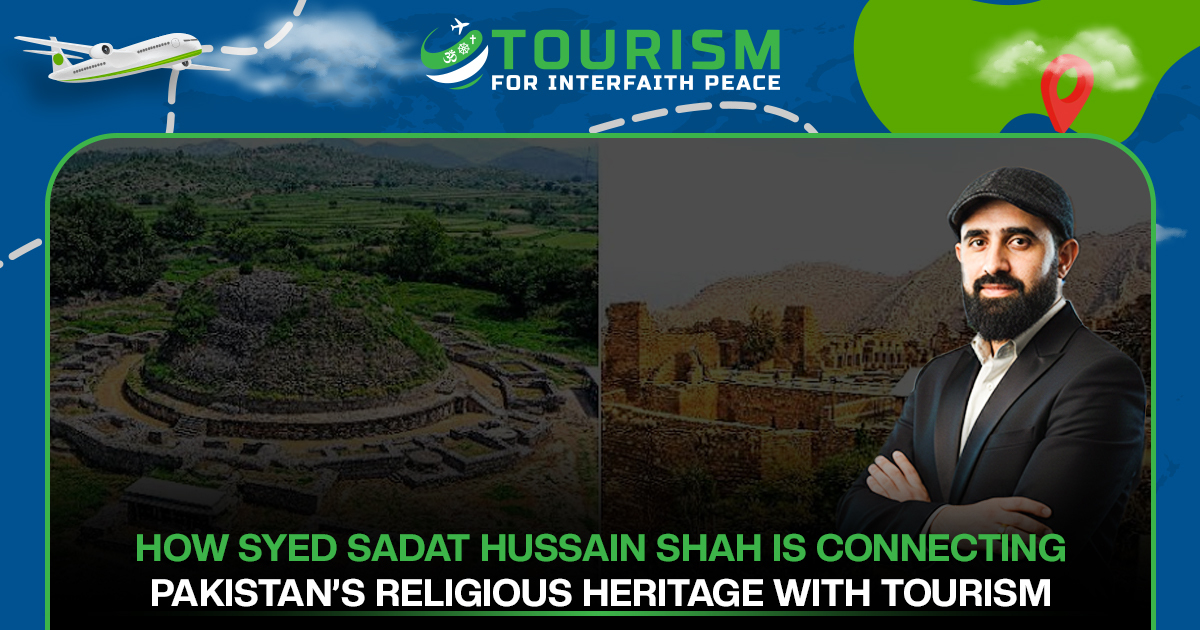
Pakistan offers an unusually concentrated set of examples. The Kartarpur Corridor, opened in 2019 to allow Sikh pilgrims from India to visit Guru Nanak’s final resting place without a full visa, depends almost entirely on guides and facilitators who can explain the corridor’s significance to visitors encountering Sikh heritage for the first time. The same is true along the Gandhara trail connecting Taxila, Takht-i-Bahi, and Swat, where Buddhist heritage travelers from Korea, Japan, and Sri Lanka rely on local guides to connect ancient Gandharan art to living Buddhist practice elsewhere in Asia.
Sufi shrine visits follow a similar pattern. Sites associated with figures like Lal Shahbaz Qalandar in Sindh have historically welcomed devotees and visitors across religious lines, and the guides and caretakers present at these shrines play a direct role in maintaining that openness for outsiders unfamiliar with Sufi devotional practice. This pattern is consistent with what this site has documented in its analysis of Pakistan interfaith tourism destination potential more broadly: the density and contrast of Pakistan’s religious heritage sites creates more opportunities for guided interfaith encounters within a single day’s travel than almost anywhere else in the region.
These are not hypothetical scenarios. They are the operating reality of religious heritage tourism in Pakistan today, and in each case, the guide is the variable that determines whether the visit becomes a genuine interfaith encounter or simply a photograph.
Challenges Local Guides Face in Promoting Harmony
The role carries real strain that is rarely acknowledged in tourism promotion. Guides are often expected to represent an entire faith tradition to visitors, a burden no single individual should have to carry, and one that can flatten the diversity within their own community if not handled carefully.
- Limited formal training in interfaith literacy, leaving many guides to develop their approach through trial and error.
- Inconsistent compensation and recognition, despite the high level of skill the role genuinely requires.
- Pressure to simplify complex or contested histories for the sake of a smooth tour experience.
- Occasional visitor disrespect or insensitivity that guides must absorb and redirect without confrontation.
- Limited infrastructure at many sites, which adds logistical strain on top of the interpretive work.
Addressing these challenges is not a minor operational issue. It is central to whether interfaith tourism can scale responsibly without burning out the people who make it work.
Training and Empowering Ethical Interfaith Guides
Professionalizing this role starts with treating it as a distinct discipline rather than a subcategory of general tourism training. Interfaith guiding requires comparative religious literacy, conflict-sensitive communication skills, and an understanding of how to navigate questions that touch on contested or painful history without either avoiding them or turning the tour into a debate.
This is also where responsible tourism practices intersect directly with guide training. A guide cannot model responsible engagement for visitors if the surrounding system does not also treat the guide’s own wellbeing, compensation, and community consent as part of the responsibility chain.
Effective training programs for interfaith guides typically combine three elements: structured knowledge of multiple faith traditions present at a given site, practical communication training for handling sensitive questions, and ongoing community input so that guides are not interpreting a tradition on behalf of a community without that community’s involvement.
Future of Interfaith Tourism and Community-Based Guiding
The next phase of interfaith tourism in Pakistan and elsewhere will likely depend less on infrastructure investment and more on building a recognized, supported profession around community-based guiding. Digital storytelling by young Pakistani photographers, documentary makers, and writers is already reshaping how heritage sites are presented to international audiences, and local guides are a natural extension of that same shift toward authority residing inside communities rather than outside them.
A community-based model, where guiding income and decision-making stay rooted in the community connected to a site, also addresses a structural risk in cultural tourism: the tendency for outside operators to profit from sacred sites while the communities maintaining them see little benefit. Strengthening that connection is not just an ethical preference. It is what keeps interfaith tourism credible over the long term.
TIP Thought Leadership Perspective
Tourism for Interfaith Peace exists because we believe the conversation about interfaith tourism has spent too much time on destinations and not enough on the people who make those destinations meaningful. A heritage site without a skilled, supported guide is simply a building with a plaque. The same site, narrated by someone trained to hold both historical fact and community trust, becomes an act of peacebuilding.
Our work is built on the conviction that local guides deserve to be treated as the cultural diplomats they already are, not as an afterthought to a tour itinerary. As interfaith tourism in Pakistan continues to grow, the organizations, training programs, and policy frameworks that succeed will be the ones that put guides, and the communities they represent, at the center of the model rather than at its margins.
Conclusion
Every major framework for interfaith peacebuilding eventually comes back to the same unit of change: one person explaining their world to another person willing to listen. Local guides have been doing this work, often unrecognized and under-resourced, for as long as people have traveled to sites sacred to someone else’s faith.
Recognizing and investing in that role is not a peripheral tourism strategy. It is one of the more direct, scalable paths toward the kind of interfaith understanding that policy documents describe but rarely deliver at a human level.
Organizations, researchers, and travel programs interested in supporting this work can contact our interfaith tourism experts to discuss guide training, community partnership models, or program collaboration.
Frequently Asked Questions
What is the role of local guides in interfaith understanding?
Local guides interpret religious and cultural sites for visitors in ways that build genuine understanding rather than surface-level sightseeing, functioning as cultural interpreters, peace educators, and informal ambassadors for their communities.
Why are local guides considered cultural diplomats?
Local guides regularly defuse misunderstanding, answer sensitive questions with patience, and humanize religious communities for visitors in real time, doing diplomatic work at a personal scale that complements formal interfaith dialogue.
How does interfaith tourism in Pakistan rely on local guides specifically?
Sites such as the Kartarpur Corridor, the Gandhara trail, and various Sufi shrines depend on local guides to provide context that visitors unfamiliar with Sikh, Buddhist, or Sufi traditions would otherwise lack entirely.
What challenges do interfaith tour guides commonly face?
Common challenges include limited formal interfaith training, inconsistent compensation, pressure to oversimplify complex histories, and the emotional labor of representing an entire tradition to visitors.
How can interfaith guides be better trained and supported?
Effective approaches combine comparative religious literacy, conflict-sensitive communication training, and ongoing input from the communities connected to each site, treating guiding as a distinct professional discipline.
Does responsible tourism depend on the quality of local guiding?
Yes. Responsible tourism principles, including community benefit and cultural sensitivity, are only as strong in practice as the guide delivering the experience on the ground.
What is the future of community-based guiding in interfaith tourism?
The likely direction is toward formally recognized, community-rooted guiding professions where income and interpretive authority stay with the communities connected to each heritage site, rather than with outside operators.