A Country That Celebrates in Many Languages of Faith
Pakistan is overwhelmingly Muslim, but it is not religiously uniform, and its festival calendar makes that visible in a way that statistics alone cannot. Within a single year, the same cities that fill with the sound of Eid prayers also light up with Diwali lamps in Hindu temples, fill churches with carols at Christmas, and echo with Sikh kirtan at gurdwaras tied to the faith’s founding history. Add the spring rites of the Kalash people in Chitral and the centuries-old Urs gatherings at Sufi shrines, and a fuller picture of Pakistan’s religious life starts to emerge: layered, regional, and far more diverse than most visitors expect.
Festivals matter here in a way that goes beyond ritual. They are recurring, visible moments when communities of different faiths share physical space, sometimes as neighbors attending each other’s celebrations, sometimes as strangers who simply notice the lights, the music, or the smell of food drifting from a temple or church down the street. That kind of ordinary, repeated proximity is where cultural harmony is actually built, not in abstract policy statements, but in the lived experience of a shared calendar.
Tourism has a specific role to play in this. When travelers engage thoughtfully with the festivals of communities different from their own, they participate directly in the kind of interfaith tourism and global peace that this platform exists to advance: travel not as passive sightseeing, but as a deliberate act of cultural exchange and mutual respect.
Understanding Pakistan’s Diverse Religious Landscape
| Quick Answer: Pakistan is home to a Muslim majority of more than 96 percent, alongside significant minority communities including Christians, Hindus, Sikhs, Buddhists, Kalash indigenous practitioners, Parsis, and Baha’is. Each community maintains its own religious festivals, many of which receive official recognition and, in several cases, optional public holiday status under Pakistani law. |
Islam
Islam is practiced by the vast majority of Pakistanis, encompassing Sunni, Shia, and Sufi traditions, each with its own devotional character. The Sufi tradition in particular has produced a distinct festival culture built around the Urs, annual commemorations held at the shrines of saints, that draw devotees from across faiths, not exclusively Muslim ones, reflecting a long history of shared devotional space at sites like Data Darbar in Lahore.
Christianity
Pakistan’s Christian community, concentrated heavily in Punjab and in urban centers like Karachi and Lahore, observes the full Christian liturgical calendar, with Christmas and Easter standing as the most visible public celebrations, often marked by church services, processions, and community gatherings that draw attention and goodwill from neighboring communities of other faiths.
Hinduism
Pakistan’s Hindu community is concentrated primarily in Sindh, particularly in Karachi and the historic temple towns along the province’s interior. Festivals such as Holi and Diwali have gained increasing public visibility over the past decade, supported by official recognition that has made these celebrations more openly part of Pakistan’s shared civic calendar.
Sikhism
Sikhism holds a uniquely significant place in Pakistan’s religious geography, since several of the faith’s most sacred sites, including Nankana Sahib, the birthplace of Guru Nanak, and Panja Sahib, sit within Pakistan’s borders. Vaisakhi and the birth anniversary of Guru Nanak draw thousands of Sikh pilgrims into Pakistan each year, many traveling from India specifically for these observances.
Buddhism
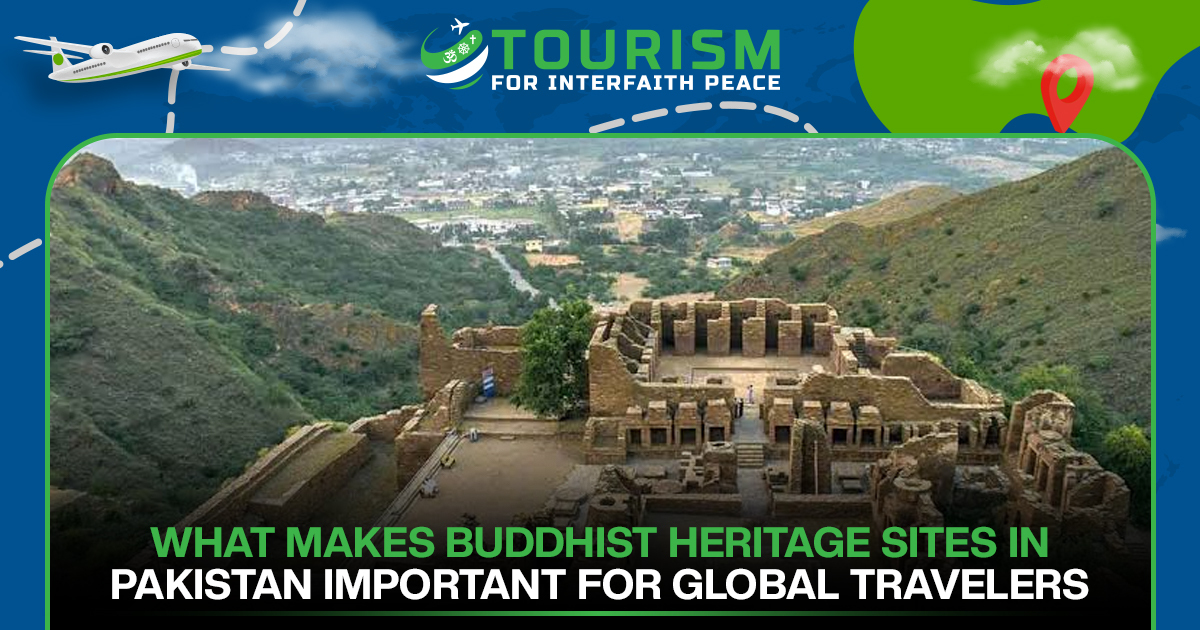
Pakistan’s living Buddhist community is small, but its Buddhist heritage runs extraordinarily deep, anchored in the Gandhara civilization that once made the Taxila valley one of the ancient world’s great centers of Buddhist learning and pilgrimage. Heritage commemorations tied to Buddhist sites continue to draw scholarly attention and a growing number of international Buddhist pilgrims and researchers.
Indigenous Cultural Traditions
The Kalash people of Chitral, in Khyber Pakhtunkhwa, maintain one of South Asia’s most distinct indigenous belief systems, expressed through three major seasonal festivals: Chilam Joshi in spring, Uchal during the late-summer harvest, and Choimus in midwinter. These celebrations combine ritual, music, and communal dance, and represent a religious tradition found nowhere else in the world.
Major Religious Festivals Celebrated in Pakistan
While Pakistan’s festival calendar is extensive, several celebrations stand out for both their scale and their visible role in demonstrating shared public space among different faith communities.
Eid-ul-Fitr and Eid-ul-Adha
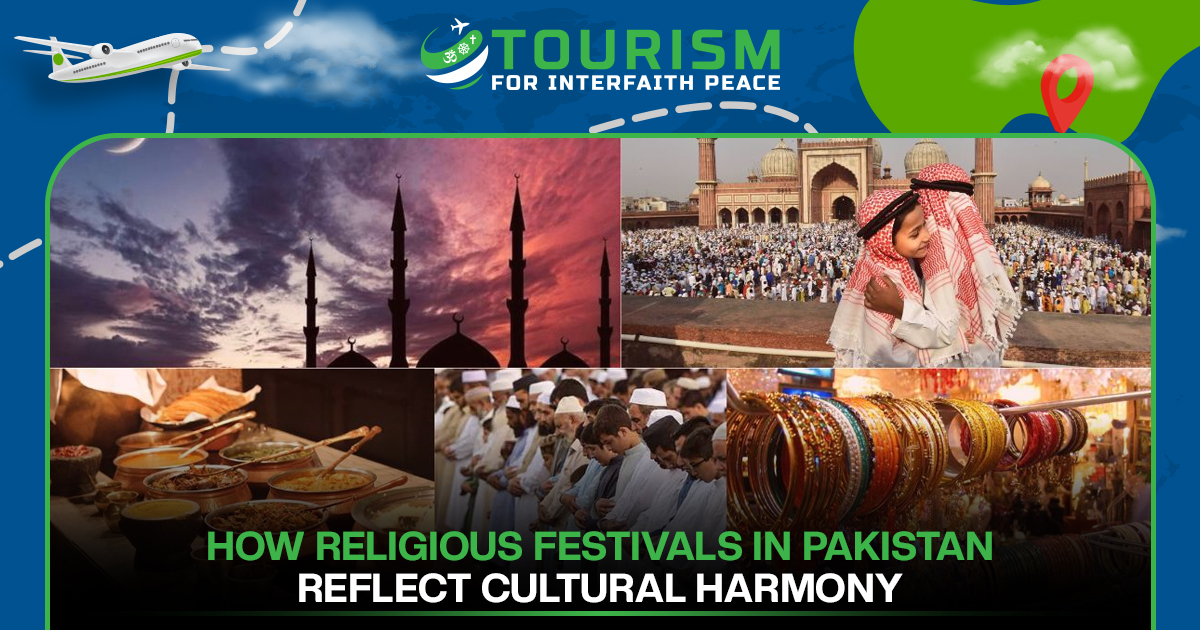
Eid-ul-Fitr marks the end of the fasting month of Ramadan, while Eid-ul-Adha commemorates the willingness of the Prophet Ibrahim to sacrifice his son in obedience to God. Both are marked nationally with prayers, family gatherings, and, particularly during Eid-ul-Adha, charitable distribution of meat that frequently extends to neighbors and communities of other faiths, a practice that quietly reinforces social bonds across religious lines.
Christmas and Easter
Pakistan’s Christian communities celebrate Christmas and Easter with church services, family gatherings, and, in cities with larger Christian populations, public decorations and community events that have increasingly drawn participation and goodwill gestures from Muslim neighbors and local government officials alike.
Holi and Diwali
Holi, the Hindu festival of colors marking the arrival of spring, and Diwali, the festival of lights, are both celebrated prominently within Pakistan’s Hindu communities, especially in Sindh. Temples such as the Krishna Mandir in Lahore have hosted public Holi celebrations attended by hundreds, complete with music, color-throwing, and shared festive meals, often under official protection and with logistical support from local authorities.
Vaisakhi
Vaisakhi marks both the Sikh new year and the harvest season, and in Pakistan it carries additional weight as a pilgrimage occasion. Thousands of Sikh pilgrims, many traveling from India, gather at Nankana Sahib and Panja Sahib each year to mark the occasion at sites considered sacred to the founding of their faith.
Buddhist Heritage Commemorations
While Pakistan’s resident Buddhist population is small, heritage commemorations connected to the Taxila valley and other Gandhara-era Buddhist sites continue to draw international Buddhist pilgrims, researchers, and cultural delegations, particularly from East and Southeast Asia, underscoring Pakistan’s often underappreciated role in the broader history of global Buddhism.
Kalash Seasonal Festivals
Chilam Joshi, held each May in the Kalash valleys of Chitral, welcomes the arrival of spring with days of traditional dance, music, and communal feasting. The Kalash people’s continued practice of these rites, largely unchanged across generations, has made their valleys one of the most distinctive cultural tourism destinations in South Asia, provided visitors approach with the same respect they would bring to any sacred observance.
| A festival calendar is, in its own quiet way, a census of tolerance. The fact that Pakistan’s cities make room for Eid prayers, Christmas carols, Diwali lamps, and Kalash spring dances within the same twelve months says something that no single statistic can.— On reading a nation’s festival calendar as a measure of coexistence |
How Religious Festivals Promote Cultural Harmony
Community Participation Across Faith Lines
In many Pakistani neighborhoods, festivals are rarely celebrated in total isolation. Muslim families have long histories of sending Eid sweets to Christian and Hindu neighbors; Christian and Hindu households frequently extend the same gesture during their own celebrations. This informal, person-to-person exchange does more to build genuine cultural harmony than any formal program, because it operates at the scale of daily life rather than ceremony.
Shared Traditions and Cultural Overlap
Several festivals in Pakistan are not exclusive to a single faith. Vaisakhi, for instance, is observed by both Sikhs and Hindus as a harvest celebration, while Sufi Urs gatherings have historically attracted devotees across religious boundaries, reflecting South Asia’s long tradition of syncretic devotional practice that predates the modern nation-state itself.
Cultural Exchange Through Food, Music, and Craft
Festivals generate some of the most accessible forms of cultural exchange available to any traveler: food, music, and craft. A visitor who shares a meal during Eid, watches Kalash dancers during Chilam Joshi, or hears qawwali at a Sufi shrine’s Urs is absorbing a community’s culture through its most generous and least guarded expression.
Hospitality and Inclusivity as Cultural Norms
Hospitality runs deep across Pakistan’s regional cultures, and it frequently extends across religious lines during festival seasons. Visitors and travel writers covering Pakistan consistently note how readily local communities, regardless of their own faith, welcome outsiders into festival spaces, treating curiosity and respectful participation as an invitation rather than an intrusion.
Respect for Diversity, Reinforced Through Repetition
Cultural harmony is not built in a single gesture. It is reinforced through the repeated, annual rhythm of festivals that require communities to make space for each other, year after year, in public squares, shared neighborhoods, and increasingly, in officially sanctioned civic events that formally recognize minority observances.
Why Religious Festivals Matter for Interfaith Tourism
Religious festivals offer some of the most concentrated, authentic cultural experiences available to any traveler, which is precisely why the importance of interfaith tourism in today’s world increasingly centers on festival-based travel rather than conventional sightseeing alone.
Cultural Immersion Beyond the Surface
Watching a festival unfold firsthand, the rituals, the food, the music, the way a community organizes itself around a shared occasion, offers a depth of cultural understanding that no museum exhibit or guidebook can fully replicate. Festivals compress a community’s values, history, and aesthetic into a single, immersive experience.
Authentic Travel Experiences
Festival tourism rewards travelers who seek experiences shaped by local communities themselves, rather than experiences packaged primarily for outside consumption. A Chilam Joshi celebration in the Kalash valleys or a Diwali gathering at a Sindh temple unfolds according to its own internal logic and calendar, not a tourism board’s schedule, which is exactly what gives it authenticity.
Educational Opportunities for Travelers and Researchers
For students, researchers, and lifelong learners, religious festivals provide a living curriculum in comparative religion, anthropology, and South Asian history that static academic study alone cannot replicate. Observing a Sufi Urs or a Sikh Vaisakhi pilgrimage firsthand grounds theoretical knowledge in lived, observable practice.
Community Engagement That Benefits Local Economies
Responsible festival tourism channels visitor spending directly into the communities hosting these celebrations, supporting local artisans, food vendors, and small hospitality businesses. This creates a direct economic incentive for communities to preserve and continue their traditions, rather than allowing them to fade under economic pressure.
Peacebuilding Through Tourism
At its core, festival tourism functions as a peacebuilding mechanism, because it requires travelers to step, however briefly, into the worldview of a community different from their own. This is the foundation of how interfaith travel encourages tolerance: direct, respectful exposure to unfamiliar traditions reliably reduces the kind of misunderstanding that distance and unfamiliarity tend to produce.
The Role of Travelers in Supporting Cultural Understanding
Interfaith tourism only delivers on its potential when travelers approach festivals with intention. A handful of practices separate genuinely respectful engagement from passive, extractive sightseeing.
Responsible Tourism Practices
- Research a festival’s religious significance before attending, so participation comes from understanding rather than novelty-seeking.
- Ask before photographing individuals, particularly at smaller or more intimate community gatherings such as Kalash festivals or family-centered celebrations.
- Support local guides, artisans, and vendors connected to the host community rather than third parties disconnected from the festival itself.
Respecting Local Customs
- Dress modestly and appropriately for the specific setting, particularly at religious shrines, temples, gurdwaras, and churches.
- Follow guidance from local hosts regarding where visitors may and may not go, especially around active ritual spaces.
- Avoid treating sacred or ceremonial moments as primarily photo opportunities; observe first, document respectfully second.
Participating in Cultural Events Thoughtfully
- Accept invitations to share food or participate in communal activities when offered, since declining can sometimes be read as a rejection of hospitality.
- Engage with curiosity rather than comparison; resist the instinct to measure another faith’s practices against one’s own as more or less valid.
Encouraging Dialogue and Learning
The most valuable outcome of festival-based travel is rarely the festival itself, but the conversations it generates afterward, with hosts, fellow travelers, and communities back home. This is the throughline connecting cultural experiences that promote peace and understanding to tangible, lasting impact: a single respectful festival visit, retold and shared, can shift how an entire social circle perceives a community it had never encountered directly.
Pakistan’s Potential as an Interfaith Tourism Destination
Growing Interest in Heritage Tourism
International interest in Pakistan’s heritage sites, from the Buddhist ruins of Taxila to the Sikh pilgrimage sites of Punjab to the Sufi shrines of Sindh, has grown steadily as travel narratives shift toward more authentic, less heavily commercialized destinations. Pakistan’s relative novelty on the international heritage tourism circuit is, increasingly, becoming part of its appeal rather than a barrier to it.
Religious and Cultural Diversity as a Travel Asset
Few countries offer travelers the chance to witness an Islamic Eid celebration, a Sikh pilgrimage, a Hindu Diwali gathering, and an indigenous Kalash spring festival within the same national borders and, in some cases, the same travel season. That density of religious and cultural diversity is a genuine, underleveraged asset for Pakistan’s tourism sector.
Opportunities for Meaningful Travel Experiences
As global travel trends continue shifting toward purpose-driven and experiential tourism, Pakistan’s festival calendar offers a ready-made foundation for exactly the kind of meaningful, immersive travel that increasing numbers of international visitors are actively seeking, provided the infrastructure, guidance, and cultural sensitivity training around these experiences continue to mature.
Frequently Asked Questions
What are the major religious festivals celebrated in Pakistan?
Pakistan’s major religious festivals include Eid-ul-Fitr and Eid-ul-Adha for Muslims, Christmas and Easter for Christians, Holi and Diwali for Hindus, Vaisakhi and Guru Nanak’s birthday for Sikhs, and seasonal festivals such as Chilam Joshi for the indigenous Kalash community. Buddhist heritage commemorations also continue at historic Gandhara sites such as Taxila.
How do religious festivals promote cultural harmony in Pakistan?
Religious festivals promote cultural harmony by creating recurring, visible opportunities for different faith communities to share public space, exchange hospitality, and participate in or witness each other’s traditions. This repeated, everyday proximity, rather than any single formal initiative, builds the foundation for sustained interfaith understanding.
Is Pakistan a good destination for interfaith tourism?
Pakistan offers strong potential for interfaith tourism due to its religious diversity, sacred sites significant to Islam, Sikhism, Hinduism, and Buddhism, and its calendar of distinct festivals across multiple faith traditions. Responsible travel infrastructure and cultural sensitivity guidance continue to develop alongside this potential.
Can non-Muslim travelers attend religious festivals in Pakistan?
Yes. Many religious festivals in Pakistan, including Sufi Urs gatherings, Holi celebrations, and Kalash seasonal festivals, welcome respectful participation from visitors of different faiths or no faith at all. Travelers should research customs in advance and follow guidance from local hosts regarding appropriate conduct.
What is the significance of Sikh festivals like Vaisakhi in Pakistan?
Vaisakhi holds particular significance in Pakistan because several of Sikhism’s most sacred sites, including Nankana Sahib, the birthplace of Guru Nanak, are located within the country. Thousands of Sikh pilgrims, many traveling from India, visit these sites annually during Vaisakhi and other key observances.
How can travelers support cultural understanding when attending festivals in Pakistan?
Travelers can support cultural understanding by researching a festival’s significance beforehand, dressing and behaving respectfully, asking permission before photographing individuals, supporting local vendors and guides connected to the host community, and engaging in genuine dialogue with hosts rather than treating the experience purely as spectacle.
Celebrations That Carry the Weight of Coexistence
Religious festivals in Pakistan are, first and foremost, expressions of faith. But taken together, across a single calendar year, they also function as something larger: a recurring, public demonstration that a religiously diverse country can still share streets, seasons, and celebrations without erasing the distinctiveness of any single tradition.
That distinction matters for how the world understands Pakistan, and for how Pakistan understands itself. Cultural harmony is not the absence of difference. It is the ongoing, sometimes imperfect, practice of making room for difference in public life, festival after festival, year after year.
For travelers willing to engage thoughtfully, Pakistan’s festival calendar offers a rare invitation: not just to observe a country’s faiths from a distance, but to stand inside its moments of shared celebration and witness coexistence as a living, ongoing practice rather than a historical claim. That is the deeper promise of interfaith tourism, and it is one Pakistan’s diverse religious landscape is well positioned to deliver.