Most travelers planning a Buddhist heritage journey think first of Bodh Gaya, Lumbini, or the temple towns of Southeast Asia. Few think of Pakistan. Yet for nearly a thousand years, the region now known as northern Pakistan was one of the most important centers of Buddhist learning, art, and pilgrimage anywhere in the ancient world.
This is the story modern travel often skips, even though the evidence sits in plain sight: hillside monasteries still standing above the Taxila valley, a stupa built by Emperor Ashoka himself, and a monastic university that once drew scholars from across Asia to study philosophy, medicine, and art.
As global travel shifts away from checklist sightseeing and toward genuine cultural and spiritual depth, Buddhist heritage sites in Pakistan are quietly becoming one of the most compelling, underexplored destinations for travelers seeking exactly that kind of experience: history that can be touched, not just read about, and a living example of how different faiths and civilizations once shared the same valley without conflict.
Pakistan’s Place in the History of Buddhism
To understand why Pakistan matters to Buddhist heritage, it helps to understand Gandhara, the ancient civilization that once spanned much of what is now northern Pakistan and eastern Afghanistan.
The Gandhara Civilization
Gandhara flourished from roughly the 6th century BCE to the 5th century CE, absorbing influences from Persian, Greek, Central Asian, and South Asian traditions. Out of that fusion came Gandharan Buddhist art, a distinctive style recognizable by its Greco-Roman sculptural technique applied to unmistakably Buddhist subject matter, Buddha and Bodhisattva figures rendered with the drapery and facial realism of classical Mediterranean sculpture.
Taxila sat at the center of this world. Long before it became a Buddhist center, the city had already functioned as a hub of trade and scholarship under Achaemenid and later Mauryan rule. Buddhism took root here with particular intensity after Emperor Ashoka embraced the faith in the 3rd century BCE and began distributing relics of the Buddha to cities across his empire, including Taxila.
A Silk Road Crossroads
Taxila’s location made it more than a regional center. It sat along key branches of the trade and pilgrimage routes connecting South Asia, Central Asia, and China, which is precisely why Buddhism, along with goods, language, and artistic styles, moved through this valley so readily. Chinese pilgrim-monks, most famously Xuanzang in the 7th century CE, traveled through the region specifically to study at its monasteries and record what they found, leaving some of the most detailed surviving accounts of Gandharan Buddhism.
An Ancient Center of Learning
Several of Taxila’s monastic complexes functioned as centers of organized education, not merely worship. Monks studied philosophy, medicine, art, and Buddhist scripture within these walls, often producing manuscripts on birch bark in dedicated scriptoriums built into the monastery design. This dual identity, sacred site and seat of learning, is part of why historians regard Taxila as one of the ancient world’s genuine intellectual capitals, alongside its religious significance.
Major Buddhist Heritage Sites That Attract Global Visitors
The Taxila valley and the wider Gandhara region preserve several distinct sites, each representing a different chapter of this history. Together, they form part of the Ruins of Taxila, inscribed as a UNESCO World Heritage Site in 1980.
Taxila
Taxila itself encompasses the broader archaeological landscape, including the early city of Bhir Mound, the Greek-influenced city of Sirkap, and the later city of Sirsukh, alongside the monasteries and stupas scattered through the surrounding hills. The Taxila Museum, established to house the artifacts recovered from these excavations, displays thousands of pieces of Gandharan sculpture, coins, and Buddhist relics.
Dharmarajika Stupa
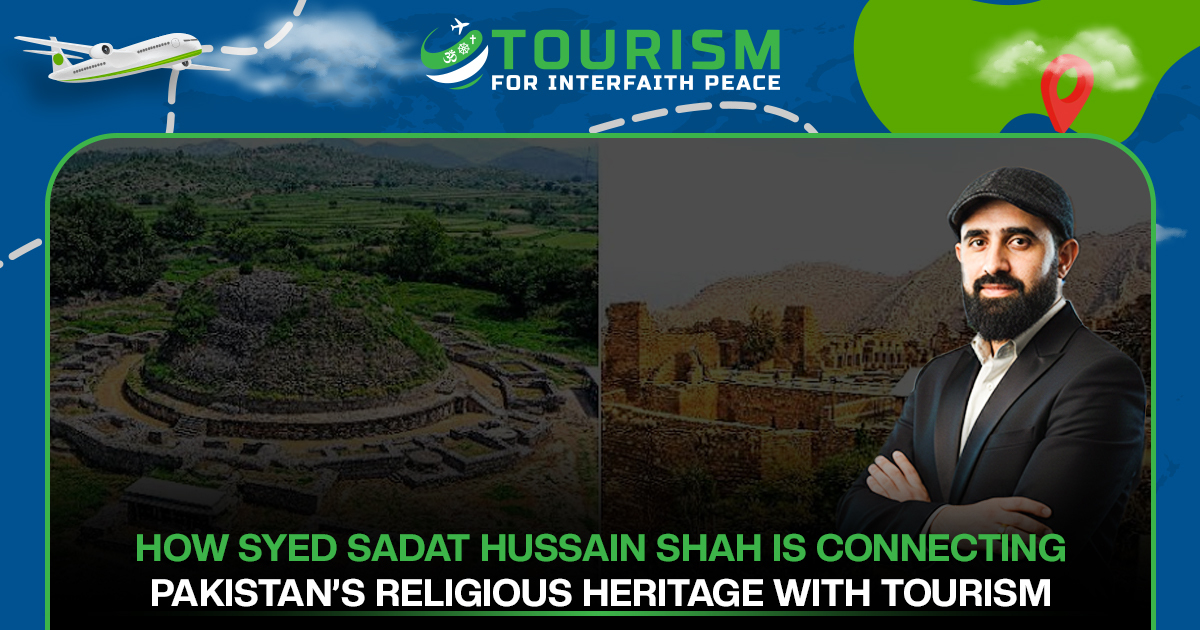
Also known as the Great Stupa of Taxila, Dharmarajika is believed to have been built by Emperor Ashoka in the 3rd century BCE to enshrine relics of the Buddha. It remains the oldest and largest Buddhist monument in the valley, and excavations here uncovered a silver scroll inscription documenting the original enshrinement of Buddha relics, along with a relic casket later presented to the Buddhist community of Sri Lanka and enshrined at the Temple of the Tooth in Kandy. Few sites anywhere connect a contemporary Buddhist nation this directly to an excavated relic from Pakistani soil.
Jaulian Monastery
Known locally as the Seat of Saints, Jaulian is a 2nd-century CE monastic complex set on a hilltop roughly 100 meters above the surrounding valley. Its ruins include a central stupa, dozens of smaller votive stupas, monastic living quarters arranged around two courtyards, and a section once dedicated to producing Buddhist manuscripts. Jaulian’s elevated position also offers visitors sweeping views across the valley toward Khanpur Dam, making it one of the more visually striking stops on a heritage itinerary.
Mohra Moradu
Located close to Jaulian, Mohra Moradu was built in the 2nd century CE and substantially renovated during the 4th and 5th centuries. It is particularly well known among archaeologists for the quality of its surviving stucco decoration, considered some of the finest preserved Gandharan plasterwork found at any Taxila site.
Takht-i-Bahi
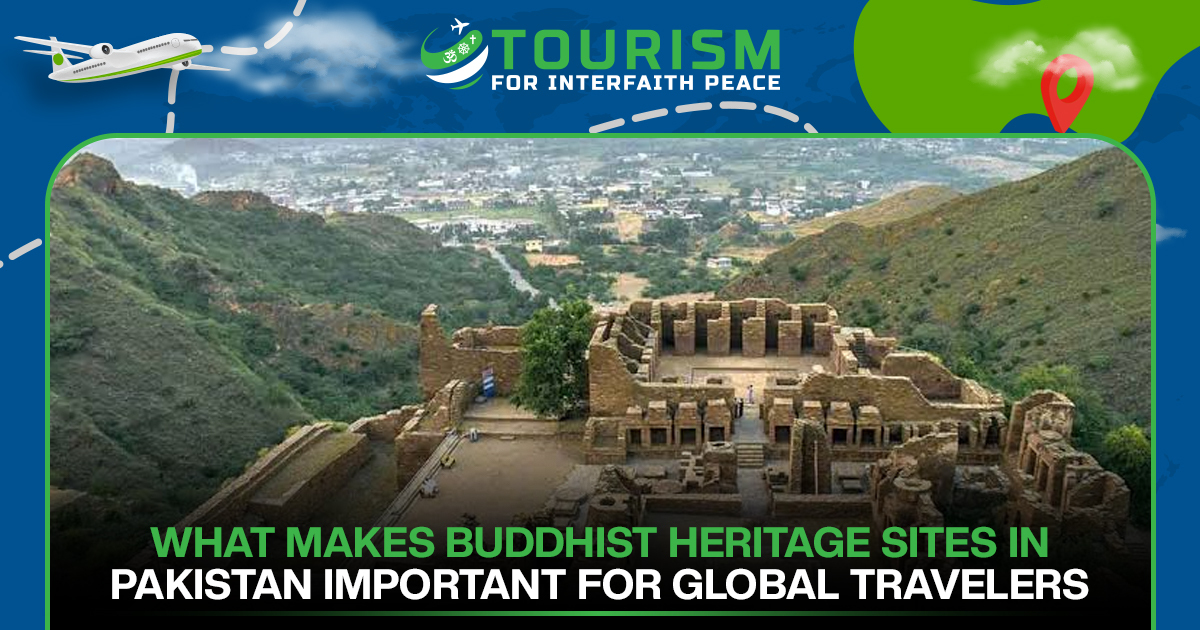
Located further north near Mardan in Khyber Pakhtunkhwa, Takht-i-Bahi is widely regarded as the most complete and best-preserved Buddhist monastery in Pakistan, recognized by UNESCO for its exceptional state of preservation. Positioned on a remote hilltop, the monastery survived centuries of regional upheaval largely because of its elevated, defensible location, allowing visitors today to see a monastic layout that remains unusually intact compared to sites at lower elevations.
Other Gandharan Archaeological Sites
Beyond these primary sites, the wider region holds dozens of smaller stupas, monastery remains, and city sites, including Sirkap’s Greek-grid streets, the Sirsukh city walls, and minor stupas at Badalpur and Bhamala. Each adds another layer to the picture of how thoroughly Buddhism once shaped daily life across this part of the subcontinent.
Why Buddhist Heritage Appeals to International Travelers
Travel motivations have shifted in recent years, and Pakistan’s Buddhist sites sit squarely within that shift.
- Cultural discovery: experiencing a civilization most travelers know little about, rather than a heavily marketed destination
- Historical exploration: walking through sites with direct, documented links to Alexander the Great, Emperor Ashoka, and the Kushan Empire
- Spiritual reflection: visiting active pilgrimage sites tied to the earliest centuries of Buddhist practice and relic veneration
- Archaeological significance: viewing some of the best-preserved Gandharan sculpture and monastic architecture anywhere in the world
- Educational value: connecting directly with the historical record left by pilgrim-scholars like Xuanzang
- Cross-cultural learning: encountering firsthand evidence of how Greek, Persian, Central Asian, and South Asian traditions blended into something distinct
For travelers who have already visited the major Buddhist sites of India or Nepal, Pakistan’s Gandharan heritage offers something genuinely different: a Buddhism expressed through a visibly Hellenistic artistic lens, found nowhere else in the Buddhist world at this scale.
Buddhist Tourism as a Bridge for Interfaith Understanding
Heritage tourism does more than move people between historical sites. Done well, it creates direct, personal encounters with belief systems and histories a traveler might otherwise only read about secondhand. That encounter is where
real interfaith tourism begins, not as an abstract diplomatic goal, but as the lived experience of standing inside a 2nd-century monastery and recognizing how much shared human history it represents.
Pakistan’s Buddhist sites carry particular weight in this regard precisely because they exist within a predominantly Muslim country that has chosen to preserve, excavate, and protect a non-Muslim religious heritage as a matter of national and cultural pride. That choice itself models the kind of respect for diverse belief systems that interfaith tourism aims to cultivate among travelers.
This is closely tied to why Pakistan’s diverse religious heritage is increasingly recognized as a distinct travel proposition. Buddhist stupas, Sufi shrines, Hindu temples, and Sikh gurdwaras coexist across the country’s archaeological and living religious landscape, offering travelers a single itinerary that spans multiple faith traditions rather than just one.
Visiting these sites with curiosity and respect, rather than treating them as backdrop photography, is itself a small act of cultural appreciation. Multiply that across thousands of travelers each year, and heritage tourism becomes a measurable, if quiet, contributor to peace-building through shared understanding rather than shared ideology.
Travelers planning a broader religious heritage circuit can review the full list of sacred sites across Pakistan to plan an itinerary spanning multiple regions and traditions in a single trip.
The Economic and Cultural Impact of Buddhist Tourism in Pakistan
Heritage tourism carries practical benefits for the communities living closest to these sites, beyond the cultural and spiritual value travelers take away.
Local Economic Benefits
Guides, transport operators, small hospitality businesses, and local artisans selling Gandharan-inspired crafts all benefit directly when international visitor numbers grow around heritage sites. Unlike large-scale industrial tourism, heritage tourism tends to distribute income across smaller, local operators rather than concentrating it in large resort chains.
Preservation Through Visibility
Sites that attract sustained visitor interest are generally easier to justify funding for conservation, security, and archaeological research. International attention has historically supported preservation efforts at sites like Takht-i-Bahi and the Taxila valley, helping protect structures that might otherwise face slower deterioration from neglect.
International Cultural Exchange and Community Empowerment
Each visiting scholar, pilgrim, or curious traveler represents a small exchange of perspective in both directions. Local communities gain exposure to international visitors and global interest in their regional history, while travelers leave with a more accurate, textured understanding of Pakistan than headlines alone typically provide. This is precisely the kind of exchange explored further in
how cultural experiences foster peace and understanding, which examines the broader mechanics of how travel reshapes perception at an individual level.
Why Pakistan Has Untapped Potential as a Global Buddhist Tourism Destination
The raw material for a major Buddhist heritage tourism sector already exists in Pakistan. What remains is the work of connecting that material to the travelers who would genuinely value it.
- Rich archaeological resources spanning multiple distinct historical periods within a single, geographically compact region
- Growing international interest in lesser-known heritage destinations as travelers seek alternatives to overcrowded, heavily commercialized sites
- Active heritage preservation efforts at UNESCO-listed sites, supported by both government departments and international archaeological partnerships
- Clear opportunities for responsible tourism growth that benefits local communities directly, rather than displacing them
Pakistan does not need to manufacture a Buddhist heritage story. It already has one of the most historically rich and architecturally intact collections of Gandharan Buddhist sites anywhere in the world. What it needs is sustained, responsible promotion that introduces this history to the travelers actively searching for exactly this kind of experience, and a tourism approach grounded in respect for the communities and heritage involved rather than extraction from them.
Frequently Asked Questions
Why are Buddhist heritage sites in Pakistan globally significant?
They preserve some of the world’s best-documented evidence of Gandharan Buddhist art and monastic life, including sites linked directly to Emperor Ashoka and recorded by historical Chinese pilgrim-scholars.
Which Buddhist sites in Pakistan attract international visitors?
Taxila, the Dharmarajika Stupa, Jaulian Monastery, Mohra Moradu, and Takht-i-Bahi are the primary sites drawing international travelers, researchers, and Buddhist pilgrims each year.
What is the connection between Gandhara and Buddhism?
Gandhara was a major center of Buddhist practice and art from roughly the 3rd century BCE to the 5th century CE, producing the distinctive Gandharan style that fused Buddhist subject matter with Greco-Roman sculptural realism.
Is Pakistan a Buddhist pilgrimage destination?
Yes. Pakistan hosts active Buddhist pilgrimage activity at sites like the Dharmarajika Stupa, where monks and pilgrims from countries including Sri Lanka periodically hold ceremonies connected to relics enshrined there.
How does Buddhist tourism promote interfaith understanding?
Visiting Buddhist heritage sites in a Muslim-majority country encourages direct, respectful engagement with a different faith tradition, modeling the kind of cross-cultural appreciation that interfaith tourism aims to build.
What makes Takht-i-Bahi different from other Gandharan sites?
Takht-i-Bahi is recognized by UNESCO as the most complete and best-preserved Buddhist monastery in Pakistan, largely due to its remote hilltop location, which protected it from much of the damage other sites experienced.
Are the Buddhist sites in Pakistan UNESCO World Heritage Sites?
Yes. Taxila and its associated Buddhist monasteries were inscribed as a UNESCO World Heritage Site in 1980, and Takht-i-Bahi received the same designation in the same year.
Can travelers visit multiple Buddhist sites in a single trip?
Yes. Taxila, Jaulian, and Mohra Moradu are located close together and can typically be visited within a single day, while Takht-i-Bahi requires a separate trip further north near Mardan.
What artifacts can visitors see from these sites?
The Taxila Museum displays thousands of Gandharan artifacts recovered from these sites, including Buddha relics, stone and stucco sculptures, coins, inscriptions, and relic caskets.
Is Buddhist heritage tourism in Pakistan growing?
Interest is gradually increasing as international travelers seek lesser-known cultural destinations, supported by ongoing preservation efforts and growing recognition of Pakistan’s role in Buddhist history.