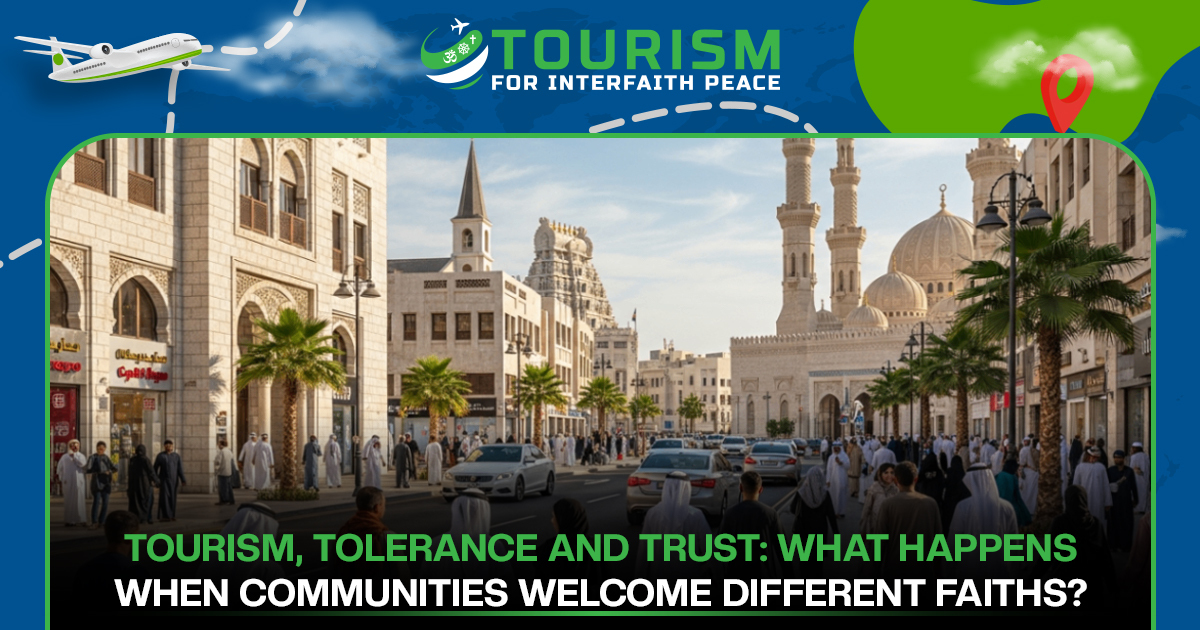
Most travel itineraries measure success by the number of sites visited. A different measure matters more in places where different faith communities live close together: whether a visitor leaves with a better understanding of a neighbor they never met. Tourism, at its best, is not only a transaction between a guest and a destination. It is a series of small, unscripted interactions that shape how people from different backgrounds see one another.
| Tourism builds tolerance and trust through repeated, positive contact between visitors and local communities of different faiths — not through sightseeing alone. Research on intergroup contact shows that direct interaction reduces prejudice more reliably than information shared secondhand. Pakistan’s Sikh, Hindu, Sufi, Buddhist, Christian, and Kalash heritage gives it an existing foundation for interfaith tourism, if communities are included in how it is shared. |
Why Tourism Can Build More Than Memories
In regions with layered religious history, tourism can stay at the surface, limited to photographs and souvenirs, or it can open a door into genuine cultural understanding. The difference depends less on the sites themselves and more on how communities choose to welcome the people who visit them. A shrine visited in silence, with no exchange between guest and host, teaches a visitor very little beyond its architecture. The same shrine, visited with a conversation about why it matters to the people who care for it, becomes something closer to an introduction between communities.
How Meeting Different Faiths Builds Understanding
Research on intergroup contact has long shown that sustained, positive interaction between people from different backgrounds reduces prejudice more effectively than information alone. Reading about a community is not the same as hearing its call to prayer in person or being invited to share tea after visiting its place of worship. Tourism creates exactly this kind of contact, provided it goes beyond a guided tour with no exchange in either direction.
When a visitor speaks with a caretaker at a gurdwara or a family running a guesthouse near a shrine, the encounter replaces assumptions with a specific, human impression. That impression tends to be harder to dislodge than a headline, because it is grounded in a real conversation rather than secondhand information.
The Connection Between Tourism, Tolerance and Trust
Tolerance grows in specific, remembered moments more than in abstract appeals for coexistence. A local guide who explains the significance of a religious site with visible respect, regardless of their own faith, models a kind of trust that visitors carry home. Trust also runs in the other direction: communities that host visitors from different backgrounds, and see that hospitality returned with respect rather than intrusion, become more willing to open further.
This is why tourism and peacebuilding are often discussed together in research on diverse societies — not because travel resolves conflict on its own, but because repeated, respectful contact lowers the suspicion that often separates communities with little other reason to interact.
Pakistan’s Cultural and Religious Diversity as a Tourism Opportunity
Pakistan carries religious heritage that spans several traditions in close proximity: Sikh pilgrimage sites such as Kartarpur, Hindu temples across Sindh, centuries-old Sufi shrines throughout Punjab, Buddhist archaeological remains in Taxila and Swat, and living Christian and Kalash communities with their own festivals and customs. This layered history is frequently treated as a historical footnote rather than a present-day tourism asset.
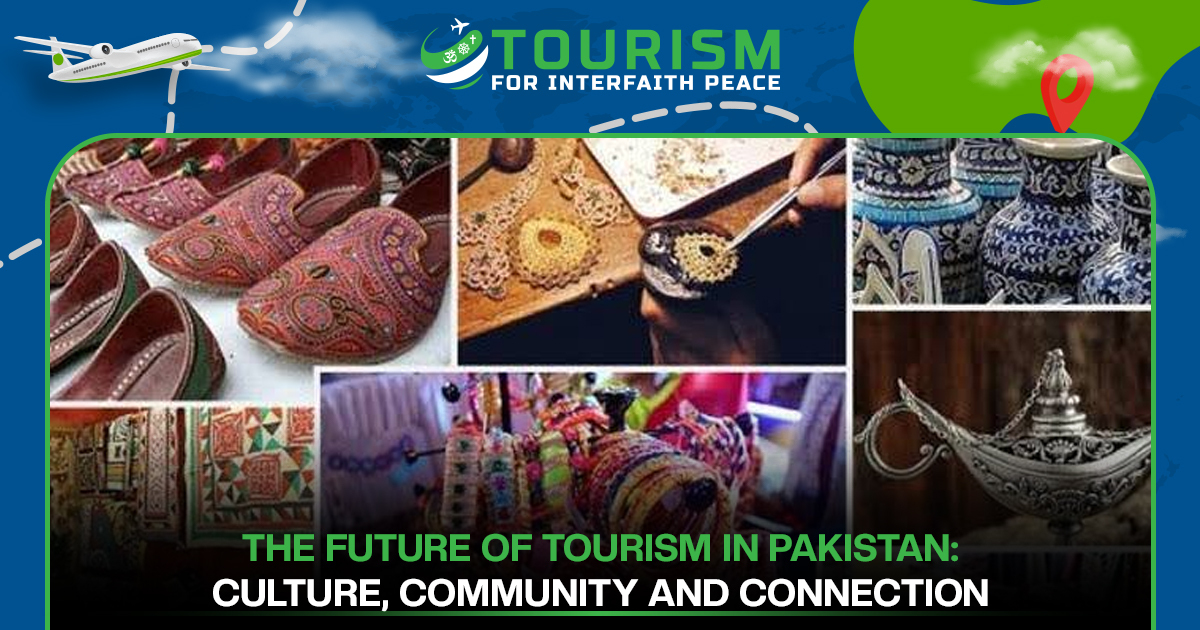
Treated deliberately, it is the opposite: a reason for visitors and domestic travelers alike to encounter more than one tradition within a single trip. “The Future of Tourism in Pakistan: Culture, Community and Connection“ looks at how community-centered planning could shape the sector’s direction going forward, including this kind of layered heritage.
Interfaith tourism in this context does not require ranking one community’s story above another. It requires presenting each site and each community accurately, with the people who belong to that tradition involved in how their heritage is shared, rather than as a backdrop for someone else’s narrative.
How Communities Can Create More Inclusive Tourism Experiences
Inclusive tourism starts with who is included in planning it. Heritage sites tied to a specific faith are represented most accurately when members of that community help shape how visitors are welcomed and what is explained. Clear signage that outlines etiquette before a visitor enters a place of worship makes a meaningful difference on its own.
Guides drawn from the local community, rather than only from outside operators, add context that an outsider cannot. Homestays and guesthouses that let visitors experience daily life, instead of a staged performance of it, do more for understanding than a formal tour ever could.
“How Pakistan Can Turn Cultural Diversity Into a Tourism Strength“ explores practical models for making this kind of diversity a deliberate asset rather than an overlooked detail in national tourism planning.
Responsible tourism in an interfaith setting also means protecting the privacy of worshippers, scheduling visits around active religious use of a site rather than around it, and being honest with visitors about which spaces are open to outsiders and which are not.
From Visitors to Connections: The Long-Term Impact of Interfaith Tourism
The value of a single visit is limited. The value of tourism as a channel for interfaith understanding comes from repetition, at both ends of the relationship. A community that regularly hosts visitors from different backgrounds develops a working familiarity with people it might not otherwise interact with. A visitor who returns, or who tells others what they experienced, extends that familiarity outward.
Some of the more durable outcomes are practical rather than symbolic: guesthouse owners who build multi-year relationships with return travelers, local guides who become informal cultural liaisons, heritage sites that gain sustained community investment because tourism revenue depends on their upkeep. This does not happen through a single festival or campaign. It happens when interfaith contact becomes a routine part of how a place does tourism, rather than an occasional feature of it.
Conclusion: Welcoming Differences, Building Trust
Tourism does not resolve religious or cultural tension on its own, and treating it as a complete solution oversells what a visit can do. What it can do, reliably, is create the specific, repeated, human contact that makes tolerance easier to sustain and trust easier to build. For a country with as much religious and cultural layering as Pakistan, that contact is already available in its shrines, temples, churches, and heritage towns. What determines whether it becomes a source of understanding is whether communities are supported and included in deciding how their heritage is shared, and whether visitors are given the chance to meet people, not just monuments.
Frequently Asked Questions
What is interfaith tourism?
Interfaith tourism refers to travel and hospitality experiences that bring visitors into contact with religious heritage sites and communities from more than one faith tradition, aimed at building genuine understanding rather than simple sightseeing.
How does tourism build tolerance between different faith communities?
Tourism builds tolerance by creating repeated, positive contact between people from different backgrounds. A guided conversation at a shrine or a stay with a local family replaces assumptions with a specific, remembered impression of another community.
What role does religious heritage play in promoting peace?
Religious heritage sites give visitors a concrete starting point for learning about a tradition. When local communities are involved in presenting that heritage accurately, the sites function as spaces for understanding rather than only as tourist attractions.
How can Pakistan’s diversity become a tourism strength?
By presenting its Sikh, Hindu, Sufi, Buddhist, Christian, and Kalash heritage accurately, and involving each community in how their sites and traditions are shared with visitors, rather than treating this diversity as a secondary detail.
What makes tourism “responsible” in an interfaith context?
Responsible interfaith tourism protects the privacy and religious use of active worship sites, includes community members in planning visitor experiences, and gives visitors accurate context instead of a simplified or staged version of a tradition.