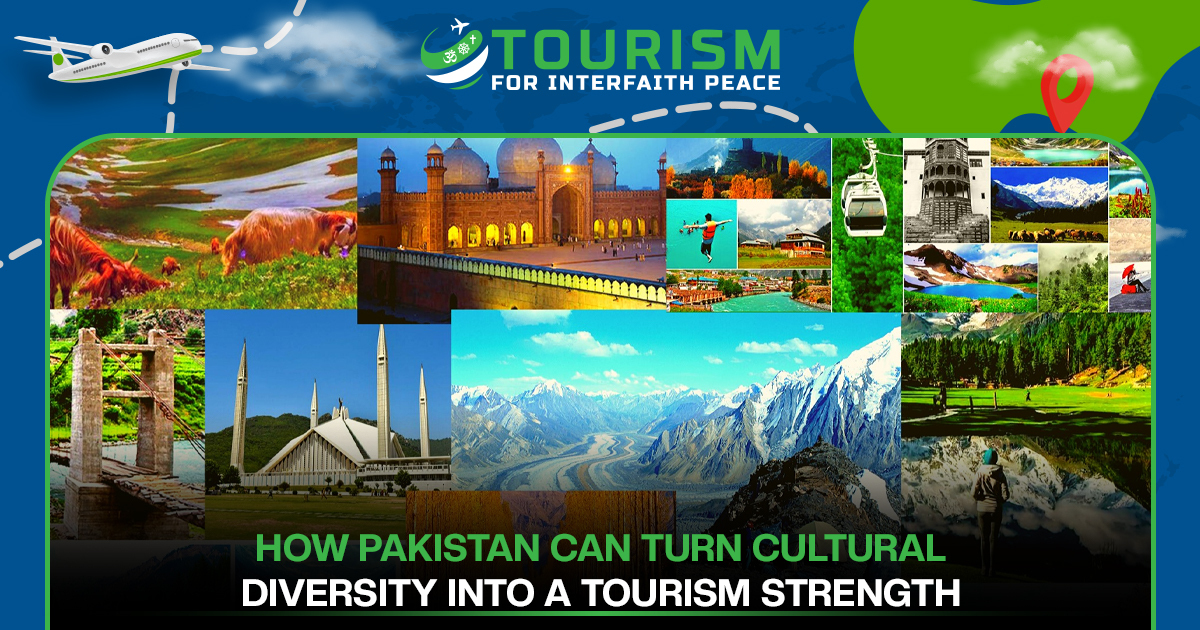
Pakistan’s tourism conversation tends to start with mountains, for good reason. But mountains alone don’t explain why a traveler would spend a week getting to know a place instead of just photographing it. What does is the layered mix of languages, faiths, regional traditions, and histories that exist across the country, often within a single day’s drive of each other. Cultural diversity in Pakistan isn’t a footnote to its tourism potential — handled with care, it’s one of the strongest reasons to visit at all.
Why Pakistan’s Diversity Matters for Tourism
Pakistan is home to multiple linguistic communities, regional cultures, and religious traditions, including Islamic, Hindu, Sikh, Christian, Buddhist-era, and Kalasha heritage represented across its provinces and historic sites. That range shows up in architecture, festivals, food, and daily life in ways a typical sightseeing trip barely scratches.
Tourism in Pakistan has often been marketed around scenery first, culture second. That ordering undersells what’s actually here. Cultural tourism in Pakistan works best when it’s framed as an invitation to understand a place through its people and history, not just observe it from a viewpoint. A traveler who visits a Sikh gurdwara, walks through the ruins at Taxila, or shares a meal in a Kalasha village in Chitral comes away with something a landscape photo can’t capture.
Turning Diversity Into Meaningful, Responsible Tourism
Religious tourism in Pakistan and interfaith tourism in Pakistan share a common foundation: they work when visits are guided by respect and local knowledge, not curiosity treated as spectacle. A visit to a shrine, church, temple, or mosque means something different when someone who understands its significance to the people who use it is doing the explaining, rather than a checklist.
This is where responsible tourism in Pakistan becomes practical rather than aspirational: tourism revenue reaching the shopkeepers, guides, and craftspeople near a heritage site, not just the operators bringing visitors there; visitor numbers at fragile sites staying within what the site can sustain; and local communities having a say in how their history is represented, instead of having that story told for them.
Cultural heritage tourism in Pakistan also depends on preservation staying ahead of visitor interest, not behind it. Sites with genuine historical weight — ancient trade routes, centuries-old places of worship — need consistent maintenance and thoughtful visitor management to remain intact for the communities who value them. Tourism’s potential to do more than bring money into a country is really a question about whether that balance gets struck deliberately or left to chance.
None of this requires ranking one tradition against another or treating diversity as a curiosity to be consumed. Tourism and cultural diversity work together when a visit is designed around listening rather than comparing, letting each community’s history stand on its own terms.
What Meaningful Travel Looks Like in Practice
A trip built around meaningful travel in Pakistan looks different from a standard itinerary: time spent with local hosts, guides drawn from the communities being visited, and enough flexibility to follow a conversation instead of rushing to the next stop. What actually separates meaningful travel from ordinary sightseeing comes down to this kind of genuine contact — the difference between seeing a place and understanding it.
Tourism and interfaith understanding grow out of exactly this kind of contact. A traveler who spends an afternoon at a shrine or gurdwara with someone willing to explain what it means to their community tends to leave with fewer assumptions and more specific memories, the opposite of a rushed group tour.
Where This Leaves Pakistan’s Tourism Potential
Pakistan’s tourism potential is often measured by how many people visit. A more useful measure is what those visits leave behind: local income that stays local, heritage sites still standing for the next generation, and travelers who understand more about the communities they passed through. That’s the tourism worth building toward, where cultural diversity isn’t scenery in the background but the reason the trip mattered.
FAQs
Why is cultural diversity important for tourism in Pakistan?
It gives travelers genuine reasons to engage with different communities, faiths, and histories, rather than experiencing a destination only through its landscapes.
What is interfaith tourism, and how does it work in Pakistan?
Interfaith tourism involves visiting sites connected to different religious traditions with respect and local guidance, encouraging understanding rather than comparison between beliefs.
How does responsible tourism support local communities in Pakistan?
It keeps tourism income circulating locally, involves communities in how their heritage is represented, and manages visitor numbers so sites and traditions aren’t degraded by overcrowding.
What makes travel in Pakistan “meaningful” rather than just sightseeing?
Genuine contact with local people and traditions, guided by curiosity and respect, that leaves travelers with real understanding rather than just photographs.