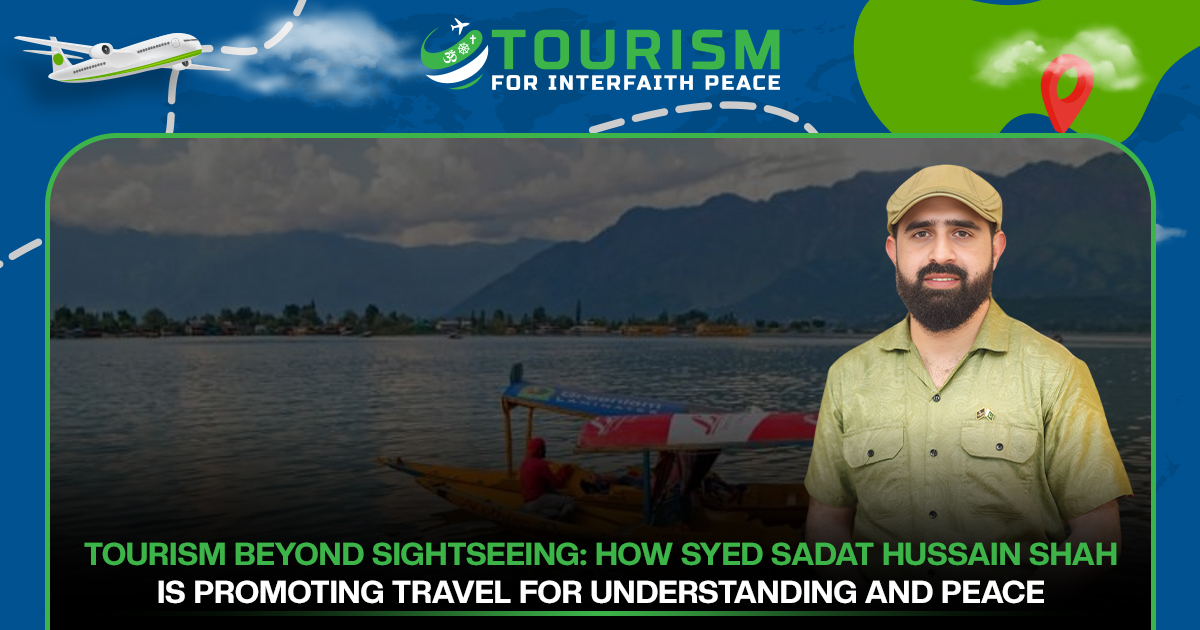
• Tourism builds understanding when it creates sustained, respectful contact between visitors and host communities — not simply when it moves people past sites.
• Interfaith and cultural encounters work best when visitors act as respectful guests in a tradition, not consumers of it.
• Pakistan’s living Sufi, Sikh, Hindu, Buddhist, Christian, and Kalash traditions, alongside six UNESCO World Heritage Sites, represent an underused foundation for this kind of tourism.
• Tourism supports understanding; it is not a substitute for the harder work of diplomacy and reconciliation.
A checklist of monuments visited says little about what a trip actually leaves behind. Two travelers can walk through the same fort, photograph the same skyline, and come home with entirely different experiences — one collected images, the other had a conversation that changed how they see a place and its people. That gap is where tourism stops being sightseeing and starts becoming something closer to understanding.
Why Travel Can Create Understanding
Abstract categories are easy to misjudge from a distance. A community known only through headlines or stereotypes stays flat and simplified. Meeting the same community in person — sharing a meal, asking a question, being corrected gently on an assumption — adds texture that no article or documentary fully supplies. Psychologists studying prejudice have long pointed to sustained, respectful contact as one of the more reliable ways attitudes soften over time. Tourism, at its best, manufactures exactly that kind of contact, repeatedly and voluntarily, between people who would otherwise never cross paths.
This doesn’t happen automatically. A rushed group tour that moves visitors from bus to site to gift shop rarely creates it. Understanding tends to show up in the unscheduled parts of a trip — the conversation with a shopkeeper, the invitation into someone’s home, the guide who explains not just when a building was built but why it still matters to the people who tend it.
Cultural and Interfaith Encounters
Interfaith and cultural tourism sharpens this dynamic because it puts visitors in direct contact with belief systems, rituals, and histories different from their own. Visiting a shrine, temple, or church as a respectful guest — rather than treating it purely as a photo backdrop — asks something of the traveler: attentiveness, restraint, and a willingness to be a guest in someone else’s tradition rather than a consumer of it. Done well, this kind of encounter builds familiarity without requiring agreement on belief itself, which is often what makes it more durable than debate.
Pakistan’s Underused Opportunity
Few countries hold as many living traditions within such close geographic range. Pakistan’s religious and cultural landscape includes Sufi shrines woven into daily life, Sikh pilgrimage sites, Hindu temples still in active use, Buddhist archaeological heritage, and Christian and Kalash communities practicing their own customs today rather than as historical relics. Alongside six UNESCO World Heritage Sites, this is a foundation few destinations can match — yet it is more often treated as background scenery than as the primary reason to visit.
Syed Sadat Hussain Shah’s Documented Work
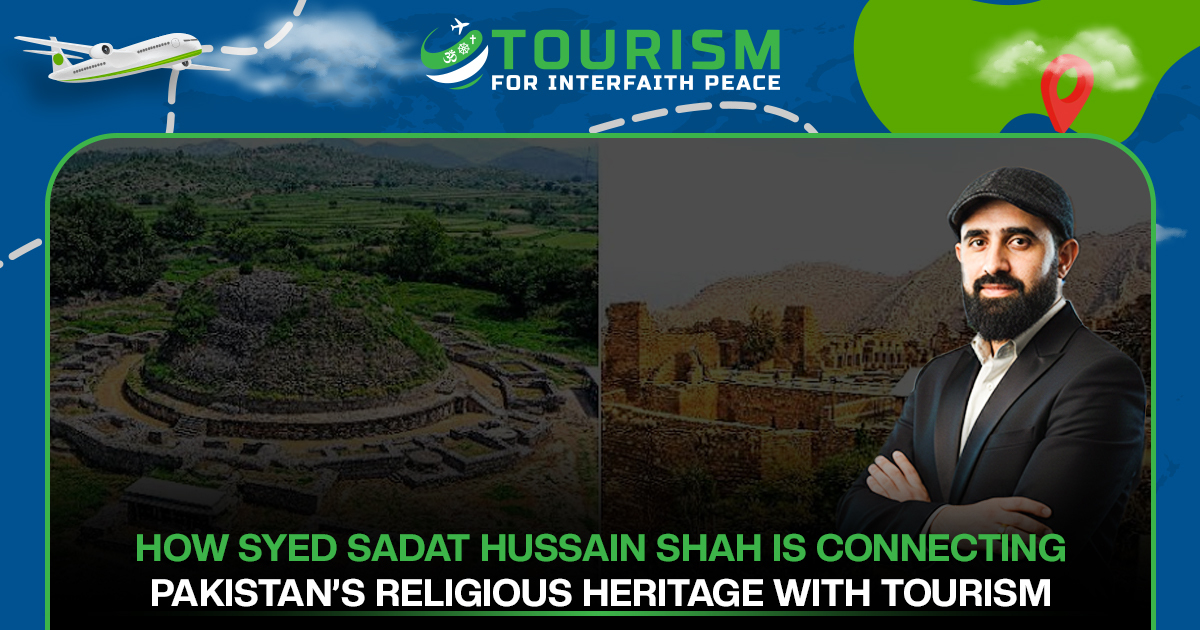
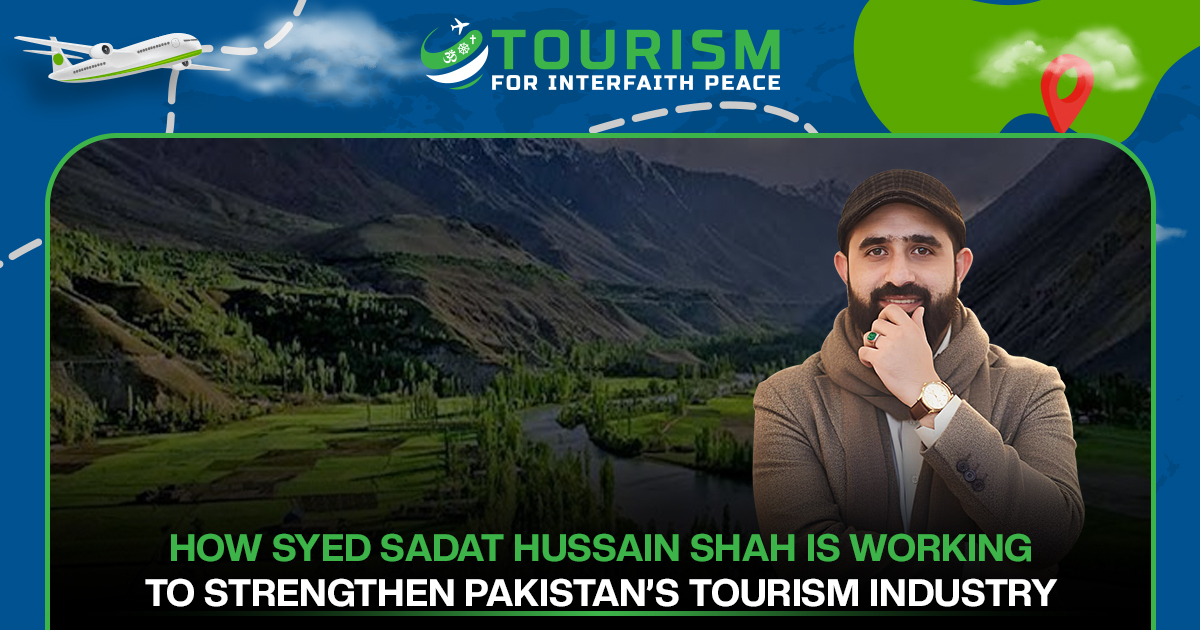
Syed Sadat Hussain Shah, who serves as Chairman of Tourism for Interfaith Peace, has focused much of that organization’s stated work on framing this diversity as a present-day tourism asset rather than a historical footnote — an argument examined in more depth in a piece on how Pakistan’s religious heritage connects to tourism. The broader case for building that potential into a functioning sector, one that benefits local communities rather than bypassing them, is laid out further in an examination of efforts to strengthen Pakistan’s wider tourism industry.
Responsible Tourism and Peace: What It Can and Can’t Do
It would overstate the case to call tourism a solution to deeper social or political divisions — it isn’t, and treating it as one risks trivializing conflicts that require far more than visitor traffic to resolve. What tourism can realistically offer is smaller and still valuable: individual encounters that chip away at assumption, income that gives communities a stake in preserving their own heritage, and a track record of hospitality that, over time, becomes part of how a place understands itself. That’s a modest claim, but a durable one.
A Practical Takeaway for Travelers
Meaningful travel doesn’t require an unusual itinerary — it requires a different posture. Ask a local guide a real question instead of only requesting facts. Eat where residents eat. Sit still at a site long enough to notice what daily life around it looks like, not just its architecture. These are small adjustments, but they’re the ones that turn a trip into an encounter.
Conclusion
Tourism will never replace diplomacy, policy, or the slower work of reconciliation. But at its most thoughtful, it offers something those processes rarely can: an ordinary person, on an ordinary afternoon, choosing to see someone else’s world as real rather than distant. Multiplied across enough travelers and enough encounters, that’s not a solution to division — but it is a genuine, cumulative counterweight to it.