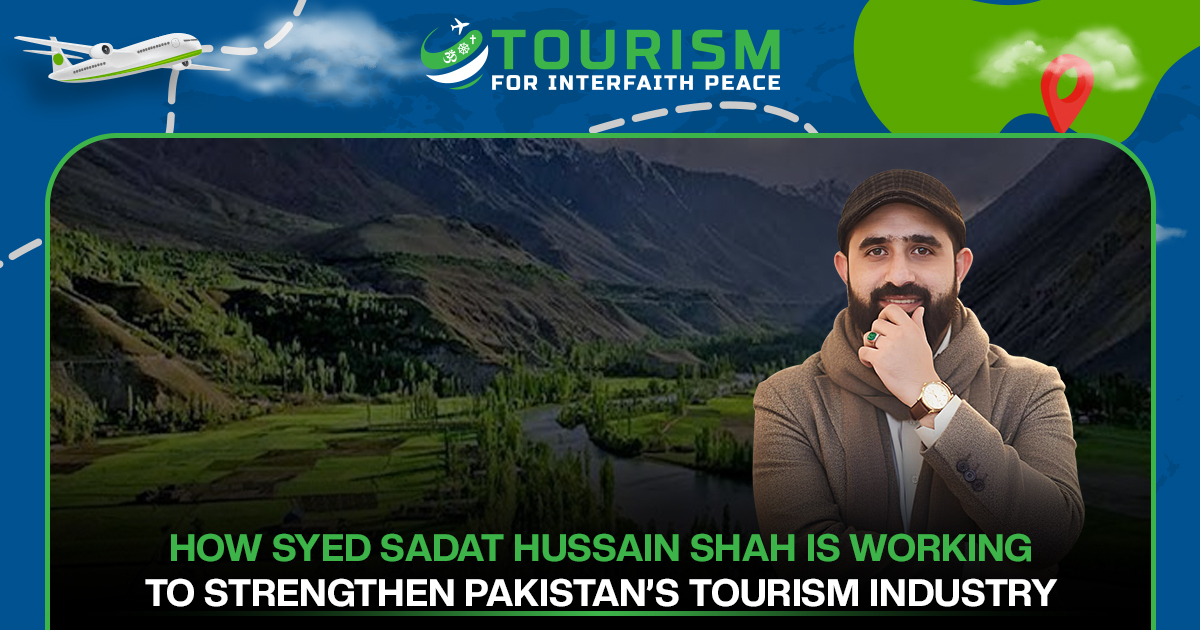
- Syed Sadat Hussain Shah’s work in Pakistan’s tourism sector, through Tourism for Interfaith Peace, centers on community engagement, interfaith trust, and treating cultural and religious diversity as a present-day tourism asset rather than a historical footnote.
- Pakistan’s tourism opportunities include six UNESCO World Heritage Sites and living Sikh, Hindu, Sufi, Buddhist, Christian, and Kalash traditions; the challenge is ensuring local communities participate in and benefit from how that heritage is shared.
- Sustainable, responsible tourism depends on local guides, homestays, and community-led planning — not infrastructure or visitor numbers alone.
Pakistan’s tourism sector holds a mix of assets rarely found together in one country: mountain ranges, ancient river civilizations, and religious heritage spanning Islamic, Hindu, Sikh, Buddhist, Christian, and Kalash traditions. Converting that mix into a sector that benefits local communities, rather than one that simply counts visitor numbers, is a harder problem than most tourism campaigns acknowledge. Syed Sadat Hussain Shah’s work, through his involvement with Tourism for Interfaith Peace and broader interests in real estate and community development, is oriented around exactly that harder problem: building tourism that strengthens trust between communities rather than treating heritage as a photo opportunity.
Pakistan’s Tourism Opportunities and Challenges
Pakistan’s tourism potential is well documented: six UNESCO World Heritage Sites, from Moenjodaro’s Indus Valley ruins to Lahore’s Mughal-era Fort, alongside northern valleys, coastal areas, and centuries of Buddhist, Sufi, Sikh, and Hindu heritage still visible in shrines and living traditions. The challenge has less to do with what exists and more to do with how it is presented. Heritage sites tied to minority faith communities are often treated as historical footnotes rather than present-day cultural assets, and tourism development in many regions has prioritized infrastructure over the communities who would host and benefit from visitors.
Community Engagement and Local Participation as a Foundation
A recurring theme in Syed Sadat Hussain Shah’s approach to tourism development is that communities should be participants in planning, not scenery for visitors to observe. Local guides, homestay hosts, and artisans understand a place’s context in ways an outside operator cannot replicate, and tourism income distributed across these smaller local businesses tends to support a place more directly than revenue concentrated in large, self-contained resorts. This view treats community-based tourism not as an add-on to a national strategy but as one of its more durable foundations — a model where local participation determines whether tourism growth strengthens a place or extracts from it.
Trust, Tolerance, and Interfaith Tourism
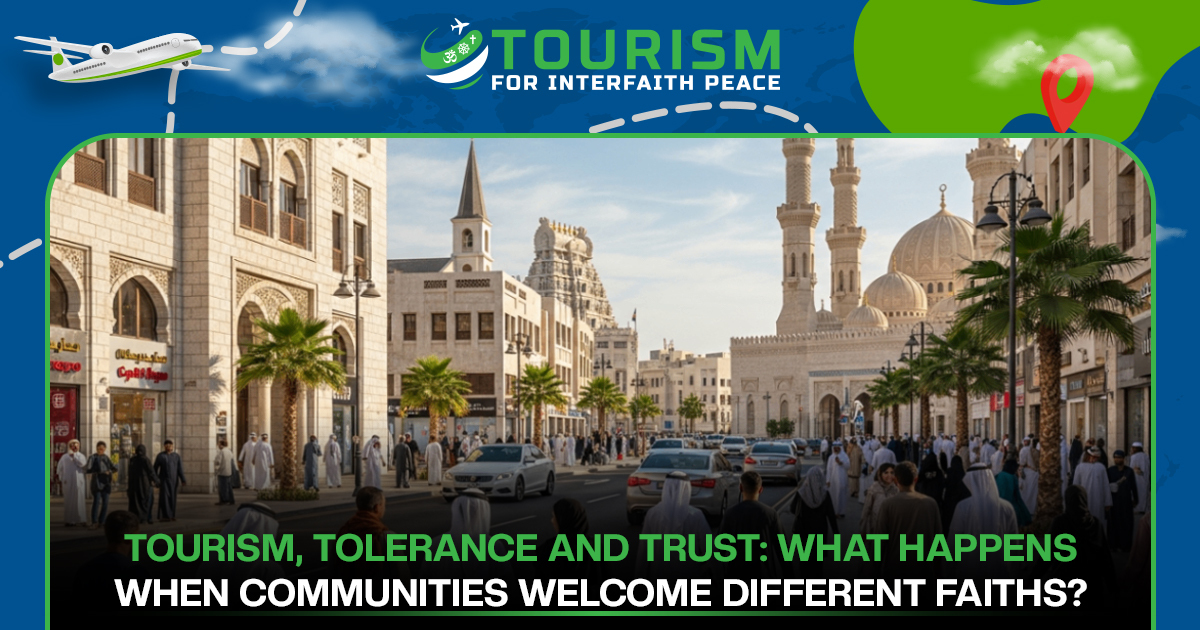
Much of this thinking comes together most clearly around interfaith tourism, where the question is not only how to attract visitors but how to build genuine understanding between communities of different faiths. As explored in “tourism, tolerance and trust: what happens when communities welcome different faiths?”, tourism builds tolerance through repeated, respectful contact — a conversation with a shrine caretaker or a stay with a local family — rather than through sightseeing alone. Syed Sadat Hussain Shah’s work with Tourism for Interfaith Peace reflects this framing: Pakistan’s Sikh, Hindu, Sufi, Buddhist, Christian, and Kalash heritage is treated as a present-day tourism opportunity, provided each community is involved in how its own traditions are shared with visitors.
Cultural Understanding as an Economic and Social Asset
Cultural tourism, done responsibly, channels income toward the people who sustain a tradition — the cooks, craftspeople, and guides who keep it active — rather than toward its packaging alone. This is where cultural understanding and economic opportunity intersect directly: a visitor who eats at a family-run restaurant, hires a local guide, and buys a handmade craft distributes value across a community in a way that scenery alone cannot. Framing tourism this way connects cultural preservation to local livelihoods, rather than treating the two as separate concerns.
Responsible and Sustainable Tourism Development
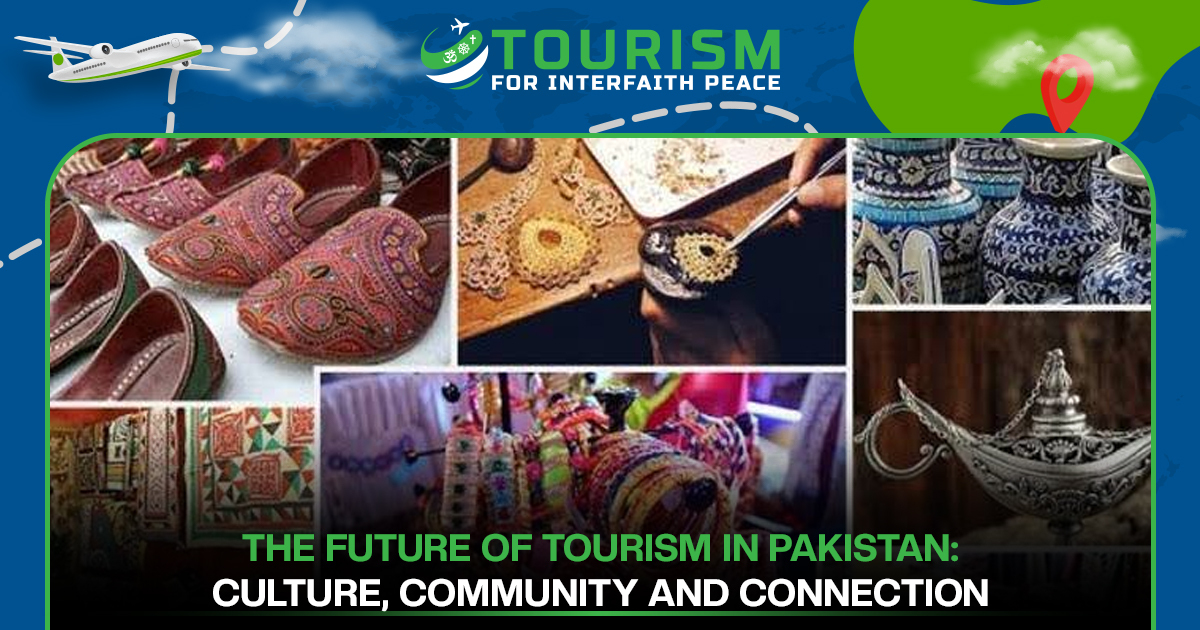
Sustainable tourism, in this framing, means development that gives back to a destination’s environment and communities at least as much as it takes — balancing visitor growth against preservation and long-term cultural health. Infrastructure and accessibility matter, but they support genuine tourism experiences rather than substitute for them. This is consistent with the broader direction laid out in “the future of tourism in pakistan: culture, community and connection”, which frames Pakistan’s tourism future as one measured by connection between visitors and places, not simply by arrival numbers.
Conclusion: Tourism as a Bridge, Not Just an Industry
None of this is a claim that Pakistan’s tourism challenges are solved, or that any single individual’s work resolves them. What Syed Sadat Hussain Shah’s involvement in this space represents is a consistent argument: that Pakistan’s cultural and religious diversity, treated with genuine community participation and responsible planning, can become a bridge rather than a backdrop. Tourism, approached this way, connects visitors to people rather than only to places, channels economic opportunity toward the communities closest to a destination, and builds the kind of trust between different faiths and backgrounds that a country as layered as Pakistan has every reason to draw on.
Frequently Asked Questions
What is the current state of Pakistan’s tourism industry?
Pakistan holds six UNESCO World Heritage Sites and a wide range of natural and cultural attractions, but its tourism sector still faces challenges around infrastructure, community participation, and how minority heritage is presented to visitors.
Why does interfaith tourism matter for Pakistan?
Pakistan’s Sikh, Hindu, Sufi, Buddhist, Christian, and Kalash heritage gives it a foundation for interfaith tourism that builds understanding through direct, respectful contact between visitors and communities, rather than through sightseeing alone.
How does community participation support sustainable tourism?
When local guides, homestay hosts, and artisans are included in planning and hosting, tourism income is distributed locally and heritage sites are represented more accurately than when outside operators manage the experience alone.
What role does trust play in tourism development?
Trust grows through repeated, positive interaction between visitors and host communities. It is what allows tourism to strengthen relationships between different cultural and religious groups rather than remaining a one-way transaction.