| Key Takeaways Interfaith travel is travel motivated by visiting sites significant to more than one faith, or by experiencing how different religious communities coexist in one region. Standing inside a community’s sacred space tends to change assumptions faster than reading about that community ever does. Compassion, hospitality, and service show up across faith traditions in remarkably similar form, without requiring any doctrinal comparison. Responsible interfaith travel — cultural sensitivity, respectful dress, supporting local communities — is what allows tourism to build peace rather than simply pass through it. |
I used to think I understood other cultures reasonably well. I had read about them, watched documentaries, formed opinions I was fairly confident in. Then I stood inside a place of worship that was not my own, watched a stranger welcome me with an ease that owed nothing to my background, and realized how much of what I thought I understood had only ever come from a distance.
That gap between reading about a tradition and standing inside it is, I have come to believe, where interfaith travel does its real work. It does not just show you a new place. It quietly rearranges what you thought you already knew.
Travel Teaches What Books Alone Cannot
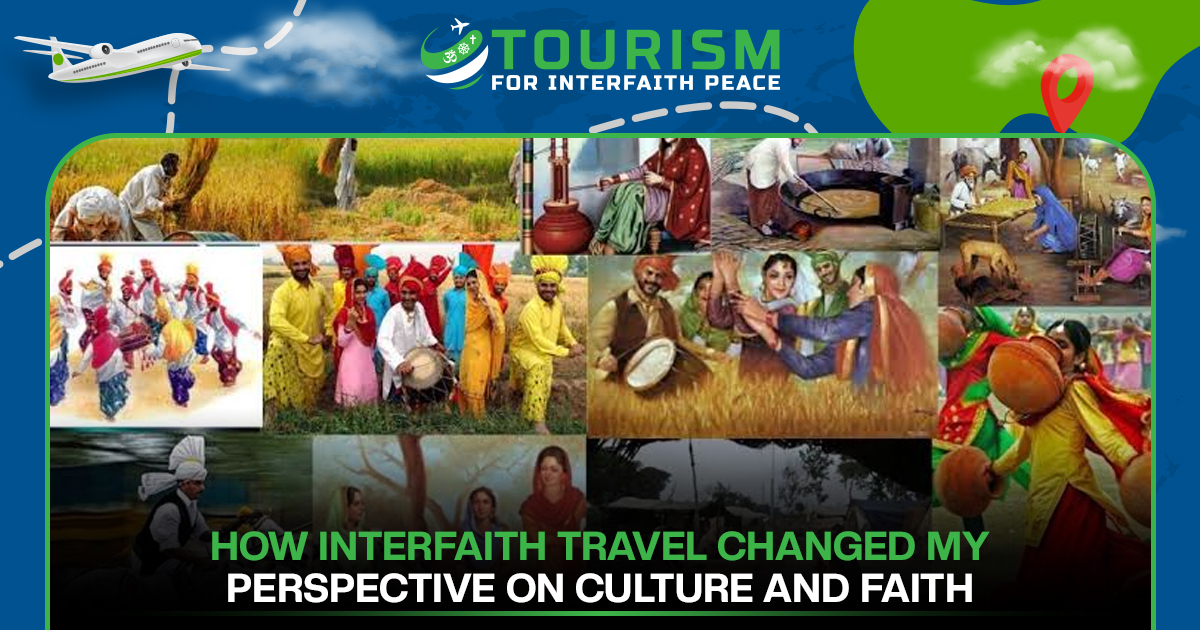
Books can describe a festival. They cannot recreate the sound of it, the particular way a community moves through a shared space, or the small, unscripted kindness of someone offering you tea before they know your name. Firsthand experience carries a kind of detail that secondhand description simply cannot hold.
This is not an argument against reading — context and history matter, and preparation makes a visit more meaningful, not less. But there is a specific kind of understanding that only forms through presence: the moment a stereotype you did not fully know you were carrying meets a real person who does not fit it. Interfaith tourism creates that moment more reliably than almost any other form of travel, because it puts visitors directly inside the daily and sacred life of a community rather than observing it from outside.
Discovering Shared Values Across Different Faiths
What surprised me most, across different sacred sites and different communities, was not how different people’s beliefs were. It was how consistently the same values surfaced, expressed differently, everywhere I went. Hospitality toward a stranger. Care for the poor. Reverence for something larger than the self. A quiet emphasis on service.
I want to be careful here, because the point is not to compare theology or suggest that different faiths are interchangeable. They are not, and that is not what this observation is about. The point is simpler and, I think, more useful: compassion, kindness, and respect are not owned by any single tradition. Seeing them expressed across many communities, in their own distinct language and ritual, does more to build common ground than any argument about doctrine ever could.
How Interfaith Travel Builds Cultural Understanding
Understanding rarely arrives through a single grand realization. It builds through small, accumulated moments — a conversation with a local guide about why a particular gesture matters, a shared meal that turns into an hour of unplanned conversation, a festival that makes more sense once you have seen the preparation that goes into it rather than just the celebration itself.
Architecture teaches its own lessons, too. The way a building orients itself toward light, or toward a specific direction, or toward a communal gathering space, tells you something about a community’s priorities that no caption ever fully captures. Storytelling, passed down by people who have inherited it rather than studied it, carries a texture that written history often smooths away. Food does something similar — a shared meal has a way of dissolving formality faster than a formal introduction ever could.
Communities that host this kind of travel benefit as well. Interfaith tourism creates real economic opportunities for local communities, supporting guides, artisans, and family-run guesthouses whose livelihoods are tied directly to visitors arriving with genuine curiosity rather than passing through.
Why Responsible Interfaith Tourism Matters
None of this works if travel is careless. Responsible interfaith tourism starts with basic respect: dressing appropriately for a sacred space, following local customs even when they are unfamiliar, and asking before taking a photograph rather than assuming it is welcome.
- Respecting sacred places as living spaces of worship, not backdrops for a photo.
- Dressing and behaving in a way that honors the customs of the community you are visiting.
- Supporting local businesses and guides rather than routing spending through outside operators.
- Asking permission before photographing people, rituals, or private moments.
- Approaching unfamiliar practices with curiosity rather than judgment.
Responsible tourism also protects the heritage that makes these journeys possible in the first place. Sites that see steady, respectful visitor traffic are more likely to secure the funding and attention needed for preservation, while sites treated carelessly tend to erode, both physically and in the trust local communities place in outside visitors.
Building Peace One Journey at a Time
Tourism is often discussed purely as an economic activity, and it is that. But interfaith travel, done thoughtfully, is something more: a low-key, repeatable form of peacebuilding that happens one conversation, one shared meal, one moment of genuine curiosity at a time.
Dialogue built this way tends to be more durable than dialogue built in formal settings, because it happens without an agenda. A visitor and a host are not negotiating anything. They are simply present with each other, and that presence, repeated across enough journeys and enough communities, is what gradually builds empathy, coexistence, and mutual respect at a scale that policy alone struggles to reach.
This is especially visible outside major cities. The social benefits of interfaith travel for rural areas extend well beyond income, giving communities new reasons to document and take pride in traditions that might otherwise fade quietly out of memory.
Conclusion
Interfaith travel changed how I see other cultures, but it changed something else too, more quietly: how I see myself, and how much of what I assumed I understood had never actually been tested by presence. That is, I think, the real gift of this kind of travel. It asks less of the destination and more of the traveler.
If there is one thing worth carrying into your next journey, let it be curiosity paired with humility — a willingness to be corrected, to sit with unfamiliar customs without rushing to explain them, and to let a place teach you something a book never could. Traveling this way, tourism stops being simply a way to see the world and becomes, in its own modest way, a way to help build a more peaceful one.
Frequently Asked Questions
What is interfaith travel?
Interfaith travel is travel motivated by visiting sites significant to more than one faith tradition, or by experiencing firsthand how different religious communities live and coexist in one region.
How does interfaith tourism promote peace?
It creates repeated, informal contact between visitors and host communities — shared meals, conversations, and moments at sacred sites — that tends to build empathy and dismantle stereotypes more effectively than formal dialogue alone.
What are the benefits of interfaith tourism?
Benefits include deeper cultural understanding, support for local economies and heritage preservation, and stronger relationships between visitors and host communities, alongside the broader goal of building tolerance and mutual respect.
Why is responsible interfaith travel important?
Responsible travel protects sacred sites, respects local customs, and ensures tourism revenue benefits the communities being visited, which is what allows interfaith tourism to build trust rather than erode it.
How does cultural tourism build understanding?
Firsthand experience — conversations, shared meals, participation in local traditions — creates a depth of understanding that reading or watching from a distance cannot fully replicate.