Interfaith tourism brings visitors to shared or adjacent sacred sites across faith traditions. For the communities around those sites, it means direct spending on lodging, food, transport, and crafts — plus longer-term jobs in guiding, hospitality, and heritage conservation that wouldn’t exist otherwise.
What Is Interfaith Tourism?
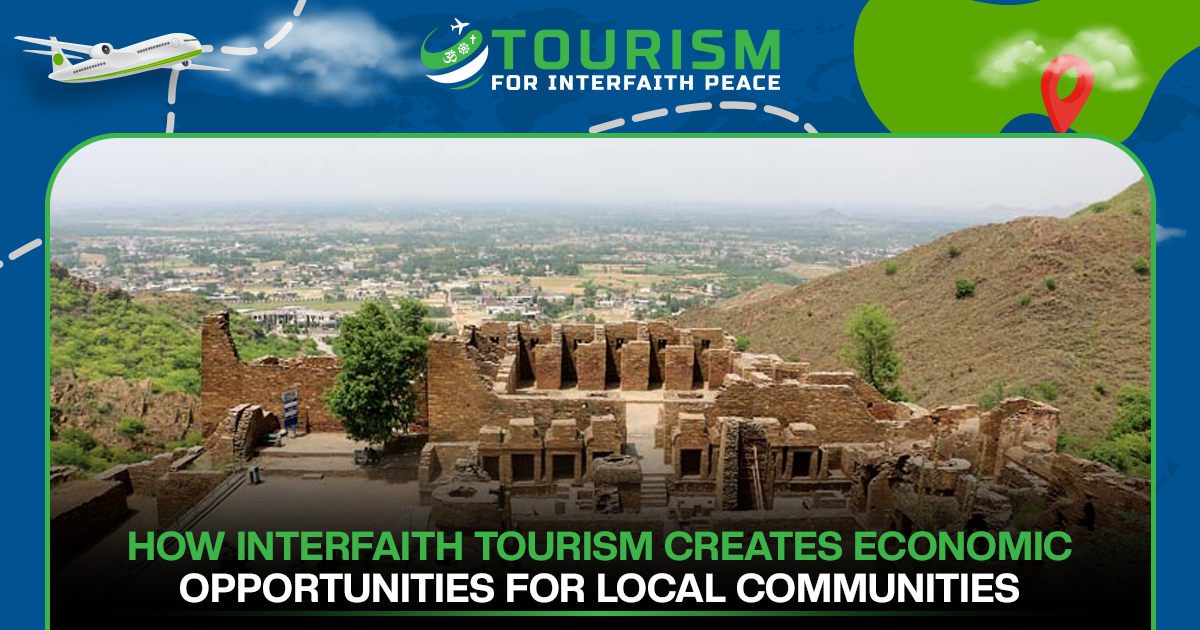
It’s travel motivated by visiting sites significant to more than one faith, or by experiencing how different religious communities coexist in one region. The Kartarpur Corridor, connecting Sikh pilgrims to Gurdwara Darbar Sahib, and Pakistan’s Buddhist heritage at Taxila and Takht-i-Bahi are clear examples — sites with meaning that extends beyond a single tradition or audience.
Why It Matters
Most tourism economics research treats religious travel as a subset of cultural tourism. UN Tourism data has long shown pilgrimage and faith-based travel among the most resilient segments of the industry — visitor numbers hold up even when general leisure travel dips, because the motivation isn’t discretionary in the same way a beach holiday is.
Economic Benefits for Local Communities
| Benefit | How It Shows Up Locally |
|---|---|
| Direct spending | Guesthouses, transport, food stalls near sites |
| Employment | Guides, site staff, drivers, artisans |
| Entrepreneurship | Small vendors, homestays, craft sellers |
| Infrastructure | Roads, sanitation, signage upgrades |
| Preservation funding | Site maintenance tied to visitor revenue |
Supporting Small Businesses and Jobs
Around a functioning pilgrimage site, the businesses that benefit most aren’t large hotel chains — they’re family-run guesthouses, food vendors, and local transport operators. This is where interfaith tourism differs from mass tourism: visitor numbers are steadier and spending is more distributed across small operators rather than concentrated in a few large properties.
Women, Youth, and Local Entrepreneurship
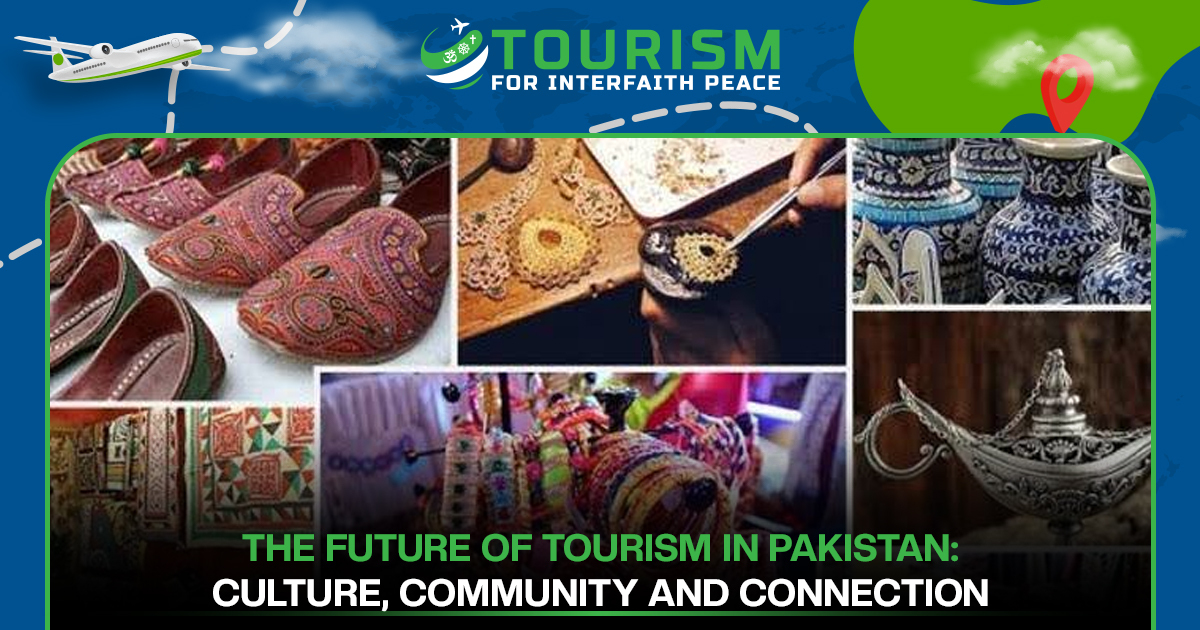
Craft markets and hospitality roles around heritage sites are frequently where women and young people find their first formal income opportunities in otherwise limited local job markets. Training programs tied to site management — guiding, language skills, hospitality standards — tend to have durable community effects beyond the immediate tourism revenue.
Heritage Preservation and the Local Food and Craft Economy
Visitor revenue creates a direct financial argument for preserving sites that might otherwise be neglected. Katas Raj Temples and Nankana Sahib both illustrate this: restoration investment tends to follow sustained visitor interest, not the other way around. The same dynamic supports local food traditions and craft production, which stay economically viable only when there’s demand to sustain them.
Global Examples
- Jerusalem — a single city drawing visitors across three major faiths, with a tourism economy built around that overlap.
- Spain — the Camino de Santiago route sustains an entire corridor economy of small towns along its path.
- Jordan — heritage and religious sites anchor a tourism sector that extends well beyond Petra.
- Indonesia and Nepal — Buddhist and Hindu heritage tourism supports rural communities with few other income sources.
Pakistan’s Potential
Pakistan holds an unusually dense concentration of interfaith heritage — Sikh, Buddhist, Hindu, and Islamic sites often within a few hours of each other. The Kartarpur Corridor demonstrated that cross-border pilgrimage access, done well, can generate sustained local economic activity around a single site. Extending that model to Taxila, Takht-i-Bahi, and Katas Raj is largely a question of infrastructure and visitor access, not lack of heritage significance.
Challenges and Solutions
- Fragmented infrastructure — solved through phased public-private investment tied to visitor corridors.
- Limited local business capacity — solved through hospitality and guiding training programs.
- Inconsistent site access — solved through predictable visa and travel policy for pilgrimage routes.
Best Practices for Sustainable Interfaith Tourism
- Keep revenue local by prioritizing community-owned businesses over outside operators.
- Fund preservation directly from visitor revenue, not as an afterthought.
- Train residents first, before importing outside guides and staff.
- Track visitor numbers against community income, not just arrivals.
FAQs
What is interfaith tourism?
Travel to sites significant to more than one religious tradition, or to regions where different faith communities and their heritage coexist. It’s distinct from single-faith pilgrimage tourism in that its appeal spans multiple audiences.
How does interfaith tourism create local jobs?
Through direct roles in guiding, hospitality, and site maintenance, and indirect roles in transport, food service, and craft production that scale with visitor numbers around a site.
Why is the Kartarpur Corridor a good example?
It connects cross-border pilgrims to a single site with clear, managed access, and has shown how streamlined visitor access translates into sustained local economic activity.
Does interfaith tourism help preserve heritage sites?
Yes. Visitor revenue often funds the maintenance and restoration that under-visited heritage sites otherwise struggle to secure.