Tourism brings money into a place. Whether it reaches the people who live there decides if it counts as development. A coach party that eats at an out-of-town chain and buys souvenirs made elsewhere leaves behind traffic and little else.
This article looks at how tourism can support community development, where it goes wrong, and how Tourism for Interfaith Peace (TIP), an Islamabad-based organization, approaches the link. It sticks to what TIP has published, which is mostly a framework, not results.
Why tourism should benefit communities
UN Tourism defines sustainable tourism as tourism that accounts for its present and future economic, social and environmental impacts while serving visitors, the industry, the environment and host communities. Its guidance adds that benefits should be fairly distributed, including stable jobs and income for hosts. The logic runs in a chain:
Tourism → Visitors → Local economic activity → Community opportunities → Heritage preservation → Cultural understanding → Sustainable development
Each arrow is a condition, not a guarantee. Visitors create local economic activity only if they hire, eat, stay and buy locally.
How tourism creates local economic opportunities
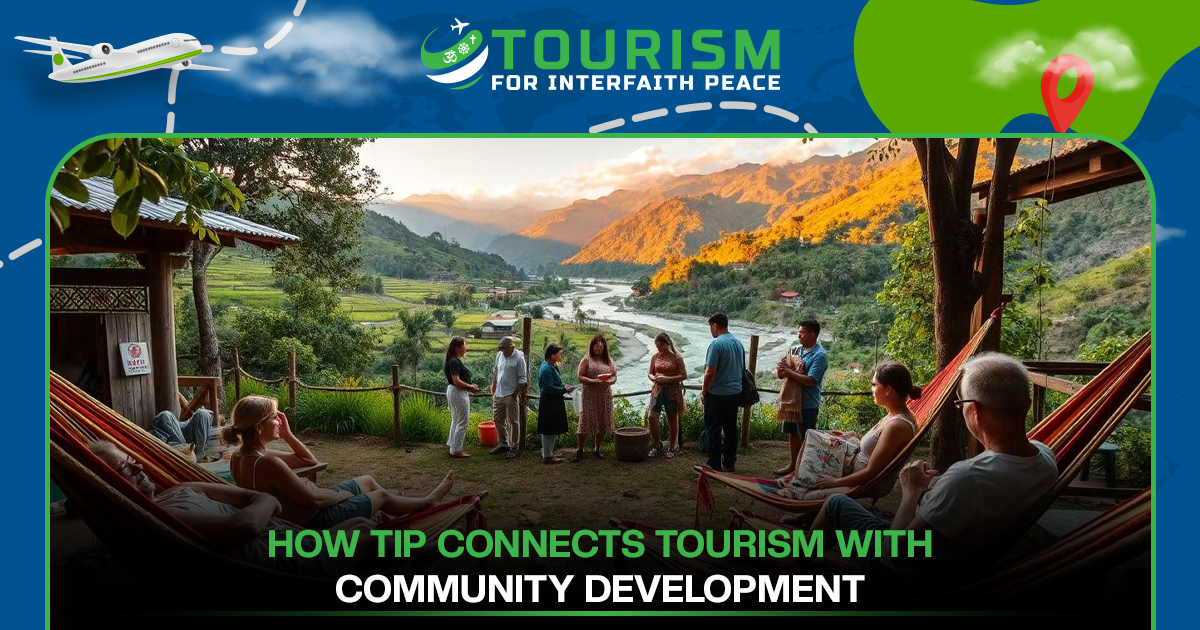
Visitors need guides, transport, food and lodging. That demand can reach local guides, transport providers, artisans, small hospitality businesses and site caretakers. UN member states have encouraged sustainable and cultural tourism investment that includes small businesses and access to finance for local communities. The key word is “can”: when visitors book distant operators and fees vanish into general budgets, the same numbers bring far less local benefit.
Tourism and heritage preservation
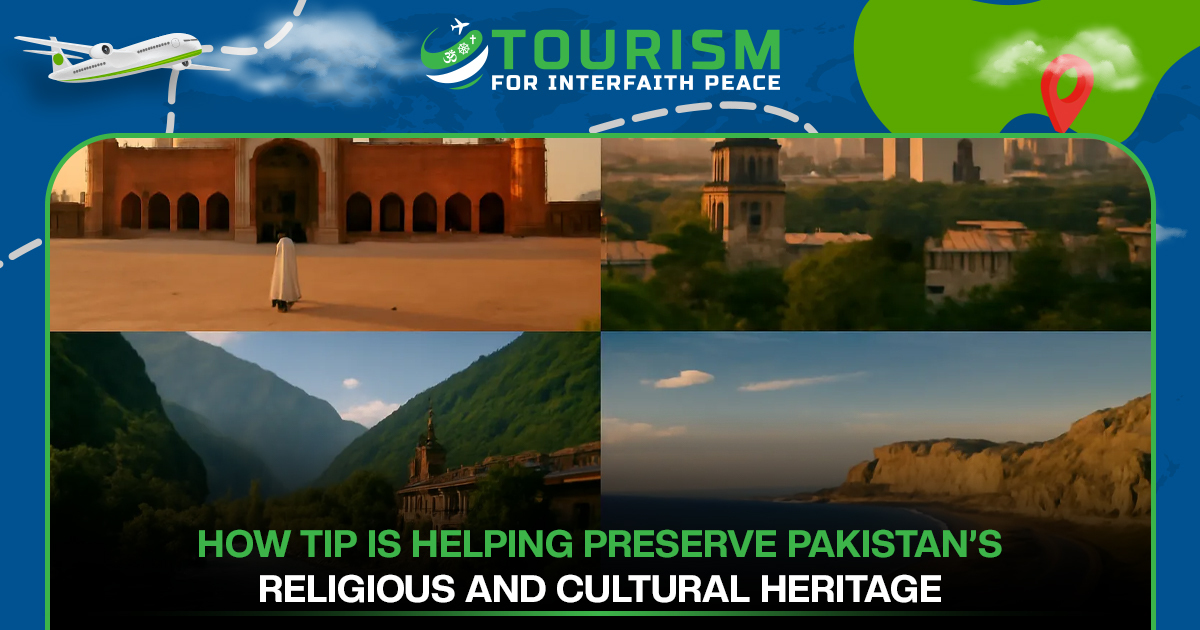
UNESCO lists six cultural properties for Pakistan, including Taxila, Makli and Rohtas Fort. Beyond them are Buddhist, Sikh, Hindu, Jain, Christian and Islamic sites, including Kartarpur, where a pilgrim corridor opened on 9 November 2019. Many are in daily use, so preservation affects living communities, not only old buildings.
Tourism does not preserve heritage on its own. Conservation, funding, policy and community participation do most of it. As TIP’s piece on preserving Pakistan’s religious and cultural heritage notes, a private endowment trust has restored parts of Nagarparkar and UNESCO has sent a monitoring mission to Makli; neither depends mainly on visitor counts. Tourism adds attention and, when well managed, income that gives local people a reason to protect a site.
TIP’s documented approach to tourism and community development
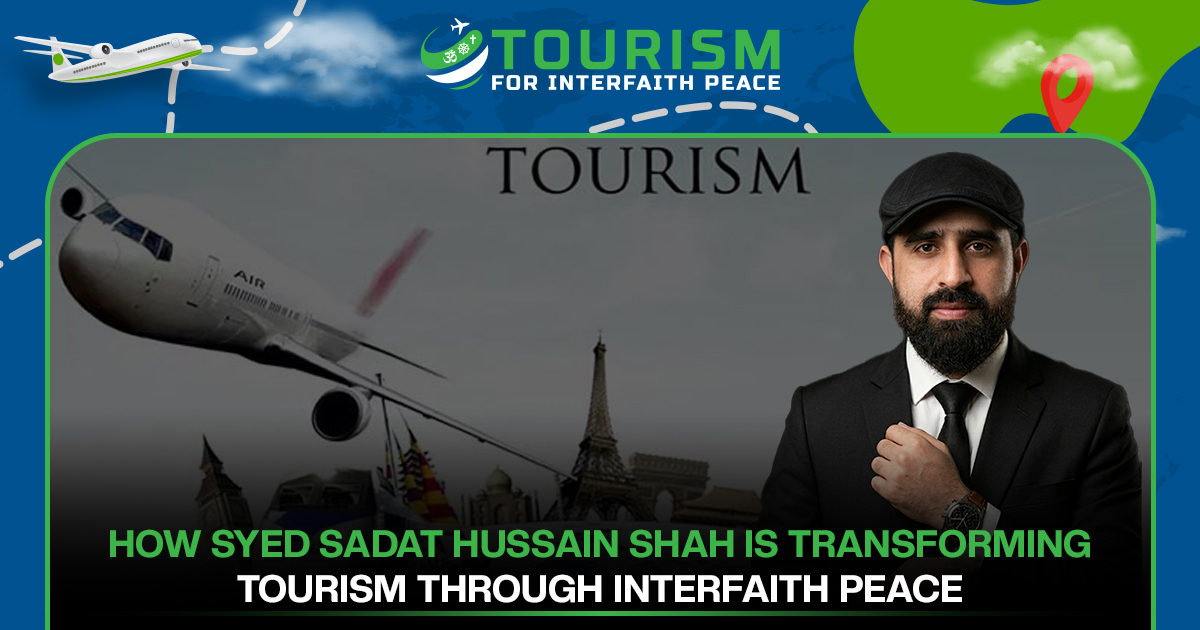
TIP’s About page describes its mission as building bridges across religious and cultural boundaries through sustainable tourism, supporting local communities and creating opportunities for economic growth and cultural preservation. It says it designs journeys to sacred and historic sites and hosts events, interfaith dialogues and workshops. Syed Sadat Hussain Shah is listed as CEO, and his documented role and vision are covered in a separate article.
The practical thinking is in TIP’s articles. Its guide to developing interfaith tourism through religious heritage proposes a sequence: conserve before promoting, interpret living practice with custodian communities, improve access and manage visitor numbers. For communities, TIP recommends training guides from custodian communities, including minority communities, buying locally and publishing how entry fees are spent. These echo the 2015 Bethlehem Declaration on religious tourism, which favors inclusive models where custodians and host communities take part and share the benefits.
One limit should be stated plainly. TIP has not published participation figures, outcome data or conservation projects. What it has documented is advocacy and awareness, and the community measures above are recommendations, not reported results.
The role of interfaith and cultural tourism
TIP’s working idea is that understanding between faiths usually begins with proximity, not debate. Standing in a space that matters to someone else and hearing a caretaker explain it asks nothing of a visitor’s own beliefs. Hinglaj Mata in Lasbela is honored by Hindus and by some local Muslims, who call the deity Nani Pir. UN Tourism’s sustainability goals include contributing to intercultural understanding, so the aim is mainstream. Whether it works at scale is untested.
Challenges: over-tourism, commercialization and who gets a say
Academic work on destination governance notes that religious tourism has become commercialized and that managing sacred sites takes more than marketing. Over-tourism hits small sites first, and worship spaces get treated as photo backdrops. Community participation is the hardest to get right: asking a caretaker for comment after the signage is written is not participation. Capacity limits, quiet hours during worship, custodian guides and clear dress and photography rules help. No single body can do it all; government, religious institutions, heritage organizations and operators each hold part.
Practical lessons for responsible tourism development
- Protect first, promote second. Check a site’s condition and secure upkeep funding before marketing it.
- Make local spending easy and visible: local guides, locally owned lodging, local artisans, published fee use.
- Write signage and guide scripts with custodians, not for them.
- Measure results. Claims of community benefit need numbers, and that applies to TIP too.
- As a traveler, read up first, follow caretakers’ guidance and ask before photographing worship.
Conclusion
Tourism becomes community development when the income and the decisions stay close to the people who live with a site. TIP’s published contribution is a clear argument for that sequence plus practical recommendations. What it still owes readers is evidence: named projects, participation figures, outcomes. Until then the argument is plausible but unproven.
Frequently asked questions
How does tourism support community development?
Visitors spend on guides, transport, food, lodging and crafts, so income can reach local people. The benefit depends on hiring and buying locally and on fees being spent visibly.
What is sustainable tourism?
UN Tourism describes it as tourism that accounts for its economic, social and environmental impacts, now and later, while serving visitors, the industry, the environment and host communities.
How does tourism help preserve religious heritage?
It brings attention and income, but preservation also needs conservation work, funding, policy and community participation. Tourism helps most when revenue is shared and spent on upkeep.
What does Tourism for Interfaith Peace do?
TIP says it designs journeys to sacred and historic sites and hosts events, interfaith dialogues and workshops. Its stated aims are peace, cultural preservation and support for local communities. It has not published outcome data.
Can religious tourism harm heritage sites?
Yes, if handled carelessly. Overcrowding and treating active worship spaces as backdrops can damage what a site means. Capacity limits, custodian guidance and community involvement reduce the risk.