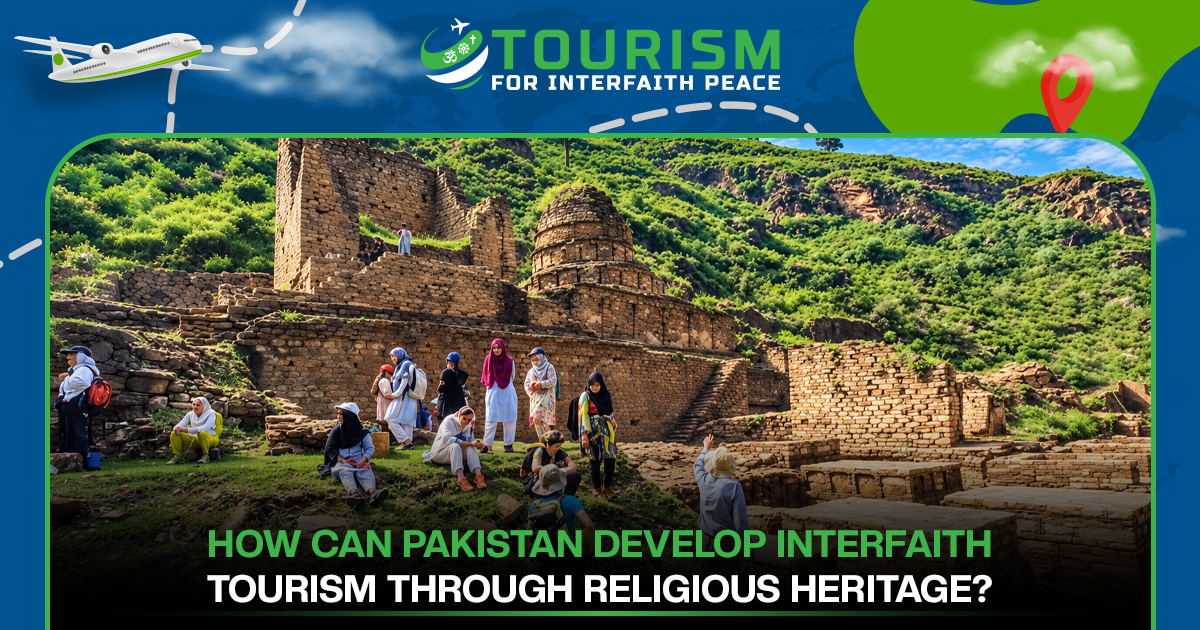
Pakistan can develop interfaith tourism by protecting its religious heritage first and promoting it second. Preservation makes responsible tourism possible. Responsible tourism brings income to local communities, and communities that benefit have reasons to keep sites open and cared for. Understanding between faiths tends to follow, because visitors meet each tradition through the people who live it.
Facts below come from cited sources. Anything phrased as a suggestion is a recommendation, not an established result.
What religious heritage does Pakistan have?
Pakistan has six cultural properties on the UNESCO World Heritage List, including Takht-i-Bahi, Taxila, the monuments at Makli, and Rohtas Fort. Beyond that list, every major tradition is represented:
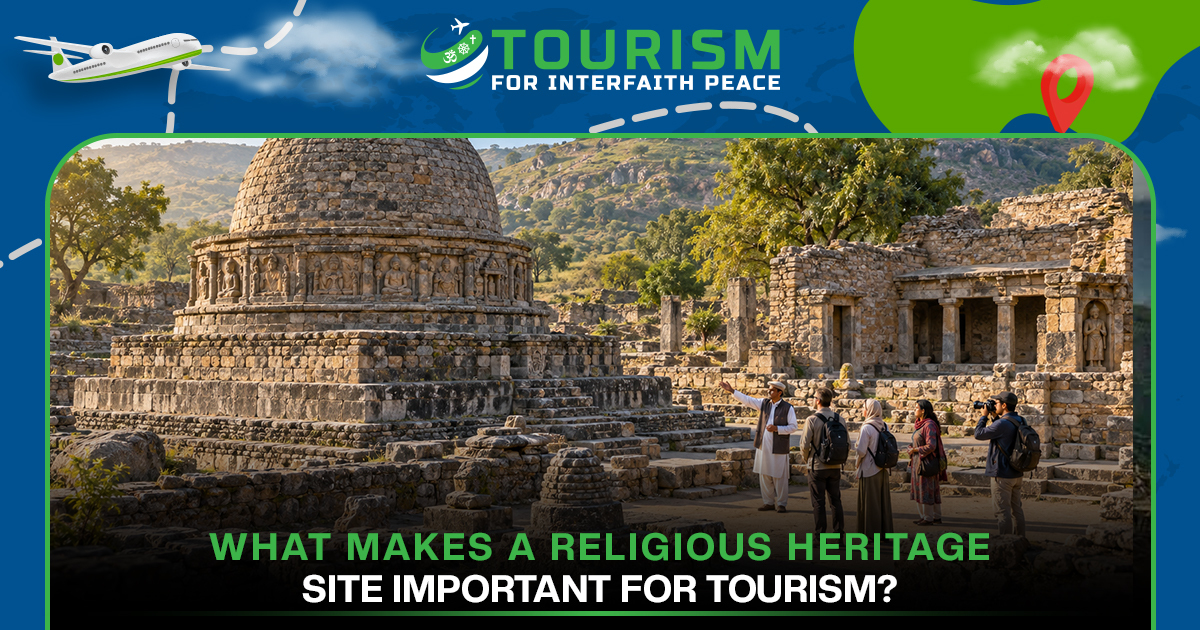
- Buddhist: The monastery at Takht-i-Bahi was founded in the 1st century CE and used until the 7th century. The Jaulian monastery at Taxila dates to the 2nd century CE.
- Sikh: Gurdwara Darbar Sahib Kartarpur is in Narowal District, and the Kartarpur Corridor to it opened on 9 November 2019. Guru Nanak was born in Nankana Sahib in 1469.
- Hindu: Katas Raj is a temple complex in the Salt Range of Punjab. Hinglaj Mata in Lasbela is also revered by some local Muslims, who call the deity Nani Pir.
- Jain: Around 14 Jain temples stand near Nagarparkar, most built between the 12th and 15th centuries, and the area was submitted to UNESCO’s tentative list in 2016.
- Christian: Lahore’s Cathedral Church of the Resurrection was consecrated in 1887, and St Patrick’s Cathedral in Karachi was erected in 1881.
- Islamic: Makli and Rohtas Fort are both on the UNESCO list.
How does religious heritage encourage interfaith understanding?
It creates proximity. TIP’s article on why a religious heritage site matters for tourism argues that understanding usually starts by standing in a space that matters to someone else and hearing a caretaker explain it, not by debating belief.
Several sites already show shared reverence. Hinglaj is honored by Hindus and some Muslims. Guru Nanak is believed to have visited Katas Raj.
What does responsible development require?
Recommendation: Follow this sequence.
- Conserve before promoting. Assess each site’s condition and secure maintenance funds before visitor numbers rise. Precedents exist. The Endowment Fund Trust for the Preservation of the Heritage of Sindh has restored parts of Nagarparkar with private funding. UNESCO has also sent a monitoring mission to Makli.
- Interpret living practice. Write signage and train guides, in Urdu and English, together with custodian communities. Present each site as a place of current worship, not a relic.
- Improve access. Nagarparkar is remote and best reached by car, so roads, sanitation, shade and clear directions matter.
- Manage numbers. Set capacity limits and keep quiet hours during worship.
How can local communities benefit?
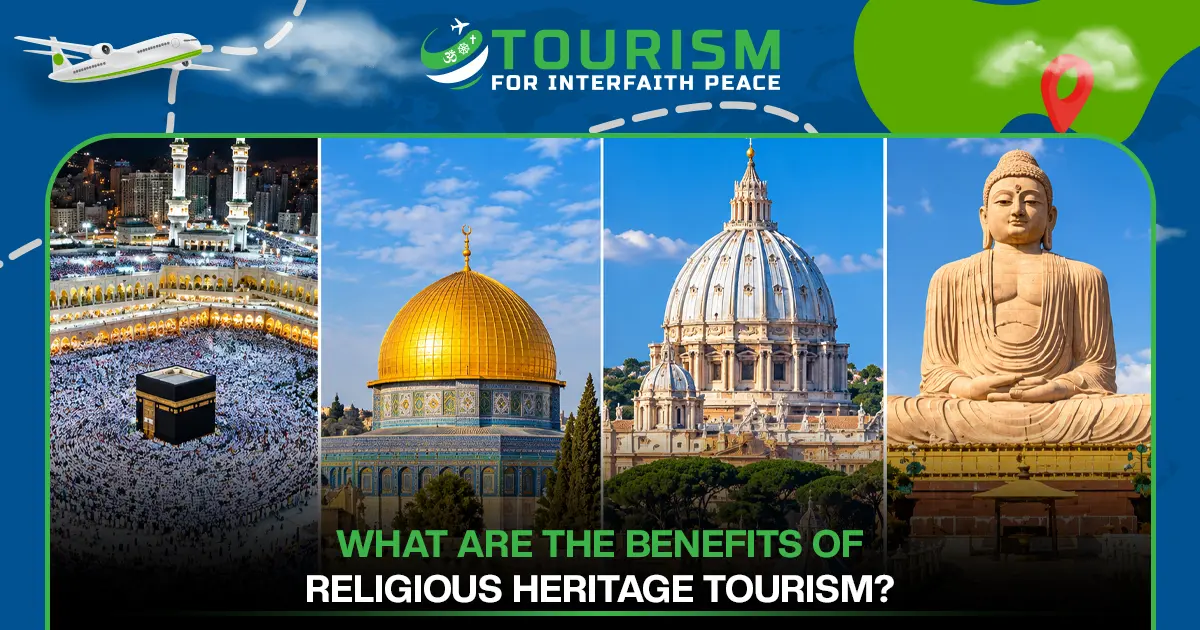
Visitors need guides, transport, food and lodging. TIP’s piece on the benefits of religious heritage tourism shares this view. Elsewhere TIP observes that this income can reach artisans, small hospitality businesses and caretakers directly, giving them a stake in protecting the site.
Recommendation: Train guides from custodian communities, including minority communities. Buy locally, and publish how entry fees are spent.
Who is responsible for what?
Cross-border pilgrimage already has a framework. Katas Raj and a site in Sindh are listed in the 1974 Pakistan-India Protocol on Visits to Religious Shrines. Beyond that, these roles are recommendations:
- Government: protect sites, fund infrastructure, and coordinate permits and security.
- Religious institutions and custodians: define what respectful visiting means and review how their tradition is explained.
- Heritage organizations: set conservation standards and monitor condition.
- Tourism operators and TIP: run small-group itineraries and brief travelers before they arrive.
How should visitors behave?
TIP’s guidance is practical. Follow local caretakers, respect active prayer areas, dress appropriately, and use locally owned guides and lodging. I would add one more: ask before photographing worship.
Frequently Asked Questions
What is interfaith tourism in Pakistan?
It is travel built around religious and cultural sites so visitors can understand the people connected to them. It goes beyond viewing architecture.
Which sites suit interfaith tourism?
Examples include Takht-i-Bahi and Taxila (Buddhist), Kartarpur and Nankana Sahib (Sikh), Katas Raj and Hinglaj (Hindu), Nagarparkar (Jain), Lahore and Karachi’s cathedrals (Christian), and Makli (Islamic).
Can tourism damage religious heritage?
Yes, if handled carelessly. Treating a place of worship as a photo backdrop or overwhelming a small site can harm what it celebrates. Capacity limits and community involvement reduce that risk.
How can travelers support local communities?
Hire local guides, stay in locally owned lodging, and buy from local artisans.
Conclusion
The chain is simple. Protected heritage supports responsible tourism, responsible tourism supports the people who live around each site, and those people can offer visitors a more honest introduction to their traditions. Pakistan’s heritage is already diverse enough to build on. What it needs is careful sequencing, honest interpretation and community ownership.