Pakistan is home to several indigenous communities whose traditions, languages and cultural practices contribute to the country’s diversity. Among them, the Kalash community of Chitral is particularly distinctive for its traditional clothing, seasonal festivals, music, dance and religious heritage.
Located in the Hindu Kush mountains of Khyber Pakhtunkhwa, the Kalash Valleys offer visitors an opportunity to learn about a living cultural tradition. Bumburet, Rumbur and Birir are the three main valleys where the community maintains its distinctive way of life.
However, visiting these places requires more than travel arrangements. Understanding local customs, respecting privacy and supporting community interests are essential for responsible cultural tourism. Tourism for Interfaith Peace (TIP) recognizes the importance of cultural understanding, heritage preservation and respectful interaction between communities.
Understanding Kalash Culture and Heritage
The Kalash people have their own language, religious beliefs, traditional clothing and seasonal celebrations. Their cultural identity is closely connected to the surrounding mountains, agricultural activities, livestock and community traditions.
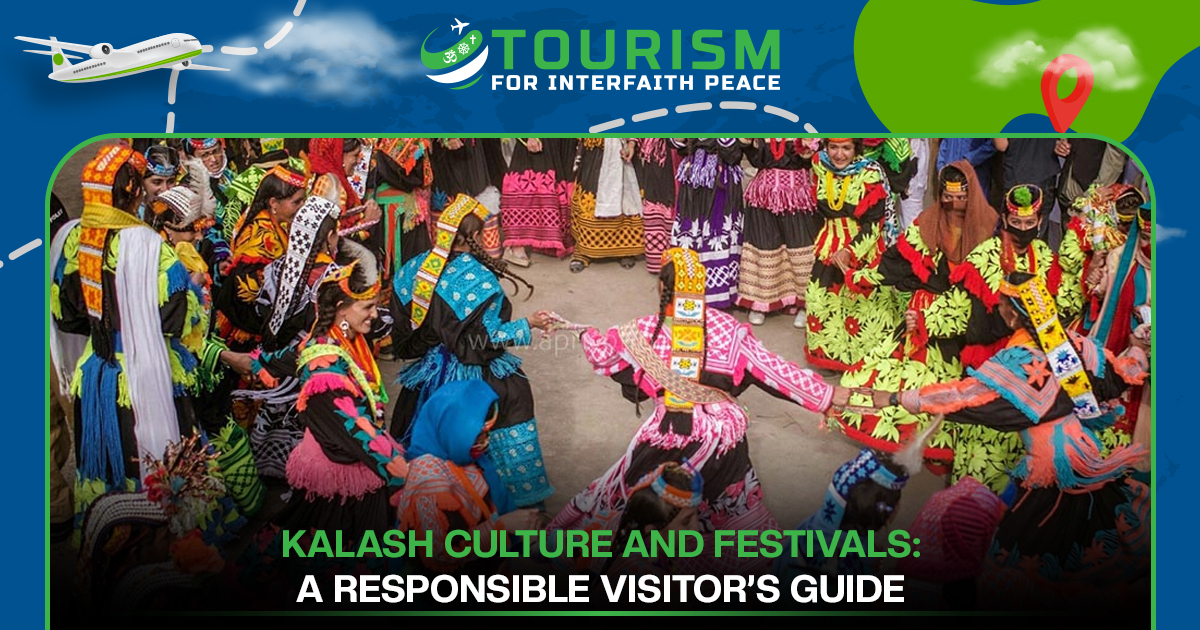
Traditional black embroidered dresses, colourful beadwork and distinctive headdresses are among the recognizable features of Kalash culture. Music, storytelling and communal dancing also play important roles in cultural celebrations.
For visitors, understanding these traditions before arriving can make the experience more meaningful. It is important to remember that Kalash communities are living communities, not open-air museums.
Exploring the Major Kalash Festivals in Pakistan
Seasonal festivals are an important part of Kalash cultural and religious life. Each celebration has its own traditions, activities and significance.
Chilam Joshi Festival
Chilam Joshi, also known as Joshi, is the spring festival celebrated around May. It marks the arrival of spring and includes traditional singing, dancing and community gatherings.
The celebration is associated with prayers and expressions of gratitude for the well-being of livestock and crops. It is one of the best-known Kalash festivals and attracts visitors interested in experiencing the community’s cultural traditions.
Uchal Festival
Uchal is a summer harvest festival generally celebrated around August. It reflects the importance of agriculture and the seasonal harvest in Kalash life.
Traditional food, music and dancing are important parts of the celebration. Visitors can learn how agricultural traditions remain connected to the community’s cultural identity.
Phool Festival
Phool, also spelled Pul, is an autumn celebration associated particularly with Birir Valley. It is connected with the seasonal harvest of fruits, including grapes and walnuts.
The festival offers an opportunity to understand the relationship between agricultural activities, seasonal changes and community traditions.
Chaumos Festival
Chaumos, also written as Chawmos or Choimus, is the major winter festival of the Kalash community. Celebrated around December, it marks the end of the agricultural year and welcomes the new year.
It includes traditional ceremonies, singing, dancing and communal celebrations. However, some parts are sacred and private. Visitors must respect restrictions and should never assume that every ceremony is open to outsiders.
Festival dates can vary, so travelers should confirm arrangements with local community representatives before planning their journeys.
How to Plan a Responsible Visit to the Kalash Valleys
A well-organized visit helps travelers enjoy the cultural experience while minimizing disruption to local communities.
Choose the Right Travel Season
The best travel period depends on the experience visitors want. May offers opportunities to experience Chilam Joshi, while late summer is associated with Uchal. Autumn and winter provide different cultural and seasonal experiences.
Check weather conditions, road accessibility and festival dates before departure.
Arrange Local Accommodation and Guides
Consider staying in locally operated guesthouses and hiring knowledgeable Kalash guides. Local guides can explain cultural traditions, identify public and restricted areas, and help visitors communicate respectfully with residents.
Supporting community-owned businesses also helps tourism income reach local families.
Learn About Local Customs Before Arrival
Visitors should familiarize themselves with local expectations, particularly concerning religious spaces, traditional practices and photography.
The Khyber Pakhtunkhwa tourism visitor guidelines recommend cultural sensitivity, small travel groups and support for local products and services.
Responsible Tourism Guidelines for Visiting Kalash Communities
Responsible tourism protects cultural dignity and helps maintain positive relationships between visitors and residents.
Important guidelines include:
- Ask before taking photographs: Always seek permission before photographing individuals, particularly women and children.
- Respect private spaces: Never enter homes, sacred places or the Bashali (a traditional women’s house) without authorization.
- Follow festival instructions: Participate in public celebrations only when visitors are welcome and invited.
- Dress appropriately: Choose modest, comfortable clothing that respects local customs.
- Support local businesses: Purchase authentic handicrafts and use locally operated accommodation, guides and transportation.
- Protect the environment: Avoid littering, disturbing agricultural land or damaging natural surroundings.
- Respect religious traditions: Do not interfere with ceremonies or treat sacred practices as entertainment.
These practices are consistent with the visitor guidance published by the Khyber Pakhtunkhwa tourism authorities.
How Tourism for Interfaith Peace Supports Cultural Understanding
Tourism for Interfaith Peace (TIP) recognizes tourism as an opportunity to promote cultural awareness, mutual respect and peaceful interaction among different communities.
The Kalash Valleys demonstrate why culturally sensitive tourism matters. Visitors can learn about a distinctive religious and cultural heritage while developing a better understanding of Pakistan’s diversity.
TIP’s broader approach to responsible tourism supports important priorities such as:
- Promoting Pakistan’s cultural and religious heritage.
- Encouraging respectful interaction between visitors and local communities.
- Raising awareness about indigenous traditions and heritage preservation.
- Supporting sustainable and community-focused tourism.
- Building understanding across different cultural and religious backgrounds.
By encouraging responsible travel, TIP supports a tourism approach that values both the visitor experience and the dignity of host communities.
Conclusion
The Kalash Valleys offer a meaningful opportunity to explore Pakistan’s indigenous heritage, seasonal festivals and distinctive cultural traditions. From the spring celebrations of Chilam Joshi to the winter ceremonies of Chaumos, each festival reflects the community’s relationship with nature, agriculture and religious life.
However, a rewarding visit should always begin with respect. Seeking permission before taking photographs, following local customs, supporting community businesses and protecting private spaces can make a positive difference.
Tourism for Interfaith Peace (TIP) encourages cultural exploration that strengthens understanding rather than disrupting local traditions. Responsible visitors do more than experience a destination; they help ensure that its cultural heritage continues to be respected and appreciated by future generations.
Frequently Asked Questions
1. Where are the Kalash Valleys located in Pakistan?
The Kalash Valleys are located in the Chitral region of Khyber Pakhtunkhwa. The three main valleys are Bumburet, Rumbur and Birir.
2. What are the major Kalash festivals?
The major festivals include Chilam Joshi in spring, Uchal in summer, Phool in autumn and Chaumos in winter.
3. When is the best time to visit the Kalash Valleys?
May to October is suitable for many visitors interested in cultural experiences and warmer weather. Travelers planning to attend specific festivals should confirm dates with local representatives.
4. Can tourists attend Kalash festivals?
Visitors can observe certain public festival celebrations, subject to community guidelines. Some religious ceremonies and traditional activities are private and must be respected.
5. How can visitors respect Kalash culture?
Visitors should ask permission before taking photographs, avoid entering private homes or sacred spaces without invitation, follow local guidance, dress appropriately and support community-owned businesses.