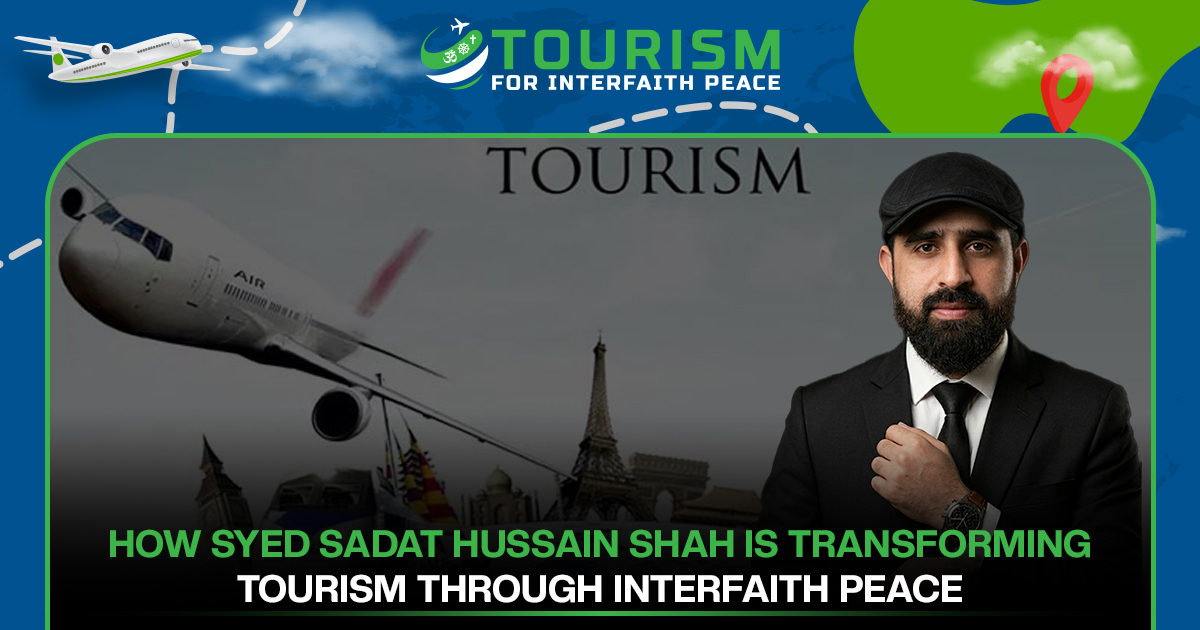
Syed Sadat Hussain Shah leads Tourism for Interfaith Peace (TIP), an Islamabad-based organization that uses travel to religious heritage sites to build understanding between faith communities. TIP’s stated aims are peace, cultural preservation and support for local communities. This article covers what is documented about his role, how TIP’s approach fits established thinking on responsible tourism, and what has not yet been shown.
Tourism as a Bridge Between Communities
TIP’s working idea is that understanding between faiths usually begins with proximity, not debate. Travel can supply that. International bodies have taken the idea seriously too: the 2015 Bethlehem Declaration on religious tourism recommends inclusive models in which traditional custodians and host communities take part and share in the benefits.
Syed Sadat Hussain Shah’s Documented Role and Vision
TIP’s About page lists Syed Sadat Hussain Shah as CEO. The organization’s account of its 12 October 2024 launch ceremony at Lakeshore City calls TIP an initiative led by Chairman Shah and says it brought together leaders from several faiths, with the Vice Chairman of the Islamabad Chamber of Commerce as chief guest. Press coverage uses other titles, including Chairman of Tourism for Interfaith Peace Pakistan and President of Tourism for Interfaith Peace and Development, so titles differ by source.
His public statements show the direction of his thinking. In June 2026, Daily Parliament Times reported him saying that Pakistan’s sustainable development should not stop at construction and investment and should be linked to youth development, tourism and interfaith harmony. In July 2026 he urged the government to promote religious, cultural and natural tourism and to improve tourism infrastructure. These are positions, not measured outcomes. TIP also says it is committed to Sustainable Development Goal 16, the UN goal on peace, justice and strong institutions.
Connecting Tourism With Religious Heritage
Pakistan’s heritage spans several traditions. UNESCO lists six cultural properties there, including Taxila, Takht-i-Bahi, the monuments at Makli and Rohtas Fort. Beyond that list are Sikh shrines at Nankana Sahib and Kartarpur, where a pilgrim corridor opened on 9 November 2019, as well as Hindu, Jain and Christian sites.
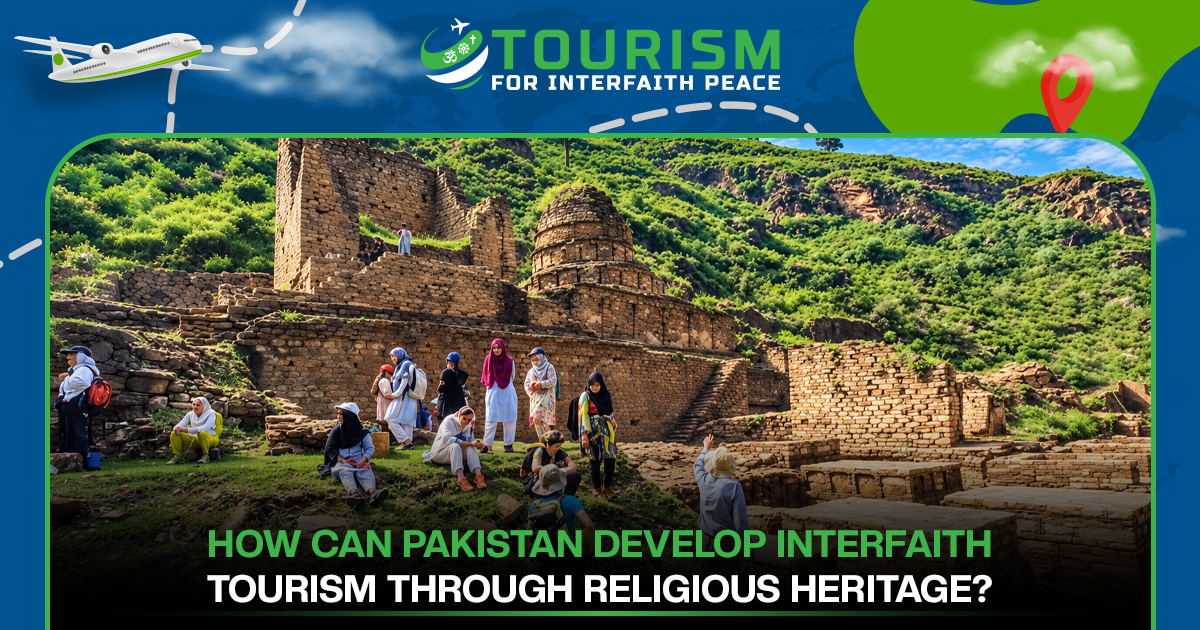
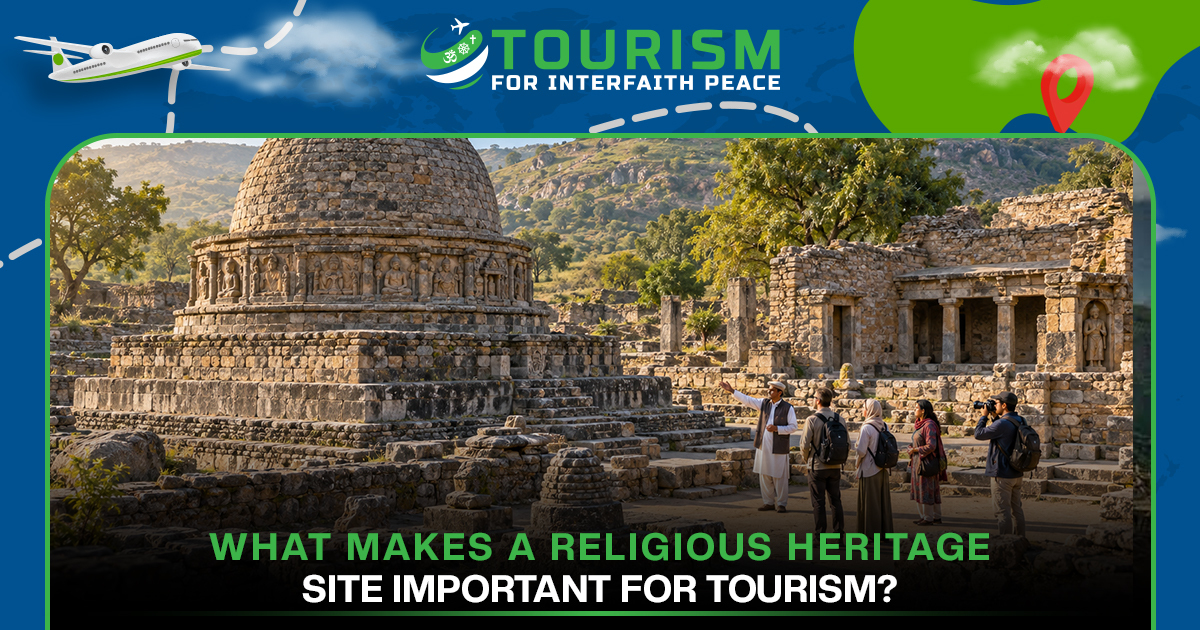
TIP’s guide on how Pakistan can develop interfaith tourism through religious heritage proposes a sequence: conserve before promoting, interpret living practice with custodian communities, improve access, and manage visitor numbers. Its companion piece on what makes a religious heritage site important for tourism adds that many sites are still in daily use, so they need to be understood in the present tense.
Supporting Interfaith Understanding Through Travel
Standing in a space that matters to someone else, and hearing a caretaker explain it, asks nothing of a visitor’s own beliefs. Some sites already show shared reverence. Hinglaj Mata in Lasbela is honored by Hindus and by some local Muslims, who call the deity Nani Pir.
TIP says it hosts events, interfaith dialogues and workshops. Its published record so far consists mainly of the 2024 launch, and it has not released participation figures or outcome data. This article therefore claims no measured impact.
Community Development and Sustainable Tourism
Visitors need guides, transport, food and lodging, so income can reach artisans, small hospitality businesses and caretakers. When it does, the people nearest a site have a reason to protect it. TIP’s recommendations follow from that: train guides from custodian communities, including minority communities; buy locally; and publish how entry fees are spent. The Bethlehem Declaration likewise encourages local entrepreneurship around sacred sites.
Challenges and Responsible Tourism Principles
Religious tourism carries real risks. Academic work on destination governance notes that the sector has become commercialised and that managing sacred sites takes more than marketing. In practice the problems are familiar:
- Crowds that a small site cannot absorb
- Worship spaces treated as photo backdrops
- Remote sites with poor roads, sanitation and signage
- Interpretation written without the custodians’ input
Workable safeguards include capacity limits, quiet hours during worship, guides drawn from custodian communities, and clear dress and photography rules. Government, religious institutions, heritage bodies and tour operators each hold part of that responsibility.
Practical Takeaways
- If you are exploring: pick one tradition or site and read about it before you go.
- If you are comparing operators: ask who guides, who owns the lodging, how large the groups are and where fees go.
- If you are ready to take part: contact TIP at info@tourismforinterfaithpeace.com or through its contact page. Custodians, heritage bodies and operators interested in collaboration can use the same channel.
- Once there: follow the caretakers, respect prayer areas, dress appropriately and ask before photographing worship.
Conclusion
Shah’s documented contribution is leading an organization built on a specific idea: that carefully managed travel to living heritage can help communities understand one another. The idea is consistent with international guidance on religious tourism. The next step is to publish what TIP’s programs achieve, so the idea can be judged on results.
Frequently Asked Questions
Who is Syed Sadat Hussain Shah?
He leads Tourism for Interfaith Peace. TIP’s website lists him as CEO, and its launch page describes him as chairman of the initiative. Press coverage also identifies him as president of Lakeshore Club.
What does Tourism for Interfaith Peace do?
TIP says it designs journeys to sacred and historic sites and hosts events, interfaith dialogues and workshops. Its stated goals are peace, heritage preservation and economic benefit for local communities.
What is interfaith tourism?
It is travel built around religious and cultural sites so visitors can understand the people connected to them, rather than only view the architecture.
Can religious tourism harm heritage sites?
Yes, if it is handled carelessly. Overcrowding and treating active worship spaces as backdrops can damage what the site stands for. Capacity limits, custodian guidance and community involvement reduce that risk.