Traditional festivals such as Eid, Diwali, Nowruz, Vaisakhi, Easter, Urs celebrations, and Buddhist cultural events regularly welcome visitors of all faiths. These gatherings offer genuine opportunities for cultural exchange, heritage learning, and peacebuilding — provided travelers approach them with respect, curiosity, and cultural sensitivity.
Introduction: Why Festivals Matter for Interfaith Understanding
Festivals are among humanity’s oldest forms of shared expression. Long before diplomatic summits and intercultural conferences, communities came together at harvest time, at the turning of a season, or at a moment of religious significance — and in that coming together, something important happened. Strangers became neighbours. Differences became curiosities rather than threats.
That dynamic has not disappeared. Across the world, traditional festivals continue to create conditions for genuine human encounter that are difficult to replicate in any other setting. For travelers interested in cultural understanding, they are among the most valuable experiences available — not as spectators, but as respectful participants in living traditions.
For travelers new to this form of travel, Why Interfaith Tourism Matters in Today’s World provides an accessible foundation for understanding the broader significance of faith-conscious travel.
What Are Interfaith Cultural Festivals?
An interfaith cultural festival is any traditional gathering — religious or secular in origin — that actively includes or welcomes participants from different faith backgrounds. These events create structured opportunities for cultural exchange, heritage sharing, and community dialogue without requiring participants to adopt or abandon their own beliefs
It is worth distinguishing between several related but distinct concepts. A religious festival is one observed primarily by adherents of a specific faith tradition. A cultural festival draws on heritage and tradition but may not centre on worship or religious practice. An interfaith event is deliberately designed to bring multiple faith communities together. In practice, many traditional festivals occupy a space where all three overlap — and that overlap is where the most interesting intercultural experiences tend to happen.
Traditional Festivals That Welcome Cross-Cultural Participation
Eid ul-Fitr and Eid ul-Adha
Both Eid celebrations are among the most widely observed festivals in the world, marking the end of Ramadan and the occasion of Hajj respectively. In Muslim-majority communities from South Asia to West Africa to Southeast Asia, these festivals have a long tradition of welcoming neighbours, friends, and travellers of other faiths to share in the communal meal, the open-house culture, and the general atmosphere of generosity and celebration. For non-Muslim visitors, attending an Eid gathering in a community setting offers insight into the values of hospitality, gratitude, and communal identity that sit at the heart of Islamic practice.
Diwali
The festival of lights, observed primarily by Hindu, Sikh, and Jain communities, has become one of the most internationally recognised traditional festivals. Its emphasis on light overcoming darkness and knowledge overcoming ignorance carries a universal resonance that makes it genuinely welcoming to visitors from all backgrounds. In countries with significant South Asian diaspora populations — the United Kingdom, Canada, the United States, and across Southeast Asia — Diwali has also become a point of civic celebration, attended by people of many faiths and none.
Nowruz
Nowruz, the Persian New Year celebrated at the spring equinox, is observed by communities across Iran, Afghanistan, Central Asia, the Caucasus, and South Asian communities with Persian cultural heritage. Recognised by UNESCO as an Intangible Cultural Heritage of Humanity, Nowruz predates Islam and carries strong associations with renewal, family, and communal hospitality. Its multi-faith character — observed by Zoroastrians, Muslims, and secular communities alike — makes it a particularly instructive example of how cultural heritage can transcend specific religious boundaries.
Vaisakhi
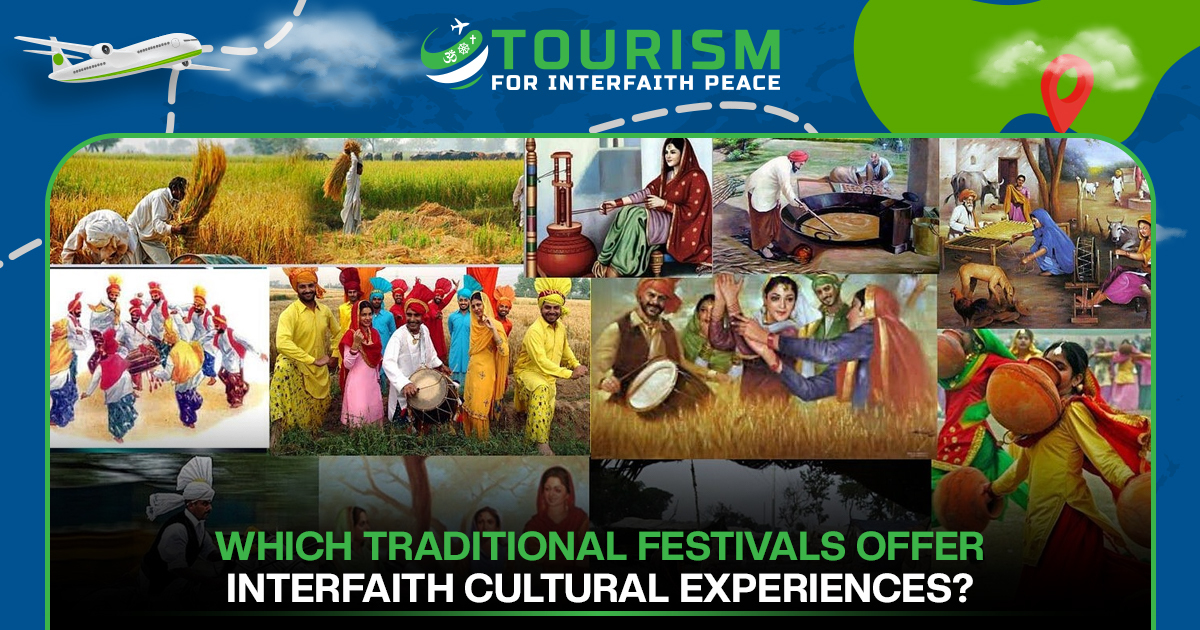
Vaisakhi holds special significance for Sikh communities as the anniversary of the founding of the Khalsa in 1699, but it is also celebrated as a spring harvest festival across Punjab by communities of multiple faiths. The public processions, communal cooking, and open langars (community kitchens) characteristic of Vaisakhi observances have historically welcomed participants regardless of background — a tradition rooted in Sikh principles of equality and service.
Urs Festivals at Sufi Shrines
Urs festivals — commemorating the death anniversaries of Sufi saints — are among Pakistan’s most distinctive and inclusive religious gatherings. At shrines such as Data Darbar in Lahore, Lal Shahbaz Qalandar in Sehwan, and Shah Abdul Latif Bhittai in Sindh, visitors of diverse backgrounds gather for music, prayer, and communal devotion in an atmosphere that has historically been open and welcoming. These events are deeply rooted in the inclusive traditions of South Asian Sufi Islam, where devotion is expressed through music, poetry, and communal gathering rather than exclusion.
Christmas and Easter
Christian communities across Pakistan, Egypt, Lebanon, Indonesia, and the Philippines observe Christmas and Easter in contexts where neighbours of other faiths often participate informally in the festivities. In many South Asian Christian communities, the open-house culture during Christmas mirrors similar practices during Eid — reflecting a broader regional etiquette of shared celebration that has evolved over centuries of coexistence.
Buddhist Cultural Festivals
Buddhist festivals such as Vesak — commemorating the birth, enlightenment, and death of the Buddha — are observed at monasteries, temples, and heritage sites across Sri Lanka, Thailand, Myanmar, and at historic Buddhist sites in Pakistan’s Gandhara region. The meditative and contemplative character of Buddhist festival observances makes them particularly accessible to visitors of different faith backgrounds seeking a moment of reflection and cultural learning.
Pakistan’s Remarkable Heritage for Interfaith Tourism
Pakistan occupies a unique position in the world’s interfaith tourism landscape. Its territory encompasses sites sacred to Islam, Hinduism, Sikhism, Buddhism, Christianity, and Zoroastrianism — the physical evidence of millennia of religious coexistence, exchange, and occasionally conflict.
The ancient Buddhist monasteries of Taxila and Gandhara, the Sikh holy site of Kartarpur Sahib, the Hindu temples of Katas Raj, the colonial-era churches of Lahore and Karachi, and the Sufi shrines spread across every province of the country collectively form one of the world’s most diverse religious heritage landscapes.
For travelers planning routes through Pakistan’s most significant sites, the best interfaith travel destinations in Pakistan offers a curated guide to places where religious heritage and cultural understanding intersect most powerfully.
Pakistan’s festivals also reflect this diversity in ways that are sometimes surprising to outside observers. For a deeper look at how the country’s calendar of celebrations embodies this pluralism, How Religious Festivals in Pakistan Reflect Cultural Harmony explores this dimension in detail.
Festival Comparison: Interfaith Accessibility at a Glance
| Festival | Origin Tradition | Regions | Visitor Welcome | Key Experience |
| Eid (ul-Fitr/Adha) | Islamic | Global | High | Hospitality, communal meals |
| Diwali | Hindu/Sikh/Jain | South Asia, diaspora | High | Light, music, community |
| Nowruz | Persian/Zoroastrian | Central & South Asia | High | Spring renewal, family |
| Vaisakhi | Sikh/Punjabi | South Asia, diaspora | High | Harvest, langar, procession |
| Urs festivals | Sufi/Islamic | Pakistan, South Asia | High | Music, devotion, community |
| Vesak | Buddhist | South & Southeast Asia | Moderate | Meditation, heritage, light |
| Christmas/Easter | Christian | Global | Moderate-High | Family, community, service |
How to Participate Responsibly
Attending a festival rooted in a tradition different from your own requires genuine preparation, not just a travel itinerary. The difference between a meaningful cultural experience and an intrusive one lies almost entirely in the attitude and preparation of the visitor.
Before You Arrive
- Research the festival’s significance and the community’s expectations for visitors
- Learn basic greetings and courtesies in the local language
- Understand what participation is appropriate and what is reserved for community members
- Read guidance from local cultural organizations or tourism bodies
During the Festival
- Dress modestly and appropriately for the setting — when in doubt, ask in advance
- Ask permission before photographing individuals, sacred objects, or ritual activities
- Follow the lead of local participants rather than imposing your own expectations
- Support local vendors, craftspeople, and food producers rather than large commercial operations
- Observe silently in sacred spaces unless explicitly invited to participate
Responsible Storytelling
- When sharing experiences on social media or in writing, represent what you witnessed accurately and respectfully
- Avoid reducing complex traditions to aesthetic images without context
- Credit the community and tradition you observed, not just the visual spectacle
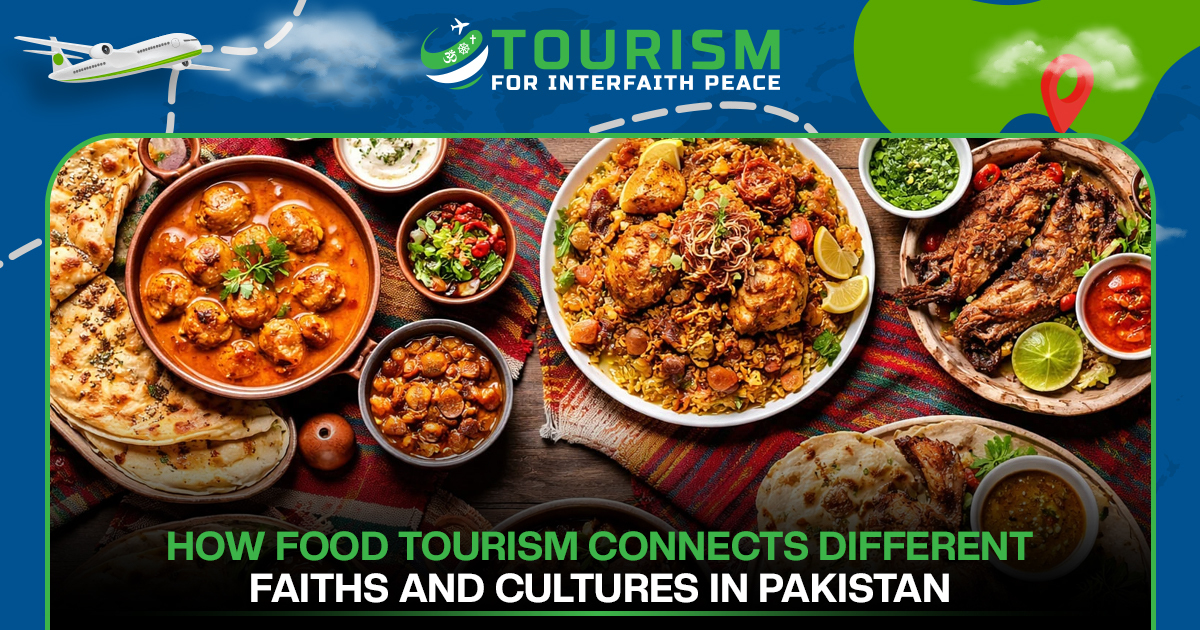
Food is one of the most accessible entry points into cultural understanding at any festival. How Food Tourism Connects Different Faiths and Cultures in Pakistan explores how shared meals and culinary traditions create connections that transcend religious difference.
Why Festival Tourism Matters for Peace
The United Nations Alliance of Civilizations has documented how cultural exchange — including tourism — plays a measurable role in reducing prejudice and building the social foundations for sustained peace. Festivals are particularly effective environments for this because they create conditions of openness, generosity, and shared humanity that everyday interactions rarely produce.
When a non-Muslim visitor attends an Eid gathering, or a non-Sikh traveller sits at a langar in Amritsar or Kartarpur, or a tourist spends a night at a Sufi shrine in Sindh listening to qawwali — something shifts. The abstract becomes concrete. A faith tradition that existed only as information becomes a living, human reality. That shift is harder to undo than almost any counter-narrative.
Heritage conservation also benefits from responsible festival tourism. UNESCO’s work on intangible cultural heritage consistently identifies community festivals among the living traditions most at risk of disappearing — and also among those most effectively sustained when they remain embedded in authentic, community-centred practices rather than purely commercial performance. Tourism, when conducted responsibly, can support rather than undermine that conservation.
Conclusion: Festivals as Living Bridges
The world’s traditional festivals are not museum exhibits. They are living expressions of the values, histories, and identities of communities that have sustained them across generations. When travelers approach them with genuine curiosity and respect, they become something more than spectators — they become part of a long tradition of exchange that has shaped every culture on earth.
Interfaith cultural tourism, at its best, does not flatten differences or pretend that religious and cultural diversity is uncomplicated. It does something more valuable: it creates the human encounters through which differences become interesting rather than threatening, and shared humanity becomes something felt rather than merely asserted.
The festivals described in this article are invitations. Whether you encounter them in Pakistan, South Asia, the Middle East, Europe, or in the diaspora communities of any major city, they offer something that no amount of reading alone can provide: the experience of belonging, however briefly, to a human gathering larger than yourself.
Frequently Asked Questions
Which festivals are most welcoming to visitors of different faiths?
Eid celebrations, Diwali, Nowruz, Vaisakhi, and Sufi Urs festivals are among those with the strongest traditions of welcoming outside visitors. The key factor is not the festival itself but whether the specific local community has a tradition of open participation — which varies by location and context.
Do I need to follow religious practices to attend an interfaith festival?
Generally, no. Respectful observation and basic cultural etiquette are sufficient for most festivals that welcome visitors. You will not typically be expected to pray, worship, or adopt practices outside your own tradition. Clarifying this with local organisers in advance is always a good approach.
How can I find interfaith festivals to attend while travelling?
Tourism for Interfaith Peace, UNESCO’s Intangible Cultural Heritage listings, and country-specific cultural tourism authorities are reliable starting points. Local faith communities and cultural organisations at your destination are also valuable sources of information about authentic, community-centred events.
What is the difference between interfaith tourism and religious tourism?
Religious tourism typically refers to travel to sacred sites or for religious pilgrimage — often by adherents of that specific tradition. Interfaith tourism specifically seeks cross-faith encounters and cultural exchange, aiming to build understanding across different religious and cultural backgrounds.
Is festival tourism always culturally respectful?
Not automatically. Festival tourism can become extractive or disrespectful when visitors treat sacred or community events as entertainment or photo opportunities without understanding their significance. Responsible participation, preparation, and genuine curiosity make the difference.