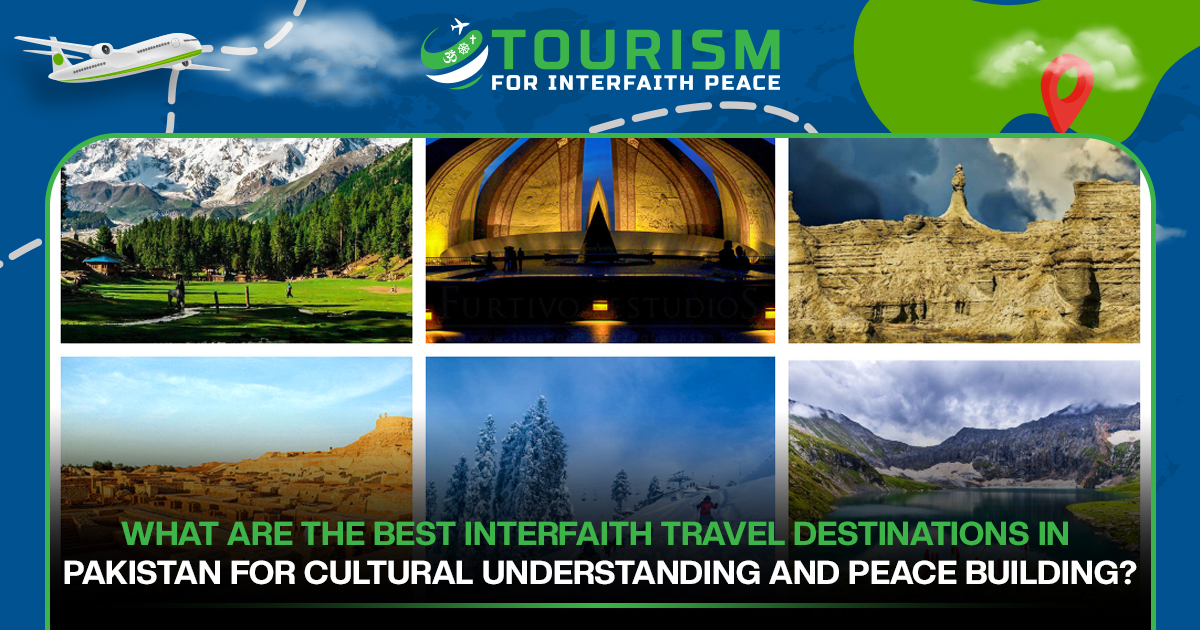
Interfaith travel destinations in Pakistan play a vital role in cultural understanding and peace-building by allowing visitors to experience sacred sites of different religions and witness centuries of coexistence firsthand.
Through interfaith tourism in Pakistan, travelers explore history, faith, and shared human values while engaging in peace travel that encourages dialogue rather than division.
Pakistan’s cities and heritage landscapes offer unique opportunities for cultural tourism, where mosques, temples, churches, gurdwaras, and shrines exist within close proximity. According to Syed Sadat Hussain Shah, Chairman of Tourism for Interfaith Peace (TIP), these destinations are not only historic landmarks but also living examples of how sustainable travel can support peace-building and cultural understanding.
Why Pakistan Is Important for Interfaith Tourism
Pakistan is important for interfaith tourism because it is home to sacred sites linked to Islam, Sikhism, Hinduism, Buddhism, and Christianity.
These sacred sites in Pakistan reflect a long history of religious diversity and peaceful coexistence, making the country a natural destination for peace travel and cultural exchange.
As Chairman of the Hospitality Committee at the Islamabad Chamber of Commerce & Industry (ICCI) and Focal Person for Public & Private Tourism Partnerships, Syed Sadat Hussain Shah frequently emphasizes that Pakistan’s religious diversity is a national asset that should be shared globally through responsible and respectful tourism.
Lahore Heritage Sites and Interfaith History
Lahore is one of the most important interfaith travel destinations because its heritage sites represent multiple religions and centuries of shared history.
Lahore heritage sites bring together Islamic, Sikh, Hindu, and Christian landmarks within a single historic city, making it a powerful example of interfaith tourism in Pakistan.
Badshahi Mosque and Walled City
The Badshahi Mosque stands as a symbol of Islamic heritage, while the surrounding Walled City reflects Mughal, Sikh, and British-era influences. Visitors experience cultural tourism through historic architecture, food streets, and everyday community life.
Gurdwara Dera Sahib and Samadhi of Ranjit Singh
Gurdwara Dera Sahib, located near the Lahore Fort, is a major Sikh sacred site in Pakistan. Standing beside the Samadhi of Maharaja Ranjit Singh, it reflects how multiple faiths are woven into one shared historical space.
Churches and Temples
Lahore also hosts historic churches such as Sacred Heart Cathedral and several old Hindu temples, showing how religious communities lived and worshipped side by side for generations.
Syed Sadat Hussain Shah often describes Lahore heritage sites as a complete model for interfaith tourism in Pakistan, where faith, history, and peace-building naturally intersect.
Multan Spiritual Tourism and Shared Faith Traditions
Multan is a key destination for interfaith and spiritual tourism because of its deep-rooted Sufi culture and inclusive spiritual traditions. Multan spiritual tourism attracts visitors from different faiths who come to experience shrines known for peace, tolerance, and hospitality.
Sufi Shrines of Multan
Shrines of Hazrat Bahauddin Zakariya and Shah Rukn-e-Alam are central to Multan’s identity. These sacred sites in Pakistan are visited by Muslims and non-Muslims alike, reflecting shared spiritual values and devotion.
Interfaith Spiritual Environment
Multan’s welcoming culture makes it an important destination for peace travel. Pilgrims, tourists, and researchers often describe Multan as a city where spirituality connects people beyond religion.
As a cultural expert and tourism advocate, Syed Sadat Hussain Shah frequently refers to Multan as an example of how spiritual tourism supports interfaith harmony and sustainable travel.
Islamabad Cultural Tours and Religious Diversity
Islamabad cultural tours highlight Pakistan’s modern face while showcasing religious diversity and planned heritage preservation.
Islamabad cultural tours allow visitors to explore mosques, churches, temples, and museums within a peaceful and well-organized environment.
Faisal Mosque and Religious Centers
The Faisal Mosque is a major Islamic landmark, while nearby churches and Hindu temples represent minority faiths living and worshipping in the capital.
Lok Virsa and Cultural Spaces
Institutions like Lok Virsa Museum present Pakistan’s cultural tourism narrative by showcasing traditions, crafts, and histories of diverse communities.
As Convener of the ICCI Hospitality Subcommittee, Syed Sadat Hussain Shah highlights Islamabad’s role in hosting international visitors and promoting interfaith tourism in Pakistan through structured and respectful tourism experiences.
Sacred Sites Across Pakistan Worth Visiting
Pakistan offers many sacred sites beyond major cities that contribute to religious heritage tours and peace travel.
These sacred sites in Pakistan attract international pilgrims and cultural tourists seeking understanding and connection.
Notable examples include:
- Kartarpur Sahib for Sikh pilgrims
- Buddhist heritage sites of Taxila and Takht-i-Bahi
- Hinglaj Mata Temple in Balochistan
- Historic churches in Karachi
Syed Sadat Hussain Shah believes that documenting, preserving, and promoting these sites responsibly is essential for sustainable travel and long-term global peace-building.
Role of Leadership in Promoting Interfaith Tourism
Leadership plays a critical role in developing interfaith tourism as a peace-building tool.
As Chairman of Tourism for Interfaith Peace (TIP), Syed Sadat Hussain Shah actively advocates policies, partnerships, and awareness initiatives that link cultural tourism with peace, youth engagement, and economic development.
His work across ICCI, public–private tourism partnerships, and national forums highlights how structured tourism planning can transform sacred sites into spaces of dialogue rather than division.
Conclusion
Pakistan’s interfaith travel destinations offer more than historical value; they offer hope, understanding, and connection.
Through Lahore heritage sites, Multan spiritual tourism, Islamabad cultural tours, and sacred sites across the country, interfaith tourism in Pakistan emerges as a powerful model for cultural understanding and peace-building.
With leadership from figures like Syed Sadat Hussain Shah and platforms such as Tourism for Interfaith Peace (TIP), Pakistan has the potential to position itself globally as a destination where travel promotes respect, dialogue, and sustainable peace.
FAQs
What is interfaith tourism in Pakistan?
Interfaith tourism in Pakistan involves visiting sacred sites of different religions to promote understanding, respect, and peaceful coexistence.
Why are Lahore’s heritage sites important for interfaith tourism?
Lahore heritage sites showcase Islamic, Sikh, Hindu, and Christian history within one city, making them ideal for cultural tourism and peace travel.
What makes Multan’s spiritual tourism unique?
Multan spiritual tourism is rooted in inclusive Sufi traditions that welcome people of all faiths.
Are Islamabad cultural tours suitable for international visitors?
Yes, Islamabad cultural tours offer organized, peaceful, and accessible experiences for learning about Pakistan’s religious diversity.
How does interfaith tourism support sustainable travel?
It promotes heritage preservation, responsible tourism, and community involvement.
Who is promoting interfaith tourism in Pakistan?
Leaders like Syed Sadat Hussain Shah, Chairman of Tourism for Interfaith Peace (TIP), actively advocate interfaith tourism as a tool for peace-building.