Few things unite human beings as effortlessly as a shared meal. Across every culture, religion, and tradition in the world, food has served as an invitation — an open hand extended across the table. Before formal dialogue, before structured diplomacy, and before carefully worded declarations of goodwill, people have always found a way to come together through the act of cooking and eating together.
This truth has not gone unnoticed in the world of travel and tourism. Over the past two decades, food tourism has emerged as one of the most meaningful and accessible forms of cultural exchange available to travelers. When a visitor sits at the table of a local family, explores a centuries-old bazaar, or watches a grandmother prepare a recipe passed down through generations, they are engaging in something far deeper than sightseeing. They are participating in a living tradition that reveals the values, beliefs, and humanity of another community.
In Pakistan — a country of extraordinary cultural depth, linguistic diversity, and layered histories — food tourism carries special significance. Pakistan’s cuisine is not a single story but a tapestry of regional identities, agricultural traditions, spice routes, and communal rituals woven together over millennia. To explore Pakistan through its food is to encounter a country that is far richer and more nuanced than any single headline or political narrative might suggest.
For Tourism for Interfaith Peace (TIP), food tourism represents one of the most effective pathways to building genuine interfaith understanding. As we explore in this article, the simple, universal act of sharing food has the power to dissolve barriers, build empathy, and create lasting human connections between people of different faiths and cultural backgrounds.
What Is Food Tourism?
Food tourism — also known as culinary tourism or gastronomic tourism — refers to travel experiences in which the primary motivation or a significant part of the journey involves exploring the food, drinks, culinary traditions, and food culture of a destination.
Unlike dining out during a holiday, food tourism is intentional and immersive. It involves seeking out authentic local experiences: visiting traditional food markets, participating in cooking workshops, dining with local families, exploring agricultural communities, and attending food festivals tied to cultural or religious occasions.
Featured Snippet: Food tourism is a form of travel focused on experiencing the authentic food, culinary traditions, and dining culture of a destination as a way of understanding its people, heritage, and way of life.
According to the World Food Travel Association, food tourism is the second-fastest growing sector in global tourism. Travelers increasingly seek meaningful experiences over passive observation, and food provides exactly that: direct engagement with local communities, traditions, and ways of life that no museum exhibit can replicate.
In the context of interfaith and cultural tourism, food tourism becomes an especially valuable tool. When two individuals of different faiths share a meal prepared according to each other’s traditions, the experience is inherently humanizing. As TIP explores in its foundational resource on
→ What Is Interfaith Tourism and How Can Travel Promote Global Peace?
Interfaith tourism is about using travel as a deliberate instrument for building understanding and peaceful coexistence — and food is one of its most powerful expressions.
Why Food Brings People Together Across Cultures and Faiths
The connection between food and human bonding is not merely romantic sentiment — it is deeply rooted in social anthropology, psychology, and interfaith dialogue theory. Across virtually every major world religion and cultural tradition, the sharing of food carries profound symbolic and social meaning.
In Islam, the concept of dastarkhan — the communal spread of food on a shared cloth — reflects generosity and hospitality as spiritual virtues. In Christianity, the communal meal is central to worship and fellowship. In Sikhism, the langar — a free community kitchen open to all regardless of religion, caste, or social background — represents one of the world’s most powerful expressions of equality through shared food. In Hinduism, prasad — food offered to the divine and then shared with worshippers — embodies the idea of food as sacred connection.
Beyond religious symbolism, food creates what sociologists call “low-stakes intimacy” — a context in which people can engage with one another without the pressure of formal dialogue or the anxiety of addressing sensitive topics directly. When you share a meal with someone, you are occupying a naturally hospitable social space in which conversation flows organically, barriers lower, and genuine curiosity about the other person tends to emerge.
Food also tells stories that words sometimes cannot. The spices used in a dish reflect centuries of trade routes and cross-cultural contact. The way a meal is served reveals family structure and hospitality values. The ingredients chosen reflect geography, agriculture, and community identity. In this way, food becomes a living archive of cultural memory.
For travelers engaged in food tourism in Pakistan, these insights translate into meaningful practical experiences: every meal becomes an opportunity to learn, every shared plate an invitation to understand.
Pakistan’s Culinary Diversity Reflects Its Cultural Richness
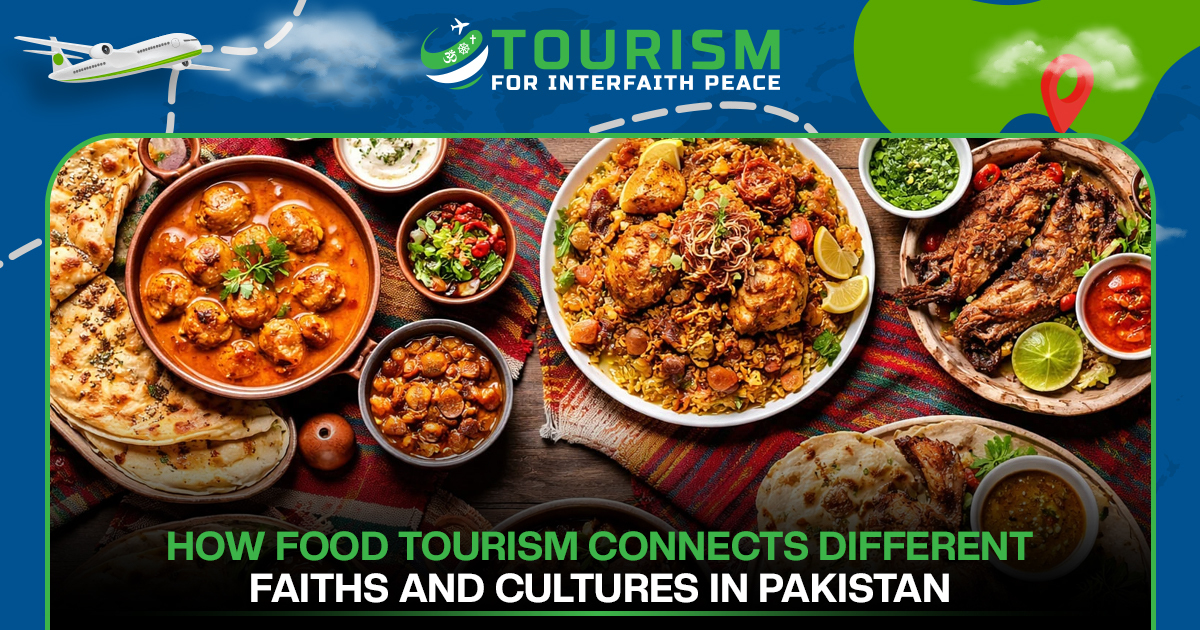
Pakistan’s cuisine is one of the most diverse and least understood in the world. The country spans a vast geographical range — from the lush river plains of Punjab to the rugged mountain passes of Khyber Pakhtunkhwa, from the arid plateaus of Balochistan to the coastal wetlands of Sindh and the high-altitude valleys of Gilgit-Baltistan. Each of these regions has developed its own culinary identity shaped by geography, history, and community.
Punjabi Cuisine
Punjab — the heartland of Pakistan — is celebrated for its robust, hearty cooking. Rich, slow-cooked dals, buttery rotis, and aromatic meat dishes like nihari and karahi reflect the agricultural abundance of the region. Punjabi hospitality is legendary: guests are typically greeted with tea, sweets, and an insistence on eating more. Lahore, Pakistan’s cultural capital, is considered by many food travelers to be one of Asia’s great culinary cities.
Sindhi Cuisine
Sindh’s culinary tradition is ancient and deeply layered, reflecting the region’s status as the cradle of the Indus Valley Civilization. Sindhi biryani — fragrant, tangy, and richly spiced — has become one of Pakistan’s most internationally recognized dishes. Sindhi cuisine also features distinctive fish preparations along the Indus River, as well as a tradition of vegetarian cooking that reflects the region’s Hindu minority communities and their centuries-long culinary heritage.
Pashtun Food Traditions
Pashtun food from Khyber Pakhtunkhwa and the tribal regions is known for its simplicity, purity of ingredients, and emphasis on communal eating. Chapli kebab — a flat, spiced patty cooked in animal fat — is among Pakistan’s most beloved street foods with Pashtun origins. Lamb and goat feature prominently, often slow-cooked over wood fire. Pashtun hospitality, enshrined in the code of Pashtunwali, demands that guests be fed generously and without reservation.
Balochi Cuisine
Balochistan’s cuisine reflects its nomadic pastoral traditions and vast semi-arid landscapes. Sajji — a whole slow-roasted lamb marinated in minimal spices and cooked over an open fire — is Balochistan’s most iconic dish and a testament to the elegance of simplicity. Balochi cooking is defined by the quality of its meat rather than elaborate spicing, and sharing sajji is a deeply communal and celebratory act.
Gilgit-Baltistan Specialties
The mountain communities of Gilgit-Baltistan have developed a cuisine uniquely adapted to high-altitude living. Chapshuro — a savory filled flatbread — and dirams — dried apricot-based dishes — reflect the region’s reliance on preserved foods during long winters. Glacier-chilled water, wild herbs, and locally grown apricots and mulberries give Gilgit-Baltistani cuisine a freshness that surprises and delights visitors.
Kashmiri Influences
Azad Kashmir’s culinary traditions share roots with the broader Kashmiri cooking style: aromatic slow-cooked meats, rich gravies infused with local spices, and the distinctive use of saffron and dried ginger. Kashmiri chai — a pink salted tea brewed with special tea leaves and topped with cream and crushed nuts — has become a symbol of the region’s warm hospitality.
This culinary diversity is not merely gastronomic interest: it is a direct reflection of Pakistan’s multicultural identity. As TIP’s guide on
→ How Cultural Experiences Foster Peace and Understanding in Tourism
explores, cultural experiences — including food experiences — are among the most direct routes to building cross-cultural empathy and genuine understanding.
How Food Tourism Encourages Interfaith Understanding
The relationship between food tourism and interfaith dialogue is both practical and profound. Here are the key ways in which shared food experiences actively promote interfaith understanding in Pakistan:
Breaking Stereotypes
Many visitors to Pakistan arrive with impressions shaped by media portrayals that emphasize conflict and instability. When a traveler sits in a Lahori home and shares daal with a family who insists on refilling their plate three times — or when they are welcomed into a Sikh langar alongside people of every faith — those preconceived images are quietly dismantled by direct human experience.
Creating Human Connections
Food tourism creates conditions for genuine person-to-person connection that formal interfaith dialogue events sometimes struggle to replicate. The kitchen table is an equalizer: regardless of background, everyone is a guest at the same meal.
Respecting Different Traditions
Learning about halal food preparation, kosher principles, or the Sikh tradition of langar through direct experience builds a nuanced respect for religious practices that abstract description cannot achieve. When travelers understand why certain foods are prepared in certain ways, they develop a more textured appreciation for the belief systems behind those practices.
Learning Through Shared Experiences
Cooking workshops, food market tours, and farm-to-table experiences give travelers an active role in cultural exchange. Learning to make roti alongside a Punjabi grandmother or watching a Balochi family prepare sajji for a community celebration transforms a passive tourist into an engaged cultural learner.
Building Mutual Respect
The mutual vulnerability of sharing food — the host’s generosity in offering, the guest’s acceptance of something unfamiliar — creates a form of reciprocal trust that is foundational to meaningful cross-cultural relationships.
Religious and Cultural Festivals as Culinary Experiences
Pakistan’s calendar of religious and cultural celebrations offers food tourists a remarkable window into the country’s living traditions of communal generosity.
- Eid ul-Fitr and Eid ul-Adha: Pakistan’s two major Islamic celebrations transform the country’s streets and homes into open kitchens. During Eid ul-Fitr, sheer khurma — a rich vermicelli pudding — is shared with neighbors of all backgrounds. During Eid ul-Adha, meat from sacrificed animals is divided into thirds: one for the family, one for relatives and friends, and one specifically for those in need, regardless of faith.
- Christmas Celebrations: Pakistan’s Christian communities — concentrated particularly in Punjab — celebrate Christmas with feasts that blend local culinary traditions with the season’s spirit of generosity. Visitors who attend community Christmas gatherings in cities like Lahore or Faisalabad often describe the warmth and inclusivity of the welcome they receive.
- Sikh Community Events: The Gurdwara Darbar Sahib Kartarpur — the world’s most significant Sikh religious site — attracts hundreds of thousands of Sikh pilgrims annually from India, Canada, the UK, and beyond. The langar served at Kartarpur is open to all visitors, regardless of religion. Sharing a meal on the langar floor alongside Sikh pilgrims from around the world is one of Pakistan’s most powerful interfaith food experiences.
- Basant and Spring Festivals: Punjab’s traditional spring festivals, though their public celebration has evolved over the years, retain strong community food traditions. The sharing of seasonal sweets and foods connects neighbors across religious and social lines in ways that continue to this day in informal community settings.
Travelers interested in experiencing Pakistan’s festival food culture are encouraged to review TIP’s resource on
→ Why Interfaith Tourism Matters in Today’s World: A Beginner’s Guide
for guidance on how to engage respectfully and meaningfully with religious celebrations in a tourism context.
Local Food Experiences That Promote Cultural Exchange in Pakistan
Beyond festivals, Pakistan offers a wealth of everyday food tourism experiences that create authentic opportunities for cultural exchange:
- Family-Run Eateries: Thousands of small family-operated dhabas and restaurants across Pakistan serve food prepared according to generations-old recipes. In these settings, the line between restaurant and home is blurred: guests often meet the cook, hear the story of a dish, and leave with a sense of having been genuinely welcomed.
- Village Food Experiences: Rural tourism programs in regions like Hunza, Swat, and Cholistan allow visitors to experience food as part of daily village life — from participating in wheat harvests to watching the preparation of traditional breads in outdoor clay ovens.
- Heritage Food Markets: Lahore’s Anarkali Bazaar, Peshawar’s Qissa Khwani Bazaar, and Karachi’s Empress Market are not merely shopping destinations but living archives of food culture. The smells, sounds, and social interactions of these markets offer an irreplaceable immersive cultural experience.
- Traditional Cooking Workshops: An increasing number of heritage homes and cultural tourism initiatives across Pakistan now offer structured cooking workshops in which visitors learn to prepare traditional dishes while hearing their cultural and historical context.
- Community-Based Tourism Initiatives: Organizations working across Pakistan are developing community-based tourism models in which local families host visitors for meals, sharing their food culture and stories. These initiatives directly support local livelihoods while creating meaningful cultural exchanges.
TIP’s resources on
explore how these community-based models connect sustainable development with interfaith tourism goals.
The Role of Food Tourism in Promoting Peace and Social Harmony
The relationship between food tourism and peace-building is not anecdotal — it is increasingly supported by research in cultural diplomacy, conflict resolution, and social psychology. When communities host visitors from different backgrounds and share their food traditions, several peace-building outcomes tend to emerge:
- Cultural Empathy: Direct experience of another community’s food culture builds a form of empathy that is embodied and personal, not merely intellectual.
- Community Development: Food tourism generates income for local families and communities, creating economic incentives for welcoming visitors and maintaining the cultural traditions that attract them.
- Cross-Cultural Understanding: Each food tourism experience creates micro-narratives of peaceful coexistence: a Christian traveler welcomed to an Eid table, a foreign visitor sharing langar at Kartarpur, a family in Lahore hosting guests from five different countries.
- Positive Visitor Experiences: Travelers who experience Pakistan through its food consistently report that the encounter profoundly challenges their prior assumptions — producing the kind of positive narrative that shapes future cross-cultural attitudes.
- Long-Term Peace-Building: At scale, food tourism contributes to a broader culture of hospitality and openness in which communities see visitors from different backgrounds not as threats but as opportunities for connection and mutual learning.
Why Food Tourism Matters for the Future of Interfaith Travel
As the global tourism industry continues to evolve toward more meaningful, responsible, and community-centered models, food tourism is increasingly recognized as one of its most promising pillars. For Pakistan specifically, food tourism offers a unique opportunity: to reframe the country’s international image through the most universal of human experiences.
Pakistan possesses every ingredient necessary for world-class food tourism development: extraordinary culinary diversity, deep traditions of hospitality, rich agricultural landscapes, vibrant food markets, and communities that have maintained their food cultures with remarkable care across centuries of change. What is needed is thoughtful investment in infrastructure, community training, responsible tourism frameworks, and the kind of storytelling that accurately reflects the country’s warmth and complexity to the world.
For interfaith travelers specifically, Pakistan’s food tourism landscape offers something rare and valuable: the lived experience of a society in which different faiths have coexisted, shared tables, and maintained their own traditions while contributing to a shared culinary culture. That experience, properly facilitated and respectfully engaged, is one of the most powerful arguments for peaceful coexistence that any traveler can carry home.
Tourism for Interfaith Peace believes that food tourism is not merely a niche market segment — it is a meaningful form of cultural diplomacy available to every traveler. When we eat together, we begin to understand one another. And understanding, consistently enough practiced, is the foundation of peace.
Frequently Asked Questions
1. What is food tourism?
Food tourism — also called culinary tourism or gastronomic tourism — refers to travel motivated by the desire to experience the authentic food, culinary traditions, and dining culture of a destination. It typically involves visiting local food markets, participating in cooking workshops, dining with local families, and attending food festivals or cultural celebrations centered on food.
2. How does food tourism promote cultural understanding?
Food tourism promotes cultural understanding by creating direct, personal encounters between travelers and local communities in social contexts that are naturally hospitable and low in social pressure. When travelers eat with local families, learn to prepare traditional dishes, or visit heritage food markets, they gain firsthand insight into the values, history, and daily life of another culture — insight that no amount of reading or observation from a distance can replicate.
3. Why is food important in interfaith tourism?
Food occupies a central place in virtually every major world religion — from Islamic hospitality traditions and Sikh langar to Christian communal meals and Hindu prasad. In interfaith tourism, food experiences allow travelers to engage with religious traditions in a natural, non-confrontational setting, building respect and understanding for different faiths through shared human experience rather than formal dialogue.
4. What makes Pakistan a food tourism destination?
Pakistan is an exceptional food tourism destination due to its extraordinary culinary diversity — from the rich slow-cooked dishes of Punjab to the fire-roasted traditions of Balochistan, the mountain specialties of Gilgit-Baltistan, and the ancient Indus-influenced cooking of Sindh. Combined with Pakistan’s deep cultural traditions of hospitality, its vibrant food markets, and its richly layered interfaith heritage, the country offers food travelers experiences of genuine depth and authenticity.
5. Can food tourism help build peace?
Yes. Research in cultural diplomacy and social psychology consistently demonstrates that direct cross-cultural encounters — particularly in food contexts — build empathy, challenge stereotypes, and create personal narratives of peaceful coexistence. At scale, food tourism contributes to a culture of openness and hospitality in which communities see visitors of different backgrounds as partners in cultural exchange rather than sources of threat or misunderstanding.
6. What are the benefits of cultural food experiences for travelers?
Cultural food experiences offer travelers a deeper, more authentic understanding of a destination than conventional sightseeing. They provide direct human connection with local communities, insight into historical and cultural traditions, personal challenges to prior assumptions and stereotypes, and the kind of memorable, meaningful experiences that stay with travelers long after they return home.
7. How does food reflect cultural identity?
Food reflects cultural identity through its ingredients (which reveal geography and agricultural traditions), its preparation methods (which embody historical influences and community practices), its presentation and sharing customs (which express social values and hospitality norms), and its symbolic meanings (which often connect to religious and cultural beliefs). In multicultural societies like Pakistan, the food landscape is a direct mirror of the community’s diverse origins, influences, and traditions.
8. How can travelers respectfully participate in food tourism?
Respectful food tourism begins with curiosity and humility. Travelers should research local food customs and dietary laws before visiting, follow the lead of local hosts, ask questions with genuine interest rather than judgment, observe any religious protocols associated with food preparation or sharing, support local businesses and family-run establishments rather than chain restaurants, and approach every food experience as an opportunity to learn rather than merely to consume.
Conclusion
Food is far more than nourishment. In Pakistan — as in every culture across the world — it is a living expression of identity, history, faith, and community. When we eat together, we do something more than satisfy hunger: we acknowledge our shared humanity, we extend and accept hospitality, and we open ourselves to the possibility of understanding.
For travelers seeking meaningful interfaith experiences, Pakistan’s culinary landscape offers a remarkable invitation. From the shared Eid table of a Lahori family to the open langar at Kartarpur, from the mountain bread of Gilgit-Baltistan to the ancient markets of Sindh, the country’s food traditions are a living archive of diversity, coexistence, and generosity.
Tourism for Interfaith Peace believes that food tourism is one of the most powerful tools available for building the cross-cultural understanding and mutual respect that form the foundation of lasting peace. Every shared meal is a small act of diplomacy. Every welcoming table is a bridge between worlds. And every traveler who returns home with a deeper appreciation of Pakistan’s food and culture carries with them a story of connection that the world needs more of, not less.
We invite you to explore Pakistan — not just as a destination, but as a table set for the world.