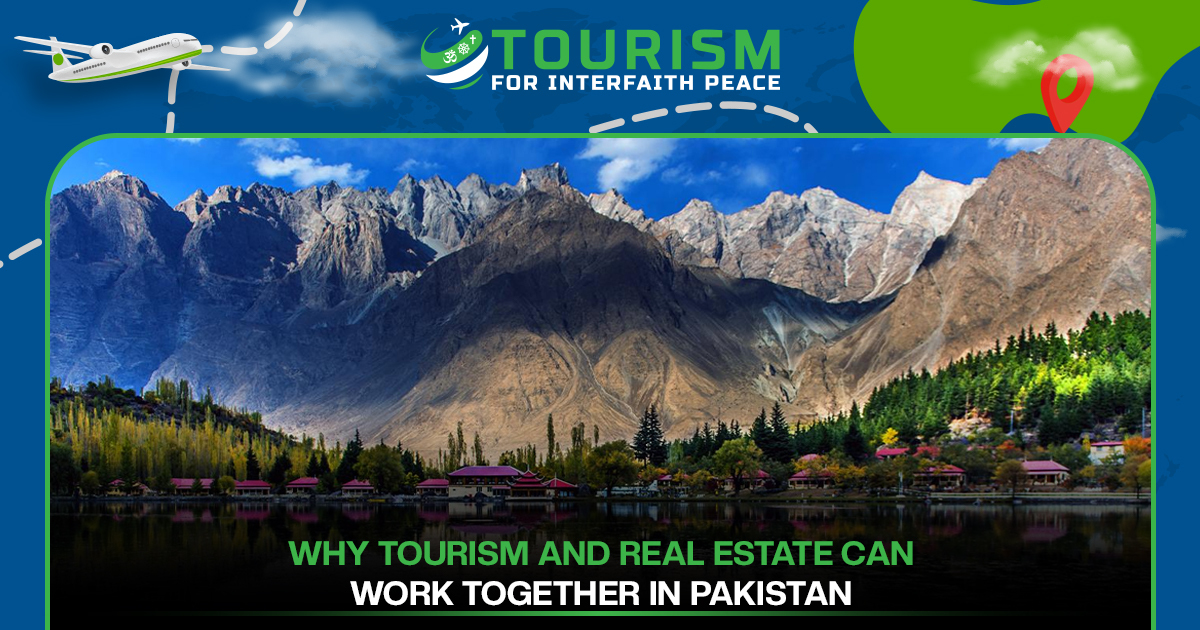
Tourism and real estate in Pakistan are not two separate sectors competing for attention. They are two halves of the same development equation. A destination without roads, accommodation, or basic utilities cannot hold visitors, and a real estate project without a genuine visitor economy around it struggles to generate lasting demand. When tourism and real estate development are planned together — deliberately, and with local communities included — the result is not just more hotels or more plots sold. It is infrastructure that a region actually needs, jobs that stay local, and cultural sites that are protected rather than overwhelmed.
This is the perspective Tourism for Interfaith Peace (TIP) brings to Pakistan’s tourism conversation: growth that respects heritage, includes communities, and treats infrastructure as a shared responsibility rather than a side effect of investment.
Why Tourism and Real Estate Are Fundamentally Interconnected
Every functioning tourist destination in the world sits on top of real estate decisions made years, sometimes decades, earlier. Roads had to be built. Land had to be zoned for hotels, guesthouses, or markets. Utilities — water, electricity, waste management — had to reach places that previously had none. Pakistan’s most visited regions, from northern valleys to religious and heritage sites across Punjab and Khyber Pakhtunkhwa, illustrate this pattern clearly: interest from travelers tends to outpace the infrastructure needed to host them comfortably.
This is the core argument behind tourism and real estate in Pakistan being discussed as a single ecosystem rather than two industries. Real estate development creates the physical capacity for tourism to grow. Tourism, in turn, gives real estate a reason to exist beyond speculative land value — it creates ongoing demand for the buildings, roads, and services being developed.
How Tourism Stimulates Demand for Hotels, Hospitality and Residential Development
When a destination begins attracting steady visitor traffic, the effects ripple outward in a fairly predictable sequence. Hotels and guesthouses are usually first, followed by restaurants, transport services, and small retail. As a location matures as a destination, demand often extends to short-term rental units, staff housing for hospitality workers, and eventually broader residential development for people who choose to relocate closer to a growing local economy.
This is where tourism-led real estate development in Pakistan becomes a meaningful planning concept rather than a marketing phrase. Instead of real estate projects being built speculatively and hoping tourism follows, the more sustainable model works the other way: genuine visitor demand justifies the commercial and residential development that follows it. Projects anchored to an actual, growing flow of visitors tend to hold their value and purpose better than developments built purely on projected land appreciation.
How Real Estate Provides the Infrastructure Tourism Depends On
Tourism cannot scale without the unglamorous groundwork that real estate and infrastructure development provide. This includes:
- Accessible roads and transport links connecting destinations to airports, cities and each other
- Hospitality infrastructure — hotels, guesthouses and serviced accommodation at a range of price points
- Reliable utilities, including water supply, electricity and waste management systems that can handle seasonal visitor surges
- Commercial spaces for restaurants, local artisans, tour operators and retail
- Community facilities such as visitor centers, parking, signage and public sanitation
None of these are exciting additions to a destination’s marketing material, but their absence is usually the first thing a disappointed visitor notices. Well-planned real estate development addresses these gaps directly, turning a scenic or historically significant location into a place people can actually visit, stay in, and return to.
Local Businesses and Young Entrepreneurs: Where the Real Economic Opportunity Lies
The most durable economic benefit of tourism-led development rarely comes from large projects alone — it comes from what grows around them. A new access road or a cluster of guesthouses creates opportunities for local transport operators, homestay owners, tour guides, food vendors and craft sellers. For Pakistan’s young population, this represents a meaningful, if currently underdeveloped, entry point into entrepreneurship that does not require large capital or relocation to a major city.
This is also where community empowerment and tourism development intersect most directly. When local residents are included as service providers, guides, and small business owners rather than bystanders to development happening around them, tourism revenue circulates within the community instead of flowing entirely to outside investors. That circulation is what turns a destination into a local economy, not just a tourist attraction.
Sustainable and Responsible Development Around Cultural and Religious Destinations
Pakistan’s tourism assets are unusually layered: Buddhist and Gandhara-era archaeological sites, Sikh pilgrimage destinations, Sufi shrines, and other places of religious and historical significance across different faith traditions. This is precisely where tourism-led real estate development requires the most caution.
Unmanaged commercial development near a heritage or religious site can generate short-term revenue while degrading the very asset that attracted visitors in the first place — through overcrowding, poor waste management, structurally incompatible construction, or a loss of the site’s original character. Responsible development around these locations means real estate planning that works within heritage protection guidelines, respects the religious and cultural significance of a site, and prioritizes visitor experience and preservation over maximum commercial density.
Sustainable tourism development in Pakistan, in this sense, is not a slogan. It is a practical planning discipline: build enough to serve visitors well, and no more than a site and its surrounding community can absorb without losing what made it worth visiting.
The Role of Public-Private Partnerships in Strengthening the Ecosystem
Neither government nor the private sector can build a tourism ecosystem alone. Government bodies typically hold the regulatory authority over land use, heritage protection, and major infrastructure like highways and utilities. Private developers and hospitality operators bring the capital, construction expertise, and day-to-day management that turn a policy framework into an actual hotel, road, or visitor facility.
Public-private partnerships matter most in the coordination they enable — aligning a road project with a hospitality investment, or a heritage protection plan with a commercial development timeline — so that infrastructure and demand grow at a matched pace. Where this coordination is absent, Pakistan has seen destinations gain popularity faster than their infrastructure can support, and real estate projects built in locations that never developed the visitor traffic to sustain them. Closing that gap is a strategic priority rather than a solved problem, and it will require sustained cooperation across sectors over time.
Syed Sadat Hussain Shah’s Perspective: Connecting Tourism, Hospitality and Development
Syed Sadat Hussain Shah, Chairman of Tourism for Interfaith Peace, has publicly framed tourism as something that depends on more than scenic destinations — it depends on leadership, infrastructure, hospitality standards and community involvement working in tandem. That framing extends naturally into real estate: a heritage site or scenic valley cannot function as a sustainable destination without the accommodation, access roads and commercial facilities that real estate development provides.
Shah’s public advocacy has consistently linked tourism promotion to investment in infrastructure, hospitality culture, and opportunities for Pakistan’s youth, positioning real estate and tourism as complementary parts of the same development conversation rather than separate agendas. These are stated positions and areas of public advocacy connected to his work with TIP, rather than claims about specific completed projects or investment outcomes.
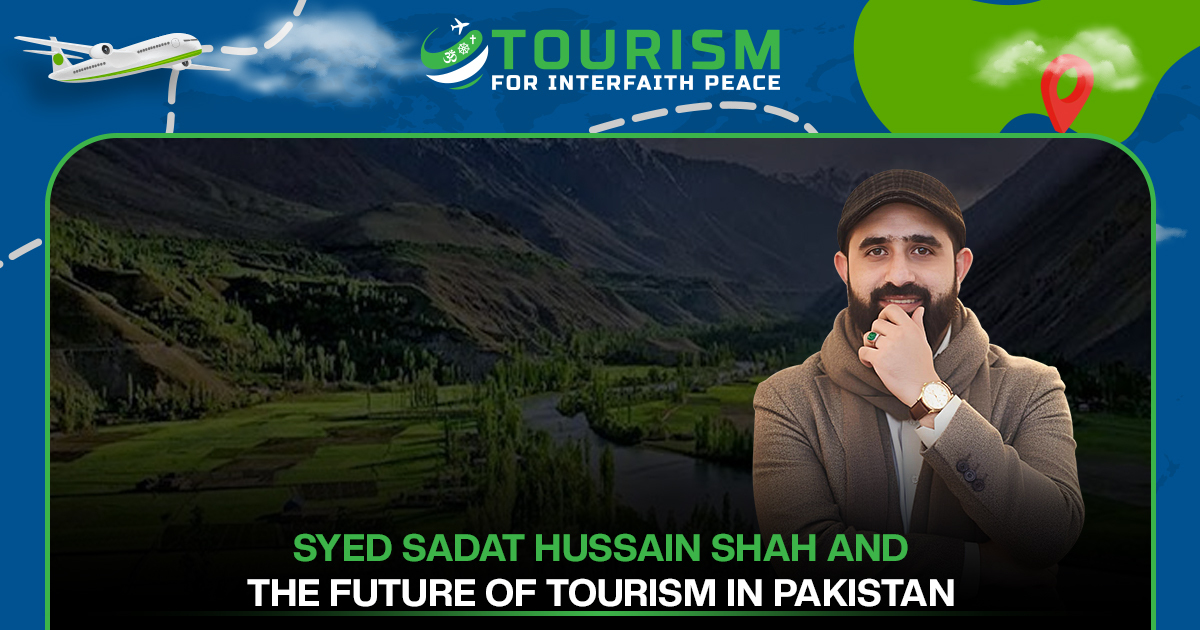
This view builds on ideas explored in TIP’s earlier feature, Syed Sadat Hussain Shah and the Future of Tourism in Pakistan, which examines how leadership, infrastructure and interfaith heritage together shape the country’s tourism trajectory.
Why Community Participation and Heritage Protection Must Stay Central
Tourism-led real estate development can create genuine economic opportunity in Pakistan, but only if two principles remain non-negotiable: local communities must have a real stake in the outcome, and heritage sites must be protected rather than commercially exploited.
Development that bypasses local participation — building hotels and commercial centers without involving the people who already live near a destination — tends to generate resentment rather than support, and rarely sustains itself once initial investment interest fades. Development that ignores heritage protection risks damaging the cultural and religious significance that made a location worth visiting in the first place. Keeping both principles central is what separates tourism-led development that lasts from development that simply extracts short-term value from a destination.
Where Pakistan’s Tourism and Real Estate Sectors Go From Here
The future of tourism in Pakistan will likely be shaped less by any single mega-project and more by how consistently infrastructure, hospitality, and heritage protection are planned together across many smaller destinations. Real estate can provide the roads, accommodation and utilities tourism needs; tourism can provide the ongoing economic demand that gives real estate genuine, lasting purpose. Neither works as well alone.
For organizations like Tourism for Interfaith Peace, that intersection is also where the mission of interfaith harmony, cultural preservation and community empowerment finds its most practical expression — not only in advocacy, but in how destinations are actually built, managed, and shared.
Frequently Asked Questions
How are tourism and real estate connected in Pakistan?
Tourism creates demand for hotels, commercial space and residential development, while real estate provides the roads, utilities, accommodation and facilities that make a destination accessible and comfortable. Growth in either sector tends to depend on progress in the other.
What is tourism-led real estate development?
It is a development approach where real estate projects — hotels, hospitality infrastructure, commercial and residential spaces — are planned around genuine, growing visitor demand at a destination, rather than built speculatively ahead of that demand.
Why is sustainable tourism development important near religious and heritage sites in Pakistan?
Pakistan’s religious and heritage sites, including Buddhist, Sikh, Sufi and other culturally significant locations, can be damaged by unmanaged commercial development or excessive foot traffic. Sustainable development plans construction and visitor capacity around the site’s ability to absorb it without losing its character or significance.
How can public-private partnerships support Pakistan’s tourism ecosystem?
Government bodies typically control land use, regulatory approval and heritage protection, while private developers and hospitality operators bring capital and operational expertise. Coordinated partnerships help align infrastructure projects, such as roads and utilities, with the hospitality investment needed to serve growing visitor numbers.
What role can local communities play in tourism-led development?
Local communities can participate as guides, homestay and small hospitality operators, transport providers and artisans, ensuring that tourism revenue circulates locally. Development that includes communities as stakeholders tends to be more durable than projects that treat them as outsiders to the process.