- Pakistan’s tourism future depends on more than scenic destinations — it needs leadership, infrastructure, hospitality standards, and community involvement working together.
- Interfaith and heritage tourism can turn Pakistan’s diverse religious and cultural history into a source of dialogue, international interest, and local economic activity.
- Sustainable growth requires public-private cooperation, destination management, and heritage preservation, not investment alone.
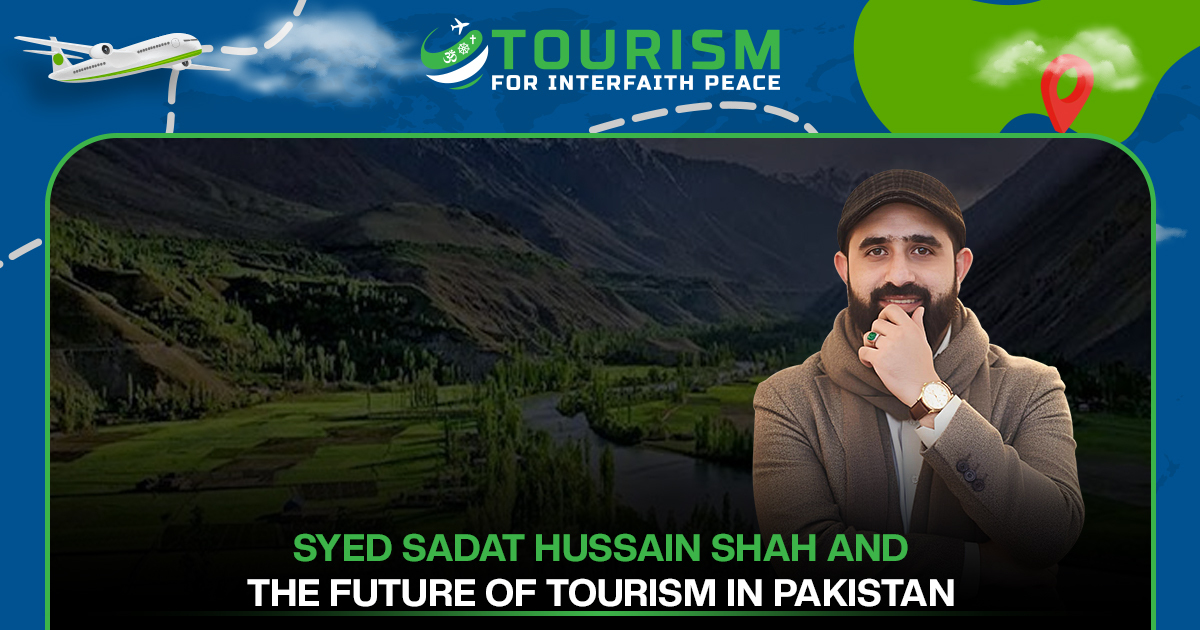
Pakistan’s tourism future will not be decided by scenery alone. Mountains, ancient trade routes, and centuries-old religious sites already exist; what has often been missing is the leadership, infrastructure, and hospitality culture needed to turn that inheritance into a lived visitor experience. Syed Sadat Hussain Shah, Chairman of Tourism for Interfaith Peace (TIP), has built part of his public career around a related idea: tourism only works as an economic and social force when destinations are paired with cultural preservation, community participation, and a genuine commitment to peacebuilding.
The Changing Future of Tourism in Pakistan
Pakistan’s tourism potential has always been wider than its most photographed valleys. The country holds Buddhist and Gandhara-era archaeological sites, Sikh pilgrimage destinations, Sufi shrines, colonial-era architecture, and mountain regions that rank among South Asia’s most dramatic landscapes. What has changed in recent years is a growing recognition that these assets need to be treated as one interconnected tourism ecosystem, rather than isolated attractions competing for the same limited infrastructure budget. Cultural, religious, heritage, nature, and community-based tourism increasingly overlap in how travelers plan a trip, and destinations that connect them tend to hold visitor interest longer than any single site can on its own.
Syed Sadat Hussain Shah’s Vision for Tourism
As Chairman of Tourism for Interfaith Peace, Syed Sadat Hussain Shah has publicly framed tourism as connected to peacebuilding, cultural understanding, and economic opportunity rather than treating it as a standalone industry. TIP’s October 2024 launch event at Lakeshore City, which brought together leaders from different faiths to discuss tourism as a bridge between communities, reflects that framing in practice. In public statements, Syed Sadat Hussain Shah has also linked tourism promotion to broader national priorities — calling for investment in religious, cultural, and natural tourism, improved tourism infrastructure, and a stronger international image for the country, alongside opportunities for Pakistan’s youth. These are stated positions and public advocacy rather than completed programs, and their eventual impact will depend on how they translate into implemented policy and investment.
Why Interfaith Tourism Can Shape Pakistan’s Tourism Future
Pakistan’s religious geography includes sites significant to several faith traditions, from ancient Buddhist centers to Sikh pilgrimage routes to Sufi and other Muslim heritage sites. Presented respectfully and without ranking one tradition against another, this shared history gives international and diaspora travelers a reason to visit that goes beyond conventional sightseeing. Interfaith tourism, in this sense, is less about religious instruction and more about using shared heritage as common ground: a starting point for dialogue, a draw for international interest, and a source of local economic activity in the towns that host these sites.
Building a More Sustainable Tourism Economy
Sustainable tourism growth rests on unglamorous fundamentals: road access, accommodation standards, trained hospitality staff, and destination management that protects a site rather than wearing it down. Heritage preservation and responsible investment have to move together, since a well-marketed destination with poor infrastructure or unmanaged foot traffic tends to disappoint visitors and degrade the site itself. Public-private cooperation matters here because government bodies typically control regulatory approvals and heritage protections, while private investment and hospitality operators build and run the facilities travelers actually use. Local communities near these sites also need a genuine stake in the outcome, since tourism that bypasses local economic participation tends to generate resentment rather than support.
What Pakistan’s Tourism Future Could Look Like
A stronger tourism future for Pakistan would likely combine a handful of practical shifts: better-managed heritage and religious sites with clear visitor facilities, hospitality standards that match international expectations without erasing local character, and tourism circuits that connect nearby cultural, natural, and religious destinations into a single itinerary rather than requiring separate trips. Inclusive tourism ecosystems — ones that route economic benefit toward local guides, artisans, and small hospitality businesses — tend to sustain themselves longer than large developments that operate in isolation from surrounding communities.
Leadership, Collaboration and the Road Ahead
None of this happens through any single actor. Government agencies set policy and protect heritage sites; private developers and hospitality businesses build the infrastructure; local communities provide the guides, services, and cultural context that make a destination worth visiting; and international partners bring visibility and investment. Shah’s public advocacy — spanning his roles connected to Lakeshore City, chamber-of-commerce tourism partnerships, and TIP — reflects this collaborative framing, treating tourism development as something that requires sustained coordination across sectors rather than a single announcement or investment.
Frequently Asked Questions
What is the future of tourism in Pakistan?
Pakistan’s tourism future depends on connecting its cultural, religious, heritage, and natural assets into a managed ecosystem, supported by better infrastructure, hospitality standards, and public-private collaboration, rather than relying on scenery alone.
How can interfaith tourism benefit Pakistan?
Interfaith tourism uses Pakistan’s shared religious and cultural heritage as common ground for dialogue and international interest, while generating local economic activity in the communities that host these sites.
How can tourism contribute to Pakistan’s economy?
Tourism can support local economic growth through hospitality jobs, small businesses, and infrastructure investment, particularly when development is planned to include nearby communities rather than bypass them.
What role does Syed Sadat Hussain Shah see for tourism in Pakistan’s future?
As Chairman of Tourism for Interfaith Peace, Shah has publicly connected tourism to peacebuilding, cultural understanding, youth opportunity, and economic development, advocating for stronger tourism infrastructure and investment alongside these goals.
A Closing Thought
Pakistan’s tourism future is not a single destination or a single announcement — it is the outcome of infrastructure, leadership, cultural respect, and community participation working together over time. Readers interested in how interfaith tourism, heritage preservation, and community-driven development connect in practice are encouraged to explore Tourism for Interfaith Peace’s broader mission and initiatives.