A monument can be photographed in under a minute. Understanding what it means to the people who still gather there takes considerably longer, and it rarely happens by accident. That gap sits at the center of how Syed Sadat Hussain Shah, Chairman of Tourism for Interfaith Peace (TIP), talks about travel: not as an industry measured in visitor counts, but as a repeated, voluntary form of contact between people who might otherwise never meet.
This piece looks at that vision in the context of Pakistan’s religious and cultural heritage, and at what tourism can realistically offer toward interfaith understanding.
Tourism Beyond Sightseeing
A checklist of monuments visited says little about what a trip actually leaves behind. Two travelers can walk through the same site and come home with entirely different experiences — one collected photographs, the other had a conversation that changed how they see a place and its people. Tourism for interfaith peace treats that second kind of experience as the point, not a bonus.
Tourism contributes to peace and intercultural understanding when it creates sustained, respectful contact between visitors and host communities, rather than simply moving people past sites. That contact builds familiarity gradually, through shared meals, honest questions, and guides who explain not just when a building was constructed but why it still matters to the people who tend it.
Heritage as a Bridge Between Communities
Few countries hold as many living traditions within such close geographic range as Pakistan. Its religious landscape includes Sufi shrines woven into daily life across Punjab, Sikh pilgrimage sites including the Kartarpur Corridor, Hindu temples still active across Sindh, Buddhist archaeological heritage at Taxila and in Swat, and Christian and Kalash communities practicing their own customs today rather than as historical remnants. Alongside six UNESCO World Heritage Sites, this depth of heritage is rarely in question — what has been less consistent is whether it gets presented as a living part of the country’s identity or simply as scenery in a travel brochure.
Heritage becomes a genuine bridge, rather than a backdrop, when the community that maintains a site has a hand in how it is presented: who tells the story, what gets explained, and what stays private.
Tourism and Interfaith Understanding
Interfaith and cultural tourism sharpens this dynamic because it puts visitors in direct contact with traditions different from their own. Visiting a shrine, temple, or church as a respectful guest, rather than treating it purely as a photo backdrop, asks something of the traveler: attentiveness, restraint, and a willingness to be a guest in someone else’s tradition rather than a consumer of it. Done well, this kind of encounter builds familiarity without requiring agreement on belief itself, which is often what makes it more durable than debate.
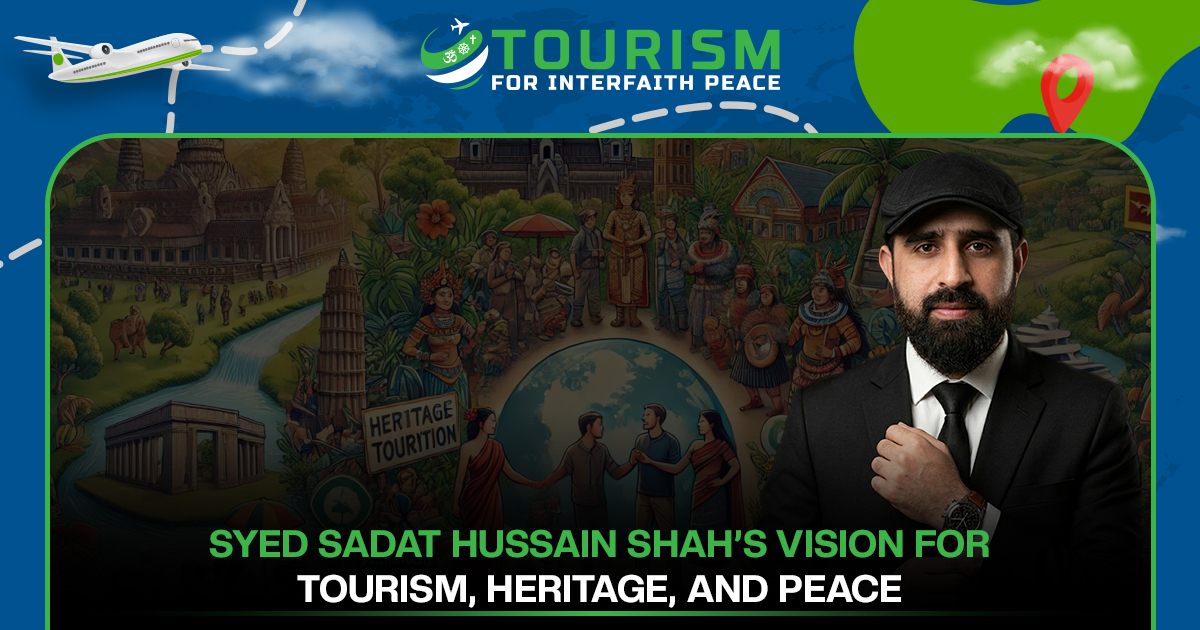
Syed Sadat Hussain Shah’s Vision
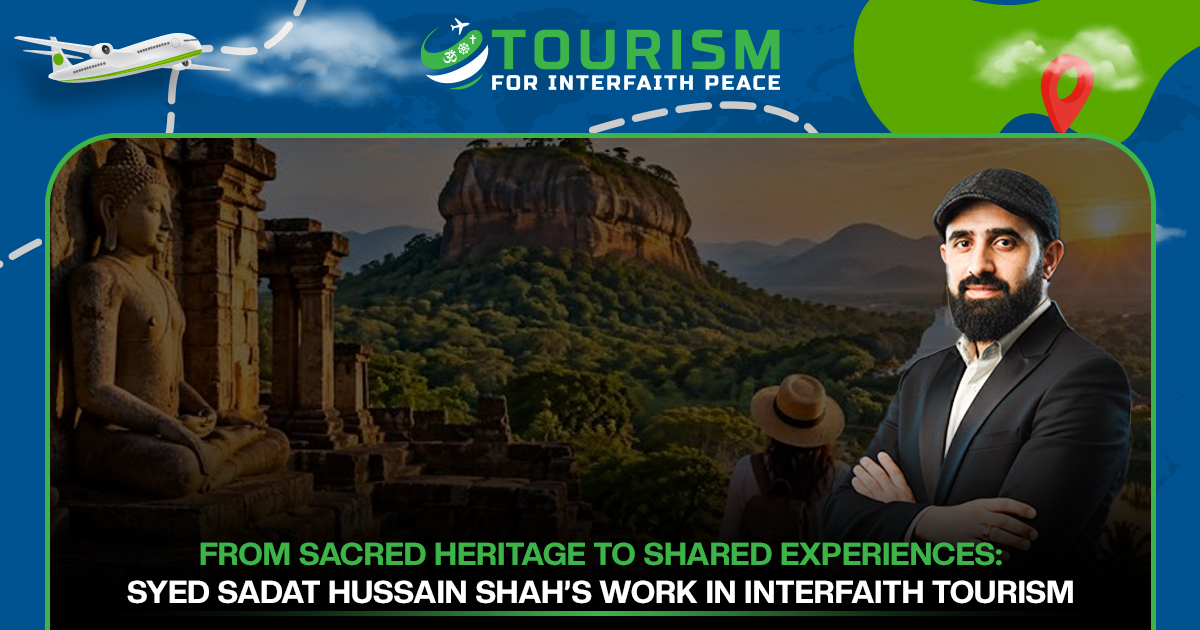
As Chairman of Tourism for Interfaith Peace, Syed Sadat Hussain Shah has argued that Pakistan’s religious diversity deserves to be treated as a present-day tourism asset rather than a historical footnote. That work is documented in more detail in his work connecting sacred heritage to shared experiences, which examines how local caretakers, protected worship spaces, and accurate storytelling turn a site visit into something closer to genuine contact.
His broader case for what tourism can and cannot do is laid out in Tourism Beyond Sightseeing: How Syed Sadat Hussain Shah Is Promoting Travel for Understanding and Peace, which distinguishes between tourism that simply moves people past sites and tourism that builds sustained, respectful contact with the communities behind them. Readers wanting a fuller picture of his work across tourism, hospitality, and related sectors can also visit his personal website.
From Visiting Places to Shared Experiences
A site becomes a shared experience rather than a stop on an itinerary through a few consistent practices: community members, not outside operators, shaping how a place is explained; visits scheduled around a site’s religious use rather than visitor convenience; and storytelling that explains why a place matters to the people who tend it, rather than reducing it to an aesthetic. None of this works without trust running in both directions.
Tourism, Dialogue, and Peace
Dialogue between communities rarely starts with a formal debate about belief. More often, it starts smaller: a question asked of a local guide, a shared meal, an explanation offered without being asked. Multiplied across enough travelers and sites, these small exchanges add up to something larger than any single visit could produce alone.
It would overstate the case to call tourism a solution to deeper social or political divisions. Syed Sadat Hussain Shah has been direct about this limitation: tourism does not resolve conflicts that require far more than visitor traffic to address. What it can realistically offer is smaller but still valuable — individual encounters that chip away at assumption, income that gives communities a stake in preserving their own heritage, and a reputation for hospitality that shapes how a place understands itself over time.
Final Thoughts
Tourism will never substitute for diplomacy or the slower work of reconciliation between communities. But at its most thoughtful, it offers something those processes rarely can: an ordinary traveler, on an ordinary afternoon, choosing to see someone else’s tradition as real and worth understanding. Pakistan’s Sufi, Sikh, Hindu, Buddhist, Christian, and Kalash heritage already provides the material for that kind of encounter.
To learn more about this work and Tourism for Interfaith Peace’s approach to responsible, interfaith travel in Pakistan, explore TIP’s ongoing coverage of heritage tourism and community-centered travel.
Frequently Asked Questions
Who is Syed Sadat Hussain Shah?
Syed Sadat Hussain Shah serves as Chairman of Tourism for Interfaith Peace (TIP), an organization focused on using travel to sacred and culturally significant sites to build understanding across religious communities in Pakistan.
How can tourism contribute to peace and intercultural understanding?
Tourism contributes to peace when it creates sustained, respectful contact between visitors and host communities — through shared meals, honest conversation, and guides drawn from the community itself — rather than simply moving people past sites.
Can tourism actually resolve religious or political conflict?
No. Tourism cannot resolve deep-rooted social or political divisions on its own, and treating it as if it could risks trivializing conflicts that need far more than visitor traffic to address. What it offers is smaller: individual encounters and economic incentive for communities to preserve their own heritage.
Why is Pakistan significant for interfaith tourism?
Pakistan holds an unusually close concentration of living traditions, including Sufi, Sikh, Hindu, Buddhist, Christian, and Kalash heritage, alongside six UNESCO World Heritage Sites — a range of active religious and cultural heritage few destinations combine within a similar geographic area.
What makes a heritage site a “shared experience” rather than just a sightseeing stop?
Community involvement in how a site is presented, protection of active worship spaces from disruption, and storytelling that explains a tradition’s significance to the people who practice it, rather than presenting it purely as an aesthetic backdrop.