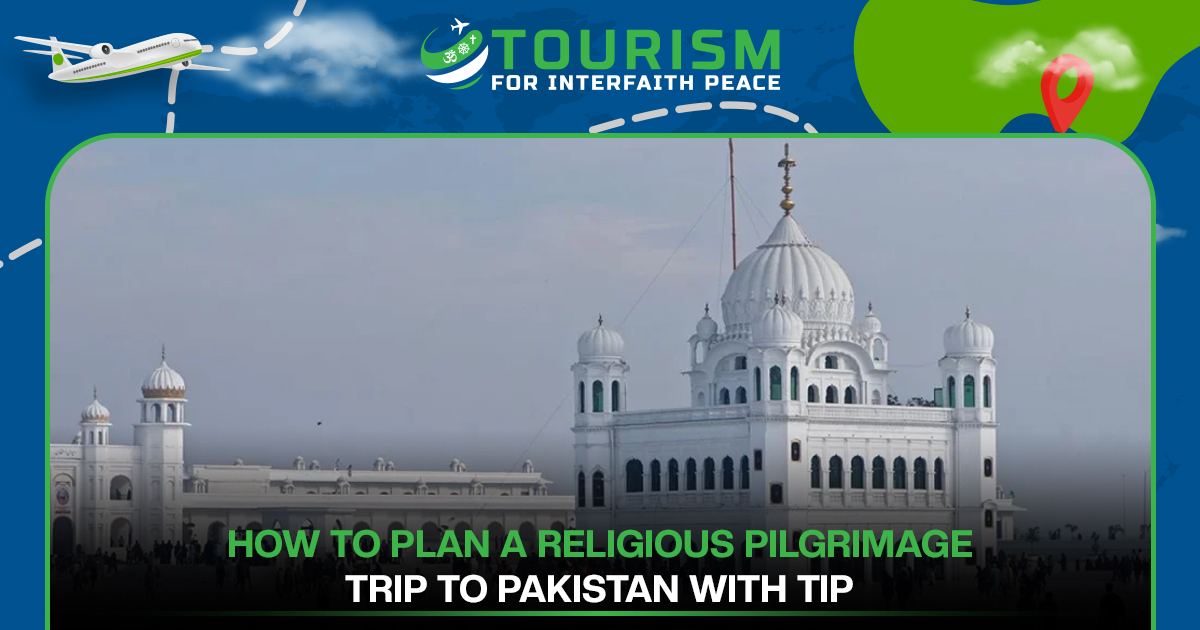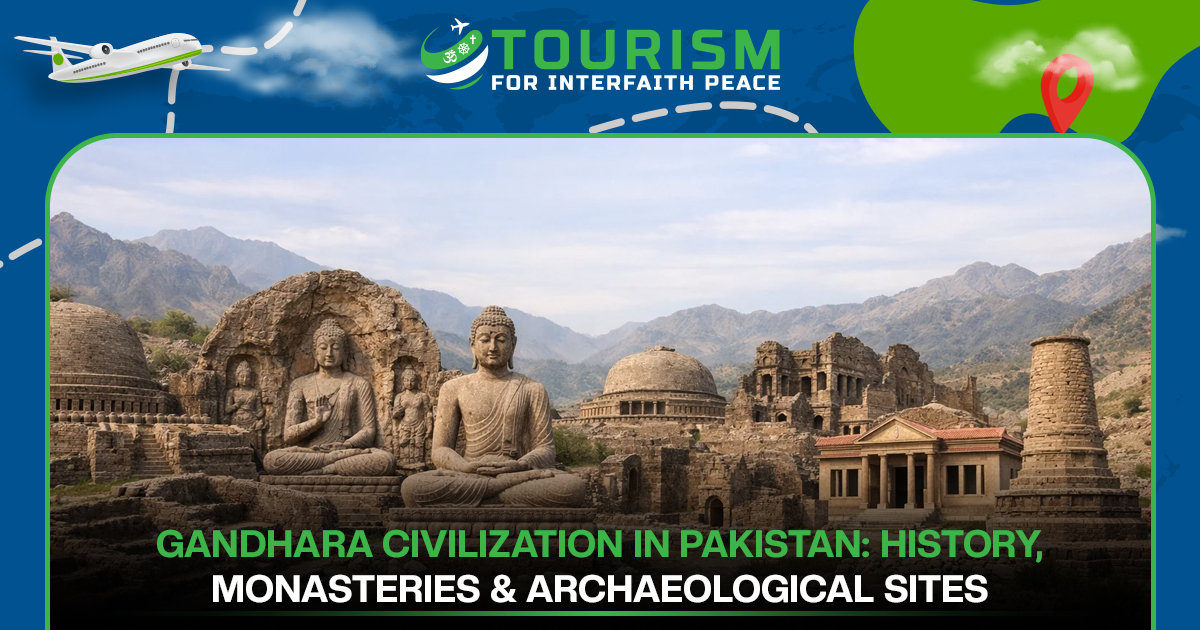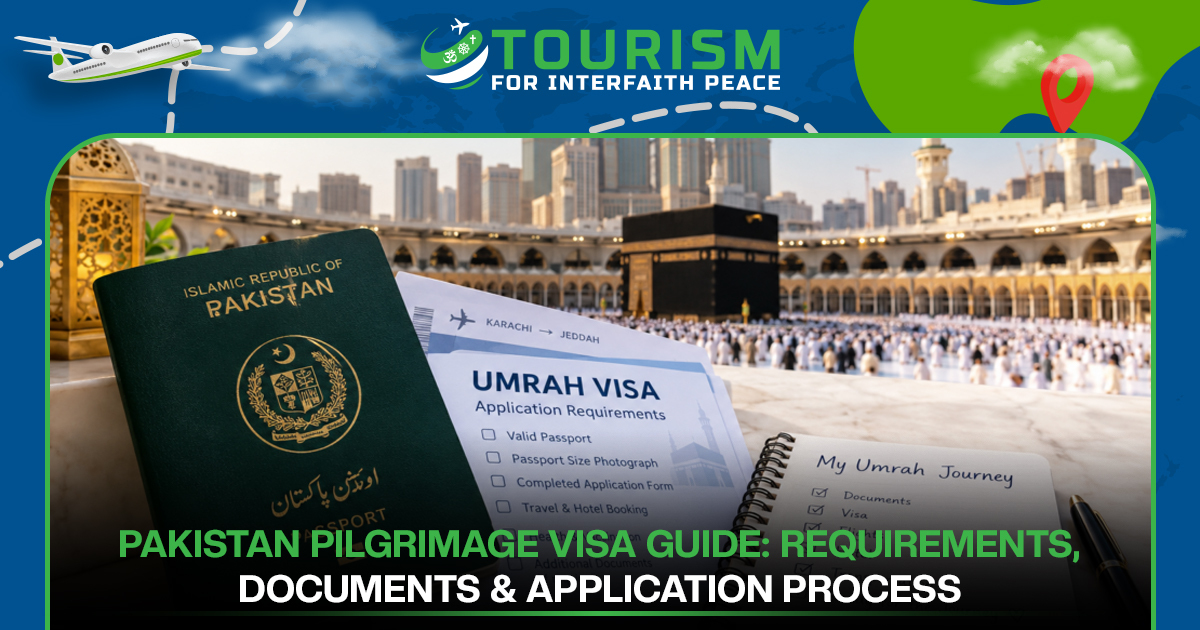
Some of the most important religious heritage sites in the world are located in Pakistan, drawing tourists from Sikh, Buddhist, Hindu, Christian, and other countries. The nation offers significant chances for spiritual travel and cultural discovery, from Gurdwara Darbar Sahib Kartarpur and Nankana Sahib to old Hindu temples and Buddhist monasteries.
Planning a pilgrimage requires a grasp of the visa procedure for foreign tourists. Choosing the right visa category, preparing supporting documentation, filling out the application, and adhering to the pertinent entrance conditions are all part of the Pakistan pilgrimage visa process.
Tourism for Interfaith Peace (TIP), which is dedicated to religious tourism and interfaith cooperation, invites foreign tourists to discover Pakistan’s rich spiritual legacy through responsible and informed travel.
Understanding the Pakistan Pilgrimage Visa
For qualified foreign tourists who want to travel to religious and historical sites, Pakistan provides religious tourism and pilgrimage-related visa procedures.
Pilgrims (Sikh, Hindu, and others) fall under the religious tourism visa category of the Directorate General of Immigration and Passports (DGI&P).
Applicants may need to use the Pakistan Online Visa System or make particular preparations through Pakistani diplomatic missions and appropriate authorities, depending on their nationality and the reason for their trip.
Also Read: How to Plan a Religious Pilgrimage Trip to Pakistan with TIP
Common religious travel interests include:
- Sikh pilgrimage: Visiting Kartarpur Sahib, Nankana Sahib, and Panja Sahib.
- Buddhist pilgrimage: Exploring Taxila, Takht-i-Bahi, and Swat’s Buddhist heritage.
- Hindu pilgrimage: Visiting Katas Raj Temples and other sacred destinations.
- Christian heritage tourism: Exploring historic churches and Christian heritage landmarks.
Pakistan Pilgrimage Visa Requirements
The applicant’s nationality, place of residence, and planned pilgrimage plans all affect the criteria for a visa. Candidates should always check with official immigration authorities to confirm the most recent requirements.
Common requirements may include:
- A valid passport with sufficient remaining validity.
- A recent passport-sized photograph.
- A completed online or prescribed visa application.
- Proof of residence, where applicable.
- If necessary, an invitation or letter of sponsorship from a recognized Pakistani religious organization.
- If necessary, an introduction or recommendation letter from a religious institution in the applicant’s home nation.
- Details of intended pilgrimage destinations and travel itinerary.
- The relevant Pakistani mission has sought additional supporting documentation.
Sikh Pilgrimage Visa Requirements
Depending on their nationality and application method, Sikh pilgrims visiting Pakistan could require additional papers.
For instance, the following criteria are listed by Pakistan’s Embassy in Denmark for qualified Sikh pilgrims:
- Valid passport.
- Recent passport-sized photograph.
- Proof of legal residence for eligible third-country applicants.
- Sponsorship letter from a Sikh Gurdwara in Pakistan.
- Sponsorship letter from a Sikh Gurdwara in Denmark.
- If applicable, the accompanying family members’ relevant marriage or birth certificates.
Countries may have different requirements. Sikh pilgrims from India who travel under the bilateral religious visits protocol also make their own arrangements.
How to Apply for a Pakistan Pilgrimage Visa
For qualified foreign applicants, the Pakistan Online Visa System offers an official portal. The following steps are part of the typical application process.
Step 1: Select the Appropriate Visa Category
Visit the official Pakistan Online Visa System and identify the relevant pilgrimage or religious tourism category.
Verify that the category you have chosen corresponds with your nationality and the reason you are traveling.
Step 2: Create an Online Account
Enter your email address and the necessary personal data to register on the official website. Access the application form after completing the account verification procedure.
Step 3: Complete the Application Form
Provide correct information about your anticipated visit, travel history, passport data, and personal information.
Make sure the dates and locations of your suggested pilgrimages are consistent throughout the application.
Step 4: Upload Supporting Documents
In the designated format, upload the necessary passport, photo, sponsorship letters, and other supporting documentation.
Check that all uploaded documents are readable and contain accurate information.
Step 5: Pay the Applicable Visa Fee
If appropriate, use the payment option on the official website to pay the necessary visa cost. Certain qualifying visa services might be provided at no cost.
Step 6: Submit and Track Your Application
Examine the application before sending it in. Use the portal to keep an eye on its development and reply right away if more details are needed.
Once approved, carefully check the visa validity, permitted entries, and authorised travel conditions before departure.
How Long Does Pakistan Pilgrimage Visa Processing Take?
Processing times vary depending on nationality, visa category, supporting documentation, and the relevant approval process.
The Evacuee Trust Property Board (ETPB) recommends that pilgrims traveling under the 1974 India-Pakistan Protocol on Visits to Religious Shrines apply at least 45 days prior to the planned tour. According to this agreement, visas are granted at least ten days before the start of the trip.
This timeline should not be confused with the processing period for other online pilgrimage visa applications.
Therefore, applicants should apply as soon as possible, refrain from making non-refundable travel plans prior to approval, and adhere to the most recent directives from the appropriate authorities.
Important Visa Documents Checklist
| Document | Purpose |
| Valid passport | Identity and international travel |
| Recent photograph | Visa identification |
| Completed application | Personal and travel information |
| Sponsorship letter | Religious visit support, where required |
| Invitation letter | Confirmation from a Pakistani host, where required |
| Residence proof | Verification of legal residence, where applicable |
| Travel itinerary | Planned pilgrimage destinations |
| Family documents | Supporting details for accompanying dependants, where required |
Preparing documents in advance can help minimise application delays.
Important Travel Considerations for Pilgrims
Obtaining a visa is only one part of pilgrimage planning. Visitors should also consider:
- Confirming accommodation and transportation.
- Checking religious site opening hours and access conditions.
- Arranging knowledgeable local guides.
- Understanding local customs and religious etiquette.
- Checking travel advisories and regional security conditions.
- Keeping printed and digital copies of important documents.
Under the bilateral agreement, eligible Indian Sikh pilgrims may use the distinct visa-free corridor arrangement for visits to the Kartarpur Corridor, subject to the appropriate requirements. Getting a standard pilgrimage visa for a longer stay in Pakistan is not the same as this.
How TIP Can Help With Religious Heritage Tourism
Pakistan’s religious legacy is promoted by Tourism for Interfaith Peace (TIP) as a chance for peaceful interaction, community involvement, and cultural understanding.
For international visitors interested in pilgrimage, TIP’s broader vision highlights the importance of:
- Discovering Pakistan’s diverse religious destinations.
- Understanding the historical significance of sacred landmarks.
- Encouraging respectful interactions between communities.
- Supporting responsible and sustainable heritage tourism.
- Promoting international awareness of Pakistan’s spiritual heritage.
Travelers can get in touch with TIP to find out more about its religious tourism programs and examine the advice that is offered for organizing travel that is heritage-focused. The appropriate government authorities are still in charge of making specific immigration and visa decisions.
Conclusion
A successful pilgrimage depends on knowing the requirements for a visa, getting the right paperwork ready, and adhering to the formal application procedure.
Pakistan’s rich religious legacy gives tourists from other countries the chance to visit hallowed locations, learn about centuries of history, and gain a greater understanding of various cultural customs.
Tourism for Interfaith Peace (TIP) emphasizes the significance of making these travels meaningful, courteous, and accessible through its dedication to religious tourism and interfaith cooperation. Pilgrims can experience Pakistan’s spiritual legacy while promoting more cross-cultural understanding and global goodwill if they are well-prepared and take an enlightened approach.
Frequently Asked Questions
1. How can foreigners apply for a pilgrimage visa to Pakistan?
Foreign nationals who meet the requirements may apply via the Pakistan Online Visa System or by following the instructions provided by the appropriate Pakistani diplomatic office.
2. What documents are required for a Pakistan pilgrimage visa?
A valid passport, a recent photo, a completed application, sponsorship or invitation letters where necessary, evidence of residency when available, and a pilgrimage itinerary are typical documents.
3. How long does Pakistan pilgrimage visa processing take?
The nationality and kind of visa determine processing timelines. Applications must be submitted at least 45 days before to the planned tour in accordance with the 1974 religious visitation guidelines for Indian pilgrims.
4. Can Sikh pilgrims apply for a Pakistan pilgrimage visa online?
Sikh pilgrims who meet the requirements can apply under the appropriate Pilgrim Tourism category on the Pakistan Online Visa System. You might need more sponsorship paperwork.
5. Can pilgrims from different religions visit Pakistan?
Indeed. Subject to appropriate visa and site-access conditions, Pakistan welcomes qualified foreign tourists interested in Sikh, Buddhist, Hindu, Christian, and other religious heritage attractions.
6. Is a sponsorship letter necessary for a pilgrimage visa?
Depending on the applicant’s nationality and kind of visa, a sponsorship or invitation letter can be necessary. Candidates should check with the appropriate Pakistani mission to confirm the particular requirements.
7. Can families apply together for a pilgrimage visa?
Individual applications with pertinent supporting documentation may be submitted by family members. The applicable visa category determines the requirements for spouses and children.
8. Can I visit multiple religious sites with a pilgrimage visa?
This is contingent upon the validity, entrance requirements, and authorized destinations of the visa. Before making trip plans, travelers should make sure that their planned itinerary is allowed.
9. Can a Pakistan pilgrimage visa be extended?
The kind of visa and the relevant immigration laws determine eligibility for an extension. Visitors should review their particular conditions because some protocol-based pilgrimage visas are not renewable.
10. Is the Kartarpur Corridor visit covered by a regular pilgrimage visa?
No. Subject to certain restrictions, eligible Indian Sikh pilgrims can visit the shrine through the Kartarpur Corridor without a standard Pakistani visa thanks to a special bilateral agreement.