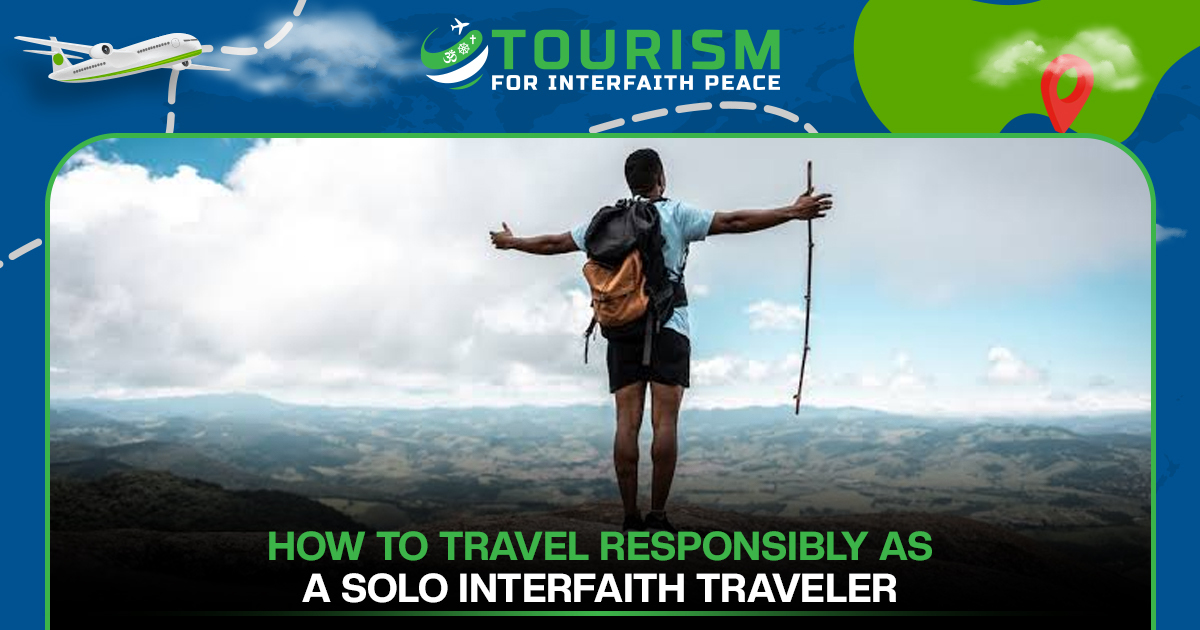
Responsible solo interfaith travel means researching a destination’s customs before arriving, dressing and behaving appropriately at religious sites, asking permission before photographing people or rituals, and staying alert to personal safety throughout the trip. Respect, not just curiosity, is what turns a solo trip into genuine cultural understanding.
Traveling alone through unfamiliar religious and cultural spaces changes how you experience them. Without a group to hide behind, you notice more — the rhythm of a call to prayer, the quiet of a temple courtyard, the way a shopkeeper explains a festival you stumbled into by accident. Solo interfaith travel tends to produce exactly this kind of attention, and attention is where real understanding starts.
It also comes with more responsibility. There’s no group leader managing etiquette on your behalf and no guide smoothing over a misstep. Every choice — what you wear, when you take a photo, how you speak inside a place of worship — is yours alone. Responsible travel, in this context, is less about exploration for its own sake and more about respect that earns you a genuine welcome.
What Is Responsible Solo Interfaith Travel?
Interfaith tourism is travel that intentionally engages with sites and communities across different religious traditions — mosques, temples, churches, gurdwaras, shrines — with the goal of understanding rather than simply sightseeing. Solo travel adds a layer of flexibility: you can linger at a site longer than a group itinerary allows, follow a conversation with a caretaker wherever it leads, or change plans based on what a local recommends.
That flexibility only pays off with cultural sensitivity. Mutual understanding is built one interaction at a time, and it depends on travelers who arrive willing to observe before acting, and to respect beliefs they may not share or fully understand. A solo traveler who does this well often gets access and conversation that a larger group simply doesn’t.
Preparing Before Your Journey
Preparation is where responsible travel actually begins, well before you reach a religious site. Research your destination beyond the headline attractions — learn which communities are active there, what their customs involve, and what days or hours carry particular significance. Understand dress codes in advance so you’re not scrambling for a scarf or modest layer at the entrance.
Carry the identification and permissions relevant to where you’re going, plan your transportation with reliable operators, and keep emergency contacts saved both digitally and on paper in case your phone loses signal. Choosing the right structure for your trip matters too — travelers weighing group support against full independence may find it useful to look into choosing the right interfaith tour operator, even if the plan is to travel solo for most of the journey and join guided moments only at specific sites.
Respecting Religious Sites and Communities
Appropriate clothing is the most visible sign of respect: covering shoulders and knees, removing shoes where required, and carrying a scarf for mosques or shrines that ask for it. Photography etiquette matters just as much — ask before photographing people, and never photograph active rituals or prayer without clear permission.
Prayer times shape how a space should be used. Visiting quietly outside active prayer, lowering your voice, and avoiding unnecessary movement near people in worship all show basic awareness. When in doubt, ask a caretaker or local guide rather than guessing — most people welcome a respectful question far more than a confident mistake. Supporting local communities through guides, artisans, or small local businesses, and being mindful about preserving heritage sites from overcrowding or careless handling, rounds out what respectful presence looks like in practice.
| Personal Safety Tips for Solo Travelers 1. Share your itinerary with someone you trust before you leave, and update them if plans change. 2. Stay aware of your surroundings, especially in unfamiliar neighborhoods or crowded sites. 3. Use trusted, verified transportation rather than unmarked or unofficial rides. 4. Avoid isolated areas after dark, particularly around religious sites that are quiet outside daylight hours. 5. Secure valuables and carry only what you need for the day. 6. Respect local laws, including any restrictions specific to religious or protected sites. 7. Stay connected — keep a charged phone and local emergency numbers on hand at all times. |
How Responsible Travel Builds Interfaith Understanding
Every respectful interaction chips away at a stereotype. A traveler who removes their shoes without being asked, who listens more than they photograph, who asks a genuine question instead of making a comparison, leaves behind a small but real impression that outsiders can be thoughtful guests. Multiplied across enough travelers, that impression becomes part of how a community understands the outside world.
This is the practical mechanism behind interfaith tourism’s larger goal: reducing misconceptions not through lectures, but through lived, respectful contact. Understanding respecting religious diversity as an ongoing practice, rather than a one-time checklist, is what separates travelers who deepen interfaith dialogue from those who simply pass through.
Practical Checklist for Solo Interfaith Travelers
Before you go, it also helps to think through planning your travel budget alongside the checklist below, since responsible spending and responsible behavior tend to reinforce each other.
- Valid travel documents and any required permissions for specific sites
- Appropriate, modest clothing suited to the religious sites on your route
- Local emergency numbers saved offline
- A clear sense of respectful behavior expected at each site type
- A plan for responsible photography — ask first, always
- Sustainable travel habits: minimal waste, local spending, small footprint
- General cultural awareness of the traditions you’re likely to encounter
Conclusion
Solo interfaith travel asks more of you than a typical group tour, but it also offers more in return — quieter moments, deeper conversations, and a more honest sense of the places you visit. None of that requires expertise. It requires attention, humility, and a willingness to be a guest rather than a spectator.
Every respectful traveler who follows local customs, asks before assuming, and leaves a place better than they found it becomes, in some small way, an ambassador of peace. That’s the quiet power of responsible interfaith tourism — one respectful visit at a time, building the kind of understanding that outlasts the trip itself.
Frequently Asked Questions
Is solo interfaith travel safe?
It can be, with preparation. Sharing your itinerary, using trusted transportation, staying alert in unfamiliar areas, and researching site-specific rules in advance all reduce risk significantly.
What should I wear when visiting religious sites?
Modest clothing that covers shoulders and knees is a safe default across most traditions. Carrying a scarf is useful for mosques, shrines, and some temples that require head covering.
Can I take photographs inside places of worship?
It depends on the site. Always ask permission first, and never photograph people or active rituals without clear consent.
How can I respect local religious customs?
Observe before acting, follow dress codes, keep your voice low in worship spaces, and ask questions respectfully rather than assuming you already understand a practice.
What documents should I carry while traveling to religious sites?
Valid identification and any site-specific permissions required for protected or restricted locations. Requirements vary by site, so it’s worth confirming in advance rather than assuming access.
Should solo travelers hire a local guide for interfaith trips?
It’s not mandatory everywhere, but a local guide often provides context and etiquette guidance that make the visit both safer and more meaningful, particularly at active or lesser-known sites.
How can solo travelers budget for interfaith trips responsibly?
Planning your travel budget around local transport, homestays, and local guides tends to stretch further while keeping more of the spending within the community you’re visiting.