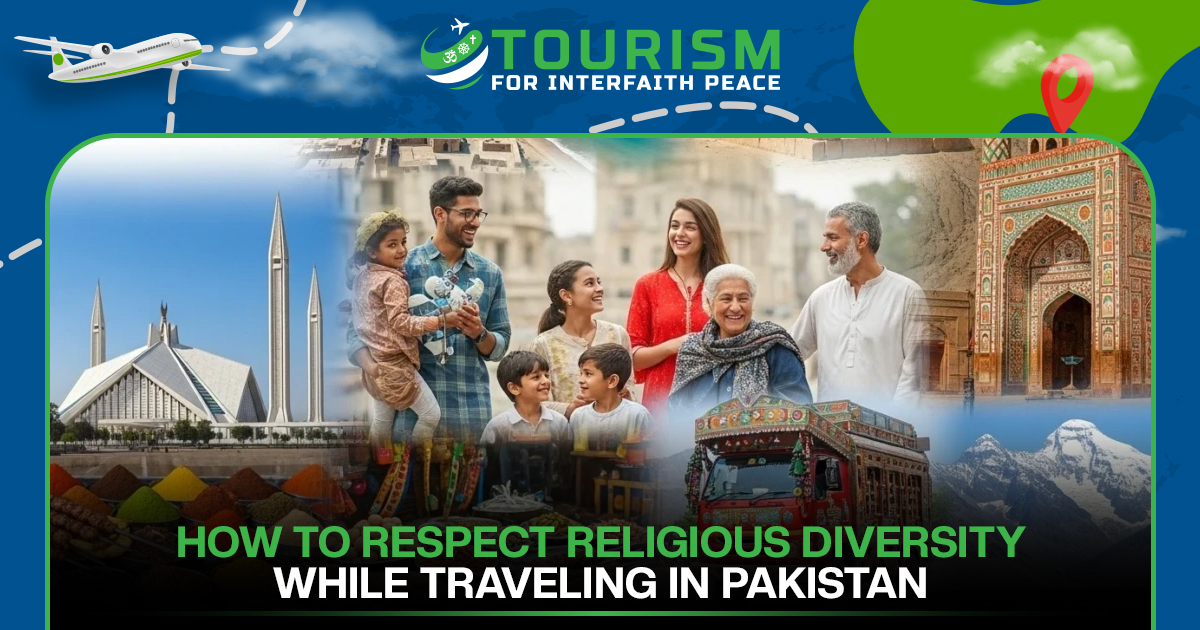
Respecting religious diversity while traveling in Pakistan means understanding local customs, behaving appropriately in places of worship, and showing awareness of different beliefs. Simple actions like dressing modestly, observing quietly, and following local etiquette help travelers build trust and avoid misunderstanding.
Pakistan is home to multiple religious traditions, and visitors often encounter different practices within a single trip. Knowing how to navigate this respectfully makes the experience more meaningful for both travelers and local communities.
In this guide, we will explain practical ways to respect religious diversity, understand interfaith travel etiquette, and explore Pakistan responsibly.
Understanding Religious Diversity in Pakistan
Pakistan is often viewed as a single-culture country, but in reality, it has a layered and diverse religious history. Alongside Islamic traditions, there are Sikh, Hindu, Christian, and Buddhist heritage sites across different regions.
This diversity is visible in:
- Active mosques and Sufi shrines
- Historic gurdwaras such as Kartarpur
- Hindu temples in Sindh and Punjab
- Churches in urban centers
- Buddhist archaeological sites in Taxila and Swat
This coexistence creates a strong foundation for multicultural tourism in Pakistan. However, it also requires travelers to be aware and respectful of different practices.
Also Read: What Are the Key Principles of Ethical Interfaith Tourism?
Organizations like Tourism for Interfaith Peace actively promote this understanding by encouraging responsible and respectful travel across religious communities.
Why Respecting Religious Diversity Matters
Builds Trust with Local Communities
When travelers show respect for local beliefs, they are welcomed more openly. Respect creates comfort, and comfort leads to better interaction.
Small actions such as removing shoes before entering a mosque or covering your head in certain spaces signal awareness and respect.
Prevents Unintentional Offense
Many travelers do not intend to be disrespectful, but a lack of awareness can lead to uncomfortable situations.
Understanding basic etiquette helps avoid:
- Entering restricted areas
- Taking photos where it is not allowed
- Interrupting religious practices
These details matter because places of worship are not tourist attractions. They are active spiritual spaces.
Supports Interfaith Harmony
Respectful behavior encourages positive interaction between visitors and local communities. Over time, this contributes to a broader culture of understanding and coexistence.
Leaders like Syed Sadat Hussain Shah emphasize that respectful tourism can play a role in strengthening harmony and promoting Pakistan’s diverse identity.
Interfaith Travel Etiquette in Pakistan
Understanding basic etiquette is essential when visiting religious sites or interacting with different communities.
Dress Modestly and Appropriately
Clothing is one of the first signs of respect.
Travelers should:
- Wear clothes that cover shoulders and knees
- Avoid tight or revealing outfits
- Carry a scarf when visiting mosques or shrines
This shows awareness of cultural norms and helps avoid unwanted attention.
Remove Shoes Where Required
In many religious places, especially mosques and some temples, shoes must be removed before entering.
Always observe:
- Whether others are removing shoes
- Designated areas for shoe storage
This is a basic but important practice.
Maintain Silence and Respect the Space
Places of worship are meant for prayer and reflection.
While visiting:
- Keep your voice low
- Avoid unnecessary movement
- Do not disturb people during prayer
Being quiet shows respect for the purpose of the space.
Ask Before Taking Photos
Photography rules vary from place to place.
Before taking photos:
- Ask permission from staff or locals
- Avoid photographing people without consent
- Do not take photos during religious rituals
This prevents discomfort and shows consideration.
Follow Gender-Specific Guidelines
Some places may have separate areas for men and women.
It is important to:
- Respect these boundaries
- Follow local instructions
- Avoid crossing into restricted sections
These practices are part of maintaining order and respect.
Cultural Sensitivity for Travelers
Respecting religious diversity is not just about rules. It is about mindset.
Stay Observant and Adapt
Every place has its own environment. Before acting, take a moment to observe how others behave.
This helps you:
- Understand local expectations
- Avoid mistakes
- Adjust naturally to the setting
Avoid Making Comparisons
Comparing one religion or culture to another can come across as disrespectful.
Instead:
- Focus on understanding
- Ask questions with curiosity
- Listen without judgment
Respect Local Beliefs Even If You Disagree
You do not need to agree with every belief, but you should respect it.
Respect means:
- Not criticizing openly
- Not mocking traditions
- Allowing others to practice freely
This creates a positive environment for interaction.
Visiting Religious Sites Respectfully
When visiting religious sites in Pakistan, it is important to treat them as living spaces rather than tourist attractions.
Understand the Purpose of the Place
Each site has a purpose, whether it is prayer, gathering, or spiritual reflection.
Take time to understand:
- What the site represents
- How people use it
- Why is it important to the community
Engage with Respectful Curiosity
If you want to learn more:
- Ask questions politely
- Speak to guides or caretakers
- Show genuine interest
People are often willing to share when approached respectfully.
Contribute Positively
In some places, visitors can contribute by:
- Supporting local guides
- Donating where appropriate
- Respecting cleanliness and order
These actions help maintain the site and support the community.
The Role of Responsible Tourism in Pakistan
Respecting religious diversity is part of responsible tourism.
When travelers act with awareness:
- Communities feel valued
- Cultural heritage is preserved
- Positive experiences are shared globally
This strengthens Pakistan’s image as a destination for multicultural tourism.
Efforts by platforms like Tourism for Interfaith Peace are helping build this narrative by promoting interfaith understanding through tourism.
Conclusion
Respecting religious diversity while traveling in Pakistan is not complicated. It comes down to awareness, observation, and simple acts of respect.
When travelers approach different cultures with an open mind and responsible behavior, they not only avoid misunderstandings but also gain deeper and more meaningful experiences.
In a country as diverse as Pakistan, respectful travel is not just good practice. It is essential for building understanding and creating positive connections.
FAQs
Q. What should I wear when visiting religious sites in Pakistan?
Wear modest clothing that covers shoulders and knees. Carrying a scarf is helpful for visiting mosques or shrines.
Q. Can tourists visit mosques and temples in Pakistan?
Yes, many religious sites allow visitors, but you must follow local rules and respect ongoing practices.
Q. Is photography allowed at religious sites?
It depends on the location. Always ask for permission before taking photos, especially during religious activities.
Q. How can I avoid being disrespectful while traveling?
Observe local behavior, follow etiquette, ask before acting, and remain respectful in all interactions.
Q. Why is cultural sensitivity important for travelers?
It helps build trust, prevents misunderstandings, and creates a more positive experience for both visitors and local communities.