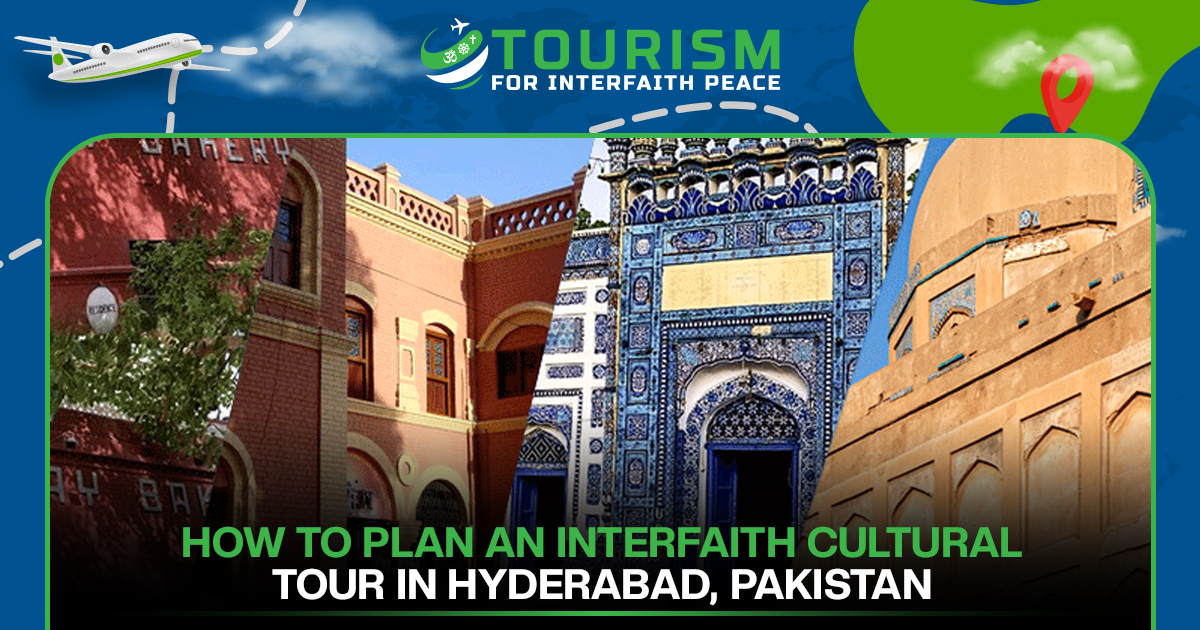
There is a city in Sindh that does not announce itself loudly. It does not have the international airport of Karachi or the political weight of Islamabad. Yet Hyderabad carries something those cities have to work harder to preserve — a layered, lived-in religious heritage that has accumulated over centuries and never quite disappeared.
Mosques and temples, shrines and churches, Sufi dargahs and Hindu mandirs: in Hyderabad, they do not exist as museum pieces. They exist as active, breathing spaces where communities still gather, still pray, still celebrate. For the traveler who wants more than photographs, that distinction matters enormously.
Understanding why Pakistan is emerging as a unique interfaith travel destination helps set the context — but Hyderabad earns its place at the center of that story on its own terms.
This guide will show you how to plan that journey well.
Why Hyderabad Is One of Pakistan’s Most Fascinating Interfaith Destinations
Hyderabad was once the capital of Sindh — a region whose multicultural history stretches back to the Indus Valley Civilisation. That history was never purely one thing. Sindh has been shaped by Hindu kingdoms, Muslim conquerors, Sufi saints, British colonial administrators, and a post-Partition migration that permanently altered its demographic character.
What that history left behind is a city where a Sufi shrine might sit three streets from a Hindu temple that still functions, where the marble architecture of a colonial-era church shares a neighbourhood with a centuries-old mosque. For the interfaith traveler, Hyderabad is not an exercise in nostalgia. It is proof that religious coexistence has deep roots in this soil.
Have you ever arrived somewhere and felt that the place was holding a conversation you had not been invited to — until you stopped and listened?
| “Hyderabad does not perform its diversity. It simply lives it.” |
What Is an Interfaith Cultural Tour?
An interfaith cultural tour is a structured travel experience designed to expose visitors to the sacred spaces, religious traditions, and faith communities of a destination. It goes beyond sightseeing to create meaningful encounters with living religious culture — through guided visits, community interactions, and reflective engagement with places of worship across different traditions.
Unlike conventional heritage tours, interfaith travel asks something of the visitor: genuine curiosity, respectful presence, and the willingness to learn from traditions that are not their own. It is one of the most direct forms of cultural exchange travel available to the modern traveler.
Why Interfaith Tourism Matters More Than Ever
We live in an era of accelerating polarisation. Communities that once existed in uneasy proximity now increasingly consume different information, inhabit different digital worlds, and interpret the same events in ways that feel irreconcilable. Travel has always been a partial corrective to this tendency — but interfaith tourism is something more deliberate.
When you sit with a Hindu priest in a working mandir in Hyderabad, or listen to a Sufi qawwal perform at a dargah, or walk through a Zoroastrian fire temple with a guide from that community, something shifts. You stop encountering a religion as a concept and start experiencing it as a practice, held by particular people, in a particular place.
What stories might emerge if we listened before judging?
| “Empathy does not grow in the abstract. It grows in the specific — in a conversation, a threshold, a shared meal.” |
The research on interfaith dialogue consistently finds that direct, positive contact between members of different religious groups is one of the most effective ways to reduce prejudice and build social cohesion. Tourism, when done thoughtfully, is one of the few civilian mechanisms that creates that contact at scale.
For youth travelers especially, interfaith tourism offers something that classroom dialogue cannot: the irreversible experience of having been somewhere, met someone, and been changed by it.
Could travel become a bridge rather than just an escape? Hyderabad suggests the answer is yes — if the traveler is willing.
Step-by-Step Guide to Planning Your Hyderabad Interfaith Tour
Step 1: Define Your Purpose
Before you look at maps or book accommodation, spend time with one question: what do you want this journey to mean?
Are you traveling to deepen your own spiritual understanding? To photograph sacred spaces? To build connections between communities? To produce content, conduct research, or simply experience something you cannot find at home? The answer shapes every decision that follows — which sites you prioritise, which communities you engage with, how much time you allocate to stillness rather than movement.
How often do we begin a journey without first asking what we hope to carry home?
Step 2: Research Sacred and Shared Spaces
Hyderabad’s interfaith map includes sites that span multiple traditions. The Pakka Qila (the old fort) anchors the historical centre. The Shah Makkai Hill area is dense with shrines, temples, and mosques operating in close proximity. The Resham Gali neighbourhood retains remnants of a once-thriving Hindu merchant community.
Imagine walking through a street where the call to prayer mingles with the sound of a temple bell — not in conflict, but as two instruments playing in the same city. That is Hyderabad on an ordinary morning.
Practical research should include: current opening hours of active religious sites, which spaces welcome non-adherent visitors, whether any significant festivals or observances coincide with your dates (these can be the most powerful moments to witness), and which sites require advance permission for entry.
Step 3: Build a Respectful Itinerary
A common mistake in heritage travel is to pack too much. Three sites visited with genuine attention are worth more than ten sites photographed from a distance. Plan for pause — time to sit in a courtyard, to observe a ritual without rushing, to ask a question and wait for a full answer.
Avoid scheduling visits to active places of worship during principal prayer times unless you are there specifically to observe a service with permission. Early morning and late afternoon visits tend to yield the most meaningful experiences — quieter, less crowded, and often when daily religious practices are most visible.
Think about sitting with a caretaker of a centuries-old shrine as he explains what this space has meant to his family for four generations. That conversation cannot be scheduled. It can only be made possible — by arriving unhurried.
Step 4: Connect With Local Experts
The quality of an interfaith tour is largely determined by who is guiding it. Local experts — historians, religious scholars, community liaisons, experienced interfaith guides — bring context that no travel app can provide. They know which spaces are currently accessible, which community leaders are open to dialogue, and how to facilitate encounters that feel genuine rather than staged. Plan your interfaith journey with a team that has that kind of embedded knowledge.
| Ready to begin your Hyderabad interfaith journey?Our team can help you build a tour that is meaningful, respectful, and genuinely transformative.» Plan your interfaith journey « |
Step 5: Prepare Emotionally and Logistically
Logistics first: Hyderabad is accessible by road and rail from Karachi (approximately two to three hours). Accommodation ranges from budget guesthouses near the city centre to mid-range hotels in the newer commercial areas. The city is generally navigable on foot in the old quarters, though rickshaws and ride-hailing apps are widely available.
For emotional preparation: read about Sindh’s religious history before you arrive. Understand, in broad terms, what happened to Hindu communities at Partition and what remained. Be familiar with the significance of Sufism in Sindhi Islamic practice. Know something about the Zoroastrian presence in Pakistan’s history. Arriving with even a basic framework allows you to receive what you see with more depth.
But the greatest preparation may simply be arriving with an open mind.
Beyond Hyderabad: Other Interfaith Experiences Across Pakistan
Hyderabad is a compelling starting point — but Pakistan’s interfaith heritage is not contained in a single city. The country holds one of the most diverse and underrecognised religious landscapes in Asia, and each region tells a different part of that story.
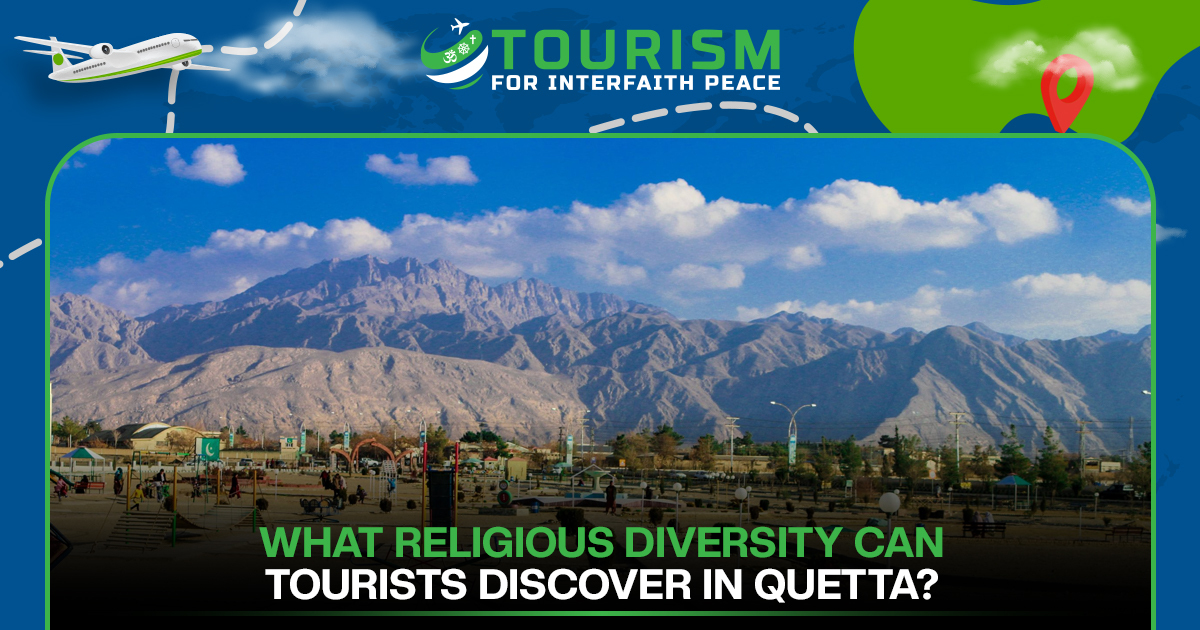
In the west, travelers can discover Quetta’s religious heritage — a city shaped by Baloch, Pashtun, Hazara, and Afghan communities, each bringing distinct religious traditions that coexist in ways that rarely make international headlines.
Northward, those inspired by Hyderabad may find equally meaningful interfaith experiences in Faisalabad — where industrial modernity overlays a city with deep roots in Punjab’s multicultural heritage.
And for travelers planning a longer itinerary, this interfaith travel guide to Karachi reveals one of the world’s great megacities as a palimpsest of faiths — Zoroastrian, Hindu, Christian, Ismaili, Shia, Sunni — each with distinct architectural and community presence.
Have you ever returned from a journey feeling changed — not by what you saw, but by who you met along the way?
| “Pakistan’s interfaith heritage is not a relic. It is a living system — and the traveler who approaches it with respect will find it surprisingly willing to open itself.” |
How Tourism for Interfaith Peace Helps Travelers Experience Pakistan Differently
Most tour operators treat religious sites as stops on an itinerary. Tourism for Interfaith Peace treats them as entry points into living communities.
We bring together our unique skills and expertise to deliver solutions tailored to your needs. Whether you are looking for guidance, creative ideas, or hands-on support, our team is here to listen and work with you every step of the way.
That means building itineraries around your purpose — not around what is easiest to photograph. It means connecting you with local religious scholars, community custodians, and interfaith dialogue practitioners who bring depth to every site visit. It means handling the practical and cultural logistics so that you can focus on the experience itself.
Our work spans Hyderabad, Karachi, Lahore, Quetta, Faisalabad, and beyond. We do not run generic heritage tours. We design encounters — experiences that leave travelers with something they did not have before: a conversation they keep returning to, a perspective they cannot unsee, a connection across difference that quietly rearranges their assumptions.
Envision experiencing the azaan rising from a mosque courtyard, then walking sixty seconds to a functioning Hindu temple where the evening aarti is beginning. That is not a curated spectacle. That is Hyderabad on a Tuesday.
| Ready to experience Pakistan’s interfaith heritage with expert guidance? Our team is ready to design your journey. » Contact our team today « |
Responsible Travel Tips for Interfaith Visitors
Interfaith tourism works best when travelers bring intention to their conduct. These principles are not rules — they are invitations to travel well.
- Dress modestly at all religious sites. Shoulders and knees covered is the safe default across traditions in Pakistan. Carry a scarf or shawl for additional cover when required.
- Ask before photographing. Many worshippers are comfortable with respectful documentation; others are not. A quiet question is always more respectful than a quietly taken photograph.
- Observe before participating. Unless explicitly invited, watch rituals from a respectful distance before asking to engage more closely.
- Learn a few words of Sindhi and Urdu greeting. Even a basic salaam or aap kaisay hain signals genuine respect for local culture and typically elicits warm responses.
- Follow entry protocols. Some sites require footwear removal, head covering, or gender-separated entry. Comply without needing to be reminded.
- Spend locally. Use local guides, eat at local restaurants, buy from community vendors. Responsible tourism Pakistan means keeping economic benefit within the communities you are visiting.
- Accept that not everything is accessible. Some spaces are not open to non-adherents and that boundary deserves complete respect.
- Travel slowly. The depth of an interfaith experience is inversely proportional to the pace at which you move through it.
Picture yourself sitting at the threshold of a Sufi dargah as the evening begins — the scent of incense, the murmur of dhikr, the feeling that you have been permitted to witness something that does not perform for visitors. That experience requires only patience and respect.
Frequently Asked Questions
What is an interfaith cultural tour?
An interfaith cultural tour is a travel experience focused on visiting sacred spaces and engaging with faith communities across different religious traditions. It combines heritage sightseeing with meaningful community interaction, designed to build understanding, empathy, and cultural awareness across religious differences.
Why visit Hyderabad specifically for interfaith tourism?
Hyderabad is one of the few cities in Pakistan where Hindu, Muslim, Sufi, and other religious traditions remain visible and active in close proximity. Its history as the former capital of Sindh gives it an unusual depth of multicultural heritage that has survived Partition, migration, and modernisation — making it genuinely distinctive for interfaith travelers.
Is Pakistan safe for cultural tourism?
Yes, for prepared and properly guided travelers. Pakistan has seen significant improvements in its security environment over the past decade. Sindh, including Hyderabad, has an established domestic tourism culture. Traveling with a reputable local operator who knows the current ground conditions is the most practical way to ensure a safe and meaningful experience.
Can Tourism for Interfaith Peace organise customised tours?
Yes. Tourism for Interfaith Peace specialises in tailored interfaith itineraries for individual travelers, academic groups, faith organisations, and documentary or journalistic projects. Every itinerary is built around the specific purpose and interests of the traveler rather than a fixed programme.
What should I wear when visiting religious sites in Hyderabad?
Modest dress is appropriate across all religious sites. Cover shoulders and knees as a baseline. For mosques and many shrines, women will need to cover their hair. For Hindu temples, footwear is typically removed at the entrance. Carrying a light shawl allows flexible adaptation across different sites in a single day.
How much time should I spend in Hyderabad?
A minimum of two full days allows meaningful engagement with Hyderabad’s interfaith sites. Three to four days is recommended for travelers who want to include community interactions, attend local religious observances, and explore the old city quarters at a reflective pace. Hyderabad pairs well with Karachi on a wider Sindh itinerary.
What other interfaith destinations should I explore in Pakistan?
Pakistan offers a rich network of interfaith destinations beyond Hyderabad. Karachi’s diverse religious communities and colonial-era sacred architecture make it essential. Quetta offers a distinct Baloch and Hazara interfaith context. Faisalabad carries Punjab’s multicultural heritage. Lahore, Multan, and Thatta each add further depth to a comprehensive faith-based itinerary.
How do I start planning my interfaith tour of Hyderabad?
Begin by defining your purpose for the journey, then contact a specialist operator like Tourism for Interfaith Peace who can advise on current site access, community contacts, and seasonal timing. A brief consultation will clarify your options and allow the team to design an itinerary matched to your interests, timeline, and budget.
A Journey Worth Taking
Hyderabad is not a city that tries to impress you. It does not have a skyline designed for Instagram or a tourism infrastructure built around international expectations. What it has is something rarer: authenticity. A religious heritage that has been lived rather than curated, preserved not in amber but in daily practice.
Interfaith tourism asks something specific of the traveler. It asks for presence — real presence, not the distracted proximity of someone moving from sight to sight. It asks for openness to being affected by what you encounter. It asks for the humility to recognize that a tradition you do not share may nonetheless have something to teach you.
Consider hearing a Sufi singer perform at a dargah that has stood for four hundred years — not as a tourist attraction but as an act of devotion, the same act performed in the same space across four centuries of history. What does that do to your sense of time? Of continuity? Of what it means to believe in something?
| “The most transformative journeys are rarely the ones we planned most carefully. They are the ones where we arrived open enough to be surprised.” |
Pakistan’s interfaith story is still being written. Why Pakistan is emerging as a unique interfaith travel destination is a question with an increasingly compelling answer — and Hyderabad is one of the places where that answer comes alive.