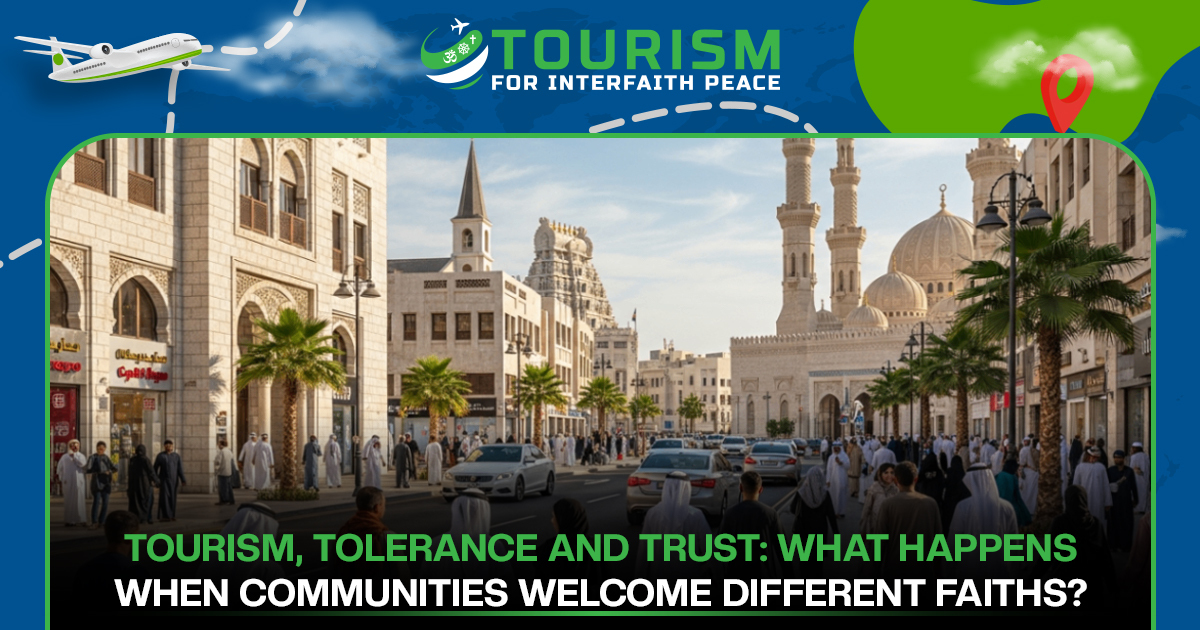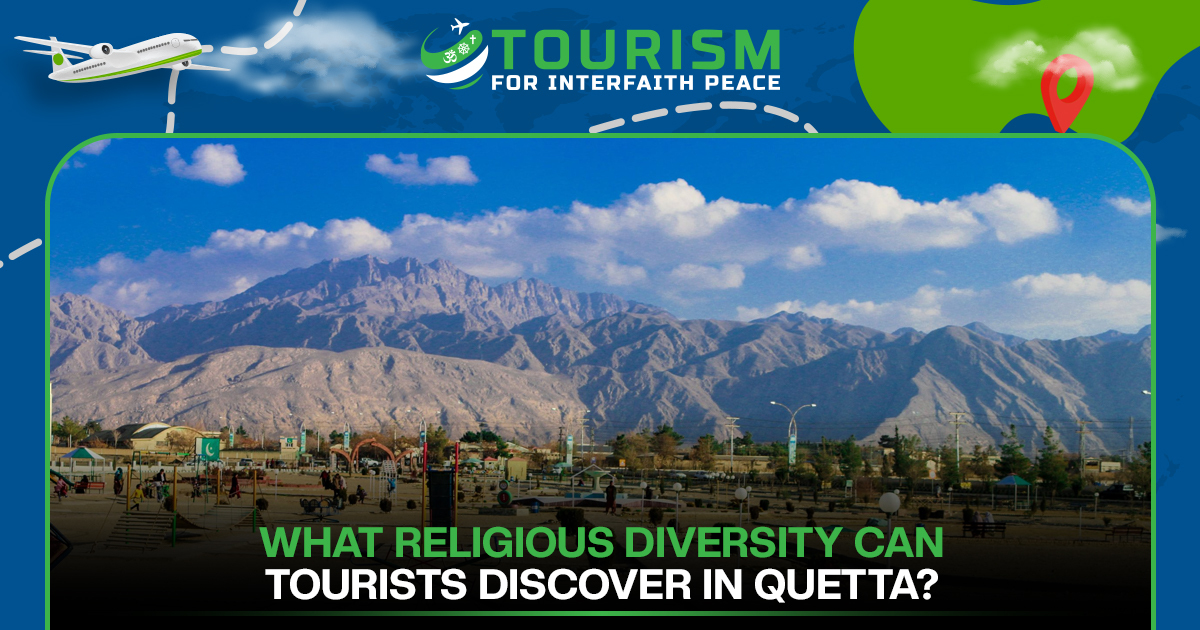
It is late afternoon in Quetta, and the call to prayer is rising from the minarets of Masjid-e-Tooba just as the bells of a small Anglican church three streets away ring out their own quiet announcement. Nobody in the bazaar looks up. Not because they are indifferent, but because the sound of more than one faith has been the background music of this city for as long as anyone can remember.
Quetta does not announce its cultural complexity the way other cities do. There are no grand slogans painted on its walls about unity or coexistence. The diversity here is older than the slogans, older than the signage, older in many respects than the modern state itself. It lives in the architecture, in the surnames of families who have been neighbours across religious lines for five generations, and in the quiet rituals of daily life in a city that sits at one of South Asia’s most ancient crossroads.
For the curious traveller, that complexity is one of Quetta’s most underappreciated offerings. This is a city where you can walk from a centuries-old mosque to a functioning Christian church to the faded stones of a Hindu temple within the space of a single morning — and feel, in each place, that you are encountering something genuine rather than preserved for tourism.
| Quetta’s diversity is older than the slogans. It lives in the architecture, in the surnames of neighbours, and in the quiet rhythms of a city built at an ancient crossroads. |
A City Shaped by Every Road That Passed Through It
Quetta’s multicultural character was not planned. It was earned — accumulated through centuries of geography doing what geography does to cities located at important junctions. Sitting in the Balochistan plateau, surrounded by mountain passes that connect Central Asia, Persia, Afghanistan, and the Indian subcontinent, Quetta was never just a local settlement. It was a waypoint, a market town, a garrison, and eventually a colonial administrative capital, each phase of its history depositing a new layer of people and belief.
The Kachi and Bolan passes brought merchants and migrants from the northwest for millennia before the British arrived. Hindu trading communities established themselves along these routes long before Partition, running businesses that connected Balochistan to the broader subcontinent. Sikh travellers and soldiers followed the same corridors. The British colonial period brought Christian missionaries and administrators, and with them, churches, schools, and institutions whose physical traces remain visible in the city today.
Also Read: Which Interfaith Experiences Can Travelers Explore in Faisalabad?
What the 1935 earthquake did not destroy the old city, time has preserved in fragments and memory. The result is a place where the cultural heritage of Balochistan cannot be understood through a single religious or ethnic lens. It requires patience, curiosity, and a willingness to look past the surface of what seems, at first glance, like a fairly ordinary provincial capital.
The Faiths of Quetta: What the Buildings Remember
Islam: Mosques, Sufi Shrines, and Living Devotion
Islam is the dominant faith of Quetta and Balochistan, and the city’s mosques range from large congregational spaces to intimate neighbourhood masjids tucked into residential streets. But it is the Sufi dimension of Islamic practice in this region that gives Quetta’s religious culture much of its particular warmth and accessibility.
Sufi shrines, known locally as dargahs and ziarat, dot the landscape around Quetta. These are living places of devotion, not museum pieces — visited by pilgrims who come to pray, to seek blessings, and sometimes simply to sit in a space that feels, as one longtime resident described it, “close to something older than argument.” The Sufi tradition in Balochistan has historically been one of the more inclusive strands of Islamic practice on the subcontinent, emphasising personal experience of the divine over doctrinal rigidity, and scholars believe this cultural emphasis has contributed to the relatively tolerant character of religious life in the region.
Visitors who attend Friday prayers at one of Quetta’s larger mosques, or who are fortunate enough to witness a qawwali evening at a local shrine, will encounter a form of spiritual expression that is simultaneously deeply specific to this place and recognisable across any boundary of belief.
Christianity: Churches That Outlasted Empire
The Christian community of Quetta is small but continuous. Its roots lie primarily in the British colonial period, when churches were established to serve British officers, Indian Christian soldiers, and local converts. Some of those buildings still stand.
St. Mary’s Church is among the most historically significant Christian sites in Quetta, a building that has survived earthquake, partition, and the passage of more than a century. It continues to hold regular services for the city’s Christian community, who represent a minority but one with deep local roots. Wandering through the older cantonment area of the city, visitors may also encounter smaller chapels and mission buildings that speak to a chapter of Quetta’s history that is rarely discussed in travel literature but is part of the complete picture.
What strikes most visitors is not the buildings themselves but the fact that they are still in use — that real congregations gather, that the community is not a relic but a living part of the city. That quiet persistence is, in its own way, a form of interfaith harmony in practice.
Hindu Heritage: Temples, Traders, and Traces in Stone
The Hindu presence in Quetta predates the British colonial period and extends back through the trade networks that connected Balochistan to Sindh, Rajasthan, and beyond. Hindu merchants were central to the commercial life of pre-Partition Quetta, and a small but notable Hindu community remains in the city today.
Several Hindu temples exist in Quetta, though their condition and accessibility varies. The Swami Narayan Temple and a handful of smaller mandir sites serve the remaining community and offer the attentive visitor a window into a presence that, while much diminished from its pre-1947 scale, has not disappeared. These spaces carry a particular atmosphere — part active place of worship, part living monument to a history that Partition did not fully erase.
For those interested in the cultural heritage of Balochistan more broadly, the Hindu architectural traces in Quetta complement what can be found along the trade routes further east — painted havelis, merchant houses, and commercial buildings whose construction reflects the prosperity and aesthetic confidence of a community that was, for several generations, woven into the fabric of this city.
Sikh Heritage: Legacy Routes and Living Memory
Quetta’s connection to Sikh history runs primarily through the caravan routes that brought Sikh merchants, soldiers, and travellers through Balochistan across several centuries. During the Sikh Empire’s period of influence in the nineteenth century, the routes through the Bolan Pass were of significant strategic and commercial importance, and the Sikh presence in Quetta reflected that broader network.
A small number of Sikh families remained in Quetta after Partition, and there are gurudwara sites in and around the city that mark the community’s historical presence. For Sikh travellers on heritage journeys across Pakistan — a growing form of cultural tourism that has brought visitors from India, the United Kingdom, and North America in recent years — Quetta represents one node in a wider network of historical sites that extends from Lahore through Peshawar and into Balochistan.
Even for visitors without personal connection to Sikh history, these sites offer something valuable: a reminder that the religious diversity of this region was never a recent phenomenon or a policy achievement, but a historical reality that predates the modern states that now govern this landscape.
| The religious diversity of Quetta was never a policy achievement. It is a historical reality older than the states that now govern this landscape. |
Interfaith Harmony as a Daily Practice
There is a tendency in travel writing about religiously diverse cities to reach for the grand gesture — the moment when all the communities gather in a public square to celebrate something together, photographically perfect and politically reassuring. Quetta’s interfaith story is quieter and more durable than that.
It lives in the bazaar, where traders of different backgrounds have worked side by side for generations, where the rhythm of commerce has always mattered more than the question of who prays where. It lives in the shared language of hospitality that cuts across religious lines in Balochistan, in the custom of offering tea to a stranger regardless of who they are, in the family stories that cross community boundaries through generations of neighbourly life.
At festival times — during Eid, during Christmas, during the Hindu calendar’s major observances — there is a quality of mutual acknowledgement that visitors from more segregated societies sometimes find surprising. Not effusive, not performative, but real. Neighbours note each other’s celebrations. The sweetmeat shops do particularly good business regardless of which festival is current.
This is what sustained coexistence actually looks like in practice. Not the absence of tension, but the accumulated weight of shared daily life that makes rupture harder and reconciliation faster. Quetta is not a utopia. But it carries within it a tradition of managing difference that has outlasted considerable pressure, and that tradition is visible to anyone willing to look for it.
What the Visitor Can See, Feel, and Take Home
Quetta rewards the slow traveller more than the itinerary-driven tourist. The city’s religious and cultural heritage is not concentrated in a single heritage zone or museum complex. It is distributed across the urban fabric, discoverable through walking, conversation, and the willingness to follow a lead rather than a map.
| A Heritage Walk Through Quetta’s Faiths — What to Look ForThe cantonment area: colonial-era churches, cemetery inscriptions reflecting multiple faiths, administrative buildings with hybrid architectural influencesThe old bazaar district: Hindu temple sites, the commercial architecture of former merchant communities, narrow lanes with layered historiesSufi shrines on the city’s edges: morning and evening visits are most atmospheric; ask locally about qawwali sessionsThe Friday Market (Jumma Bazaar): cross-community commercial life at its most vividThe Hazara Town area: distinct Shia community culture, unique religious observances, and renowned hospitality |
Beyond the physical sites, some of Quetta’s most memorable cultural experiences come from conversation. The city has a tradition of extended hospitality — if you are fortunate enough to be invited for tea or a meal, the stories that emerge over a shared table will tell you more about Quetta’s interfaith reality than any heritage plaque.
The local markets, particularly the Liaquat Bazaar and the Kandahari Bazaar, are places where the cultural mixing of Quetta is visible in real time — in the goods on display, the languages being spoken, the faces of the traders. These are not staged experiences. They are just Quetta on an ordinary Tuesday.
Visiting Responsibly: A Few Things Worth Knowing
Religious sites in Quetta are places of active worship, not tourist attractions that happen to be open to the public. Approaching them with that understanding changes how you move through them, how you photograph them, and how you interact with the people you meet inside.
| Cultural Sensitivity Tips for Quetta VisitorsDress modestly at all religious sites — cover your head in mosques, gurudwaras, and temples, and carry a scarf or shawl regardless of genderAsk permission before photographing worshippers, interiors, or anything that feels private — a respectful request is almost always grantedAt Sufi shrines, follow the lead of other visitors regarding where to sit, how to behave, and whether to participate in any ritualsRemove footwear when entering mosques, temples, and gurudwaras — look for the shoe rack at the entranceArrive at places of worship outside of active prayer times unless you intend to observe respectfully from a distanceEngage with local guides, especially those from the communities whose heritage you are exploring — their knowledge runs far deeper than any guidebookQuetta has specific security considerations; check current travel advisories before visiting and register with local authorities if required |
The most important cultural sensitivity tip is also the simplest: come with genuine curiosity rather than a checklist. People in Quetta can tell the difference between a traveller who wants to understand something and one who wants to photograph it and leave. The former tends to have a much more interesting time.
The Lesson Quetta Quietly Offers
There is a line sometimes attributed to the Sufi poet Rumi, paraphrased in a hundred different ways, about the space where all the different rivers of the world eventually return to the same sea. Whether or not Quetta’s residents would use that kind of language to describe their own city, the image is apt.
This is a place where the threads of several great religious traditions have been woven together by geography, commerce, and the simple requirement of getting along. The weaving is not seamless. There are tensions, as there are everywhere. But the pattern that has emerged across centuries is one of genuine coexistence — of communities that have maintained their distinctiveness while sharing a city, sharing a market, sharing the particular light that falls across the Balochistan plateau at sunset.
For the traveller who comes to Quetta in the spirit of understanding rather than consumption, the city offers something rare: not a curated experience of diversity, but the real thing. The call to prayer and the church bells and the oil lamp at a mandir and the langar served at a gurudwara — all of it happening in the same city, on the same afternoon, under the same sky.