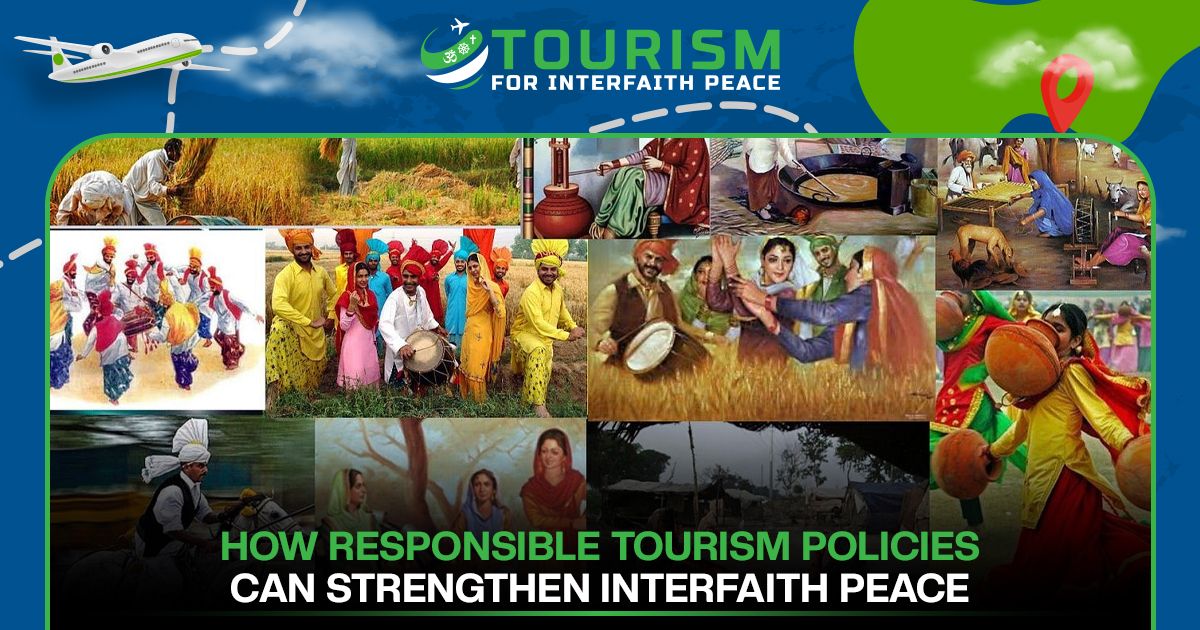
Responsible tourism policies strengthen interfaith peace by setting clear standards for how sacred sites are visited, how heritage is protected, and how local communities participate in and benefit from tourism — turning respectful travel into a consistent, structured practice rather than a matter of individual goodwill.
Every year, millions of travelers cross borders not just to see new landscapes, but to stand inside mosques, temples, churches, synagogues, and shrines that belong to traditions different from their own. Tourism is rarely framed this way, but at its best it is a structured opportunity for people of different faiths to meet, observe, and learn from one another. Whether that opportunity strengthens understanding or causes quiet harm depends largely on one factor: policy. Responsible tourism policy can turn ordinary travel into a durable tool for peace.
What Is Responsible Tourism?
Responsible tourism is travel and destination management designed to minimize harm and maximize benefit — to the environment, to local economies, and to the communities and cultures that hosts belong to. It asks a destination to think beyond visitor numbers and consider impact: Are local people benefiting economically? Are natural and cultural resources being protected rather than depleted? Are visitors arriving with the knowledge they need to behave respectfully?
Policy is what turns these good intentions into consistent practice. Without clear guidelines, responsible behavior depends entirely on individual goodwill, which is inconsistent at best. Governments set the legal framework. Tourism boards translate that framework into destination management plans. Businesses implement it on the ground, through guide training, visitor materials, and site management. Travelers complete the chain by following the guidance they are given. Sustainability and inclusion work only when all four groups are pulling in the same direction.
Tourism as a Platform for Interfaith Understanding
Interfaith understanding rarely begins with a formal dialogue session. More often, it begins with a shared experience — visitors removing their shoes before entering a place of worship, listening to a call to prayer for the first time, or watching a religious festival unfold in a public square. These moments do not require agreement on doctrine. They require only the willingness to observe closely and listen carefully.
Religious heritage tourism gives travelers direct, respectful access to traditions they might otherwise only encounter through headlines or secondhand accounts. That access matters. Stereotypes tend to form and persist in the absence of contact, and they weaken considerably once a visitor has stood inside a sacred space and felt its stillness firsthand. Community interaction — a conversation with a caretaker, a shared meal near a shrine, a guided walk through a historic quarter — builds empathy in a way that written explanation cannot fully replace.
Why Tourism Policies Matter
Good policy protects both the visitor experience and the communities being visited. Specifically, well-designed tourism policy can promote:
- Respect for sacred sites through clear codes of conduct on dress, behavior, and photography.
- Visitor education delivered before and during a trip, not left to chance on arrival.
- Cultural preservation that treats heritage sites as living community assets, not backdrops.
- Community participation in decisions about how a site is presented and managed.
- Inclusive tourism development that distributes benefits across, not around, local communities.
- Responsible visitor behavior, reinforced through signage, guide briefings, and site management.
Each of these elements exists because informal norms tend to break down at scale. A single respectful visitor rarely causes harm. Thousands of visitors without shared guidance can overwhelm a fragile site or, just as damaging, drain the meaning from a place that a community still considers sacred.
Protecting Religious and Cultural Heritage
Heritage conservation is not only about preserving stone and structure. Sacred places, museums, and pilgrimage routes hold living memory — the accumulated practices, stories, and rituals of communities who often still use these spaces today. Frameworks developed by organizations such as UNESCO have long recognized this dual nature of heritage sites: physical and cultural preservation must happen together, guided by the communities who hold the deepest connection to the place.
Community ownership is central to this work. When the people who maintain a shrine or manage a pilgrimage route also have a voice in how it is presented to visitors, heritage protection becomes sustainable rather than imposed. Sustainable destination management follows the same principle: manage visitor flow, revenue, and site conservation with the long-term health of the community and the site as the deciding factor, not short-term visitor volume. Protecting this kind of heritage protects something larger than a single tradition — it protects a shared, layered record of human history that belongs to everyone who encounters it with respect.
Encouraging Local Community Participation
Community-led tourism ensures that the people closest to a heritage site or tradition also benefit most directly from its visitors. This can take several practical forms:
- Local employment in guiding, hospitality, and site management roles.
- Training community members as cultural ambassadors who interpret their own traditions for visitors.
- Fair economic opportunities that channel tourism revenue back into the community, not only to outside operators.
- Genuine respect for local customs and religious practices in how tours are designed and scheduled.
When communities participate meaningfully, tourism stops being something that happens to a place and becomes something a place actively shapes.
Practical Policy Recommendations
Destinations and organizations looking to strengthen interfaith tourism can consider the following measures:
- Visitor codes of conduct for sacred and heritage sites, communicated clearly before arrival.
- Heritage interpretation programs that explain a site’s significance across the traditions connected to it.
- Guide training on cultural sensitivity, including etiquette specific to different faith traditions.
- Multi-faith tourism initiatives that connect sites of different religious significance within a single respectful itinerary.
- Educational campaigns aimed at both domestic and international travelers.
- Sustainable destination planning that limits visitor pressure on fragile or actively used sacred spaces.
- Local stakeholder engagement built into every stage of tourism development, not added afterward.
- Youth exchange programs that introduce the next generation to interfaith travel early.
- Responsible tourism certification that gives travelers a reliable way to identify operators committed to these standards.
The Role of TIP in Promoting Tourism for Interfaith Peace
Tourism for Interfaith Peace (TIP) works at the intersection of these ideas — encouraging tourism development that treats interfaith understanding as a core outcome, not an accidental byproduct. TIP promotes responsible tourism practices that respect the sacred and cultural significance of the sites travelers visit, and it supports intercultural dialogue by helping travelers, communities, and destinations engage with one another on equal footing.
Rather than treating peacebuilding and tourism as separate goals, TIP’s work reflects the view that they reinforce each other: tourism done responsibly creates the conditions for dialogue, and dialogue, in turn, shapes more thoughtful and sustainable tourism. This approach celebrates the diversity of faiths and cultures represented across the destinations it engages with, while advocating for ethical practices that protect both people and places.
Looking Ahead
Building tourism systems that genuinely support interfaith peace requires sustained collaboration. Governments set the policy conditions. Tourism businesses translate those conditions into daily practice. Educators prepare the next generation of travelers and hosts to engage thoughtfully. Faith leaders help ensure that visitor access respects the meaning a site holds for the community that maintains it. Travelers, for their part, carry responsibility too — arriving with curiosity, humility, and a willingness to be guided.
None of these groups can accomplish this alone. But together, they can shape a form of travel where every visit to a sacred or historic site becomes an opportunity for understanding rather than a transaction.
| Quick Facts Responsible tourism balances environmental protection, economic benefit, and cultural respect. UNESCO frameworks recognize heritage sites as holding both physical and cultural significance. Community-led tourism channels revenue and decision-making back to local stakeholders. Visitor codes of conduct are among the most direct tools for protecting sacred sites. |
Conclusion
Responsible tourism policies are not simply administrative guidelines tucked into a destination management plan. They are structured opportunities to build trust between communities, preserve heritage that belongs to all of humanity, and strengthen peaceful relationships between people who believe differently. When policy, practice, and traveler intention align, tourism becomes something more than movement across borders — it becomes a quiet, consistent contribution to a more respectful and connected world. Every journey, approached this way, is a chance to help build that world.
Frequently Asked Questions
What is responsible tourism?
Responsible tourism is travel and destination management designed to minimize environmental and cultural harm while maximizing benefit to local economies and communities.
How does tourism promote interfaith peace?
Tourism creates structured, firsthand encounters between people of different faiths — visiting sacred sites, observing traditions, and engaging with communities — which builds empathy and reduces reliance on stereotypes.
Why are tourism policies important?
Policies turn respectful behavior from a matter of individual goodwill into a consistent standard, protecting fragile heritage sites and ensuring visitor impact benefits rather than burdens local communities.
What is cultural heritage tourism?
Cultural heritage tourism involves visiting places — sacred sites, museums, pilgrimage routes, historic quarters — that hold significant cultural, religious, or historical meaning for the communities connected to them.
How can travelers respect religious sites?
Travelers can follow local codes of conduct on dress, behavior, and photography, listen to guidance from community members or guides, and approach unfamiliar customs with humility rather than assumption.
What is sustainable tourism?
Sustainable tourism manages visitor numbers, revenue, and site conservation with the long-term health of the destination and its community as the priority, rather than maximizing short-term visitor volume.
How can governments promote responsible tourism?
Governments can establish clear legal frameworks, support visitor education campaigns, fund heritage conservation, and require community consultation in tourism development decisions.
What role do local communities play?
Local communities play a central role as hosts, cultural interpreters, and decision-makers — their participation ensures tourism benefits reach the people most connected to the sites and traditions being visited.
What is TIP’s role in interfaith tourism?
Tourism for Interfaith Peace (TIP) promotes responsible tourism practices that respect sacred and cultural significance, supports intercultural dialogue, and advocates for ethical tourism that treats interfaith understanding as a core outcome.