Centuries of cultural interchange, spiritual traditions, artistic advancement, and shifting empires are all reflected in Pakistan’s religious architecture. Ancient Buddhist monasteries, Hindu temples, Sikh gurdwaras, mosques, and Sufi shrines all around the nation serve as reminders of the groups that impacted the history of the area. These buildings demonstrate how various communities expressed their ideas via architecture, materials, decoration, and spatial layout; they are more than just houses of worship.
The growth of Gandhara, the expansion of Islam, the rise of Sikh authority in Punjab, and the ancient Indus civilizations are all intimately linked to the history of religious architecture in Pakistan. Visitors can learn about Pakistan’s rich history and the architectural customs that still shape its cultural character by exploring these structures.
Early Religious Architecture and the Ancient Indus Region
Pakistan’s architectural heritage dates back thousands of years. Archeological sites like Mohenjo-daro and Harappa serve as examples of the advanced urban planning, building, and water management practices of the Indus Valley Civilization. These cities offer crucial background for comprehending the early built environment of the area, even though they are not as well-preserved as later temples or monasteries.
Buddhist and Hindu traditions developed unique styles of religious architecture during the next centuries. In various regions of the area, temples, stupas, monasteries, and other religious buildings emerged. Local resources, creative traditions, religious convictions, and ties to nearby cultures were all reflected in their creations.
In Gandhara, where Buddhist religious structures coexisted with artistic influences from South Asia, Central Asia, and the Hellenistic world, this architectural diversity became particularly apparent. Visitors interested in this wider historical background can explore Gandhara Civilization in Pakistan.
Buddhist Architecture in Taxila and the Gandhara Region
The evolution of Buddhist architecture in Taxila is one of the most important periods in Pakistani religious architecture. Between the ancient and early medieval eras, Taxila, which is now in Punjab, developed into a significant hub of Buddhist scholarship and religious activities.
Stupas, monasteries, holy buildings, and remnants of old villages are all part of its archeological environment. Mohra Moradu Monastery, Jaulian Monastery, and Dharmarajika Stupa are significant examples. These locations show how Buddhist groups set up areas for meditation, worship, learning, and monastic living.
Gandhara architecture is particularly recognised for combining local building traditions with artistic influences from the wider ancient world. Its religious structures commonly featured:
- Stupas: Monumental structures associated with Buddhist relics and worship.
- Viharas: Monastic complexes containing residential cells and shared spaces for monks.
- Courtyards: Open areas connecting different parts of monasteries.
- Stone and stucco decoration: Materials used in architectural features and religious sculptures.
- Carved imagery: Representations of the Buddha and scenes connected with Buddhist teachings.
The architectural remnants at Taxila demonstrate how places of worship evolved throughout time and responded to various cultural influences. Important examples of Buddhist architecture can also be found in the larger Gandhara region, which includes Swat and the Peshawar Valley. For a closer look at these historic sites, read about the Buddhist Heritage Trail in Pakistan.
Hindu Temple Architecture and Sacred Spaces
Another significant aspect of Pakistan’s religious legacy is the architecture of Hindu temples. Historic temples in Punjab, Sindh, and other areas showcase various architectural styles, eras of building, and religious customs.
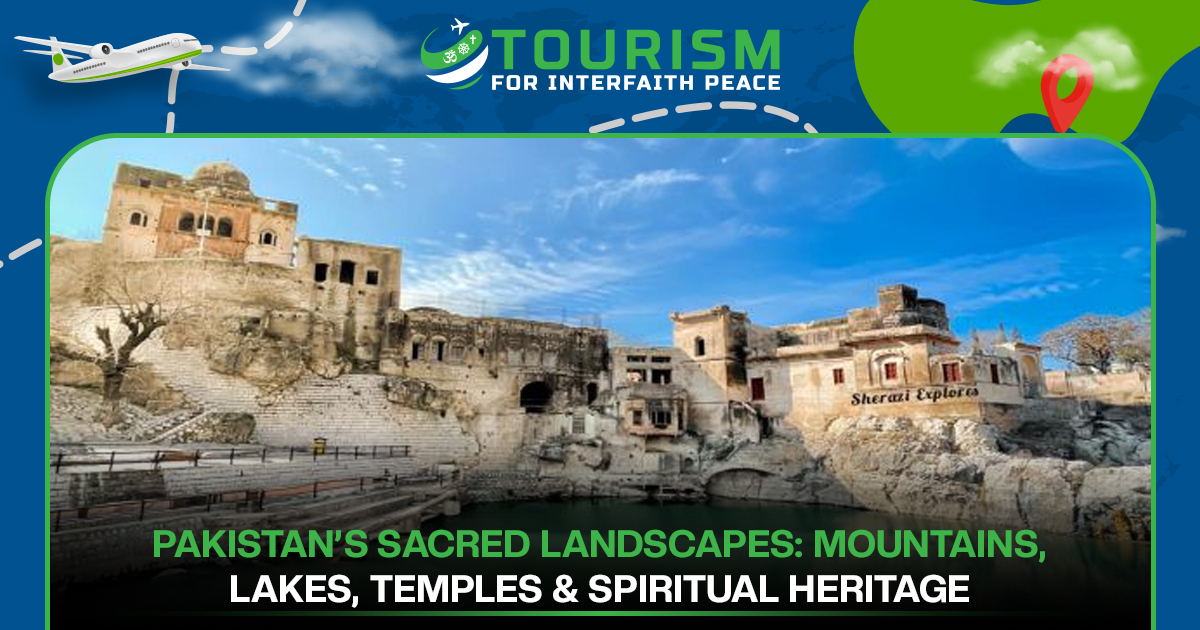
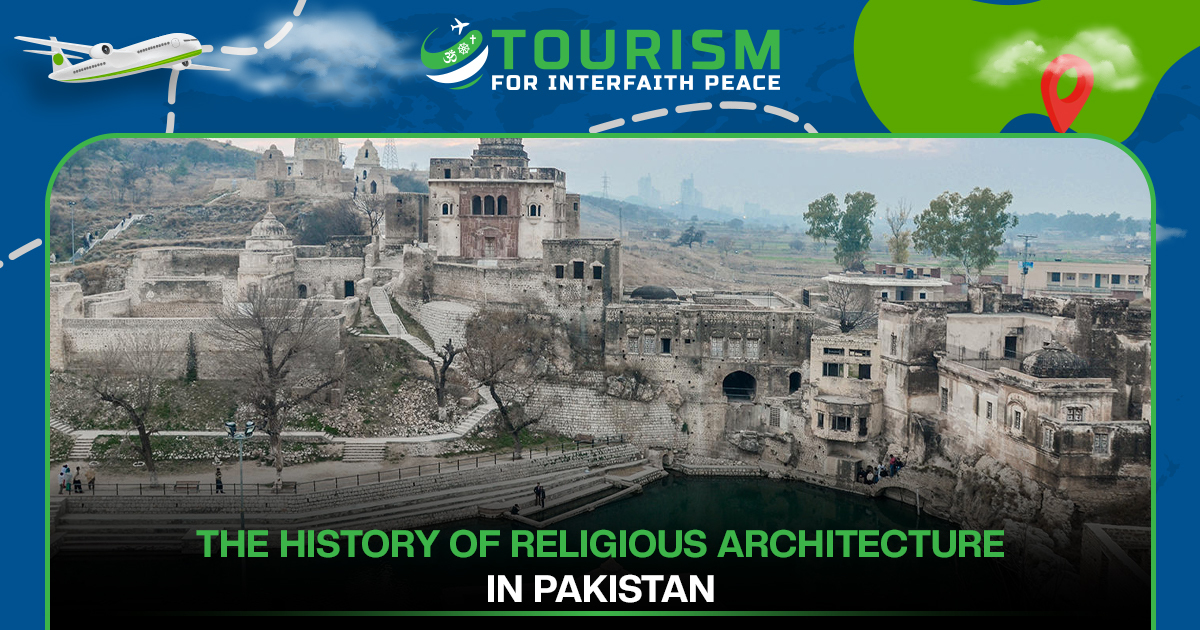
This complex, which is close to Chakwal, is made up of a number of connected temples grouped around a pond that is considered sacred by Hindus. Raised platforms, ornamental pillars, arches, and roof structures typical of local temple types are also present in the buildings. The Salt Range’s overall architectural history is also reflected in the complex.
The Amb Temples in the Salt Range, which contain buildings connected to the Hindu Shahi era, are another significant example. Their remnants offer proof of the development of artistic traditions and temple construction in the northwest region of the subcontinent.
There is more than one style of Hindu temple architecture in Pakistan. Temples used a variety of designs, elevations, ornamental elements, and materials depending on the area and time period. To set them apart from other religious buildings, their structures frequently featured a central sacred chamber, entrances, platforms, and towers or roof shapes.
These temples remain significant not only for their religious associations but also for their contribution to the architectural history of the region. Visitors can discover more through TIP’s guide to Hindu Temples in Pakistan.
Islamic Architecture and the Development of Mosques and Shrines
New architectural traditions brought about by the expansion of Islam eventually took the stage in the region’s built environment. Persian, Central Asian, Central Indian, and regional influences were reflected in the development of mosques, madrasas, tombs, and Sufi shrines over time.
Domes, minarets, courtyards, geometric designs, calligraphy, and ornamental tilework are characteristics of Islamic religious architecture in Pakistan. But depending on the time period, place, and function of each building, these components differ significantly.
Islamic monumental architecture was greatly influenced by the Mughal era. For instance, the Badshahi Mosque in Lahore is renowned for its enormous courtyard, domes, and minarets. The Wazir Khan Mosque and other ancient mosques are known for their elaborate surface ornamentation, vibrant tilework, and frescoes.
Sufi shrines also developed into significant spiritual and architectural landmarks. Saints-related buildings such Data Ganj Bakhsh in Lahore, Shah Rukn-e-Alam in Multan, and Lal Shahbaz Qalandar in Sehwan demonstrate the connection between regional architectural styles, local workmanship, and religious devotion.
The development of these sacred spaces illustrates how Islamic architecture became part of Pakistan’s wider cultural landscape. TIP’s guide to Sufi Shrines in Pakistan explores their spiritual and historical importance.
Sikh Architecture and the Heritage of Punjab
The religious history of Punjab, the site of numerous significant Sikh historical events, is intimately linked to Sikh architecture in Pakistan. Gurdwaras were built at places connected to the Sikh Gurus and developed into places of prayer, community meetings, and remembering.
Sikh religious buildings’ architectural evolution was influenced by local customs, especially Rajput and Mughal designs. Gurdwaras acquired identifiable characteristics over time, such as domes, ornate entrances, beautiful arches, frescoes, and chhatris.
Important examples in Pakistan include:
- Gurdwara Janam Asthan, Nankana Sahib: Associated with the birthplace of Guru Nanak.
- Gurdwara Darbar Sahib, Kartarpur: Commemorates a significant place in Guru Nanak’s life.
- Gurdwara Panja Sahib, Hasan Abdal: A major Sikh pilgrimage destination.
- Gurdwara Dera Sahib, Lahore: Associated with Guru Arjan Dev.
Sikh worshipers’ communal and religious demands are also taken into consideration when designing gurdwaras. They might have a primary prayer hall, places for gathering, and a langar facility where guests can eat. These religious structures can also be identified by the Sikh flag, the Nishan Sahib.
Sikh architecture developed through a combination of spiritual requirements, regional craftsmanship, and the architectural influences of its time. Its historic buildings remain an essential part of Punjab’s shared heritage. Read more about Sikh Pilgrimage in Pakistan to explore these important destinations.
Religious Architecture as a Shared Cultural Heritage
Pakistan’s religious structures serve as an example of how communities, artistic traditions, and historical eras combine to shape architecture. Although they have distinct religious functions, Buddhist monasteries, Hindu temples, Sikh gurdwaras, mosques, and Sufi shrines collectively provide a significant record of the region’s cultural evolution.
Conservation, responsible tourism, historical research, and consideration for the communities associated with these structures are all necessary for their preservation. Visitors should respect active houses of worship, abide by site-specific regulations, and refrain from interfering with religious ceremonies or historic sites.
These locations can develop into chances for meaningful interaction and cross-cultural understanding through interfaith travel. Tourism for Interfaith Peace (TIP) promotes respectful travel and a deeper understanding of Pakistan’s many customs while supporting the investigation of the nation’s religious and cultural legacy.
Conclusion
The numerous civilizations and religious groups that have influenced the area are reflected in Pakistan’s history of religious building. These structures, which range from Sikh gurdwaras and imposing Islamic architecture to Buddhist monasteries and ancient Hindu temples in Gandhara, preserve centuries of creative and spiritual expression.
Interfaith harmony can be promoted and cultural understanding strengthened by preserving this legacy and making it accessible through responsible tourism. Visitors can gain a broader understanding of Pakistan’s history and its varied religious traditions by respectfully exploring these locations.
FAQ
1. What are the oldest religious buildings in Pakistan?
Some of Pakistan’s oldest surviving religious structures include Buddhist stupas and monasteries in the Gandhara region, particularly Taxila. Ancient Hindu temples in the Salt Range also preserve early religious architectural traditions.
2. What makes Gandhara architecture unique?
Gandhara architecture combines South Asian, Central Asian, and Hellenistic influences. Its Buddhist stupas, monasteries, carved stonework, and sculptural decoration reflect a distinctive blend of artistic traditions.
3. How did Sikh architecture develop?
Sikh architecture developed in Punjab through the construction of gurdwaras associated with Sikh Gurus and historical events. It incorporated Mughal and Rajput influences, including domes, arches, chhatris, frescoes, and decorative entrances.
4. What are the most famous examples of religious architecture in Pakistan?
Notable examples include the Dharmarajika Stupa and Jaulian Monastery in Taxila, Katas Raj Temples in Punjab, Gurdwara Panja Sahib in Hasan Abdal, Badshahi Mosque in Lahore, and Shah Rukn-e-Alam’s shrine in Multan.
5. What are the main features of Hindu temple architecture in Pakistan?
Hindu temples commonly feature a central sacred chamber, raised platforms, decorative pillars, entrances, and towers or roof structures. Their architectural styles vary according to their historical period and regional influences.
6. Which cities in Pakistan are known for historic religious architecture?
Taxila, Lahore, Multan, Nankana Sahib, Hasan Abdal, Chakwal, and Sehwan are among Pakistan’s important destinations for religious architecture. Each preserves structures connected with different faiths and historical periods.
7. Why is preserving religious architecture important in Pakistan?
Preserving religious architecture protects the country’s historical record, artistic traditions, and cultural diversity. It also supports heritage tourism, encourages interfaith understanding, and helps future generations learn about the communities that shaped Pakistan’s history.