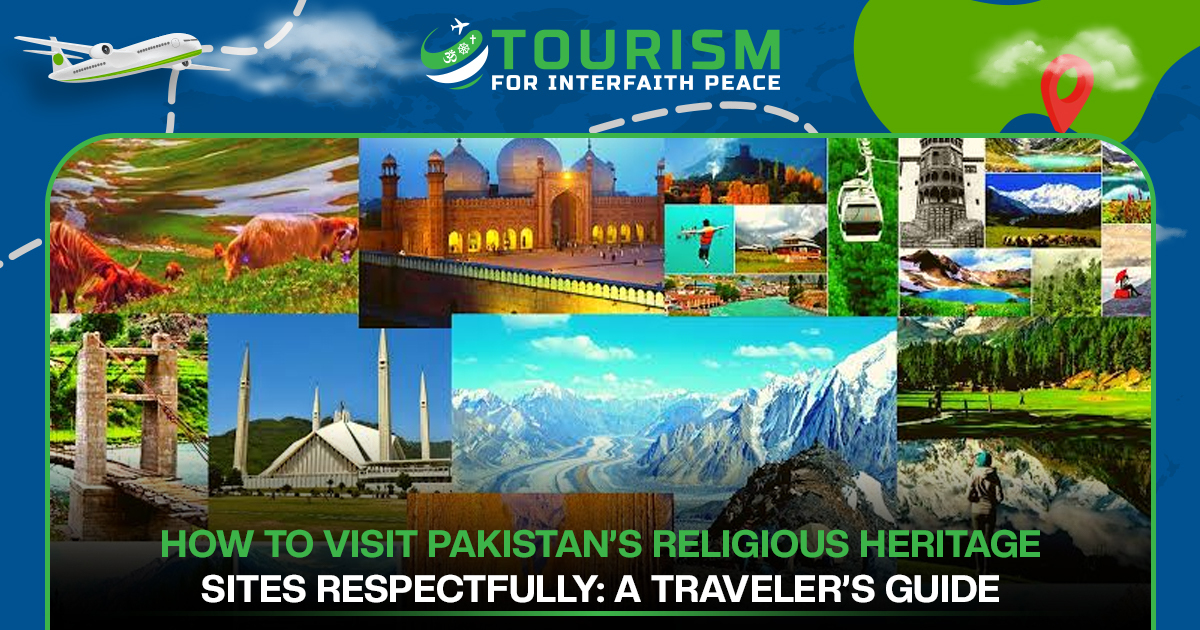
Pakistan’s religious heritage is still lived in. People pray in the mosques, tend the shrines and bathe in the ponds you may want to photograph. The short answer on how to visit religious heritage sites in Pakistan respectfully: dress modestly, follow shoe and head-covering signs, ask before photographing people or worship, stay on marked paths, hire a local guide, and check access and advisories before you go. Customs differ by tradition and by site, so treat this guide as a starting point.
Start With Respect That Travels
Clothing and footwear
A Pakistani tour operator advises women to cover shoulders and legs past the knees at mosques, and says full-length trousers are considered more respectful for men. Carry a light scarf. Many sites ask visitors to remove shoes, and gurdwaras commonly ask everyone to cover their heads (SikhiWiki). Where signs or caretakers differ from this guide, follow them.
Photography and worship
Rules vary and are not always posted. A Dawn Herald columnist described guards stopping photography at archaeological sites such as Taxila’s Dharmarajika stupa. Ask the caretaker first. Never photograph worshippers without consent, skip flash, and ask site authorities before flying a drone. Step back from prayer, keep your voice low, and wait for an invitation before joining a ritual or accepting an offering.
Site Notes: Where Practice Differs
Mosques, shrines and churches
Lahore’s historic mosques and shrines are active places of worship, so avoid busy prayer times and ask about visiting hours. Head coverings and bare feet are commonly expected at shrines; watch what others do. Churches deserve the same courtesy: ask about visiting times.
Katas Raj
Katas Raj, near Chakwal, is a temple complex around a pond Hindus regard as sacred. Treat the pond as a place of worship, not a backdrop. An older Dawn report described the temples as locked outside pilgrim visits, so confirm access (Dawn). A 2012 PTI report said the pond dried up after nearby groundwater use before the Punjab government revived it (OneIndia). Conservation depends on water as much as stone.
Kartarpur
Gurdwara Darbar Sahib in Kartarpur, Narowal district, is where Guru Nanak spent his last 18 years (Hindustan Times). Visitors are generally asked to cover their heads, remove shoes and keep tobacco and alcohol away. Pilgrims using the corridor have needed permits, and a US$20 fee was reported in 2019 (Newsweek Pakistan). Rules change, so verify through official channels.
Taxila
Taxila, inscribed on UNESCO’s World Heritage List in 1980, includes Buddhist monasteries and stupas such as Dharmarajika, Jaulian and Mohra Moradu, and is protected under the Antiquities Act, 1975 (UNESCO). Stay on paths, do not climb ruins, and never take fragments home. Small habits protect fragile stone: no touching carved or stucco surfaces, and no leaning on old walls.
Travel Well Beyond the Gate
Guides, makers and hosts
A licensed local guide can explain site rules and context that signs omit. Buy directly from makers where you can; our guide to how tourism can support local artisans and traditional crafts in Pakistan covers fair pricing. Women guides and hosts widen who tells a site’s story, as explored in women, culture and tourism.
Access and security
Risk differs by region and changes. Canada’s advice, updated 9 October 2026, urges a high degree of caution in Pakistan and lists regions to avoid (Government of Canada). The UK publishes regional advice too (FCDO). Confirm opening hours, permits and security rules with official or local sources, and recheck before you leave. No advisory guarantees safety.
Traveler Checklist
- Pack a scarf, modest layers and slip-on shoes.
- Confirm hours, permits and access with the site custodian or an official channel.
- Check current government advice for your route.
- Ask before photographing people, worship or interiors.
- Hire a licensed local guide where available.
- Stay on paths and leave ruins, ponds and shrines undisturbed.
- Buy from makers and pay fairly.
Frequently Asked Questions
What should I wear to religious sites in Pakistan?
Modest layers covering shoulders and knees, plus a scarf. Follow each site’s signs.
Can I take photographs at religious heritage sites?
Not always. Ask first, and never photograph worshippers without consent.
Are customs the same at every site?
No. Practice differs by tradition and by site, so confirm locally.
Travel With Curiosity
Respectful travel is a habit that grows from curiosity. Tourism for Interfaith Peace promotes peace and understanding through religious tourism, with a mission built around interfaith understanding, cultural preservation, responsible tourism and community benefit. To learn about its work or ask about its tourism initiatives, contact the TIP team.