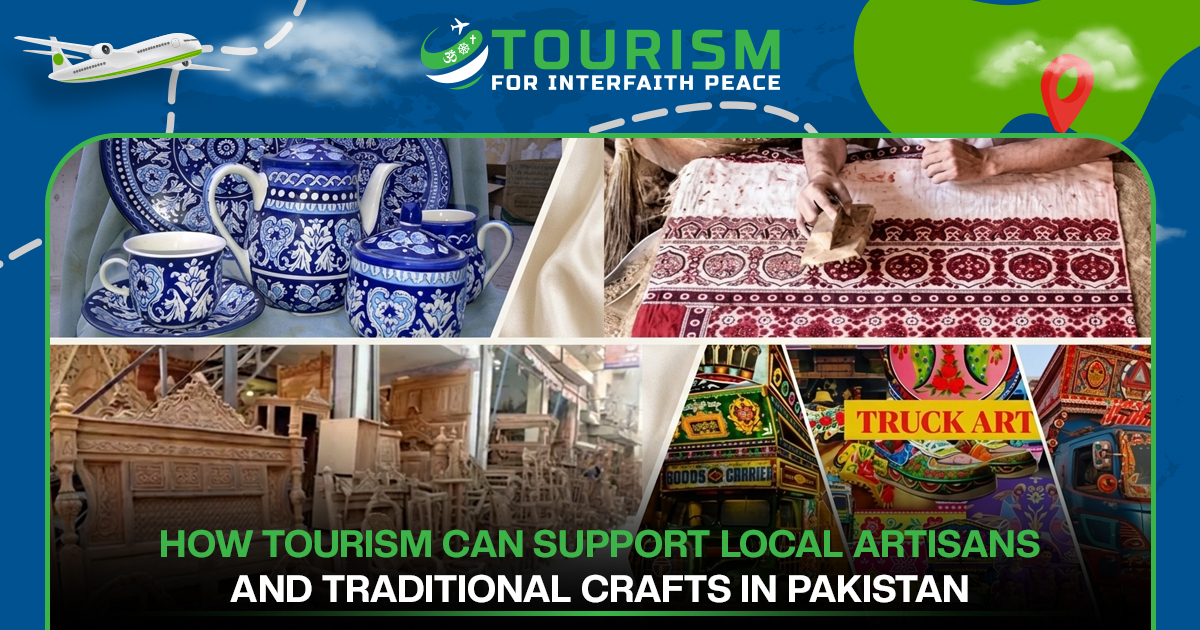
A blue-glazed plate from Multan or a block-printed ajrak from Sindh carries more than pattern. It carries a way of working, passed from hand to hand. That chain is under strain. Associated Press of Pakistan reporting from Multan describes blue pottery and kashigari as struggling with costly tools, limited funds, and too few skilled artisans. Travelers cannot fix that alone, but where and how they spend can help.
Which traditional crafts can travelers look for?
| Craft | Where it is associated | Worth knowing |
|---|---|---|
| Blue pottery (kashi work) | Multan; Hala and Nasarpur, Sindh | In Multan its patterns draw on Persian calligraphy and miniature designs |
| Ajrak | Sindh | Block-printed cloth; few block carvers remain, a 2015 report said |
| Ralli quilts | Sindh | Handmade quilts with geometric patterns |
| Camel-skin lamps | Multan | Painted lamps made from camel skin |
How does tourism actually help artisans?
When visitors pay fair prices to the people who make things, income stays in the household and the craft becomes a viable livelihood. That outcome is not automatic. It depends on who holds the decisions and the money, which is the core idea behind community-based tourism in Pakistan, where residents shape what they share and keep a fair portion of the income.
The benefits reach beyond the maker. Craft demand also creates work for local guides, family-run guesthouses, food businesses, and drivers. Communities gain most when they have a real voice in how visitors are hosted, from which workshops open to the public to what prices they set. A workshop that visitors can say yes or no to is a partner, not a stage set.
How can you support artisans ethically?
- Buy from the maker, or from a shop that names and pays its makers. Ask who made the piece.
- Pay fairly. UN Tourism’s Responsible Tourist guide, based on the Global Code of Ethics for Tourism, says bargaining should reflect an understanding of a fair wage.
- Choose handmade over imitation. Cheaper machine-made copies are widely cited as a reason traditional crafts are declining.
- Ask before photographing makers, workshops, or designs, and before sharing patterns commercially.
- Use the real names. Say ajrak, ralli, or kashi, and credit the region and community.
- Commission rather than rush. Custom work takes time, and a deposit helps makers buy materials.
Why does traditional knowledge need protecting?
Craft knowledge lives in families. One researcher’s study of kashikari in Sindh describes a craftsman who learned the trade from his uncle. When earnings are low, young people have little reason to follow. A Pakistan Observer commentary argues that cheap substitutes and thin support leave artisans barely making ends meet. Festivals such as Lok Virsa’s Lok Mela, which has showcased camel-skin work, block making, and blue pottery, put makers in front of buyers. Check current dates before you go.
How do crafts connect to heritage and interfaith understanding?
Crafts and heritage sites share a story. Multan’s blue pottery is tied to its shrine architecture, and Pakistan’s monasteries, mosques, temples, and gurdwaras sit among living communities. A route like the one in TIP’s guide to Buddhist, Sikh, Hindu and Islamic heritage in Pakistan is a natural time to meet makers. Ask your local guide to introduce workshops nearby.
A conversation beside a potter’s wheel is ordinary, respectful contact between people who might otherwise know each other only through headlines. Tourism cannot resolve deep social or religious tensions, and no trip should promise to. It can build familiarity and mutual respect.
Conclusion
Preserving a craft and building trust between communities depend on the same habit: paying attention to people. Travel with local guides, ask who made what you buy, and pay what the work is worth. If you would like to explore Pakistan this way, contact Tourism for Interfaith Peace to ask what it currently offers.
Frequently asked questions
How can tourists support local artisans in Pakistan?
Buy directly from makers or shops that pay them fairly, pay fair prices, choose handmade over imitation, and ask permission before taking photographs.
Should I bargain when buying handicrafts in Pakistan?
Polite negotiation is customary in many markets, but UN Tourism guidance says it should reflect an understanding of a fair wage. Avoid pushing a price below the value of the work.
How can I tell if a craft is handmade?
Ask who made it and how. Handmade pieces often show small variations, and a genuine maker can describe the process.
Which crafts should I look for?
Multan’s blue pottery and camel-skin lamps, Sindh’s ajrak and ralli quilts, and Hala and Nasarpur pottery are good starting points.