- Tourism can draw investment into underdeveloped areas by creating steady local demand for hospitality, transport, and retail.
- Infrastructure built for tourists — roads, utilities, connectivity — tends to benefit the whole local economy, not just visitors.
- Cultural, religious, historical, and natural heritage sites are what typically anchor early tourism interest in a region.
- Overdevelopment, environmental pressure, and unequal distribution of benefits are real risks that unmanaged tourism growth can create.
- Long-term investment value depends on tourism growing alongside community participation and cultural preservation, not ahead of them.
A road that exists only because tourists needed to reach a valley. A guesthouse that became the first formal business in a village. A shrine visit that turned into a weekend market. These small, almost accidental shifts are how tourism quietly begins converting overlooked areas into places worth investing in — not through a single large project, but through steady demand that infrastructure and local business gradually grow to meet.
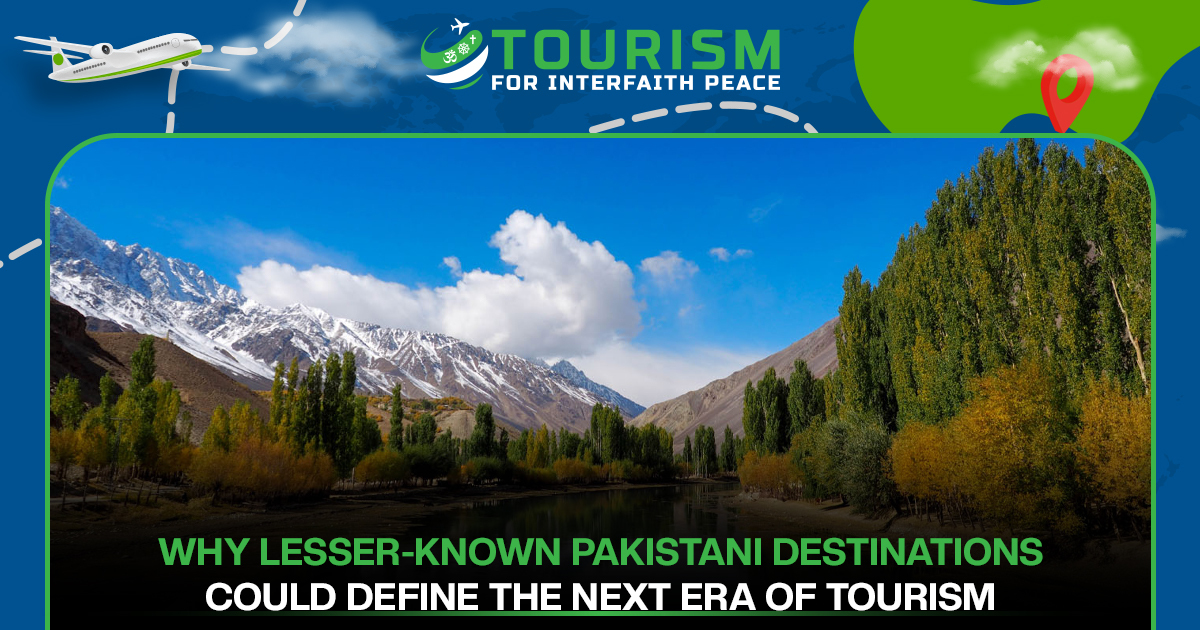
Pakistan has no shortage of places with this kind of potential: valleys, coastlines, historic towns and shared religious heritage sites that see a fraction of the visitors their character deserves. The question worth asking is not whether tourism can create investment interest in these areas — it demonstrably can, in similar geographies around the world — but under what conditions that shift actually holds up and benefits the people already living there.
How Tourism Creates Local Economic Activity
Visitors spend money in ways that ripple well beyond the sites they came to see. A traveler visiting a historic town needs a place to stay, food to eat, transport to get around, and often a guide or driver who knows the area. Each of those needs becomes a small business opportunity for someone already living there, which is a meaningfully different growth pattern from an industrial project that imports labor and exports profit.
Sustained visitor demand, not a single tourist season, is what eventually attracts formal investment. A destination that sees repeat, consistent interest over several years signals to investors that a guesthouse, a restaurant, or a transport service can expect ongoing demand, not just a one-time spike.
Infrastructure Improvements Driven by Tourism
Tourism development in Pakistan and elsewhere has a track record of accelerating infrastructure that might otherwise take decades to reach less-connected areas. Better roads, more reliable electricity, improved water systems, and expanded telecom coverage often arrive in tourist areas earlier than they would purely on local population size, because visitor demand adds an economic case that pure resident need sometimes struggles to make on its own.
The important nuance here is that this infrastructure doesn’t only serve tourists. A paved road built to reach a heritage site also shortens a farmer’s route to market. A cell tower installed for visitor connectivity also connects local students and small businesses. Tourism can function as a practical justification for infrastructure investment that ends up serving the whole community.
Hospitality, Transport, Retail and Small-Business Opportunities
The most direct and accessible investment opportunities in tourism tend to sit in a fairly predictable set of categories: guesthouses and homestays, local transport and guide services, restaurants and food stalls, craft and retail outlets, and small tour-operation businesses. These are typically lower-capital entry points compared to large hotel or resort development, which makes them realistic starting points for local entrepreneurs rather than only outside investors.
This matters for who actually captures the benefit. A destination where small, locally owned businesses form the backbone of its tourism economy tends to keep more of that spending circulating within the community, compared to one dominated by outside-owned, large-scale developments from the outset.
Also Read: What Investors Often Miss When Looking at Emerging Tourism Destinations
How Local Communities Can Benefit From Tourism Investment
Communities benefit most clearly when tourism growth includes them as participants rather than as a backdrop. That can mean training and employment in hospitality and guiding roles, support for local cooperatives and small businesses, and a genuine say in how development proceeds in areas that communities have lived in and cared for long before any visitor arrived.
Where that participation is missing, tourism can still generate revenue, but the benefits tend to flow disproportionately to outside operators and investors, while the local population absorbs the costs of increased traffic, strain on resources, and rising prices without a comparable share of the gains.
Why Accessibility and Connectivity Matter
A remarkable destination that’s difficult to reach will struggle to build the sustained visitor base that attracts real investment. Road quality, travel time from major cities, availability of public or organized transport, and digital connectivity for booking and information all shape whether a place moves from occasional visits to a steady flow of tourism.
This is why accessibility improvements are often the first meaningful signal that a destination is shifting from a hidden gem to an emerging investment opportunity. Investors and businesses watching a region for early signs of tourism growth tend to track exactly this kind of infrastructure progress before committing capital.
The Role of Cultural, Religious, Historical and Natural Tourism
Heritage is usually what anchors a destination’s identity before infrastructure or hospitality investment follows. Historic towns, natural landscapes, and shared religious and cultural heritage sites draw an initial wave of visitors motivated by something deeper than convenience: a connection to history, faith, or landscape that a generic destination can’t replicate.
Pakistan’s religious and cultural heritage spans multiple traditions and communities, and interfaith tourism specifically highlights sites and stories that hold meaning across different faiths sharing the same geography. Presented respectfully and accurately, this kind of tourism draws visitors interested in shared heritage and coexistence, which tends to support a more thoughtful, preservation-minded style of development compared to purely recreational tourism.
The Real Risks: Overdevelopment and Unequal Benefit
Tourism-driven growth isn’t automatically positive. Overdevelopment can strain water supplies, generate waste management problems local infrastructure wasn’t built to handle, and gradually erode the natural or cultural character that attracted visitors in the first place. A destination that grows too fast, too unevenly, risks becoming a less appealing version of itself within a decade.
Unequal distribution of benefit is an equally real risk. When large outside investors capture most of the value while local communities see rising costs and limited new opportunity, tourism growth can create resentment rather than shared prosperity. Environmental pressure and community friction of this kind are well documented in destinations worldwide that grew tourism without a management plan to match.
Why Sustainable, Community-Focused Tourism Matters for Long-Term Investment
Sustainable tourism development in Pakistan, and anywhere else, tends to hold its value better over time than rapid, unmanaged growth. Investors increasingly recognize that a destination which protects its environment, preserves its cultural character, and maintains community goodwill offers a more durable opportunity than one that peaks quickly and declines once its original appeal is compromised.
Practical elements of sustainable tourism development include capping development density relative to a site’s carrying capacity, involving local communities in planning decisions from the outset, investing in waste and water management alongside guest facilities, and preserving the cultural or natural features that gave the destination its original appeal. None of this eliminates risk, but it materially improves the odds that early investment holds up over a longer horizon.
Emerging Pakistani Destinations With Investment Potential
Several types of Pakistani destinations illustrate where this kind of tourism-led development could plausibly unfold, based on existing heritage and natural assets rather than any confirmed project. Historic towns with layered cultural and religious heritage offer the kind of storytelling depth that draws sustained interest beyond a single visit. Northern valleys and lesser-visited natural landscapes carry the scenic and outdoor-tourism appeal that has driven investment in comparable regions elsewhere. Shared religious and cultural heritage sites, approached through a lens of coexistence and shared history, offer a distinct form of interfaith tourism that few destinations globally can authentically claim.
None of these possibilities should be read as guaranteed outcomes. They represent categories of opportunity worth watching as accessibility, infrastructure, and community-based tourism initiatives develop over time.
Frequently Asked Questions
How does tourism boost local economies in underdeveloped areas?
By creating steady demand for accommodation, food, transport, and retail, which local residents can meet through small businesses, and by justifying infrastructure investment — roads, electricity, connectivity — that benefits the wider community, not just visitors.
What are realistic investment opportunities in tourism for smaller investors?
Guesthouses and homestays, local transport and guide services, restaurants, craft retail, and small tour-operation businesses tend to require lower capital than large hotel or resort development, making them accessible entry points, particularly for local entrepreneurs.
What risks should investors consider in emerging tourist destinations in Pakistan?
Overdevelopment relative to a site’s carrying capacity, strain on water and waste infrastructure, unequal distribution of benefit between outside investors and local communities, and loss of the cultural or natural character that originally attracted visitors are the primary risks to weigh.
Why is community participation important for sustainable tourism in Pakistan?
Tourism that includes local communities as participants — through employment, local business ownership, and a voice in planning decisions — tends to keep more economic benefit within the community and reduces the friction that can arise when growth is imposed rather than shared.
Can religious and cultural heritage sites support tourism-led investment?
Yes. Heritage and cultural significance often anchor a destination’s initial visitor appeal before infrastructure and hospitality investment follow. Interfaith and cultural heritage tourism, presented respectfully and accurately, can support a preservation-focused style of development.
Where Tourism and Investment Meet
Tourism doesn’t transform an underdeveloped area into an investment destination on its own, and it doesn’t happen quickly or automatically. It happens when accessibility improves, when small local businesses get the chance to grow alongside larger investment rather than being displaced by it, when infrastructure serves residents as much as visitors, and when the cultural or natural heritage that drew the first travelers is protected rather than gradually worn away.
For Pakistan’s less-developed but heritage-rich regions, that combination — infrastructure, community participation, cultural preservation, and sustainable growth developing together rather than in sequence — is what will ultimately decide which emerging destinations become lasting investment opportunities and which simply have a good decade before losing what made them worth visiting in the first place.