Emerging tourism destinations often draw investor attention because they appear to offer room for growth that saturated, well-known destinations no longer have. A quiet valley, a newly paved road, or a spike in social media travel content can look like the early signal of a profitable opportunity. But early-stage tourism markets also carry risks that are easy to overlook, and scenic appeal alone rarely determines whether a destination can sustain hospitality businesses, attract repeat visitors, or generate returns over a realistic investment horizon.
Pakistan’s tourism landscape illustrates this tension well. The country has no shortage of striking geography, from the northern mountain valleys to coastal and desert regions in the south, and interest in these areas has grown among both domestic and international travelers in recent years. Yet visibility is not the same as investment readiness. Understanding the difference is where informed investors separate themselves from speculative ones.
Visitor Demand vs. Tourism Hype
A surge of photographs and travel reels from a location signals interest, not necessarily durable demand. Hype can bring a short-term spike in footfall that fades once the novelty wears off or once influencers move on to the next trend. Genuine visitor demand is different: it shows up as repeat visits, a growing mix of domestic and international travelers, extended average stays, and interest across different seasons rather than a single viral moment.
Investors evaluating a destination should ask whether visitor numbers are backed by consistent, verifiable patterns rather than anecdotal claims. Where possible, this means looking at data from provincial tourism departments, hospitality occupancy trends, and independent reporting rather than relying solely on social media metrics, which measure attention, not economic activity.
Accessibility and Transport Connectivity
A destination’s long-term tourism potential is closely tied to how easily people can reach it. Road conditions, travel time from major cities, airport proximity, and the reliability of public and private transport all affect whether a location can support a consistent visitor economy rather than occasional, weather-dependent travel.
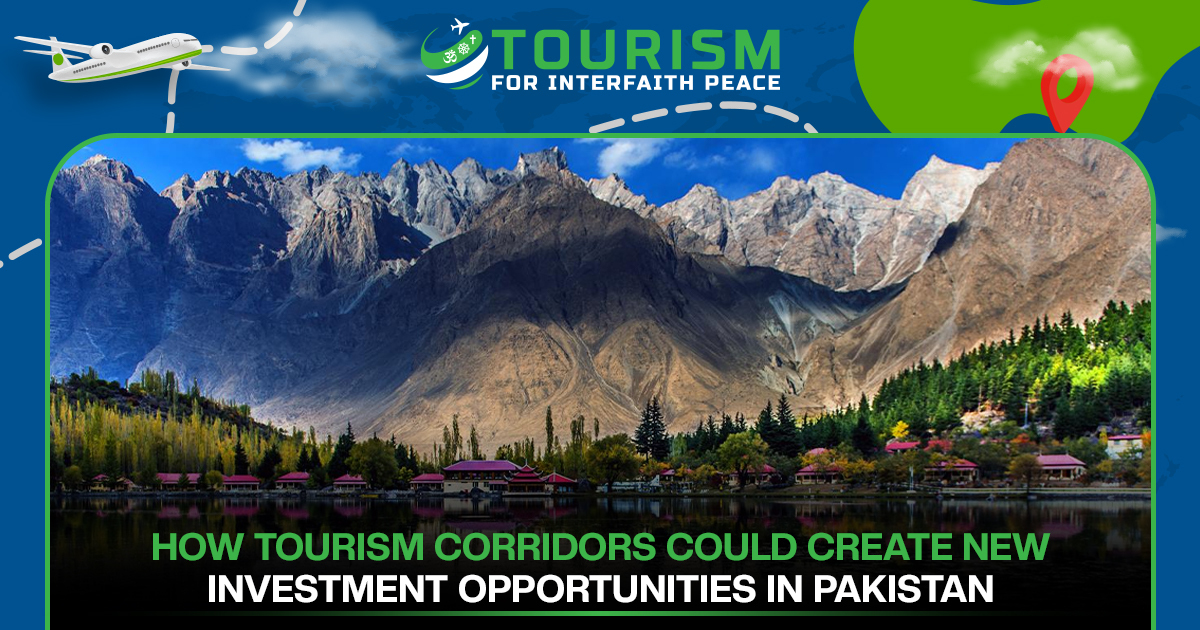
This is also where tourism corridors matter. As highway networks, regional air links, and cross-provincial routes are upgraded, previously hard-to-reach areas can become commercially viable in ways that were not possible before. Understanding how tourism corridors could create new investment opportunities in Pakistan is central to evaluating whether a destination’s accessibility is likely to improve, stagnate, or remain a limiting factor.
Roads, Utilities, Internet, and Basic Infrastructure
Beyond getting to a destination, investors need to assess what exists once visitors arrive. Reliable electricity, water supply, waste management, mobile network coverage, and internet connectivity are not glamorous considerations, but they directly affect whether a hotel, guesthouse, or restaurant can operate at a professional standard.
Destinations that lack basic utilities often require investors to fund private infrastructure solutions, such as backup power or water storage, which raises upfront costs and changes the economics of a project. A realistic infrastructure assessment should be treated as a core part of due diligence, not an afterthought once construction has begun.
Seasonality and Year-Round Tourism Potential
Many of Pakistan’s emerging destinations, particularly in mountainous and high-altitude areas, face significant seasonal variation. Snow, monsoon conditions, or extreme summer heat in other regions can shrink the viable tourism window to just a few months a year.
Investors should evaluate whether a destination has, or could realistically develop, shoulder-season or off-season appeal through cultural events, adventure tourism, religious or interfaith heritage sites, or wellness offerings. A location with a narrow operating season requires a different financial model than one with year-round demand, and revenue projections should reflect that reality rather than assume peak-season conditions apply throughout the year.
Government Policies, Approvals, and Land or Legal Considerations
Tourism development in Pakistan intersects with land ownership rules, provincial regulations, environmental approvals, and in some regions, local or tribal governance structures. These vary significantly by province and by the specific status of the land in question.
Before committing capital, investors should verify land title and ownership history, understand which approvals are required from bodies such as provincial tourism authorities or environmental protection agencies, and clarify whether the intended use of the land is legally permitted. Policy support at the federal or provincial level can improve a destination’s outlook, but announced plans should be distinguished from implemented regulatory frameworks.
Accommodation, Hospitality, and Supporting Businesses
A destination’s tourism ecosystem extends beyond a single hotel or resort. Investors should look at the depth of the surrounding hospitality sector: are there trained staff available locally, functioning supply chains for food and materials, and a range of accommodation options that can absorb demand at different price points?
A single well-built property in an area with no supporting services, limited transport, and no trained workforce is more exposed to operational risk than one located within a developing but interconnected hospitality cluster.
Local Community Participation and Economic Impact
Tourism projects that exclude local communities from employment, ownership, or decision-making tend to face greater friction over time, including disputes over land, resources, or benefit-sharing. Community participation is not only a social consideration; it has direct implications for project stability and reputation.
Investors should assess whether local residents are involved in staffing, supply chains, or joint ventures, and whether a proposed development is likely to be seen as adding value to the local economy rather than displacing it. This is particularly relevant in interfaith and culturally significant regions, where community trust affects how sustainable a tourism initiative can be.
Environmental Sustainability and Carrying Capacity
Emerging destinations are often attractive precisely because they are less developed and ecologically intact. Overdevelopment can undermine the very qualities that attracted visitors and investors in the first place, whether through water stress, waste accumulation, deforestation, or damage to fragile ecosystems such as glacial valleys or coastal habitats.
A responsible investment approach includes an honest assessment of carrying capacity: how many visitors and how much construction the area can sustain without degrading the environment or the visitor experience itself. Sustainable tourism investment in Pakistan depends on treating environmental limits as a planning input, not a constraint to work around after the fact.
Existing Tourism Ecosystem and Future Development Plans
It is worth examining what already exists in and around a destination, including any operating tour operators, transport providers, or hospitality businesses, as well as publicly announced infrastructure or tourism development plans from federal or provincial authorities. A destination with an emerging but connected ecosystem, and credible development plans backed by budget allocation, presents a different risk profile than one that is entirely undeveloped and dependent on future promises.
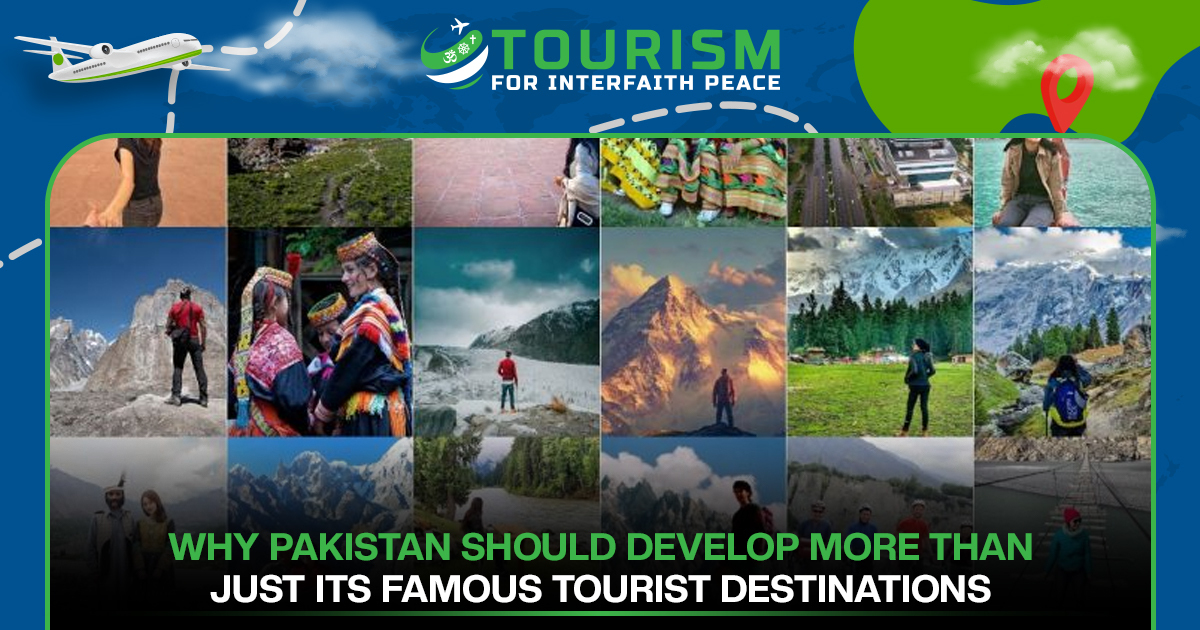
This is also where destination diversification matters. Much of Pakistan’s tourism attention has historically concentrated on a small number of well-known locations, and this points to why Pakistan needs to develop more than its famous tourist destinations if the sector is to grow sustainably. Lesser-known regions can offer genuine long-term potential, but that potential still needs to be evaluated on its own merits rather than assumed simply because it has not yet been discovered.
Exit Strategy, Liquidity, and Realistic Investment Timelines
Tourism real estate and hospitality assets in emerging destinations are generally less liquid than comparable assets in established markets. There may be fewer buyers, less transparent pricing benchmarks, and longer holding periods before a project reaches stable occupancy or profitability.
Investors should plan for realistic timelines that account for infrastructure development, regulatory processes, and the time it takes for visitor demand to mature, and should think through exit options in advance, whether through resale, long-term leasing, or partnership structures, rather than assuming an easy or quick exit will be available.
Attracting Visitors, Supporting Businesses, and Attracting Investment Are Not the Same Thing
It is useful to separate three related but distinct outcomes when evaluating a destination.
- A destination that attracts visitors has scenic, cultural, or experiential appeal that draws people, at least seasonally or temporarily.
- A destination that can support sustainable tourism businesses has the accessibility, infrastructure, workforce, and demand consistency for hospitality operators to run viable, ongoing businesses.
- A destination that can attract long-term investment has, in addition to the above, a stable regulatory environment, credible development trajectory, and realistic path to liquidity for investors.
A location can satisfy the first condition without meeting the second or third. Recognizing which category a destination currently falls into is one of the more practical steps an investor can take before committing capital.
How Investors Can Make More Informed Decisions
Making an informed decision about an emerging tourism destination generally involves combining several sources of information rather than relying on a single indicator.
- Reviewing available data from organizations such as the Pakistan Tourism Development Corporation, Pakistan Bureau of Statistics, and relevant provincial tourism authorities.
- Consulting international benchmarks and guidance from bodies such as UN Tourism, the World Bank, and the Asian Development Bank on sustainable destination development.
- Conducting on-ground due diligence covering land title, infrastructure, transport access, and local regulatory requirements.
- Engaging with local communities and existing operators to understand the practical realities of doing business in the area.
- Modeling investment timelines conservatively, accounting for seasonality, infrastructure gaps, and the time required for a destination’s tourism ecosystem to mature.
None of these steps guarantee a particular outcome, and no credible analysis should promise one. What they offer instead is a clearer, evidence-based picture of whether a destination’s fundamentals support the kind of investment being considered.
Conclusion
Emerging tourism destinations can represent genuine long-term opportunities, but scenic beauty and social media popularity are not reliable indicators of investment potential on their own. Demand consistency, transport connectivity, basic infrastructure, seasonality, regulatory clarity, hospitality capacity, local community participation, environmental carrying capacity, and realistic timelines for liquidity all shape whether a destination can move from being simply attractive to visitors, to being genuinely investable.
As Pakistan’s tourism corridors, infrastructure, and hospitality sector continue to develop, new opportunities are likely to emerge across a wider range of destinations than the handful that have traditionally dominated attention. Investors who evaluate these opportunities on fundamentals, rather than momentum, are better positioned to make decisions that hold up over the long term.