Pakistan offers a rich variety of interfaith travel experiences that showcase its diverse religious and cultural heritage, including Buddhist sites in Taxila, the Kartarpur Corridor, Lahore’s Sacred Heritage Trail, Hindu temples, Christian churches, and indigenous cultural landmarks. More than simply visiting places of worship, interfaith tourism encourages cultural understanding, strengthens connections between communities, supports local economies, and helps preserve shared heritage for future generations. By traveling responsibly through respectful behavior, appropriate dress, hiring licensed local guides, and supporting community-run businesses, visitors can transform their journeys into meaningful cultural exchanges that promote peace, mutual respect, and sustainable tourism.
Pakistan holds one of South Asia’s richest collections of layered heritage — Islamic architecture, Buddhist monasteries, Sikh pilgrimage sites, Hindu temples, Christian churches, and indigenous mountain traditions, often within a few hours’ drive of each other. Interfaith tourism isn’t simply about checking religious landmarks off a list. It’s about understanding how different communities have shaped the same landscape over centuries, approaching that history with curiosity and respect, and recognizing that meaningful travel can build bridges between cultures rather than just document them.
Why Interfaith Tourism Is Growing in Pakistan
Interest in interfaith travel has grown alongside a broader shift toward cultural diversity and heritage preservation in how Pakistan presents itself to visitors. Sites like the Kartarpur Corridor have shown what’s possible when cross-border access is managed thoughtfully, and that model is drawing attention to other heritage corridors across the country. Growth in this space is also tied to peacebuilding and community engagement: sustainable development around heritage sites tends to follow sustained, respectful visitor interest rather than large-scale investment alone, which makes responsible tourism as much a preservation strategy as an economic one.
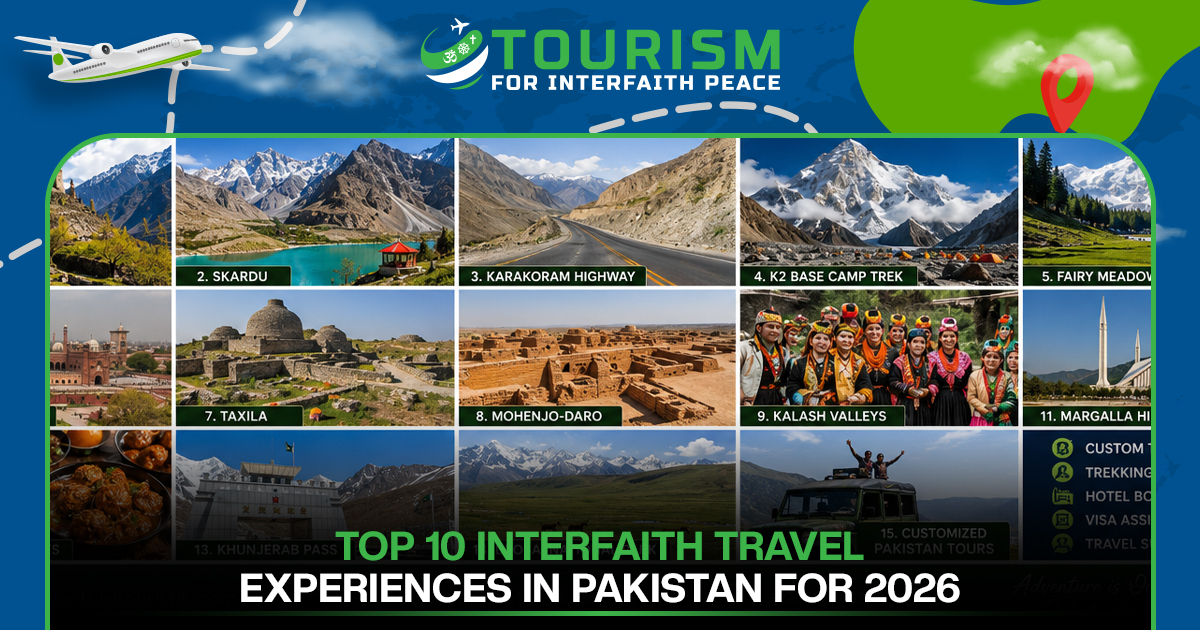
Top 10 Interfaith Travel Experiences in Pakistan
1. Exploring Taxila’s Buddhist Heritage
A UNESCO World Heritage Site near Islamabad, Taxila preserves monasteries, stupas, and archaeological remains from the Gandhara civilization, once a major center of Buddhist learning and art. Walking its ruins offers a direct sense of how trade routes carried ideas as much as goods.
Travel tip: hire a licensed guide from the site museum and avoid touching excavated stonework, which is fragile and still under study.
2. Visiting Kartarpur Corridor
This managed corridor connects visiting pilgrims to Gurdwara Darbar Sahib, one of Sikhism’s most significant sites, and stands as a rare example of cross-border pilgrimage access done well.
Travel tip: dress modestly, cover your head where indicated, and follow the gurdwara’s guidance on shoe removal and photography before entering.
3. Discovering Lahore’s Sacred Heritage Trail
Lahore’s Walled City packs mosques, a Sikh-era samadhi, colonial-era churches, and Hindu temple remains into a compact, walkable footprint, making it one of the country’s clearest illustrations of layered coexistence.
Travel tip: book a heritage-walk guide familiar with all the sites on the trail rather than visiting each independently, since context connects them.
4. Exploring Katas Raj Temples
This Hindu temple complex, built around a sacred pond, has drawn pilgrims and researchers alike, and ongoing restoration work has been closely tied to growing visitor interest.
Travel tip: time your visit outside peak pilgrimage days if you prefer a quieter experience, and support the on-site vendors who maintain the surrounding stalls.
5. Visiting Mohenjo-daro and Ancient Civilizations
One of the world’s earliest urban settlements, Mohenjo-daro predates the region’s major organized faiths and offers a shared human history that belongs to no single tradition.
Travel tip: visit in cooler months, as the Sindh site can be extremely hot, and bring sun protection since shaded areas are limited.
6. Experiencing Hunza’s Cultural Diversity
The mountain communities of Hunza reflect a distinct blend of Ismaili tradition, indigenous Wakhi and Burusho customs, and centuries of Silk Road exchange, all set against a striking Karakoram backdrop.
Travel tip: choose community-run guesthouses over larger hotel chains to keep more of your spending within the valley.
7. Visiting Peshawar Museum and Gandhara Heritage
Home to one of the world’s largest collections of Gandhara Buddhist sculpture, Peshawar Museum places centuries of cross-cultural artistic exchange under one roof.
Travel tip: check photography rules at the entrance, as flash photography is restricted around several fragile pieces.
8. Exploring Churches and Colonial Heritage
From Lahore’s cathedral architecture to Karachi’s historic churches, Pakistan’s Christian heritage sites reflect both colonial-era history and a living local community.
Travel tip: visit outside active service times unless you’ve been invited to attend, and ask before photographing worshippers.
9. Community-Based Cultural Experiences in Rural Pakistan
Homestays, craft markets, and village-hosted meals connect travelers directly with the families preserving regional traditions, and this is where interfaith tourism creates the clearest economic opportunities for local communities.
Travel tip: book through a community-based tourism operator so your visit directly supports the households hosting you.
10. Participating in Ethical Heritage Walks and Local Cultural Exchanges
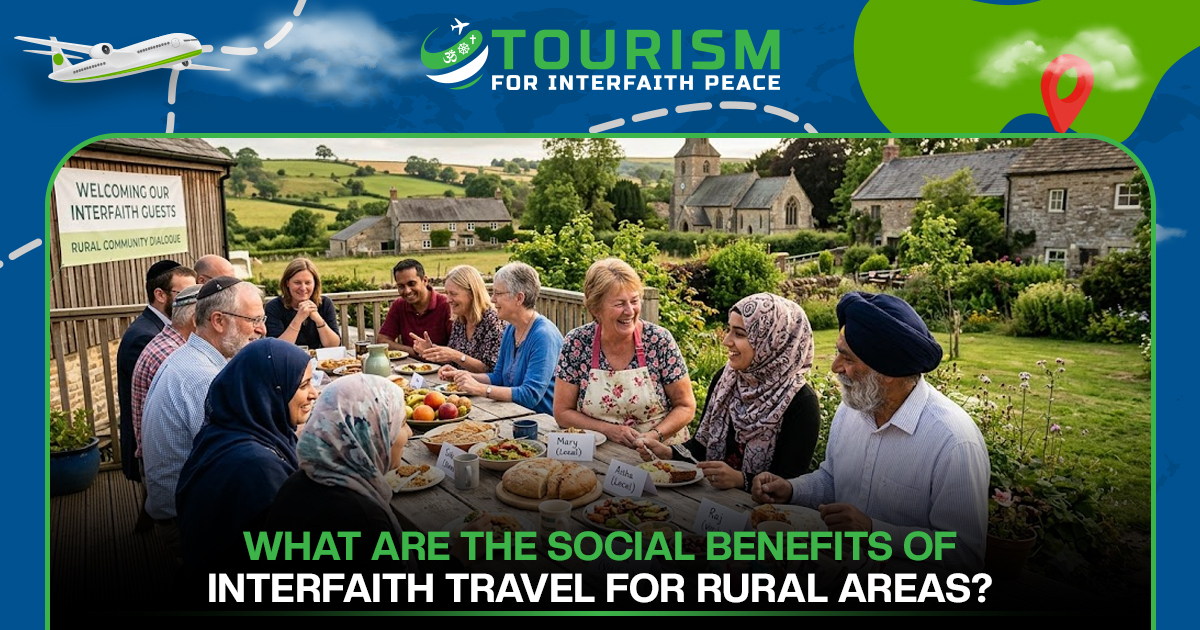
Guided walks and storytelling sessions led by local residents offer a more grounded understanding of shared heritage than a self-guided visit, and they tend to deliver social benefits that extend well beyond the tourism economy in rural areas.
Travel tip: ask your guide about the community’s own priorities for how their heritage is shared before assuming what visitors should see.
How Responsible Travelers Can Strengthen Interfaith Understanding
Respectful behavior is what separates interfaith tourism from simple sightseeing. That starts with dress etiquette appropriate to each site, asking before photographing people or active worship, and following the specific customs of wherever you’re visiting rather than assuming one set of rules applies everywhere. Supporting local businesses — guesthouses, guides, artisans — keeps tourism revenue distributed rather than concentrated, and responsible storytelling afterward means describing what you observed accurately rather than flattening it into a single narrative. Cultural sensitivity isn’t a checklist; it’s a habit of paying attention.
Why These Experiences Matter Beyond Tourism
These experiences carry weight well past the trip itself. They support peacebuilding by giving visitors direct, human contact with communities different from their own, which tends to do more for mutual understanding than any single conversation about tolerance. They fund cultural preservation, since heritage sites with steady, respectful visitor interest are simply more likely to secure restoration support. They create space for youth engagement, training a new generation of local guides and storytellers, and they strengthen local economies in ways that reach far beyond ticket sales. Collectively, they build the kind of international understanding that outlasts any individual visit.
Planning Your Interfaith Journey in Pakistan
Spring and autumn generally offer the most comfortable travel conditions across most of these regions, though Hunza’s high-altitude sites are best visited in summer. Work with local guides wherever possible — they bring context no guidebook can, and their income supports the communities you’re visiting. Confirm site-specific etiquette in advance, since customs vary meaningfully between a Buddhist archaeological site, a Sikh gurdwara, and a Hindu temple complex. As with any travel, check current safety guidance for your specific route before departing, and prioritize sustainable choices — refillable water, local transport, and community-run accommodation — throughout your trip.
Conclusion
Every one of these journeys carries the same underlying invitation: to understand a little more about a tradition, a community, or a history that isn’t your own. Traveled with curiosity, respect, and an open mind, interfaith tourism in Pakistan does more than fill an itinerary — it builds empathy, supports the communities preserving this heritage, and creates the kind of lasting connection that a passport stamp alone never could.