There is a moment in Karachi that stops first-time visitors short. You are standing somewhere in the old city — Saddar, maybe, or the narrow lanes behind Burns Road — and within the space of a single block you hear the adhan from a mosque minaret, pass a temple with marigold garlands draped over its entrance, and catch the faint smell of incense from a street-side Zoroastrian prayer house. The city does not announce this to you. It just happens, and you either notice or you don’t.
Karachi is Pakistan’s largest city, its commercial engine, and one of the most religiously diverse urban spaces in South Asia. Muslims, Hindus, Christians, Sikhs, Parsis, and smaller communities have shared this city for generations. The fact that their places of worship still stand — functioning, maintained, open to curious visitors — is not incidental. It is part of the city’s character.
This guide is written for travelers who want more than a list of coordinates. Interfaith tourism is not sightseeing with a checklist. It is about sitting with the history of a place, understanding what each community built here and why it still matters, and leaving with a more honest picture of Pakistan than most international visitors arrive with.
Whether you are a devout pilgrim, a cultural historian, an architecture enthusiast, or simply someone who wants to understand how different faiths have coexisted in a megacity for over a century — Karachi has more to show you than you would expect.
Why Karachi Is One of Asia’s Quietly Interfaith Cities
Most people who have not visited Pakistan hold a mental image of religious uniformity. That image is wrong, and nowhere is that clearer than Karachi.
The city’s religious geography developed over centuries. Sindh has been home to Hindu communities since antiquity. Parsi merchants arrived from Persia over a thousand years ago and built a community that became central to Karachi’s colonial-era commercial life. Sikh pilgrims and traders moved through the region long before Partition. The British colonial administration brought Christian missionaries who built schools, hospitals, and churches that still operate today.
Partition in 1947 reshuffled populations across the subcontinent in ways that are still difficult to fully account for. Many Hindu and Sikh residents left. Millions of Muslim refugees arrived from India. The religious composition of the city changed significantly. But it did not become religiously singular. Hindu temples were maintained. Parsi fire temples kept burning. Christian cathedrals continued to hold services. The communities that remained were smaller, but they remained.
What this produced, over decades, is a city with layers. Walk through Karachi’s older neighborhoods and you are walking through overlapping histories — each faith community leaving its own architectural fingerprint on the urban fabric. That is what makes interfaith tourism here different from visiting a single heritage monument. The whole city is the heritage site.
Karachi’s Major Interfaith and Religious Sites
The sites below are organized by faith tradition, not by geography. If you are planning a day-by-day itinerary, a guide familiar with the city can help sequence these into logical routes — several are within walking distance of each other in the Saddar and Old City areas.
| Hindu | Shri Swaminarayan MandirOne of the oldest surviving Hindu temples in Karachi |
| Sikh | Gurdwara Nanak SahibA living Sikh heritage site in the heart of the city |
| Islamic | Masjid-e-ToobaThe world’s largest single-dome mosque |
| Sufi/Islamic | Abdullah Shah Ghazi ShrineKarachi’s most visited spiritual site |
| Zoroastrian | Parsi Dar-e-Meher (Agiary)A functioning fire temple in a city that still honors its Parsi heritage |
| Christian | St. Patrick’s CathedralThe oldest Roman Catholic cathedral in Pakistan |
Shri Swaminarayan Mandir
The Swaminarayan Mandir in Karachi’s Burns Road area is one of the most intact Hindu temples in Pakistan. Built in the 19th century, it was constructed by the Swaminarayan Sampraday community — a Vaishnava Hindu tradition that still has millions of followers worldwide.
The temple’s architecture is detailed work. The carved wooden facades and painted interior murals survived Partition and decades of relative neglect, and they remain standing today largely because of the small Hindu community that has maintained continuous custody of the property. Visiting this temple is an experience in quiet persistence — a living religious site in a city where its community shrank to a fraction of its former size.
The surrounding area, Ranchore Lines, was once the center of Karachi’s Hindu merchant community. Some of that old neighborhood fabric is still visible if you look for it — havelis with carved wooden balconies, old shop fronts with faded lettering. The temple is the most intact part of that history.
Visitor guidelines
- Remove footwear before entering the main temple area
- Dress modestly — covered shoulders and knees are expected
- Avoid visiting during active prayer times unless you plan to observe respectfully
- Ask before photographing devotees or religious ceremonies
- Small donations toward temple maintenance are welcomed but not required
Gurdwara Nanak Sahib
Gurdwara Nanak Sahib is the most significant Sikh heritage site in Karachi and one of the important Sikh historical sites in Pakistan outside of Punjab. The gurdwara is associated with Guru Nanak Dev Ji, the founder of Sikhism, who is believed to have passed through Sindh during his travels in the early 16th century.
The building itself is a substantial structure — a white-domed gurdwara in the traditional style, maintained by the small Sikh community that still lives in Karachi and by the broader community of Pakistani Sikhs who consider this site part of their religious heritage. The langar, the free community kitchen that is central to Sikh practice, has operated here for generations.
For Sikh visitors from the diaspora, this gurdwara carries deep significance. For non-Sikh visitors, it is an opportunity to experience a tradition of open hospitality that is central to Sikh identity — the langar is open to all, regardless of faith.
Visitor guidelines
- Cover your head before entering — scarves or handkerchiefs are available at the entrance
- Remove footwear at the entrance
- The langar is open to all visitors who wish to eat — it is considered an act of service to share in it
- Observe quietly during prayer and scripture readings
- Photography of the interior should be done discreetly and respectfully
Masjid-e-Tooba
Masjid-e-Tooba in the Defence Housing Authority area holds a specific architectural distinction: it is built under a single concrete dome 72 meters in diameter, reportedly the largest of its kind in the world at the time of its construction in 1969. There are no internal columns. The interior is a single uninterrupted space that can accommodate around 5,000 worshippers.
The architect was Babar Hamid Chauhan, and the mosque was a considered piece of modernist religious architecture — the dome’s proportions are calibrated so that it reads as a place of contemplation rather than spectacle. The interior is cool even on Karachi’s hottest days, lit by natural light filtered through the dome’s perimeter.
Non-Muslim visitors are generally welcome to visit outside of prayer times. The mosque is less a tourist attraction than a working religious space, and it should be approached as one.
Visitor guidelines
- Non-Muslim visitors should visit outside of the five daily prayer times
- Women should wear a headscarf and loose, covering clothing
- Men should wear long trousers and covered shoulders
- Remove footwear before entering
- Keep voices low inside the prayer hall
Abdullah Shah Ghazi Shrine
The dargah of Hazrat Abdullah Shah Ghazi sits on a small hill in Clifton, overlooking the Arabian Sea. Shah Ghazi was an 8th-century saint — a descendant of the Prophet Muhammad who came to Sindh and, according to tradition, is the reason Karachi has been spared the destructive cyclones that have historically hit much of the Arabian Sea coastline. The local belief in his protective role is genuine and deep.
This shrine is the most visited spiritual site in Karachi. On any given Thursday evening — when dargah visits are traditional in Pakistani Sufi culture — thousands of people arrive: families with children, elderly pilgrims, young men and women, people from every economic class. Qawwali devotional music plays. The smell of rose petals and attars fills the air. The steps and surrounding lanes are busy with vendors selling flowers, incense, and religious items.
For visitors unfamiliar with Sufi shrine culture, this is one of the most accessible entry points anywhere in Pakistan. The atmosphere is open, the crowd is diverse, and the spiritual energy of Thursday evenings is unlike anything in the city’s more formal religious spaces.
Visitor guidelines
- Thursday evenings are the most atmospheric time to visit, but also the most crowded
- Women should cover their heads and wear modest clothing
- The inner sanctum where the tomb is located has separate entry for men and women in most sections
- Photography near the tomb should be done with sensitivity — many visitors are in a state of deep prayer
- Accept the hospitality of flowers or rose petals offered by attendants graciously — declining can seem dismissive
Parsi Dar-e-Meher (Agiary)
Karachi’s Parsi community is one of the oldest religious minorities in the city and one of the most historically significant. Zoroastrianism — the faith of the ancient Persian Empire — has been practiced in the Indian subcontinent by Parsi communities since roughly the 9th century CE. In Karachi, the Parsis built a community that was commercially prosperous and disproportionately influential in the city’s early development as a port.
The Dar-e-Meher (also called Agiary) is a fire temple — the central religious space of Zoroastrian practice. A sacred fire burns continuously inside, tended by ordained priests. The fire at many Parsi fire temples has been burning for centuries without interruption.
Non-Zoroastrians are not permitted to enter the inner sanctum of the fire temple. This is a sincere religious boundary, not an exclusionary gesture, and visitors should understand and respect it. The architectural exterior, the surrounding community area, and conversation with community members who are often willing to speak about their history are all accessible.
Visitor guidelines
- The interior of the fire temple is restricted to initiated Zoroastrians — this boundary must be respected without exception
- You may photograph the exterior
- Dress modestly and behave with the same decorum you would at any active religious site
- If you are invited to speak with community members, treat the conversation as a privilege — this is a community that has been in Pakistan for over a thousand years and has much to share
St. Patrick’s Cathedral
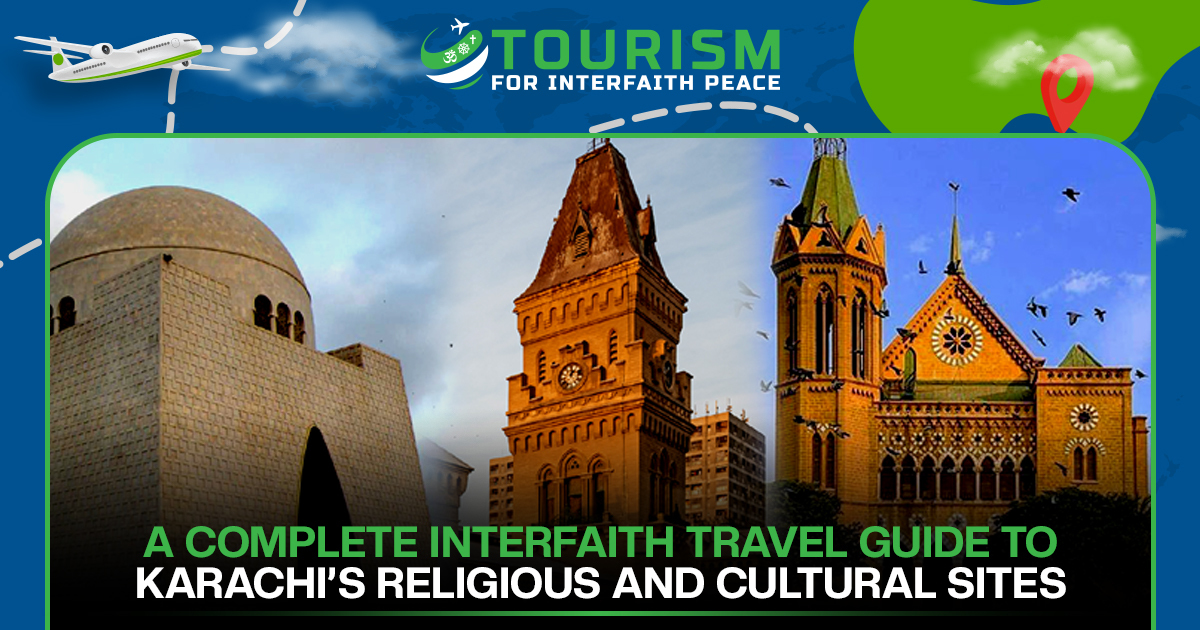
St. Patrick’s Cathedral in Saddar is the seat of the Roman Catholic Archdiocese of Karachi and the oldest Catholic cathedral in Pakistan, built in 1881. The building is Gothic Revival in style — pointed arches, stained glass windows, a stone exterior that looks improbable in this climate but has survived it for well over a century.
The cathedral is an active parish church with a large congregation, drawing Karachi’s Catholic community for Sunday masses and daily services. The churchyard contains graves from the colonial period, some of the oldest maintained Christian burial records in the city.
Karachi also has a significant Protestant community with several churches of historical interest, including Holy Trinity Cathedral in Saddar and St. Andrew’s Church — a Church of Scotland congregation established in 1866 that still holds weekly services.
Visitor guidelines
- Non-Catholic visitors are welcome to enter and observe, but should not approach the altar or participate in sacramental parts of the Mass
- Dress modestly — this is a working church, not a museum
- Photography inside during services requires permission from the presiding priest or a church official
- The churchyard is accessible and the historic graves are of genuine interest to those curious about Karachi’s pre-Partition history
The Saddar Heritage Walk: Where Karachi’s Religious History Lives in Streets
If the individual sites are chapters, Saddar is the whole book.
Saddar was the commercial and civic center of colonial Karachi, and it shows. The streets here are tight and busy in the way that old commercial districts always are — pavements broken by decades of heavy use, shopfronts stacked three deep from the street. But look up and the buildings are extraordinary: Victorian arcades, Art Deco facades, Edwardian civic buildings, all crammed together over about two square kilometers.
In Saddar you can walk from St. Patrick’s Cathedral to the Swaminarayan Mandir to Gurdwara Nanak Sahib in under thirty minutes. That proximity is not accidental — these communities lived and worshipped alongside each other for generations. The streets between them are the physical record of that coexistence.
The Empress Market, built in 1889 to commemorate Queen Victoria’s Diamond Jubilee, is worth a visit not for shopping but for the building itself: a large Gothic-Italianate structure with a clock tower that remains one of Saddar’s landmarks. The surrounding market streets have been in continuous commercial operation for over a century.
Clifton, a short drive from Saddar, adds a different layer. The Abdullah Shah Ghazi Shrine, the Sea View promenade, and the old residential areas near the beach have their own history — this was the neighborhood where Karachi’s wealthy families, from multiple communities, built their large homes in the late colonial period. Some of those homes still stand, in varying states of preservation, along the older streets.
Walking both areas over a full day, with the religious sites woven in, gives a more complete picture of Karachi than any single destination can offer.
Interfaith Travel Etiquette: How to Visit With Genuine Respect
There is a version of religious tourism that is extractive — visitors treating holy sites as content for social media without any real curiosity about what they are witnessing. The communities that maintain these places have seen enough of that to notice the difference. Genuine respect is not difficult, but it requires some preparation.
Dress code across all religious sites
The general principle in Karachi is modest dress for all visitors regardless of gender. This means covered shoulders and knees as a minimum at every site listed in this guide. For mosques and Sufi shrines, women should bring a headscarf. For gurdwaras, both men and women need to cover their heads — small cloths are available at entrances if you forget.
Loose, non-form-fitting clothing is appropriate. Bright colors are generally fine; there is no requirement for white or any specific color at most sites. The goal is to dress in a way that signals you understand you are entering a sacred space.
Prayer times
The Islamic prayer schedule (five daily prayers: Fajr, Zuhr, Asr, Maghrib, Isha) governs when mosques and shrines are most actively in use. Visiting mosques during these times as a non-Muslim is generally discouraged — not prohibited in all cases, but it is an active worship moment and not the time for tourism. Most mosques in Karachi are accessible outside prayer times without any formality.
Hindu temple visits are best in the mornings, when puja ceremonies are conducted and the temple is most alive. Ask at the entrance about the daily schedule.
Footwear
Remove shoes before entering all Hindu temples, gurdwaras, mosques, and most Sufi shrines. This is not a suggestion — it is a basic requirement, and arriving without awareness of it marks you immediately as someone who hasn’t made any effort to understand what they are walking into. Carry a small bag for your shoes if needed.
Photography
At every site: ask before photographing people who are praying or in a state of visible devotion. No one owes you a picture of their private spiritual moment. The architecture, the exteriors, the broader scenes — these are generally fine to photograph. Zoom shots of individuals at prayer are not, without permission.
Some sites — particularly the interior of the Abdullah Shah Ghazi Shrine during peak hours — are crowded enough that having a camera out feels intrusive. Read the atmosphere. If the dominant energy in a space is devotional, put the camera away.
Accepting hospitality
Pakistani religious culture across most traditions has strong norms of hospitality toward visitors. You may be offered tea, food, flowers, or conversation. Accepting graciously is almost always the right choice. Declining or ignoring these gestures is often experienced as dismissiveness, even if none is intended.
Best Time to Visit Karachi for Interfaith Tourism
Karachi has one of Pakistan’s more manageable climates for tourism — it does not get the extreme cold of the north or the intense heat of interior Punjab. But timing still matters, both for weather and for the festival calendar.
October to February: the reliable window
This is when Karachi is at its most hospitable. Temperatures sit between 18 and 28 degrees Celsius. The sea breeze moderates the humidity. Evening walks in Saddar or along the Clifton waterfront are genuinely pleasant. If you have one window for Karachi, this is it.
March to May: warming fast
Manageable in March and April, increasingly uncomfortable by May. Temperatures climb into the mid-30s. The city functions normally but outdoor walking tours become taxing by mid-morning.
June to September: avoid if possible
Hot, humid, and interrupted by the monsoon from July onward. July and August in Karachi can mean heat in the high 30s with heavy moisture and occasional flooding in the older neighborhoods. Not impossible to visit, but not comfortable.
Festival seasons worth planning around
Eid al-Fitr and Eid al-Adha transform the city. The streets around major mosques and shrines fill with celebrants. The energy is exuberant rather than solemn, and the communal feasting culture means food is everywhere and sharing is expected. These are good periods to visit if you have some previous context for Pakistani culture — they can be overwhelming for first-time visitors without a local guide.
Diwali, the Hindu festival of lights, is observed by Karachi’s small but active Hindu community, with the Swaminarayan Mandir area seeing increased activity in October or November depending on the lunar calendar. It is not a large public celebration in Karachi the way it is in India, but it is real and meaningful for the community.
Navroz, the Zoroastrian and Persian New Year in March, is observed by the Parsi community with community gatherings. It is not a public festival in the same sense but may be an opportunity for engagement if you have prior contact with the community.
Christmas is marked visibly in Saddar, where St. Patrick’s Cathedral and the surrounding Christian quarter are decorated, and midnight Mass draws a large congregation. The contrast of Christmas decorations on Saddar street is distinctly Karachian.
How Interfaith Tourism Actually Builds Peace
This is a claim that sounds like it belongs on a poster, so it deserves a more honest examination.
The mechanism is not mysterious. When people visit places of worship outside their own tradition, they are confronted with evidence that the people who pray there are fully human — with history, with beauty, with architecture they cared enough about to build and maintain over generations. That experience is difficult to dismiss. It works against the abstraction that makes dehumanization possible.
Pakistan’s image problem internationally is partly a media problem, but it is also a visibility problem. Very few international travelers have been here. The gap between what they expect and what they find is wide enough that many visitors describe something close to disorientation — a feeling that they were operating on wrong information. That disorientation is the beginning of a more accurate understanding.
For Pakistani visitors traveling within their own country, the effect is different but equally real. Visiting a working temple or a gurdwara that has been operating in your city for over a century challenges easy narratives about Pakistani identity that some political and religious currents have tried to make singular. The buildings themselves are an argument that this has always been a more complicated and more interesting place than those narratives suggest.
This is what interfaith tourism does at its best. It does not require agreement between traditions. It requires only that you look at what the other tradition actually built, understand something about why it was built, and recognize that the people who built it were doing something worth understanding.
When people visit places of worship outside their own tradition, they find evidence that the people who pray there are fully human — with history, with beauty, with architecture they cared enough to build and maintain over generations.
Frequently Asked Questions
What is interfaith tourism and what makes Karachi suitable for it?
Interfaith tourism is travel with the specific intention of visiting and learning from the religious and spiritual heritage of multiple faith traditions. Karachi is suited to it because the city contains functioning places of worship from at least six major traditions — Islam, Hinduism, Sikhism, Christianity, Zoroastrianism, and Sufi spiritual practice — within a relatively compact urban area. Many of these sites are centuries old and maintained by their respective communities.
What are the main interfaith sites in Karachi worth visiting?
The most significant sites for interfaith tourism in Karachi are the Shri Swaminarayan Mandir (Hindu, Saddar area), Gurdwara Nanak Sahib (Sikh), Masjid-e-Tooba (Islamic, Defence area), the Abdullah Shah Ghazi Shrine (Sufi, Clifton), the Parsi Dar-e-Meher or Agiary (Zoroastrian), and St. Patrick’s Cathedral (Catholic, Saddar). These represent the major faith communities that have coexisted in Karachi since the 19th century.
Is Karachi safe for religious tourism?
Karachi’s major religious heritage sites are in areas of the city that see regular domestic and international visitors. The Saddar area, Clifton, and Defence are well-established parts of the city with active commercial and community life. As with any large city, awareness of your surroundings and traveling with a local guide for the first visit are sensible precautions. The religious communities that maintain these sites are, in the experience of most visitors, welcoming to respectful outsiders.
Can tourists visit Hindu temples and Sikh gurdwaras in Karachi?
Yes. The Shri Swaminarayan Mandir and Gurdwara Nanak Sahib both receive visitors from outside their communities. Basic etiquette applies: remove footwear, dress modestly, cover your head at the gurdwara, and avoid visiting during active prayer times unless you plan to observe respectfully. The communities that maintain these sites are generally welcoming to visitors who arrive with genuine curiosity.
What is the best time of year to visit Karachi’s religious sites?
October through February is the most comfortable period for exploring Karachi’s religious and heritage sites. The weather is mild, outdoor walking is manageable, and the city’s cultural calendar includes several festivals. Eid, Christmas, and Diwali each bring their own character to their respective communities and neighborhoods. Avoid the June to September period if possible due to heat and monsoon humidity.
Do I need a guide to visit Karachi’s interfaith sites?
A local guide is not strictly required for visits to individual sites, but it adds significant value. The history of each community in Karachi is layered, and a guide with knowledge of the city’s religious and architectural history can connect the dots between sites in ways that visiting independently does not. For the Saddar heritage walk in particular, a guide helps navigate the area and provides context for what you are seeing.
What is peace tourism and how does it differ from regular tourism?
Peace tourism, also called interfaith tourism or cultural diplomacy travel, is travel that prioritizes sites, experiences, and encounters across religious and cultural lines with the goal of building understanding. It differs from standard sightseeing in its intent: the goal is not simply to photograph a landmark but to gain genuine familiarity with a tradition, community, or historical period outside your own experience. Karachi’s religious heritage sites are well suited to peace tourism because they represent distinct traditions in close proximity, allowing visitors to encounter several different religious histories in a single trip.
Karachi Offers a Different Argument About Pakistan
Most travel writing about Pakistan focuses on the north. The mountains, the glaciers, the adventure tourism, the dramatic roads. All of that is real and worth experiencing. But it tells only one part of the story.
Karachi tells a different part. It tells the story of a port city where communities from across the world’s major faiths built their lives alongside each other — not always easily, not without tension, but with enough sustained coexistence to leave behind a city where the evidence of multiple traditions is still standing and still functioning.
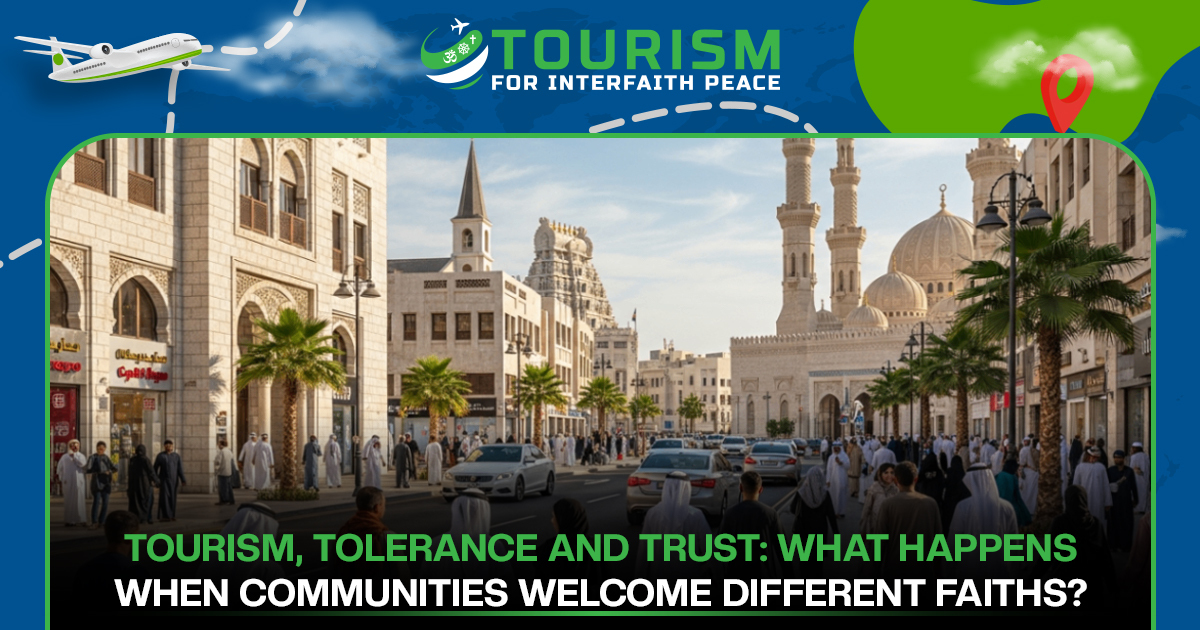
That is not a small thing. In a world where religious difference is frequently used as a tool for division, a city where you can walk from a mosque to a temple to a gurdwara to a fire temple in an afternoon is making an argument by existing.
Come and look at that argument in person. Walk the streets of Saddar slowly enough to notice what is above the shop fronts. Spend a Thursday evening at the Abdullah Shah Ghazi Shrine and stay for the qawwali. Sit in the cool interior of Masjid-e-Tooba and understand why the architect did not want any columns.
Karachi is not a perfect city. No city of 20 million people is. But it is an honest one, and for those curious enough to look carefully, it offers something that only cities with layered, complicated histories can offer: the visible proof that people with different beliefs have been finding ways to share the same streets for a very long time.