A destination cannot become truly sustainable if the people who live there are excluded from its development. Tourism is often discussed in terms of arrivals, attractions, and infrastructure, but a strong destination needs more — local participation, employment, entrepreneurship, functioning infrastructure, and cultural preservation, with benefits that reach the community around it. Tourism development isn’t something built for a destination and then introduced to its residents. It works best when it begins with their needs, strengths, and aspirations.
Why Local Communities Are the Foundation of Sustainable Tourism
Residents carry a kind of knowledge no feasibility study fully replicates. They understand which routes are safe in different seasons, which customs matter to visitors and which don’t, and how a place actually functions day to day rather than how it appears in a proposal. A tourism strategy built without that input can look sound on paper and still misjudge basic realities on the ground — a road that floods every monsoon, land use that overlaps with a planned trail, festival dates that don’t match a marketing calendar. Local knowledge isn’t a supplement to planning; it’s part of the planning.
Tourism Can Create Meaningful Local Economic Opportunities
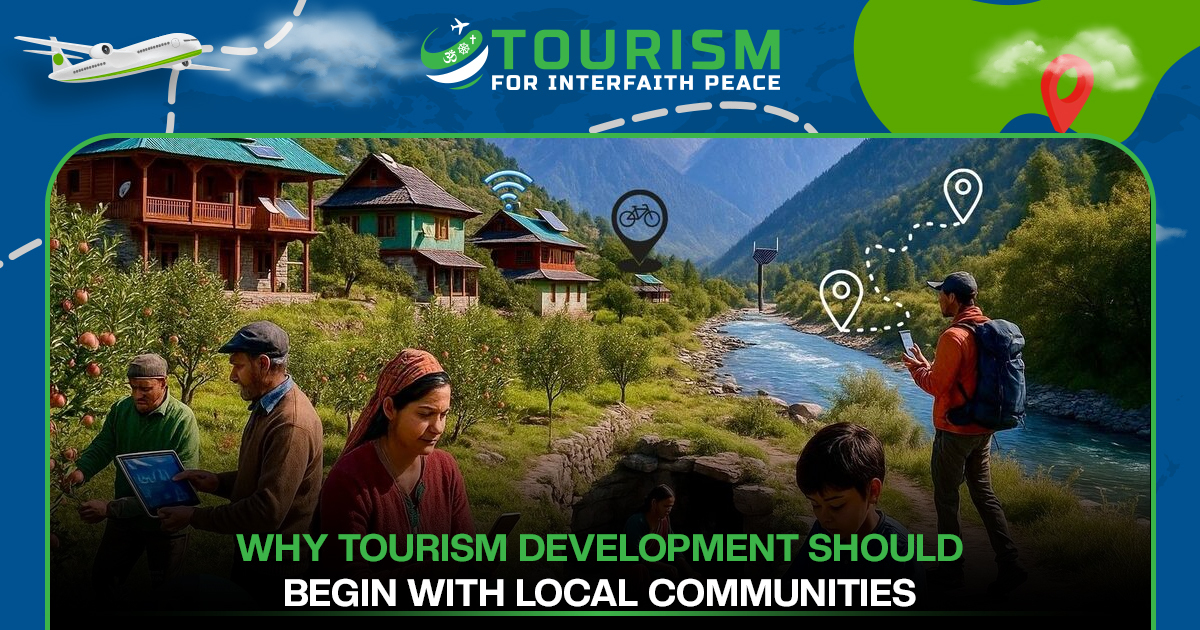
The economic opportunities tourism creates extend well past hotel and restaurant jobs. A destination economy can include local transport operators, food vendors, handicraft producers, tour guides, small retail businesses, photographers, event organizers, and increasingly, digital tourism services such as bookings and local content creation. When visitors spend with locally owned businesses rather than only through outside operators, that spending tends to circulate further within the local economy — a pattern tourism researchers describe as a multiplier effect. Its scale varies by destination and is worth measuring locally rather than assumed, but the underlying logic holds: local ownership keeps more value close to where it was generated.
Community Participation Can Improve the Visitor Experience
Authentic experiences are difficult to manufacture from outside. A guided walk led by someone who grew up in a place carries different weight than one read from a script. Local storytelling, home-taught cuisine, heritage sites interpreted by people who understand their significance, and craftspeople demonstrating techniques passed down through generations create the sense of place visitors increasingly look for. Community involvement isn’t only an ethical consideration — it’s often what separates a memorable destination from an interchangeable one.
Tourism Development Should Improve Everyday Life Too
Tourism infrastructure that serves only visitors misses an opportunity and often creates resentment instead of support. Roads built primarily to move tourists can also serve residents commuting to work or school. Improved connectivity, waste management, water infrastructure, and digital access benefit a community regardless of whether a visitor ever arrives. Skills development tied to tourism — language training, hospitality skills, small business support — can outlast any single season. When residents see tangible improvement in daily life alongside a growing visitor economy, support for tourism tends to be more durable.
Protecting Culture and Heritage Through Community Involvement
Local residents are the primary custodians of the traditions, languages, crafts, architecture, cuisine, and stories that make a destination distinct. Left unmanaged, tourism can flatten that into a simplified version of itself — a performance staged for cameras rather than a living tradition. Communities should have a meaningful role in deciding how their heritage is represented to visitors, including where the boundary sits between what is shared and what stays private. That involvement is what keeps cultural tourism from drifting into cultural commodification.
What Happens When Tourism Ignores Local Communities?
The risks are well documented across tourism research: income concentrated among outside investors rather than residents, rising pressure on local water and land resources, cultural practices reduced to photo opportunities, environmental strain that outpaces capacity, and eventually, community resistance to tourism itself. Growth in visitor numbers doesn’t automatically translate into sustainable development — it depends heavily on who captures the resulting economic and social value.
A Better Model for Community-Centered Tourism
Several practices consistently appear in the models researchers and development organizations point to as more sustainable:
- Consult communities before major development decisions, not after.
- Create direct local employment pathways.
- Support local entrepreneurs with training and market access.
- Invest in tourism-relevant skills development.
- Protect cultural heritage through community-led guidelines.
- Include residents in ongoing planning, not just initial consultation.
- Apply responsible environmental practices from the outset.
- Encourage sourcing from local suppliers.
- Measure tourism’s social and economic impact over time.
- Structure benefit-sharing so tourism revenue remains within the destination.
Pakistan’s Opportunity for Community-Based Tourism
Pakistan’s geography gives it an unusually broad base for community-centered tourism: mountain regions in the north, lakes and valleys, coastal areas in the south, historic and archaeological sites, and cultural and religious heritage spread across different communities. Rural and mountain communities in particular often hold the practical knowledge and cultural context that make a destination distinctive to visitors. Responsible tourism development in these regions can create local opportunity while improving infrastructure and services residents rely on daily — provided planning begins with community involvement rather than treating it as an afterthought.
Conclusion
The strongest tourism destinations aren’t simply places where visitors arrive. They’re places where local people have a genuine reason to participate, benefit, and feel ownership over what the destination becomes. Sustainable tourism works when it creates shared value among visitors, local communities, businesses, the environment, and the destination itself, rather than treating any one of those as secondary to the others. As destinations across Pakistan and elsewhere continue to develop, community-centered planning is likely to remain one of the clearest paths toward tourism that lasts.
FAQs
Why are local communities important in tourism development?
Residents hold practical, cultural, and environmental knowledge that outside planning can miss, and they are the ones who live with a destination’s long-term outcomes — making their participation essential rather than optional.
How does tourism benefit local communities?
Through direct and indirect employment, entrepreneurship opportunities in transport, food, crafts and guiding, improved local infrastructure, and stronger preservation of cultural heritage when residents help shape how it’s presented.
What is community-based tourism?
An approach that places local communities at the center of tourism planning and decision-making, so residents are active participants and primary beneficiaries rather than a backdrop for visitor activity.
How can tourism create local jobs?
Beyond hotels and restaurants, tourism can support local transport, food businesses, handicrafts, guiding, small retail, events, and digital tourism services, particularly when visitor spending is directed toward locally owned businesses.
Why should local people participate in tourism planning?
Because decisions made without local input can overlook practical realities on the ground and risk building infrastructure or experiences that don’t reflect community needs or long-term interests.