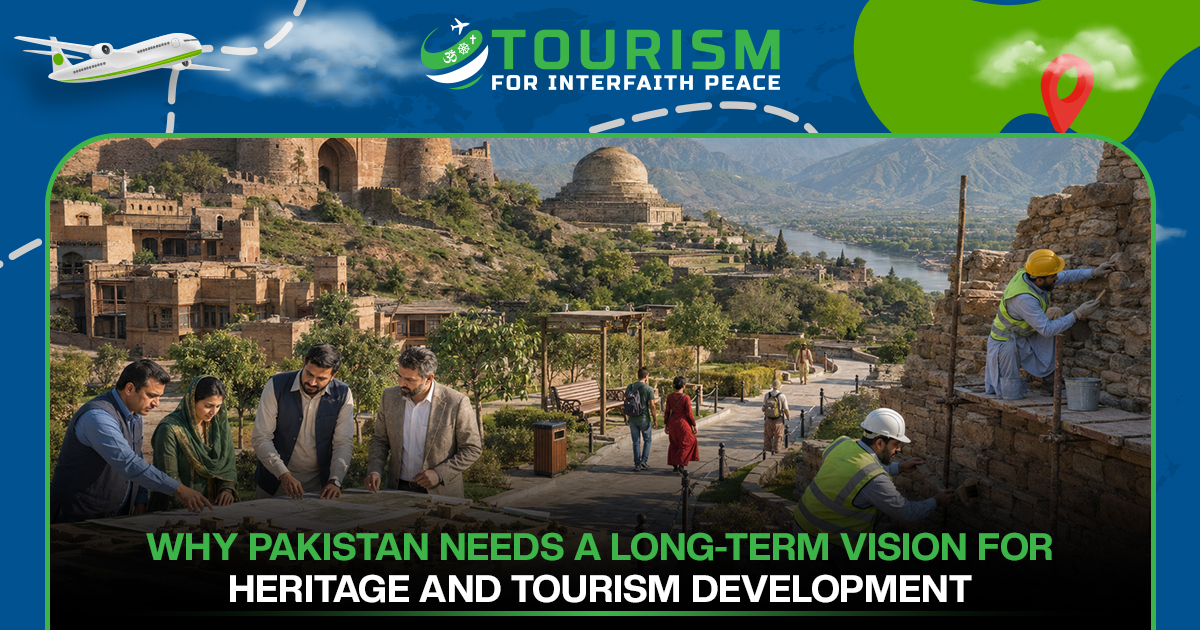
Pakistan holds a combination of assets that few countries can match: sites tied to some of the world’s earliest urban civilizations, centuries of Mughal architecture, Buddhist and Gandharan heritage, living Sufi and Islamic traditions, Sikh and Hindu heritage sites, some of the highest mountain ranges on earth, and a range of regional cuisines, crafts and festivals that vary sharply from one province to the next.
None of that translates automatically into a functioning tourism industry. Potential becomes performance only when it is supported by planning, infrastructure, conservation, accessibility, investment and community participation working together over time. A single marketing campaign or an isolated development project can generate short-term attention, but it cannot substitute for a coordinated, long-term national vision — one that treats tourism growth and heritage preservation as parts of the same effort rather than competing priorities.
Pakistan’s Tourism Potential Goes Beyond Scenic Destinations
International conversation about Pakistani tourism tends to centre on the northern mountain regions — their valleys, lakes and high-altitude landscapes remain a genuine draw. But the country’s tourism proposition extends well beyond scenery.
Pakistan is home to six UNESCO World Heritage Sites: the archaeological ruins at Mohenjo-daro, the ancient city of Taxila, the Buddhist ruins of Takht-i-Bahi and neighbouring Sahr-i-Bahlol, Lahore Fort and Shalamar Gardens, the Makli necropolis near Thatta, and Rohtas Fort. Beyond these formally recognized sites, cities such as Peshawar and Multan carry centuries of layered history, from Mughal-era architecture to Sufi shrines and old-city trade quarters, much of which remains under-documented and under-visited relative to its significance.
The country’s heritage also spans multiple faith traditions — Buddhist, Sikh, Hindu and Islamic sites among them — each with genuine cultural and historical weight. Presenting this heritage responsibly means treating each tradition on its own terms, with accurate context and appropriate care, rather than reducing any of it to a generic “attraction.”
Why Short-Term Tourism Campaigns Are Not Enough
There is an important difference between tourism promotion and tourism development. A campaign can raise awareness of a destination in a matter of weeks. Building a destination that can actually receive visitors well takes considerably longer.
Visitors arriving at a promoted site still need functioning roads, reasonable transport options, safe and adequate accommodation, sanitation, trained guides, clear signage, accessible information and a working emergency response system. When promotion outpaces destination readiness, the result is often a visitor experience that undermines the very campaign that generated interest in the first place — and a heritage site absorbing more pressure than its current management capacity can handle.
Heritage Conservation Must Be at the Centre of Tourism Development
Rising visitor numbers without a matching conservation effort can damage the sites tourism depends on. Maintenance, restoration, documentation, visitor management and a clear understanding of a site’s carrying capacity all need to be built into tourism planning from the outset, not added afterward as a corrective measure.
Heritage should not be consumed faster than it can be preserved. This is not a case against tourism growth — it is the argument for treating conservation as the foundation that makes long-term tourism value possible in the first place. A heritage site that is well documented, professionally managed and protected from uncontrolled development around its perimeter retains its value for far longer than one opened to visitors without those safeguards.
Infrastructure Is the Backbone of Tourism Growth
Roads, airports, rail connectivity, public transport, hotels, restaurants, clean water, sanitation, electricity, telecommunications and internet access all shape whether a destination is genuinely usable. Infrastructure affects accessibility, but it also affects visitor confidence — travellers, and particularly international and overseas visitors, tend to stay longer and spend more in destinations where basic services are reliable.
This is also where destination competitiveness is decided. Two sites of comparable historical significance can perform very differently depending on how easy each is to reach, navigate and stay in.
Local Communities Should Be Part of the Tourism Economy
Tourism tends to be more sustainable when the communities living around a heritage site or destination see direct economic benefit from it — through work as local guides, guesthouse operators, restaurant owners, craftspeople, transport providers and hospitality staff.
This is not only an economic argument. Communities with a genuine stake in tourism’s success also have a direct incentive to protect the sites and landscapes that draw visitors in the first place. Excluding local residents from the tourism economy around their own heritage tends to weaken, rather than strengthen, long-term preservation.
Pakistan Needs Stronger Destination Management
A tourism destination functions as an ecosystem, not a single attraction. That means coordinated destination management — clear tourism policies, defined coordination between federal, provincial and local departments, reliable visitor data, carrying-capacity planning, crisis management protocols and standardized visitor services — rather than fragmented responsibility spread across agencies with limited communication.
Where destination management organizations exist and function well internationally, they typically bring heritage departments, tourism authorities, private operators and local government into a shared planning process. Pakistan’s own path toward this kind of coordination will need to reflect its specific administrative structure and provincial autonomy, but the underlying principle — shared planning over fragmented responsibility — holds regardless of context.
Digital Technology Can Transform the Visitor Experience
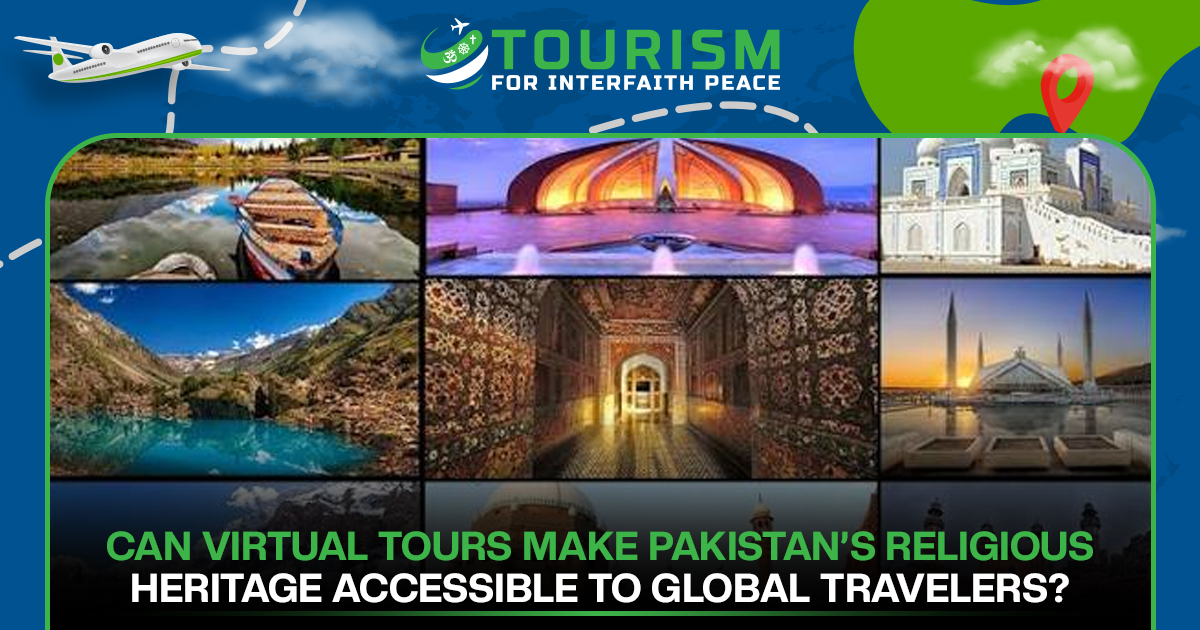
Digital tools have a clear role to play: destination information available online, digital maps, virtual previews of heritage sites, online ticketing, multilingual tourism websites, digital heritage archives and data on visitor patterns can all make destinations easier to discover, plan for and navigate.
Technology supports tourism development; it does not replace it. A well-designed website cannot substitute for a functioning road, and a virtual tour cannot substitute for trained on-site guides. Digital transformation works best as one layer within a broader infrastructure and conservation strategy, not as a stand-in for it.
A Long-Term Tourism Vision Should Focus on Sustainability
A national tourism vision for Pakistan should bring together several elements at once rather than treating them as sequential phases:
- Heritage protection — preserving historical and cultural assets through documentation and conservation.
- Infrastructure — improving access and visitor facilities across regions.
- Community participation — ensuring tourism revenue reaches local populations.
- Private-sector investment — encouraging responsible hospitality and tourism businesses.
- Skills development — training guides, hospitality workers and destination managers.
- Digital transformation — making destinations easier to discover and navigate.
- Environmental sustainability — protecting the natural ecosystems tourism depends on.
- Data-driven planning — using reliable tourism statistics to guide decisions.
- International marketing — building Pakistan’s destination brand strategically and accurately.
- Long-term governance — maintaining continuity across political and administrative cycles.
From Tourism Potential to Tourism Performance
Pakistan does not simply need more tourists. It needs better-managed tourism — visitors who stay longer, spend more locally, leave with a positive experience, and return. It needs heritage sites that are protected rather than gradually worn down by uncoordinated visitation. And it needs a tourism sector where economic benefit reaches the communities living closest to the destinations themselves.
Measuring success by visitor numbers alone misses most of what actually determines whether a tourism strategy is working. Longer stays, stronger local economic participation, better visitor experiences, durable heritage protection and repeat visitation are the indicators that reflect a tourism sector built to last, rather than one built to generate a short-term surge in attention.
Realizing Pakistan’s tourism and heritage potential is less about discovering new destinations than about committing to the coordinated, long-term work of managing the ones the country already has. That is the vision worth building toward — one shaped by planning and patience rather than campaigns and shortcuts.
Frequently Asked Questions
Why is tourism important for Pakistan?
Tourism offers Pakistan a way to generate economic activity around its cultural, historical and natural assets while creating employment opportunities in hospitality, guiding, crafts and local services, provided that growth is managed sustainably.
Why is heritage conservation important for tourism?
Heritage sites are the foundation of much of Pakistan’s tourism appeal. Without ongoing maintenance, documentation and visitor management, increased tourism activity can accelerate wear and damage, reducing the very value that attracts visitors in the first place.
What are the biggest challenges facing tourism in Pakistan?
Key challenges include uneven infrastructure, fragmented destination management across departments and provinces, limited visitor data, and a tendency to prioritize short-term promotion over long-term destination readiness and conservation.
How can Pakistan develop sustainable tourism?
By coordinating heritage protection, infrastructure development, community participation, private investment, skills training and digital tools within a single long-term strategy, rather than pursuing these elements separately or sequentially.
What role do local communities play in tourism development?
Local communities can benefit directly through guiding, hospitality, crafts and small businesses, and their involvement gives them a direct stake in protecting the heritage sites and landscapes tourism depends on.
How can technology improve Pakistan’s tourism industry?
Digital tools such as online information, virtual previews, digital ticketing and multilingual resources can make destinations easier to discover and plan for, but they work best alongside physical infrastructure and trained tourism professionals, not as a replacement for either.
What should a long-term tourism strategy for Pakistan include?
A credible strategy should address heritage protection, infrastructure, community participation, private investment, skills development, digital transformation, environmental sustainability, data-driven planning, destination branding and governance that outlasts individual political cycles.