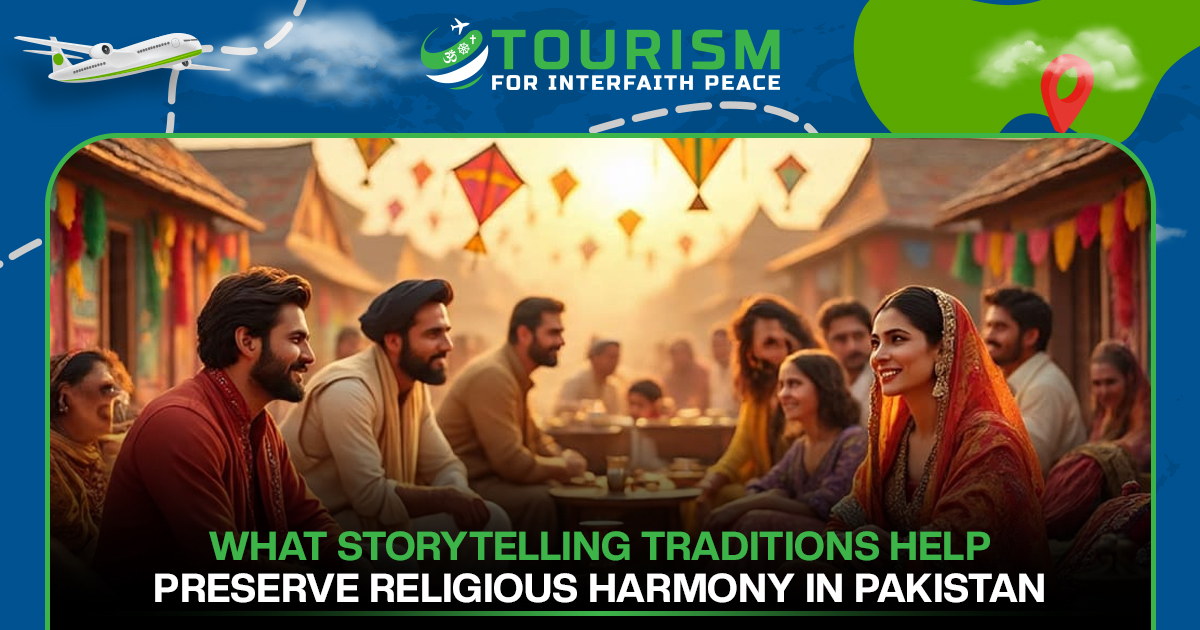
Long before newspapers, schools, or broadcast media reached every village in Pakistan, stories were doing the essential work. They carried moral codes across generations. They explained suffering and celebrated kindness. They kept memory alive in communities that had no written archive. And they did something perhaps more remarkable: they helped people from different faiths, languages, and backgrounds find common ground.
Pakistan is home to one of the most complex cultural tapestries in Asia — dozens of ethnic groups, several major religious communities, and linguistic traditions stretching from Balochi and Sindhi to Punjabi, Pashto, and beyond. What has held this diversity together for centuries is not institutions or treaties. It is, in large part, the shared act of gathering to listen to a story.
The storytelling traditions of Pakistan are not relics. They are living, breathing practices that continue to shape how communities understand themselves and each other. For travellers interested in cultural heritage, interfaith dialogue, and authentic local experience, these traditions are among the most powerful entry points into Pakistani life.
Why Storytelling Has Always Been More Than Entertainment
Every culture on earth tells stories. But in oral-dominant societies — where knowledge passed from person to person through speech rather than text — storytelling carried a weight that modern audiences can underestimate. It was the mechanism for cultural survival.
In Pakistan’s diverse communities, oral traditions served several simultaneous purposes. They preserved historical memory in regions where literacy was limited. They transmitted ethical frameworks — honesty, generosity, loyalty, respect for elders — across generations without formal education systems. They created shared reference points: characters, dilemmas, and outcomes that different people could discuss and interpret together.
Crucially, they built empathy. When a Hindu merchant in pre-Partition Punjab and a Muslim farmer from the same district listened to the same folk tale from the same travelling storyteller, they inhabited the same imaginative space for a time. They felt the same suspense, the same moral satisfaction at a just resolution. That shared experience mattered — and it still does.
The oral traditions of Pakistan also had a practical wisdom: they avoided the doctrinal disputes that formal religious discourse can trigger. A story about a generous widow whose kindness saves a village does not name her religion. A tale of a young man who crosses mountains to honour a promise does not ask whether he is Muslim, Hindu, or Sikh. The moral is available to everyone.
How Sufi Storytelling Encourages Peace and Inclusion
Of all Pakistan’s storytelling traditions, the Sufi tradition has had the most profound influence on interfaith harmony. Sufism — the mystical dimension of Islam that emphasises the direct experience of the divine — arrived in the subcontinent gradually over many centuries, carried partly by travelling saints and scholars who adapted their teachings to local cultures rather than demanding conformity.
The great Sufi saints of the subcontinent — figures like Lal Shahbaz Qalandar, Data Ganj Bakhsh, and Shah Abdul Latif Bhittai — were also poets and storytellers. Their teachings reached ordinary people not through theological treatise but through verse, song, and parable. The message they carried was consistent: love for the divine is inseparable from love for humanity, and no human being stands outside that love.
Shah Abdul Latif Bhittai, the 18th-century Sindhi saint and poet, is perhaps the most studied example. His major work, the Shah Jo Risalo, weaves together classical Islamic mysticism with pre-Islamic Sindhi folklore. The female protagonists of his verses — Heer, Sassui, Marvi, Noori — are not defined by their religious identity. They are defined by their devotion, their courage, and their longing. These figures have been claimed as cultural ancestors by Sindhi Hindus and Muslims alike for generations.
Sufi shrines across Pakistan continue to function as spaces of remarkable inclusivity. People of different faiths visit the same dargahs, listen to the same qawwali performances, and leave offerings at the same tombs. The role of Sufi shrines in Pakistan as spaces of peace and inclusivity has made them central to any serious engagement with interfaith tourism in this country.
Folk Tales That Unite Communities Across Faiths
Beyond the Sufi tradition, Pakistan’s secular folk literature has long served as common cultural property across religious lines. The great romantic epics — Heer Ranjha, Sohni Mahiwal, Mirza Sahiban, Sassi Punnu — are not Islamic stories, nor Hindu ones. They are human stories, rooted in the specific landscape and social texture of the Punjab and Sindh, and they have been retold by storytellers from every background.
These tales carry themes that transcend religious doctrine. Heer Ranjha is a story about love defying social hierarchy — the arbitrary barriers that keep people apart. Sohni Mahiwal is about the lengths to which devotion will drive a person, including across rivers that cannot be safely crossed. Sassi Punnu traces the relentless pursuit of connection despite every obstacle. The emotional truth in each is universally legible.
Common moral values run through Pakistan’s folk narrative traditions regardless of region or religious context:
- Hospitality as sacred duty — guests must be protected and fed, regardless of their identity
- Honesty as the foundation of social trust — deception, even for sympathetic reasons, carries consequences
- Sacrifice in service of others as the highest measure of character
- Forgiveness as strength rather than weakness
- Respect for the natural world, which appears in Balochi, Pashto, and Sindhi traditions as a moral actor in its own right
These values are not the exclusive property of any single faith. They appear in the Quran, in the teachings of the Vedas, in Sikh scripture, and in the ethics of pre-Abrahamic traditions. The folk tales of Pakistan do not resolve theological differences — they do not try to. Instead, they locate a shared ethical ground where different communities can stand together.
Storytelling as Living Cultural Heritage
It is tempting to speak of storytelling traditions in the past tense — as something that used to happen before television, smartphones, and streaming services arrived. That would be inaccurate.
Dastan-goi, the classical Urdu art of oral storytelling, was revived in Lahore and Delhi in the early 2000s and has since attracted growing audiences in major Pakistani cities. Performers trained in the traditional style now present hours-long narratives to audiences who sit in deliberate silence — no screens, no amplification — and rediscover the concentrated pleasure of a spoken story.
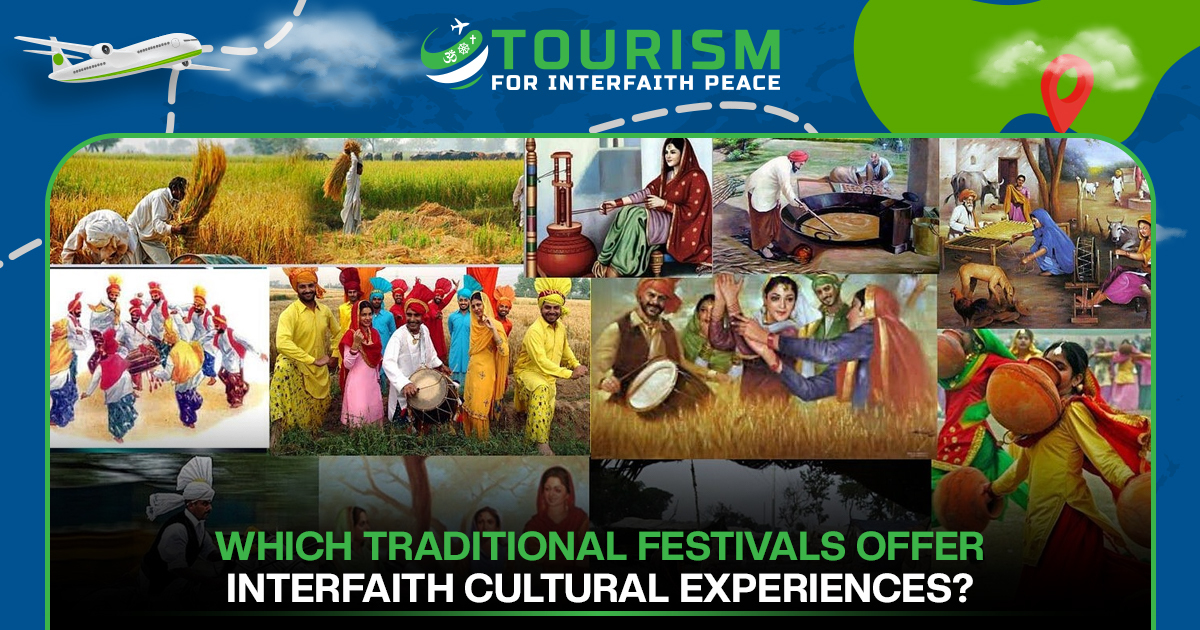
Village gatherings centred on storytelling continue across rural Punjab, Sindh, and Balochistan, particularly during agricultural festivals and post-harvest seasons when communities have the time and reason to gather. Local elders remain custodians of specific regional tales that exist nowhere in written form.
Shrines and festivals provide another living context. The annual urs celebrations at major Sufi shrines — marking the death anniversaries of saints — involve music, poetry recitation, and the informal exchange of stories about the saint’s life and teachings. These gatherings draw people from diverse backgrounds who participate together in the shared cultural act.
The table below maps Pakistan’s major storytelling traditions against their geographic centres, core messages, and value for interfaith travellers:
| Tradition | Region | Core Message | Tourism Value |
| Sufi Qawwali | Punjab, Sindh | Divine love transcends all divisions | Shrine visits, devotional performances |
| Dastan-goi | Lahore, Multan | Heroism, sacrifice, and moral courage | Live storytelling events, heritage walks |
| Sindhi folk tales | Sindh | Heer-Ranjha archetypes: love conquers separation | Cultural festivals, museum experiences |
| Potohari oral verse | Rawalpindi-Pothohar plateau | Community memory, ancestral identity | Village tourism, local guide experiences |
| Kissa poetry | Khyber Pakhtunkhwa | Hospitality, loyalty, and forgiveness | Pashtun cultural centres, guided oral tours |
| Balochi epic songs | Balochistan | Endurance, honour, and human dignity | Desert tourism, cultural documentation tours |
These traditions deserve preservation not as museum exhibits but as active practices. The knowledge held by an 80-year-old Potohari oral poet or a Sindhi kafi singer represents something that cannot be reconstructed from documents once it is gone.
Why Storytelling Strengthens Interfaith Tourism
Tourism built around monuments and geography gives visitors something to look at. Tourism built around storytelling gives visitors something to understand.
The difference matters. A traveller who walks through the Badshahi Mosque or the Lahore Fort has witnessed impressive architecture. A traveller who sits with a local guide and hears the human stories embedded in those places — the ordinary lives, the political tensions, the acts of remarkable generosity and betrayal that unfolded in those spaces — leaves with something more durable: a relationship with the place and the people who made it.
This is why storytelling is not merely a cultural add-on to interfaith tourism. It is the mechanism through which cultural experiences genuinely foster peace and understanding in travel. When a traveller hears a Hindu merchant’s folk tale recounted by a Muslim guide in Lahore’s walled city, the story models something: people from different backgrounds have always shared more than they have contested.
Storytelling also creates space for questions. A traveller might feel awkward asking a local community about their religious practices or historical tensions. But they can ask about a story — what it means, why it matters, how it has changed over time. The story becomes a safe conversational vehicle for deeper exchange.
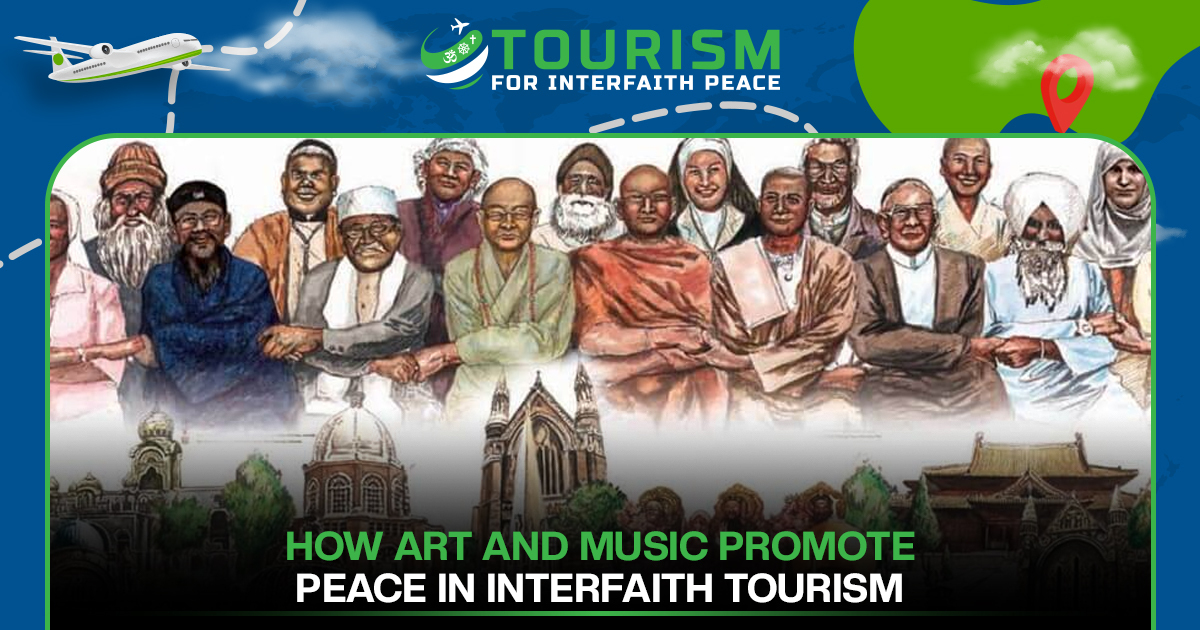
Consider also how art and music promote peace in interfaith tourism alongside oral narrative. Qawwali performance, regional music, visual folk art, and storytelling are not separate categories in Pakistani cultural life. They exist together in shrine courtyards, village festivals, and urban cultural events. A visitor who engages with one is naturally drawn into all of them.
How Travellers Can Experience Pakistan’s Storytelling Culture
Pakistan’s storytelling traditions are not behind museum glass. Most of them can be experienced directly with appropriate guidance and planning.
- Heritage walks in Lahore’s walled city often include local guides who draw on folk narratives and oral history, not just architectural description. Request a guide who specialises in cultural storytelling rather than standard monument commentary.
- Sufi shrine visits at major dargahs — including Data Darbar in Lahore, Lal Shahbaz Qalandar in Sehwan, or Shah Abdul Latif Bhittai’s shrine in Hala — involve regular musical gatherings where qawwali and devotional poetry are performed. Thursday evenings are traditionally the most active night at many shrines.
- Dastan-goi performances in Lahore and Karachi are increasingly listed through cultural organisations and art spaces. These multi-hour narrative sessions are among the most immersive cultural experiences available in urban Pakistan.
- Village stays in rural Punjab or Sindh, arranged through responsible tourism operators, can include evenings with local elders who maintain oral traditions. These require sensitive organisation through trusted local partners.
- Cultural festivals — including the Lok Mela in Islamabad and various provincial folk festivals — bring storytellers, musicians, and oral performers from across the country to a single venue.
- Museum visits, particularly the Lahore Museum and the National Museum of Pakistan in Karachi, provide historical context for the literary and folk traditions, with manuscript collections and artefacts that deepen the experience.
For travellers seeking to understand why interfaith tourism matters in today’s world, Pakistan’s storytelling landscape offers experiences that are not merely pleasant but genuinely transformative. The meal shared after a Sufi gathering, the conversation with a Sindhi folk singer about the verses they have carried since childhood — these are the moments that reshape how a traveller understands a place.
The Future of Storytelling in Pakistan
Digital technology has changed the conditions for oral tradition, but it has not made oral tradition obsolete. In some respects, it has expanded its reach.
Younger Pakistani artists are using podcasts, YouTube channels, and social media platforms to document and share oral traditions that would otherwise exist only within specific geographic communities. Sindhi folk verse that once circulated within a single district now reaches diaspora Sindhis in the Gulf, the UK, and North America. Potohari oral poetry has found audiences in Pakistani communities worldwide.
Youth engagement with these traditions is growing in Pakistani universities and arts organisations, driven partly by a generation that is simultaneously globally connected and searching for cultural rootedness. This is not nostalgia — it is identity construction, and storytelling is one of its primary tools.
Responsible tourism has a role to play in this future. When travellers specifically seek out storytelling experiences, they create economic conditions that support the practitioners of these traditions. The connection between food, cultural exchange, and interfaith understanding in Pakistan works on the same principle: local cultural practices survive better when they are valued by both residents and visitors.
Documentation is also urgent. Many of the oldest living practitioners of regional oral traditions are elderly. Recording their repertoire — with proper consent, community involvement, and archival care — is a task that cannot be indefinitely deferred. Tourism organisations, cultural institutions, and universities all have roles to play here.
Conclusion
Pakistan’s architectural heritage is magnificent, and it deserves the attention it receives. But the country’s storytelling traditions carry something that no monument can: the texture of ordinary life, the moral imagination of communities across centuries, and the persistent human belief that people from different backgrounds can share something essential.
Religious harmony in Pakistan has never been perfect, and no honest account of this country’s history would claim otherwise. But the storytelling traditions examined here represent something real: a long, consistent, and genuinely cross-cultural effort to locate what different communities share. That effort has expressed itself through Sufi verse, folk epic, oral poetry, and village narrative for longer than any formal institution has existed in this region.
Travellers who come to Pakistan looking only for monuments will find remarkable things. Those who come looking for stories will find something deeper: a living civilisation still engaged in the ancient, necessary act of telling itself who it is. Explore Pakistan through its stories, and you will understand it in a way that no guidebook can fully prepare you for.
Frequently Asked Questions
What role does storytelling play in preserving religious harmony in Pakistan?
Oral storytelling traditions in Pakistan have historically transmitted shared moral values — honesty, hospitality, forgiveness, and compassion — across religious boundaries. Because folk tales and Sufi poetry rarely name the religious identity of their protagonists, they create common ethical ground that different communities can inhabit together.
How does Sufi storytelling promote peace and inclusion?
Sufi saints like Shah Abdul Latif Bhittai and Lal Shahbaz Qalandar used poetry, parable, and song to teach that divine love is available to all people regardless of religious identity. Their shrines continue to function as inclusive gathering places where people of different faiths participate in the same devotional acts.
Which storytelling traditions are most important for interfaith tourism in Pakistan?
The most significant traditions for interfaith visitors include Sufi qawwali at major dargahs, dastan-goi (classical Urdu oral storytelling), Sindhi folk verse associated with Shah Abdul Latif Bhittai’s poetry, Potohari oral narrative, Kissa poetry from Khyber Pakhtunkhwa, and Balochi epic song.
How can travellers experience Pakistan’s storytelling culture authentically?
Authentic engagement with Pakistani storytelling is possible through shrine visits on Thursday evenings, dastan-goi performances in Lahore and Karachi, guided heritage walks with culturally knowledgeable local guides, village stays arranged through responsible tourism operators, and attendance at national folk festivals such as the Lok Mela in Islamabad.
Why are Pakistan’s folk tales relevant to modern interfaith dialogue?
Pakistan’s folk tales — including the romantic epics of Heer Ranjha, Sohni Mahiwal, and Sassi Punnu — carry universal themes of love, sacrifice, and the arbitrary nature of social barriers. These narratives have been claimed as cultural heritage by communities of different religious backgrounds for centuries, making them natural starting points for conversations about shared identity and mutual respect.