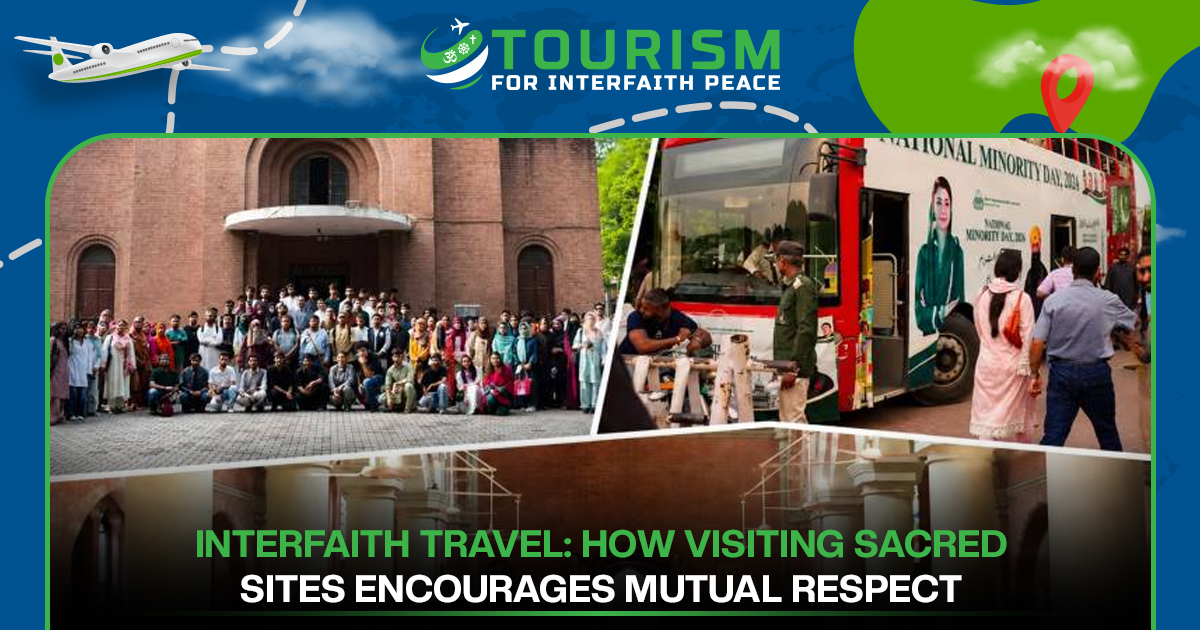
Visiting sacred sites encourages mutual respect when travelers go as guests. They learn from the people who care for a place, follow local rules, listen more than they speak, and treat the site as a living place of worship, not a backdrop. It builds understanding. It does not settle deep disagreements on its own.
Many of us learn about other faiths from headlines. A visit can replace a headline with a person: a caretaker explaining a custom, a guide sharing local history, a family at prayer who simply let you stand quietly nearby.
What Is Interfaith Travel?
Interfaith travel means visiting places that matter to faith communities, including your own and others, in order to learn. It is not about judging, comparing or converting. A mosque, gurdwara, temple, church or Buddhist monastery each holds the story of a community. Visiting helps you understand that story, the history behind it and the daily life that continues around it.
How Visiting Sacred Sites Promotes Interfaith Harmony
Social psychologists have studied this for decades. A 2006 meta-analysis by Thomas Pettigrew and Linda Tropp, covering 515 studies, found that contact between groups typically reduces prejudice, with larger effects under supportive conditions such as equal status and shared goals. Later reviews note that many studies were not experiments, so travel is best seen as one helpful step, not a cure.
A respectful visit offers exactly this kind of ordinary contact. You meet hosts on their terms, hear their own account of a place, and notice how much you had assumed. To go deeper, read about the role of cultural exchange in promoting interfaith harmony.
Pakistan’s Sacred Heritage: Examples Worth Knowing
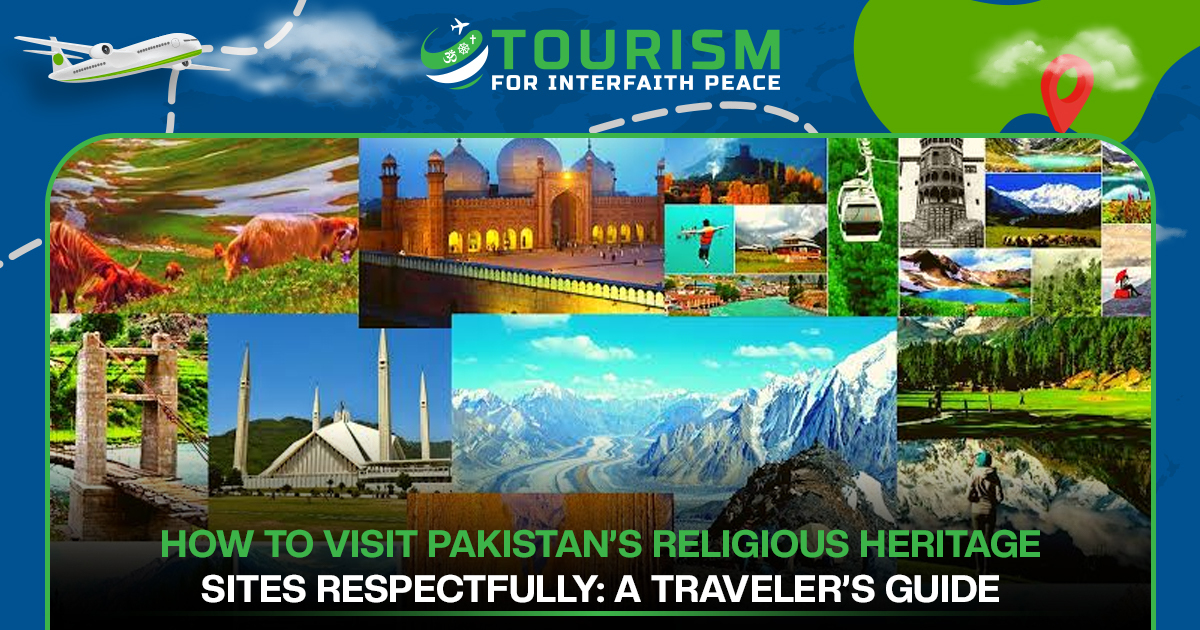
Religious tourism in Pakistan reaches across many traditions. These places are still lived in, so visit as a guest.
- Buddhist heritage: UNESCO inscribed both Taxila and the Buddhist ruins of Takht-i-Bahi in 1980. The monastery at Takht-i-Bahi was founded in the 1st century CE and remained in use until the 7th century.
- Sikh heritage: Gurdwara Janam Asthan in Nankana Sahib marks the place where Guru Nanak is believed to have been born. Gurdwara Darbar Sahib in Kartarpur, Narowal district, stands where he spent his last 18 years.
- Hindu heritage: Katas Raj, near Chakwal, is a temple complex built around a pond that Hindus regard as sacred.
- Christian heritage: In Lahore, the Cathedral Church of the Resurrection was consecrated in 1887, and the Sacred Heart Cathedral in 1907.
- Muslim heritage: Lahore’s historic mosques and shrines remain active places of worship.
Access arrangements differ and can change, so confirm hours and permission before you travel.
How to Visit Sacred Sites Respectfully
The short answer: dress modestly, follow the site’s customs, ask before you photograph, and defer to the people who look after the place.
- Cover shoulders and knees, and carry a light scarf.
- Follow signs on shoes and head coverings.
- Ask permission before photographing people, worship or interiors.
- Observe quietly, and join a ritual only if you are invited.
- Respect restricted areas and follow caretakers’ guidance.
- Check opening hours, permits and current government travel advice.
Our respectful traveler’s guide to Pakistan’s religious heritage sites covers etiquette site by site.
Why Local Guides and Communities Matter
A licensed local guide explains what signs leave out and helps you avoid unintended offence. Hiring local guides, buying directly from makers and paying fairly keeps the benefit of your visit in the community. Cultural exchange through tourism works best when hosts set the terms and take part in planning. Responsible tourism treats communities as partners, not attractions.
Listening, Humility and Respect
Photographing a landmark is not the same as understanding it. Ask open questions, accept answers without debating them, and avoid ranking or comparing beliefs. Some questions will go unanswered, and that is fine. Understanding grows through patience, not through collecting sites.
Travel With Curiosity and an Open Mind
Approach every sacred place with curiosity, sensitivity and a willingness to be taught. Tourism for Interfaith Peace promotes peace and understanding through religious tourism, and it welcomes travelers who want to explore religious heritage responsibly. Reach out to the TIP team to learn about its work and how you can support it.
Frequently Asked Questions
What is interfaith travel?
It is travel to sacred and heritage sites of different faith communities, undertaken to learn respectfully rather than to judge or compare.
How does visiting sacred sites build mutual respect?
It creates respectful, direct contact with the people who care for a place. Research on intergroup contact suggests such contact typically reduces prejudice, though results vary.
What should I know before visiting religious sites in Pakistan?
Dress modestly, ask before photographing, follow each site’s customs, and confirm access and current travel advice before you go.