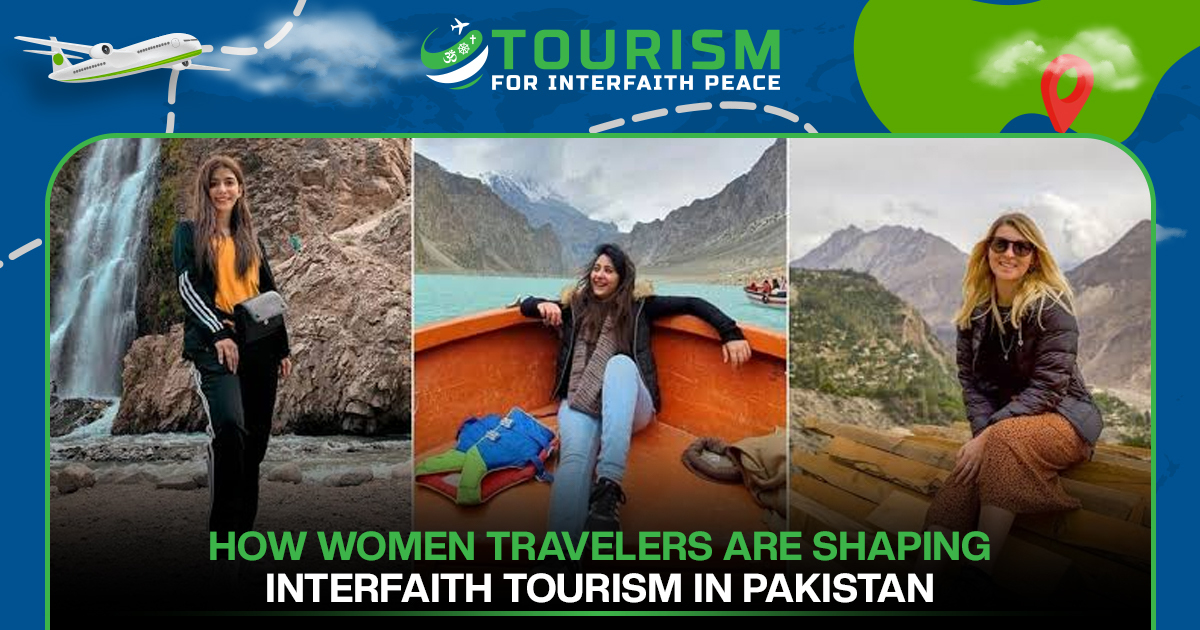
Tourism has always been more than sightseeing. At its heart, it is an exchange of stories, beliefs, and human connection. Across the world, women travelers are increasingly driving this exchange, choosing destinations that offer depth, meaning, and cultural insight rather than surface-level experiences.
This shift is reshaping how interfaith tourism is practiced and understood. Women travelers often approach unfamiliar cultures with curiosity, patience, and a genuine interest in dialogue, qualities that align closely with the goals of interfaith and cultural tourism.
Pakistan, with its layered religious and cultural heritage, is emerging as a compelling destination for this kind of travel. From ancient Buddhist monasteries to living Sufi shrines, historic Sikh gurdwaras, and centuries-old churches, the country offers a landscape where multiple faiths have coexisted for generations. Tourism in Pakistan (TIP) is committed to highlighting this heritage responsibly, and understanding the role women travelers play in it is central to that mission.
Understanding Interfaith Tourism
Interfaith tourism refers to travel experiences designed around learning, dialogue, and mutual respect between people of different religious backgrounds. It differs from conventional religious tourism, which typically centers on pilgrimage or worship within a single faith tradition.
Interfaith tourism instead invites travelers to explore multiple religious and cultural narratives side by side, whether that means visiting a Buddhist stupa, a Hindu temple, an Islamic shrine, and a Christian church within the same region. The goal is not conversion or comparison, but understanding.
In an increasingly polarized world, this form of travel matters. It offers a practical, people-centered way to reduce misunderstanding, encourage tolerance, and demonstrate that diverse faiths can share space, history, and even architecture. For destinations like Pakistan, where such diversity is deeply embedded in the landscape, interfaith tourism is both a cultural asset and a diplomatic opportunity.
The Growing Influence of Women Travelers
Solo and group travel among women has grown steadily over the past decade, supported by greater access to travel information, women-focused travel communities, and a rising interest in cultural and educational tourism over purely recreational trips.
Women travelers are not just consuming destinations; they are shaping how those destinations are perceived. As bloggers, photographers, researchers, and content creators, many women document their journeys in ways that emphasize context, respect, and nuance rather than novelty.
This storytelling role matters for interfaith tourism specifically. A thoughtful account of visiting a shrine or heritage site can do more to build cross-cultural understanding than a conventional guidebook entry, because it reflects lived observation and genuine curiosity rather than promotional language.
Their preferences are also influencing the travel industry itself, pushing tourism boards and operators toward more authentic, community-connected experiences and away from purely transactional tourism models.
How Women Travelers Encourage Cultural Understanding
Cultural understanding is built through small, consistent actions rather than grand gestures. Women travelers frequently engage in these actions as a normal part of how they experience a destination.
- Initiating respectful conversations with local residents, shopkeepers, and guides
- Observing dress codes and customs at religious and cultural sites
- Asking questions about local traditions instead of making assumptions
- Participating in community-based tourism initiatives, such as local craft workshops or homestays
- Sharing accurate, respectful accounts of their experiences with wider audiences
These behaviors, repeated across many travelers over time, contribute to a broader culture of empathy. They also model responsible travel for others, particularly younger or first-time visitors who look to experienced travelers for guidance on how to engage respectfully with unfamiliar cultures.
Pakistan’s Rich Religious and Cultural Heritage
Few countries offer the density of religious and cultural heritage found in Pakistan. The region has been shaped by successive civilizations and faith traditions, leaving behind a landscape rich in historical and spiritual significance.
Gandhara sites in the north preserve one of the world’s most significant collections of Buddhist heritage, including monasteries, stupas, and sculpture that once anchored a major center of Buddhist learning. In Punjab, Sikh heritage is preserved at sites connected to the faith’s founding figures, drawing pilgrims and cultural visitors from around the world.
Hindu temples in Sindh and elsewhere reflect centuries of continuous worship and architectural tradition, while Islamic heritage is expressed through Sufi shrines, historic mosques, and centers of learning that have shaped the region’s spiritual life for over a thousand years. Christian heritage, including colonial-era churches and mission institutions, adds another layer to this diversity.
Beyond individual religious sites, Pakistan’s ancient civilizations, including the Indus Valley settlements of Mohenjo-daro and Harappa, and its historic architecture, museums, and pilgrimage routes together form a cultural landscape suited to exactly the kind of exploratory, multi-faith travel that interfaith tourism encourages.
Why Safety, Accessibility, and Inclusion Matter
Meaningful interfaith tourism depends on more than heritage sites. It requires an environment where travelers, particularly women, feel genuinely safe, welcomed, and able to move through a destination with confidence.
This means practical investments: reliable transport, clear signage, trained guides, accessible digital travel information, and hospitality standards that meet international expectations. It also means inclusive destination planning that involves local communities, so that tourism development reflects the needs and voices of the people who live alongside these heritage sites.
Women-friendly tourism infrastructure, from well-lit public spaces to responsive local support networks, is not a peripheral concern. It is a core requirement for any destination hoping to attract the growing segment of women travelers seeking cultural and interfaith experiences. Responsible tourism development in Pakistan increasingly reflects this understanding, with growing attention to hospitality standards and traveler support systems.
Women as Ambassadors of Peace Through Tourism
Travel has a documented capacity to reduce stereotypes by replacing assumptions with direct experience. When a traveler visits a shrine, temple, or church outside their own tradition and engages respectfully with the people there, both sides walk away with a more accurate, humanized understanding of the other.
Women travelers, through their storytelling and community engagement, often extend this impact well beyond their own trip. A well-told travel account can shift perceptions for thousands of readers who may never visit the destination themselves, making responsible storytelling an important form of cultural diplomacy.
In this sense, women travelers function as informal ambassadors of peace. Their journeys build trust between communities, strengthen international goodwill, and support the broader goal of intercultural dialogue that interfaith tourism is built around.
The Future of Interfaith Tourism in Pakistan
The future of interfaith tourism in Pakistan will likely be shaped by several converging trends. Sustainable tourism practices, including heritage conservation and responsible visitor management, are becoming central to how religious and cultural sites are preserved for future generations.
Youth participation is also growing, with young travelers and tourism professionals bringing fresh energy to digital storytelling, heritage documentation, and community-based tourism projects. Women’s leadership within this movement is particularly significant, as more women take on roles in tourism planning, guiding, research, and advocacy.
Community empowerment, digital tourism platforms, and international collaboration between cultural organizations, NGOs, and policymakers will further support this growth. As these elements come together, women are positioned not as passive beneficiaries of tourism development but as active contributors shaping the direction of Pakistan’s interfaith and cultural tourism sector.
Conclusion
Interfaith tourism offers something increasingly rare: a way to encounter difference with curiosity instead of caution. Women travelers, through their growing presence, thoughtful storytelling, and genuine engagement with local communities, are helping define what responsible, meaningful travel looks like in this space.
Pakistan’s religious and cultural heritage, spanning Buddhist, Sikh, Hindu, Islamic, and Christian traditions, offers fertile ground for this kind of travel. Approaching it with openness and respect allows visitors to experience not just monuments, but the shared human values that connect them.
Travelers considering their next journey are encouraged to explore with curiosity, respect cultural diversity, and support the communities that sustain these heritage sites. In doing so, they become part of a larger story, one where tourism serves not only personal discovery, but the ongoing work of building understanding across faiths and cultures.
Frequently Asked Questions
What is interfaith tourism?
Interfaith tourism is travel focused on exploring and understanding multiple religious traditions within a single destination. It emphasizes dialogue, respect, and cultural learning rather than pilgrimage to a single faith, helping travelers appreciate how different religious communities coexist and share history.
Why are women important in tourism?
Women travelers contribute unique perspectives through storytelling, community engagement, and cultural research. Their growing presence in travel is shaping industry trends toward more authentic, respectful, and community-connected tourism experiences, while also influencing how destinations are perceived by wider audiences.
How does interfaith tourism promote peace?
Interfaith tourism promotes peace by replacing assumptions with direct experience. When travelers engage respectfully with communities of different faiths, both sides gain a more accurate understanding of one another, reducing stereotypes and building the kind of trust that supports long-term cultural diplomacy.
Is Pakistan suitable for cultural tourism?
Yes. Pakistan holds Buddhist, Sikh, Hindu, Islamic, and Christian heritage sites, along with ancient civilizations like Mohenjo-daro. This density of religious and historical heritage makes it well suited to cultural and interfaith tourism for travelers interested in exploring diverse traditions within one journey.
What are the benefits of women-led travel?
Women-led travel often emphasizes authentic community engagement, responsible storytelling, and cultural sensitivity. These experiences tend to prioritize meaningful interaction over convenience, contributing to more sustainable and respectful tourism practices that benefit both travelers and local communities.
How does tourism strengthen cultural diplomacy?
Tourism strengthens cultural diplomacy by creating direct, personal connections between travelers and host communities. These interactions, and the stories that follow them, help build international goodwill and mutual understanding in ways that formal diplomatic channels alone cannot always achieve.
What makes Pakistan unique for interfaith tourism?
Pakistan’s geography has hosted multiple major faith traditions for centuries, leaving behind coexisting heritage sites from Gandhara Buddhist ruins to Sikh gurdwaras, Hindu temples, Sufi shrines, and historic churches, offering travelers a rare, concentrated view of shared religious history.
How can travelers support responsible tourism?
Travelers can support responsible tourism by respecting local customs, engaging thoughtfully with communities, choosing community-based experiences where possible, and sharing accurate, respectful accounts of their journeys that reflect the destination’s cultural context rather than stereotypes.