A visitor who walks through a place of worship that is not their own learns something no brochure can teach. Interfaith tourism in Pakistan rests on that idea: travel to shared heritage as a respectful guest and let familiarity do its slow work. Mosques, temples, gurdwaras, churches and Buddhist ruins stand within one country, and many are still in daily use. Tourism will not settle complex social or religious disputes. It can create ordinary contact between people who might otherwise know each other only through headlines.
What is interfaith tourism, and how does it differ from sightseeing?
Interfaith tourism means travelling to sacred and historic places in order to understand the communities connected to them. Sightseeing asks what a place looks like. Interfaith travel also asks who prays there, who looks after it and what a guest owes those keepers. It does not require anyone to debate belief. Tourism for Interfaith Peace (TIP) says it designs journeys to sacred and historic sites and hosts interfaith events.
What does Pakistan’s religious and cultural heritage include?
Pakistan’s religious heritage sites run from Buddhist monasteries to colonial cathedrals, and each has its own caretakers and customs. These are among the well-documented examples.
| Site | Tradition | What the record shows |
|---|---|---|
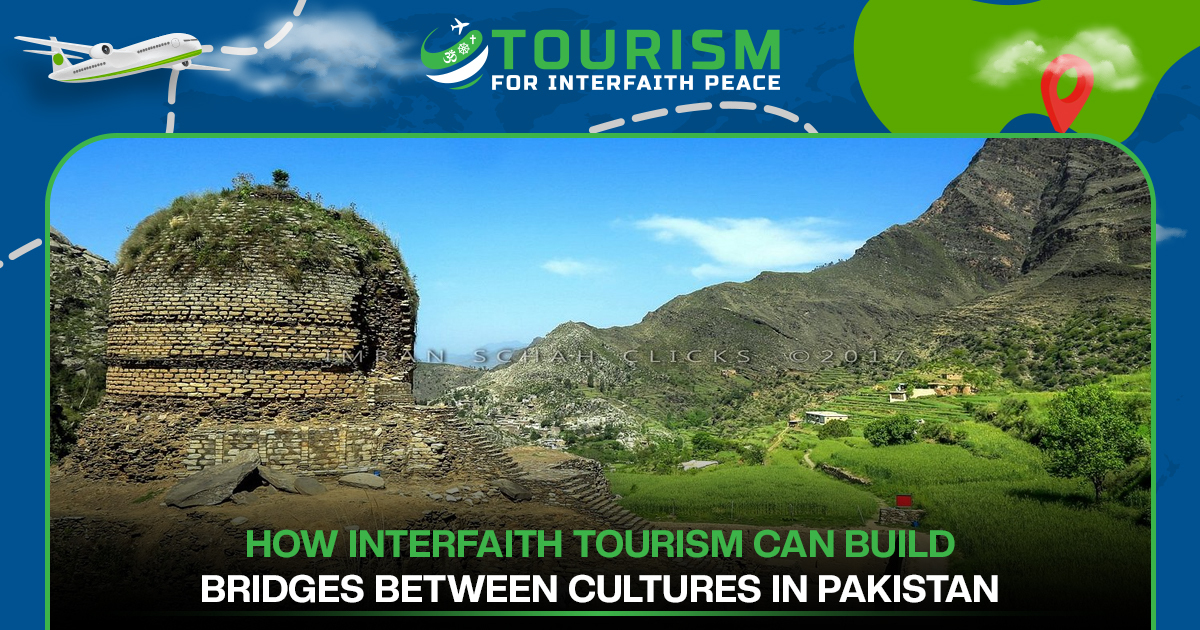
| Takht-i-Bahi and Sahr-i-Bahlol | Buddhist | UNESCO-inscribed Buddhist ruins. |
| Wazir Khan Mosque, Lahore | Islamic | Built in 1634-35 under Shah Jahan; the Aga Khan Trust for Culture has worked with the Government of Punjab on its conservation. |
| Katas Raj, Chakwal | Hindu | A temple complex around a pond Hindus regard as sacred; government restoration began in 2006. |
| Nankana Sahib and Kartarpur | Sikh | Gurdwara Janam Asthan marks Guru Nanak’s birthplace; Gurdwara Darbar Sahib is tied to his later years. |
| St Patrick’s Cathedral, Karachi | Christian | Gothic Revival; opened in April 1881 on the grounds of an 1845 church. |
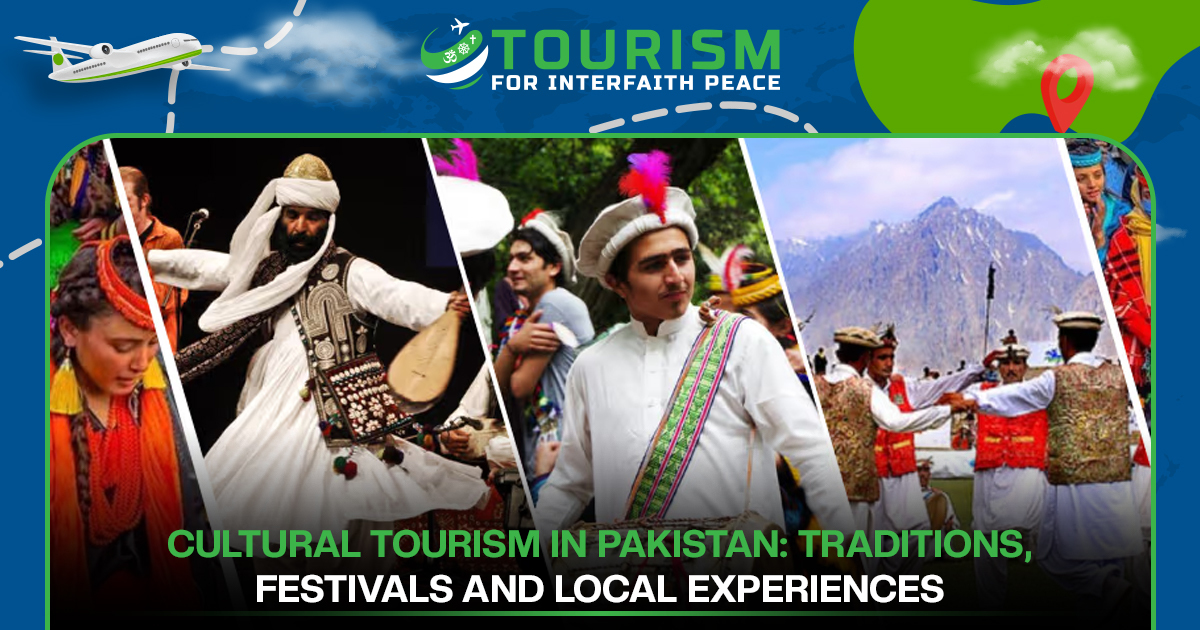
Festivals add another layer. The Kalash of Chitral hold Chilam Joshi in spring, and TIP’s guide to Cultural Tourism in Pakistan: Traditions, Festivals and Local Experiences explains why a festival is a community’s own calendar, not a show. Dates shift each year, so confirm them with local tourism authorities.
How does interfaith tourism build cultural bridges?
Contact does most of the work. A guest who asks about a site’s customs, and follows them, learns from the people who keep them. Stereotypes weaken when they meet a specific person and place. Local guides help because they can explain what no sign can.
Access matters too. The Kartarpur Corridor opened on 9 November 2019 and gave Indian Sikh pilgrims visa-free entry to Gurdwara Darbar Sahib, the first such entry since 1947. Its operation has since depended on the wider political situation, which shows how fragile access can be. For Pakistan’s image abroad, the effect is gradual: a traveller who returns from a well-run, safe visit carries more weight with friends at home than any campaign does.
What do local communities and heritage gain?
The gains are possible, not automatic. Visitor spending can pay guides, drivers, craftspeople and hotel staff, and it can help fund upkeep. Visits also let students and families learn history where it happened. Conservation shows partnership at work: the Aga Khan Trust for Culture has collaborated with the Government of Punjab on Lahore’s Walled City since 2007, and it began documenting Wazir Khan Mosque in 2009. Benefits can still miss the people who host visitors. A visitor code cited in TIP’s cultural tourism guide says the Kalash receive little economic benefit from tourism, so choosing local guides and locally run stays matters.
What challenges remain, and what is the way forward?
Distance and weather limit access, since landslides can close mountain roads without notice. Many sites remain active places of worship, so visitors need clear guidance on conduct. Honest information about opening times and customs helps visitors arrive prepared. Preservation is an ongoing task: the Aga Khan Trust notes that parts of Wazir Khan’s original complex have disappeared over nearly four centuries. Safety also needs attention, and travellers should check official advisories before booking. No single party can fix this. Government, private operators, heritage bodies and host communities each hold part of the answer.
Visitors can contribute directly.
- Dress as each site or community expects.
- Ask before photographing people, worship or ceremonies.
- Follow the guidance of the people who keep the site.
- Hire local guides and buy from makers.
Conclusion: Responsible Travel Starts With Respect
Tourism cannot resolve deep disagreements, and no itinerary promises peace. It can turn strangers into guests and hosts. To see how partnerships and community benefit shape that kind of travel, read Syed Sadat Hussain Shah’s Vision for Promoting Tourism in Pakistan, then plan a visit that leaves the places you see in good order. To ask what TIP currently offers, write to info@tourismforinterfaithpeace.com.
Frequently Asked Questions
What is interfaith tourism in Pakistan?
It is travel to sacred and historic places, such as mosques, temples, gurdwaras, churches and Buddhist sites, to learn about the communities connected to them. Visitors act as respectful guests and do not debate belief.
Which UNESCO cultural sites are in Pakistan?
UNESCO has inscribed six cultural properties: Mohenjo-daro, Taxila, Takht-i-Bahi with Sahr-i-Bahlol, the monuments at Makli, Lahore Fort with Shalimar Gardens, and Rohtas Fort.
How should visitors behave at active places of worship?
Dress as the site expects, ask before photographing people or worship, follow the guidance of caretakers and hire local guides. Customs differ between sites, so ask when unsure.