| Interfaith tourism refers to travel experiences that engage with the heritage, history, traditions, and living cultural contexts of different faith communities, often creating opportunities for learning and cross-cultural understanding, rather than travel confined to pilgrimage alone. |
What if some of Pakistan’s strongest tourism assets are not new attractions at all, but centuries-old stories still waiting to be properly understood? Few countries hold a comparably layered religious and cultural record within a single landscape: Buddhist monastic ruins, Hindu temple complexes, Sikh shrines, Islamic architecture, and Christian institutions, often within a few hours’ drive of one another. That density of history creates a genuine opportunity, but only if conservation comes first. Preserved responsibly, heritage becomes the foundation on which interfaith tourism, and the understanding it can encourage, is actually built.
Pakistan’s Heritage Tells a Multifaith Story
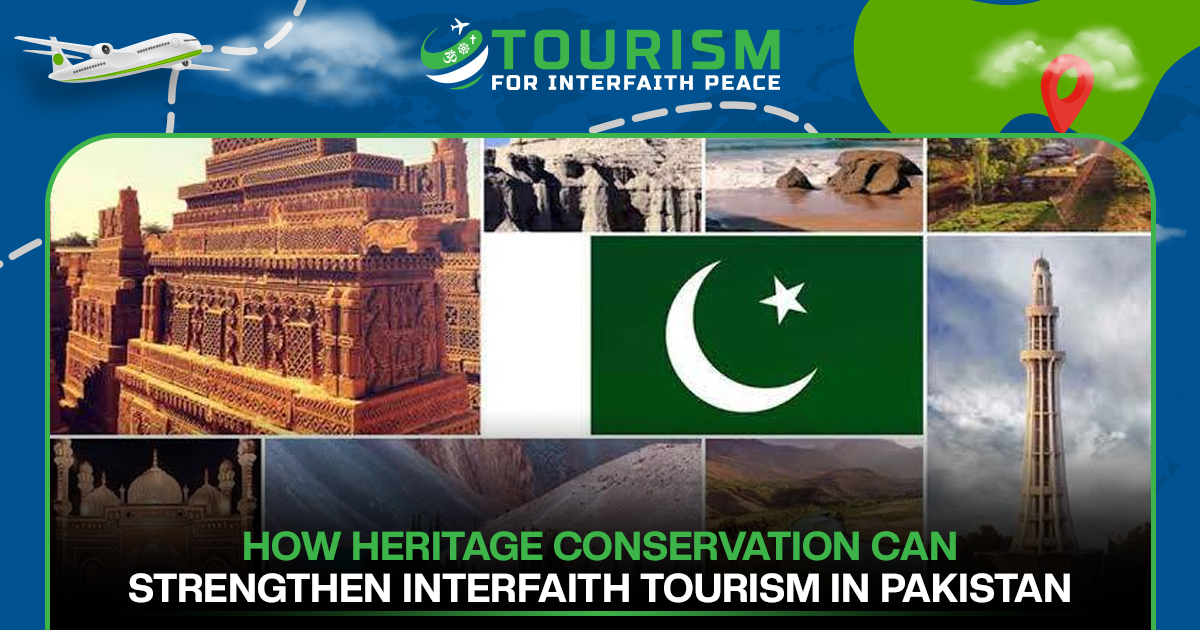
Pakistan’s historical landscape reflects the presence of multiple civilizations and religious traditions across several millennia. Taxila, in Punjab’s Rawalpindi district, was inscribed as a UNESCO World Heritage Site in 1980 for its Buddhist monasteries, early settlement mounds, and later Islamic-era structures, tracing an urban and religious history spanning more than a thousand years. The Katas Raj Temples in Chakwal district, associated with the Hindu Shahi period, remain an active pilgrimage site for Pakistan’s Hindu community and are included on Pakistan’s Tentative List for UNESCO World Heritage status, a formal step below full inscription. The Kartarpur Corridor, opened in 2019, connects international visitors to Gurdwara Darbar Sahib in Narowal district, one of Sikhism’s most significant sites, where Guru Nanak is believed to have spent his final years.
Alongside these are Mughal and earlier Islamic monuments across Lahore, Multan, and Thatta, along with churches, missions, and institutions reflecting Pakistan’s Christian communities. Each tradition deserves interpretation on its own terms and within its own historical context, not as an entry in a checklist of attractions.
Why Conservation Comes Before Tourism Growth
A destination cannot sustainably market heritage that it fails to protect. Heritage authorities working on sites like Taxila have documented real risks: exposure to climate extremes, vegetation growth, nearby industrial expansion, and, in some cases, illegal excavation. Increased visitor numbers without matching investment in structural preservation, waste management, and site interpretation can accelerate exactly the deterioration that made a site worth visiting in the first place.
Responsible growth requires attention to several practical elements at once: structural conservation and monitoring, trained site management, visitor capacity planning where fragile structures are involved, multilingual interpretation, accessible infrastructure that does not compromise historical fabric, and clear guidance on respectful visitor behavior, including photography, at active religious sites. None of this is glamorous. All of it determines whether a site survives the attention tourism brings it.
How Heritage Can Create Interfaith Tourism Experiences
Interfaith tourism can extend well beyond pilgrimage itself. Guided heritage walks through multireligious neighborhoods, site museums, well-designed interpretation centers, cultural festivals tied to specific traditions, oral-history projects with local elders, and academic exchanges with universities and heritage institutions can all deepen a visitor’s understanding of a community’s history without requiring them to share its faith.
The Kartarpur Corridor illustrates one model: a purpose-built pilgrimage route with dedicated visitor infrastructure that has, at points, accommodated thousands of pilgrims a day according to official capacity figures. But the same principle scales down to a single interpretation panel at a smaller shrine, written with historical accuracy and cultural care. Both are forms of heritage tourism infrastructure. Both require the same underlying commitment to accuracy and respect.
From Religious Sites to Shared Human Stories
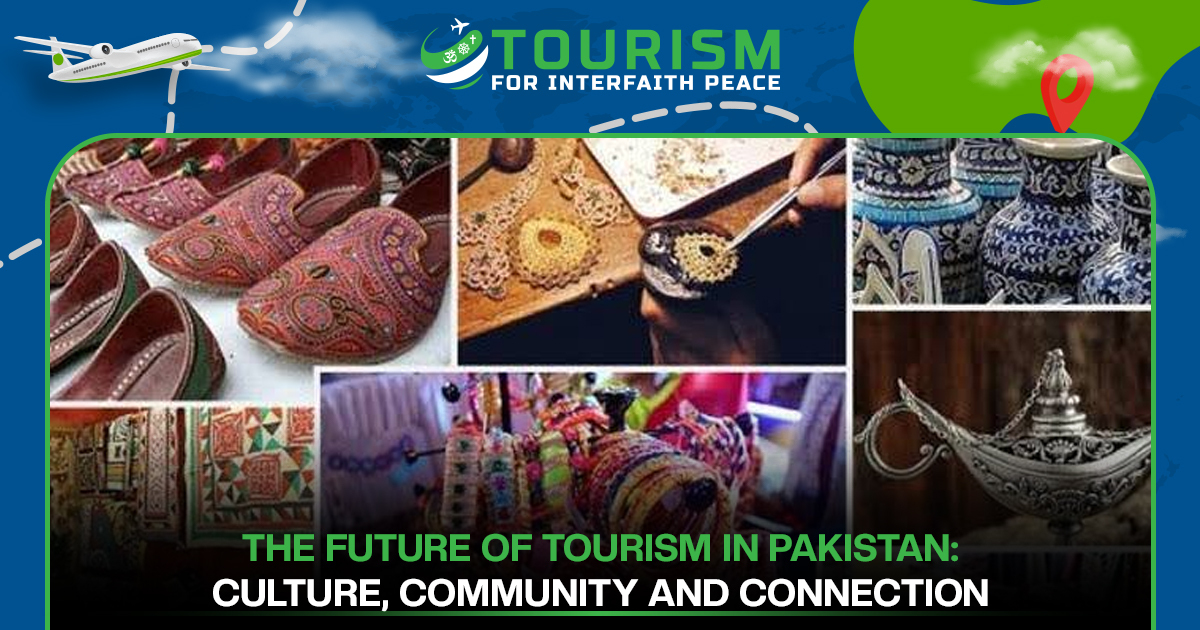
The question is not simply how many visitors a heritage site can attract, but what those visitors learn, and what the surrounding community gains, once they arrive. The most memorable heritage experiences tend to involve people, not only architecture: the artisans who maintain traditional crafts, the families who have lived beside a shrine for generations, the food, music, and everyday routines shaped by centuries of coexistence.
A visitor who leaves a Buddhist monastery, a Hindu temple complex, or a Sikh gurdwara with only a set of photographs has had a shallower experience than one who leaves understanding why the site mattered to the people who built it, and to the people who still care for it today.
The Economic Case for Conservation
Well-managed heritage tourism can support local economies through guiding, hospitality, transport, handicrafts, restaurants, and conservation-related employment. None of this is automatic. Economic benefit depends on planning, governance, adequate infrastructure, sustained visitor demand, and, critically, how revenue is distributed once it is generated. A heritage site that draws visitors without channeling any benefit to its surrounding community risks becoming an extractive attraction rather than a shared asset.
Communities Must Be Part of the Tourism Story
Local communities are not spectators to their own heritage; they are its custodians. Conservation tends to hold up over time when nearby residents see tangible cultural and economic value in protecting a site, whether through employment, consultation on how a site is presented, or genuine ownership of the stories being told about their own traditions. Tourism planning that sidelines the community closest to a site risks both weaker conservation outcomes and a thinner visitor experience.
What Pakistan Can Do Next
1. Develop integrated heritage circuits: connecting related sites, such as Buddhist-era locations across Punjab and Khyber Pakhtunkhwa, into coherent regional itineraries rather than isolated stops.
2. Improve interpretation: through multilingual signage, well-researched museum content, and trained guides who understand the religious and historical context of what they present.
3. Invest conservation-first: directing a share of tourism-related revenue back into long-term structural preservation, where site-specific arrangements allow it.
4. Train tourism professionals: in cultural and religious sensitivity, so operators and guides represent living traditions accurately and respectfully.
5. Empower local communities: through employment, consultation, and a genuine role in how their heritage is presented to visitors.
6. Improve infrastructure responsibly: so accessibility improves without altering the historical character of a site.
7. Build institutional partnerships: with heritage, academic, and cultural organizations, domestic and international, that bring research capacity and conservation expertise.
Interfaith Tourism as a Bridge Between People
Responsible tourism will not, on its own, resolve complex religious or political questions, and it would be a mistake to claim otherwise. What it can do is create space: for curiosity instead of assumption, for a documented history instead of a secondhand impression, for a conversation with a guide, a custodian, or a fellow visitor from a different background. That space is modest by nature. It is also real, and it accumulates over repeated, well-managed encounters in a way that a single visit rarely achieves alone.
Pakistan does not need to invent cultural diversity to build a distinctive tourism identity. It needs to preserve, interpret, and responsibly share the diversity already present in its history and its living communities. Measured well, interfaith tourism’s success should be tracked not only in visitor numbers, but in heritage protected, communities benefiting, visitors genuinely educated, and stories kept alive for the people who still call these places home. Done carefully, heritage conservation can become one of the more meaningful ways Pakistan invites the world to understand its history, one preserved site and one respectful encounter at a time.
Frequently Asked Questions
What is interfaith tourism?
Interfaith tourism refers to travel that engages with the heritage, history, and living cultural context of different faith communities, creating opportunities for learning and cross-cultural understanding beyond pilgrimage alone.
Why is heritage conservation important for tourism in Pakistan?
Conservation protects the physical and historical integrity of sites before visitor growth puts pressure on them. Without it, tourism can accelerate the deterioration of the very heritage it depends on.
What religious heritage can visitors explore in Pakistan?
Verified examples include Taxila’s Buddhist and early settlement ruins (a UNESCO World Heritage Site since 1980), the Hindu Katas Raj Temples in Chakwal, and the Kartarpur Corridor connecting visitors to a major Sikh shrine, alongside Islamic and Christian heritage across the country.
How can communities benefit from heritage tourism?
Through guiding, hospitality, crafts, and conservation-related employment, provided planning includes local consultation and ensures tourism revenue is genuinely shared with the communities closest to each site.