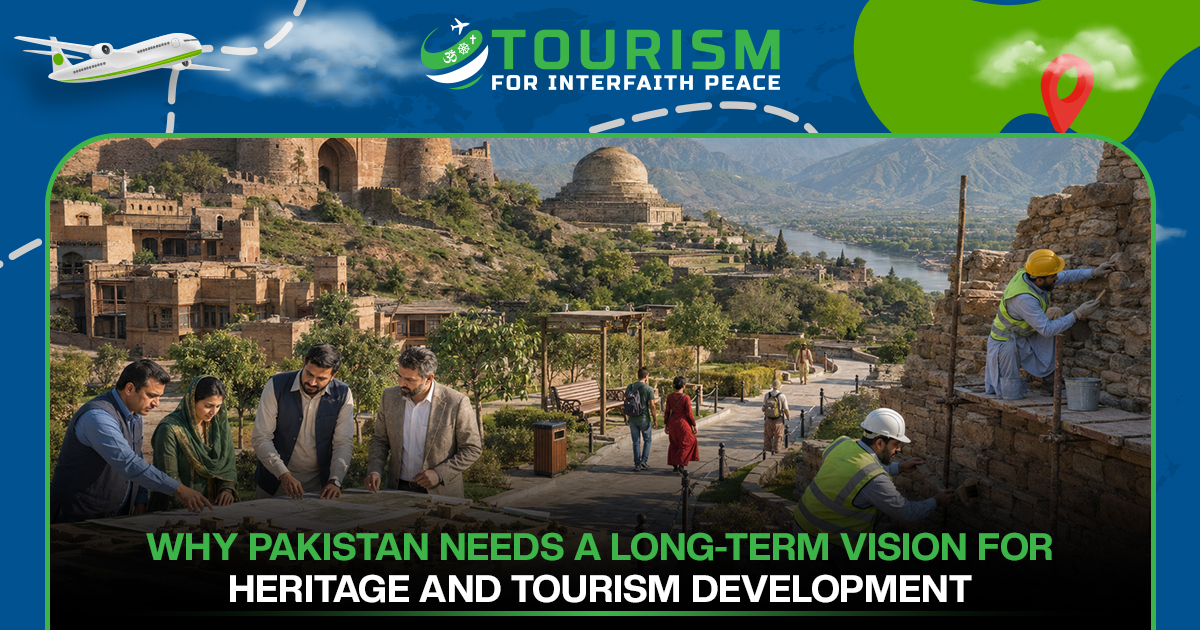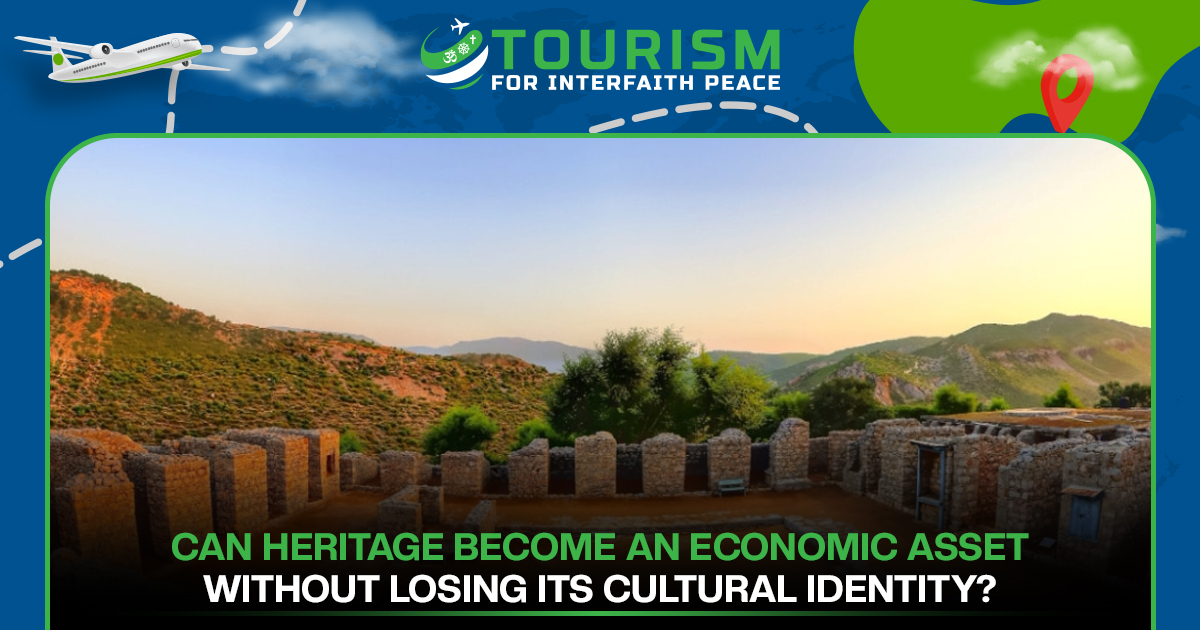
A historic building can attract visitors, create jobs and support local businesses. But the moment its cultural meaning is sacrificed for commercial appeal, the very asset being monetised starts losing the value that made it worth visiting in the first place. That tension sits at the centre of every serious conversation about heritage tourism, and it deserves a direct answer rather than a comfortable one.
Can heritage become an economic asset without losing its cultural identity?
Yes, but only when tourism and investment are designed around conservation, community participation and cultural authenticity rather than treating heritage as a commercial product. Heritage that generates revenue while eroding the meaning behind it isn’t really being preserved. It’s being spent.
Key Takeaways
- Heritage can fund its own preservation when tourism is designed around conservation, not the other way around.
- Different sites call for different approaches; some suit visitor access, others require strict limits.
- Community participation and local revenue-sharing determine whether heritage tourism strengthens or erodes identity.
What Makes Heritage an Economic Asset?
Heritage generates economic value through several channels: tourism spending, hospitality, local craft economies, guided experiences, cultural festivals, destination branding, and the investment those activities can attract. A well-managed historic bazaar supports shopkeepers. A documented archaeological site draws researchers, students and long-stay visitors, not just day-trippers.
There is a meaningful difference between generating economic value and commercialising a place outright. Economic value is a byproduct of people encountering something genuine and being willing to pay for the experience, whether that’s a meal, a guided walk, a handwoven textile or an entry fee that funds upkeep. Commercialisation happens when the site is redesigned around what sells rather than what it actually is, and the two are easy to confuse from a spreadsheet but very different in practice.
Why Heritage Tourism Can Benefit Local Communities
Heritage tourism benefits communities most directly through employment: guiding, hospitality, transport, food service, craft production and small-scale retail built around a site’s visitor traffic. Done well, it also creates room for cultural entrepreneurship, where residents interpret and present their own history rather than having it narrated for them by outside operators.
- Local guides who bring lived knowledge that no outside operator can replicate
- Artisans selling traditional crafts directly, rather than through intermediaries who capture most of the margin
- Guesthouse and hospitality operators rooted in the community rather than absentee ownership
- Infrastructure improvements, such as roads and utilities, that also serve residents, not only visitors
Community benefit should be central to how a heritage site is developed, not an afterthought layered on once the tourism plan is already set.
When Does Tourism Start Threatening Cultural Identity?
The line is rarely a single event. It’s usually a slow accumulation of small decisions that each seem reasonable on their own.
- Over-commercialisation, where a site’s presentation is shaped more by what photographs well than by what it actually means
- Physical deterioration from visitor volume exceeding what a structure or landscape can sustain
- Overcrowding that degrades the experience for visitors and the daily life of residents alike
- “Staged authenticity,” where traditions are simplified or performed for visitors rather than practised as they actually exist
- Loss of local control, when decisions about a site shift to outside operators or distant authorities
- Displacement, when tourism development raises costs or restricts access for the people who have always lived there
- Commercial activity that encroaches on sacred or ceremonial space, treating religious meaning as a backdrop rather than a boundary
None of these outcomes require bad intentions. They tend to result from treating visitor growth as the primary success metric instead of one factor among several.
Heritage Is Not a Product
A hotel can be renovated. A restaurant can be redesigned. A commercial attraction can be replaced if it stops working. A centuries-old monument, a religious site or a living cultural tradition cannot simply be recreated once its authenticity is damaged. This is the structural difference between heritage and most other tourism assets, and it’s why economic development around heritage has to operate within the limits conservation sets, rather than the other way around.
How Can Heritage Be Developed Without Losing Its Identity?
A practical framework for balancing economic use with cultural protection:
| Principle | What It Means in Practice |
| Conserve first | Treat preservation as the starting condition for any tourism activity, not an afterthought |
| Involve local communities | Give residents real roles as guides, hosts and decision-makers, not just service staff |
| Respect sacred and cultural boundaries | Limit or restrict access where religious or cultural sensitivity requires it |
| Invest in interpretation | Help visitors understand context and meaning, not just take photographs |
| Keep economic benefit local | Structure revenue so a meaningful share stays with the surrounding community |
| Manage visitor numbers | Set carrying-capacity limits based on the site’s physical and cultural tolerance |
| Plan for the long term | Treat heritage tourism as decades-long stewardship, not a seasonal campaign |
Can Heritage Investment Be Both Profitable and Responsible?
Investors weighing heritage tourism opportunities often focus on visitor numbers first. Long-term destination value depends on more than that: authenticity, conservation status, accessibility, governance, community support, visitor experience and reputation all shape whether a heritage destination can sustain returns over decades rather than a single tourism cycle.
Responsible heritage investment can include conservation and restoration funding, visitor infrastructure, interpretation centres, accessibility improvements, digital documentation, heritage trails, guide training, local enterprise development, waste management and visitor-flow planning, not just hotel construction near a historic site. Evaluating any of this requires the same underlying discipline described in five things to consider before calling a destination investment-ready: demand, infrastructure, ecosystem, regulatory clarity and sustainability, evaluated together rather than in isolation.
What Pakistan Can Learn From Its Own Heritage
Pakistan’s heritage spans Mughal-era architecture, Gandharan and Buddhist sites, Sikh and Hindu heritage, Islamic architecture, Sufi traditions, colonial-era buildings, historic bazaars, regional crafts, oral traditions and living community practices that vary sharply by province. The country holds six UNESCO World Heritage Sites: the archaeological ruins at Mohenjo-daro, the ancient city of Taxila, the Buddhist ruins of Takht-i-Bahi, Lahore Fort and Shalamar Gardens, the Makli necropolis near Thatta, and Rohtas Fort, alongside countless undocumented sites of local and regional significance.
This diversity is also where the interfaith dimension of heritage tourism becomes concrete. A visitor encountering a Sikh gurdwara, a Hindu temple, a Buddhist stupa or a Sufi shrine within the same country is encountering a form of cultural exchange that doesn’t require doctrinal comparison to be meaningful. Responsibly managed heritage tourism can preserve minority heritage, give local communities a platform to tell their own stories, and create shared economic interest in protecting sites that matter to different faith communities. Tourism does not create peace by itself, but it can function as one genuine platform for encounter and understanding when it’s built with care.
Pakistan’s opportunity isn’t simply to attract more visitors to these sites. It’s to build better-managed, higher-value and more sustainable heritage experiences around them, which requires the kind of coordinated, long-term planning described in Pakistan’s long-term heritage and tourism vision, rather than isolated campaigns or one-off development projects.
Heritage Should Create Value Without Losing Meaning
The strongest heritage destination isn’t necessarily the one with the most visitors. It’s the one where heritage survives, communities benefit, visitors learn something genuine, businesses earn a fair share, and the culture on display remains authentic rather than performed. Those outcomes reinforce each other when tourism is designed with conservation as the starting point. They work against each other when visitor volume becomes the only measure of success.
Frequently Asked Questions
Can heritage sites generate economic value?
Yes. Heritage sites can generate employment, tourism revenue, local enterprise and investment through hospitality, guiding, crafts and cultural experiences, provided the activity is designed around conservation rather than treating the site as a disposable attraction.
What is sustainable heritage tourism?
Sustainable heritage tourism manages visitor numbers, protects physical and cultural integrity, keeps a meaningful share of revenue within the local community, and plans for the long term rather than maximising short-term visitor volume.
How can tourism help preserve cultural heritage?
Tourism revenue can fund conservation, restoration, documentation and site management that might otherwise go unfunded, and it can give local communities a direct economic incentive to protect the heritage around them.
How can communities benefit from heritage tourism?
Communities benefit when they participate as guides, hosts, artisans and business owners rather than only as service providers, and when governance structures ensure tourism income reaches the local economy rather than bypassing it.
Can heritage tourism threaten cultural identity?
Yes, when visitor numbers exceed a site’s carrying capacity, when commercial activity overtakes religious or cultural meaning, or when local communities lose control over how their heritage is presented and monetised.
What makes a heritage destination investment-ready?
Investment readiness combines demonstrated visitor demand, reliable infrastructure, a functioning tourism ecosystem, clear regulatory conditions and a sustainable growth path, evaluated alongside the site’s conservation needs.