Pakistan holds some of South Asia’s oldest and most visited places of worship. Buddhist monasteries, Sikh gurdwaras, Hindu temples, Mughal mosques, Sufi shrines and colonial-era churches stand across the country, and many are still in daily use. For travellers, religious heritage sites in Pakistan offer a way into history, architecture and living tradition at once. This guide covers some of the most important, and how to visit them in a way that builds understanding.
| Key sacred places in Pakistan include Taxila and Takht-i-Bahi (Buddhist), Gurdwara Janam Asthan and Gurdwara Darbar Sahib (Sikh), Katas Raj (Hindu), Wazir Khan Mosque and Data Darbar (Islamic and Sufi) and St Patrick’s Cathedral, Karachi (Christian). Many are active places of worship, so visit as a guest and confirm access in advance. |
Buddhist Heritage Sites in Pakistan
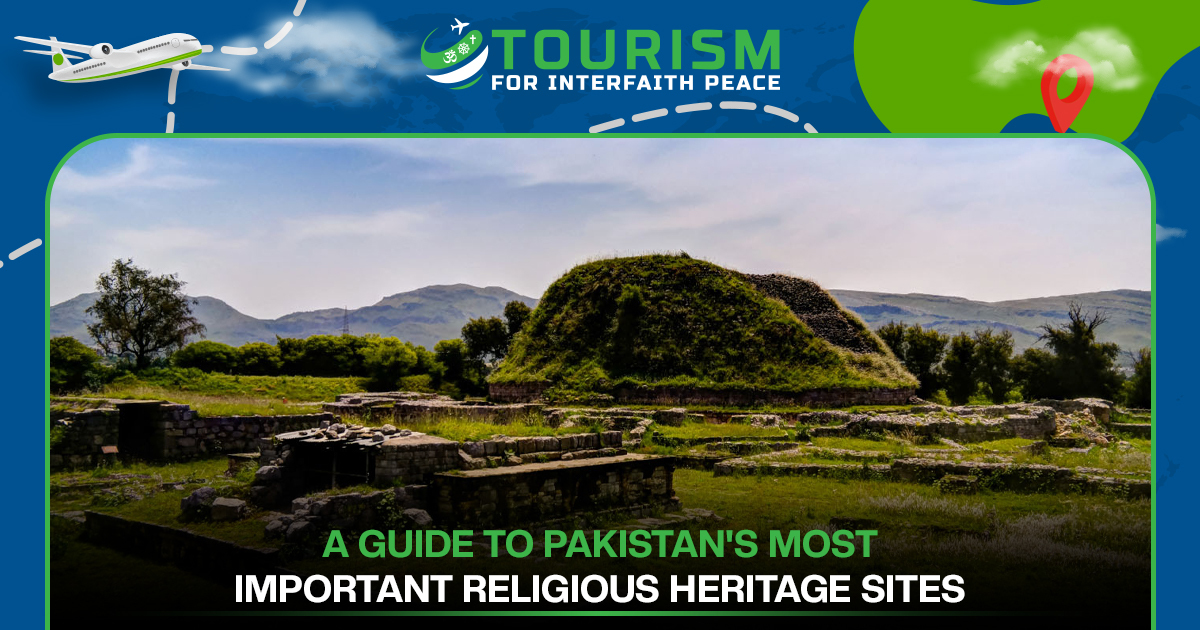
UNESCO inscribed both Taxila and the Buddhist ruins of Takht-i-Bahi as World Heritage Sites in 1980. Taxila, in Punjab, was an important Buddhist centre of learning in antiquity, and its listing covers several ancient settlements and religious buildings. Takht-i-Bahi, in Khyber Pakhtunkhwa, is a hilltop monastery complex founded around the 1st century and used until the 7th century. UNESCO describes the ruins as exceptionally well preserved.
Sikh Pilgrimage Sites in Pakistan
Gurdwara Janam Asthan in Nankana Sahib, roughly 65 km from Lahore, marks the birthplace of Guru Nanak, the founder of Sikhism. Gurdwara Darbar Sahib in Kartarpur, Narowal district, stands where he spent the last 18 years of his life. Sikhs regard both among their holiest places.
Hindu Temples in Pakistan
Katas Raj, near Choa Saidan Shah in Chakwal district, is a group of temples around the Katas pond, which Hindus regard as sacred and which tradition links to Shiva. A restoration project began there in 2006, so check the site’s current condition before you go.
Islamic and Sufi Heritage
Wazir Khan Mosque, in Lahore’s Walled City, dates to about 1634–35 under the Mughal emperor Shah Jahan. It is known for its kashi-kari tilework and interior frescoes. Data Darbar, also in Lahore, is the shrine of Ali Hujwiri, an 11th-century scholar and mystic who wrote the earliest Persian treatise on Sufism. In Multan, the tomb of Shah Rukn-e-Alam dates to the early 14th century.
Christian Heritage
St Patrick’s Cathedral is the seat of the Roman Catholic Archdiocese of Karachi. The present Gothic Revival building opened in April 1881, to a design by the Jesuit Father Wagner.
Why Religious Heritage Sites in Pakistan Matter
Sacred sites preserve traditions and architecture, from Gandharan stonework to Mughal tilework. They also hold collective memory and give communities a shared sense of identity. Many are also places where communities still gather to pray and celebrate, which is why visits call for care. Looking after them benefits residents and visitors alike.
Cultural Heritage and Interfaith Harmony Through Tourism
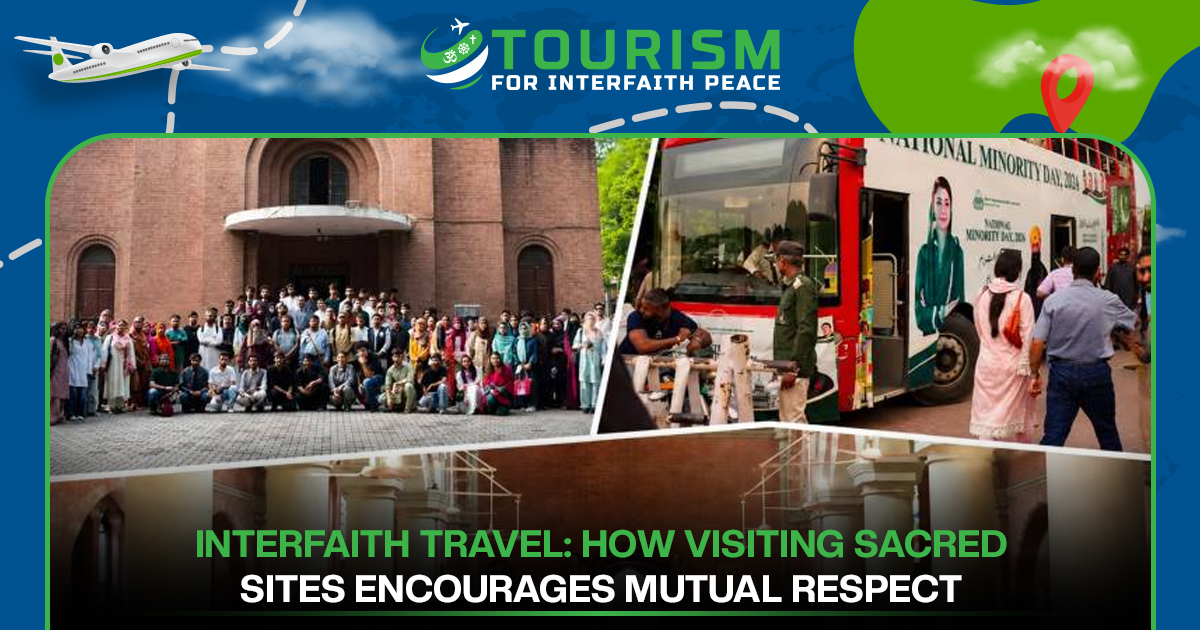
Visiting a place that matters to someone else’s faith turns an abstract idea into a human encounter. A conversation with a caretaker or guide can challenge a stereotype faster than a headline, and local guides can explain customs that signs leave out. Read more on how visiting sacred sites encourages mutual respect. Shared food, craft and stories matter too, and they are explored in the role of cultural exchange in promoting interfaith harmony. Neither settles deep disagreements alone, but both are good beginnings.
Responsible Visiting Tips
- Dress modestly: cover shoulders and knees, carry a light scarf and follow any rules on shoes and head coverings.
- Ask before photographing people, worship or interiors.
- Stay quiet near worshippers, and join a ritual only if invited.
- Follow local customs and the guidance of caretakers.
- Protect the site: avoid touching fragile structures and take litter with you.
- Check access first. Hours, permissions and conditions can change, and some sites may require prior arrangements.
Explore Pakistan’s Religious Heritage Responsibly
Pakistan’s religious heritage is rich and still lived in. Approach it with curiosity, listen to the people who care for these places, and leave them as you found them. Tourism for Interfaith Peace promotes peace and understanding through religious tourism, and travellers who explore interfaith tourism in Pakistan with respect help that mission along.
Frequently Asked Questions
What are the main religious heritage sites in Pakistan?
Examples include Taxila and Takht-i-Bahi (Buddhist), Nankana Sahib and Kartarpur (Sikh), Katas Raj (Hindu), Wazir Khan Mosque and Data Darbar (Islamic and Sufi) and St Patrick’s Cathedral in Karachi (Christian).
Can visitors enter these sites?
Access varies by site and can change. Confirm opening hours, permissions and current travel advice before you travel.
How does religious tourism promote interfaith harmony?
Respectful visits and conversations with local communities replace assumptions with direct contact, though tourism alone does not resolve deeper disagreements.