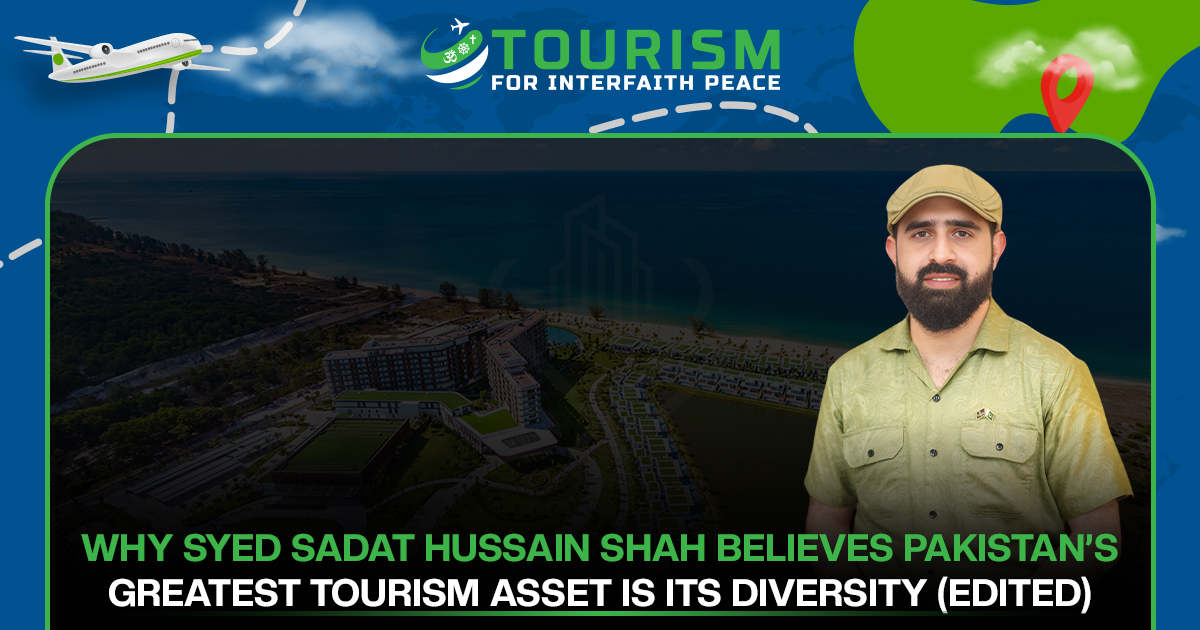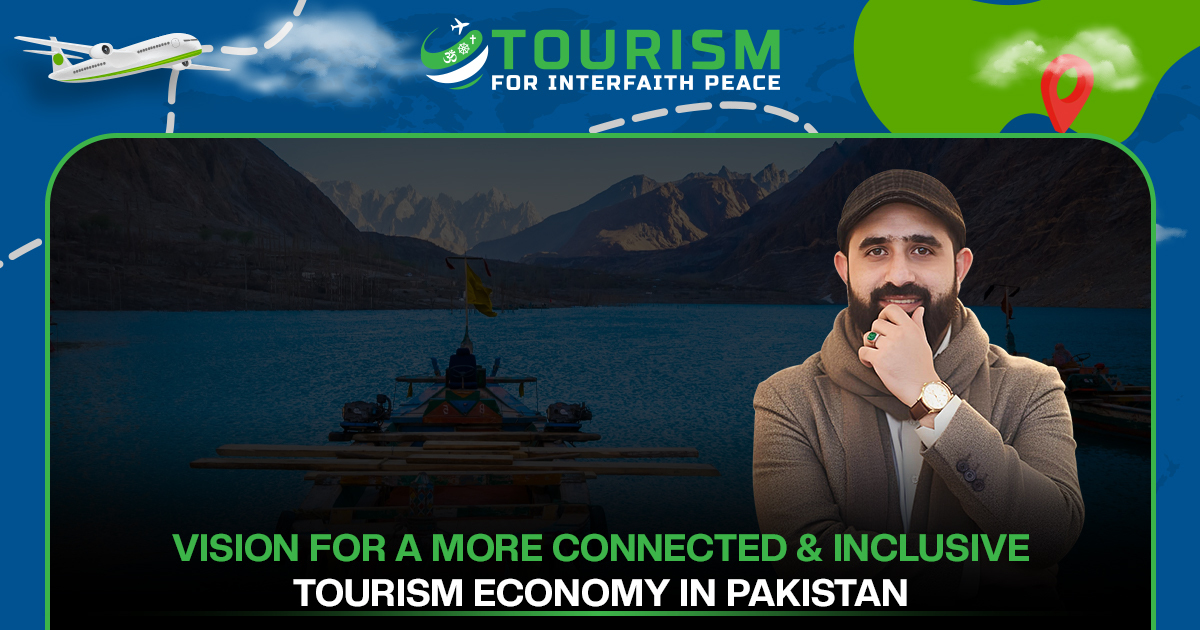
A country’s tourism potential is usually measured in mountains, coastlines and monuments. That measure misses something Pakistan has in unusual abundance: the chance for a traveler to sit down at a table, a shrine or a festival ground with someone from a different faith or region and leave with a slightly wider view of the country. Syed Sadat Hussain Shah, who chairs Tourism for Interfaith Peace (TIP), has built a public case for treating that exchange as central to tourism development rather than a byproduct of it. His stated position, reflected across TIP’s programming and his public remarks on Pakistan’s development, is that tourism works best when it moves money, understanding and opportunity through the same channel at once.
Who Is Syed Sadat Hussain Shah?
Syed Sadat Hussain Shah chairs Tourism for Interfaith Peace (TIP), an Islamabad-based initiative launched in October 2024 with an event hosted at Lakeshore City that brought together leaders from multiple faith communities. He also holds hospitality and tourism-related roles, including chairing the Hospitality Committee at the Islamabad Chamber of Commerce and Industry, and has been publicly identified as Focal Person for Public & Private Tourism Partnerships. His broader professional background includes real estate development and an openly stated interest in youth entrepreneurship, both of which recur in his public comments on tourism as an economic tool rather than a purely cultural one.
What Is Tourism for Interfaith Peace?
Tourism for Interfaith Peace is a Pakistan-based initiative that describes its purpose as promoting mutual respect and harmony among diverse communities through travel to religious and cultural sites, according to TIP’s own published vision and mission statements. TIP frames tourism as socio-economic activity and a peacebuilding tool at once, aligning its stated work with the United Nations’ Sustainable Development Goal 16 on peace, justice and strong institutions. Interfaith tourism matters in Pakistan specifically because the country’s religious and cultural sites, from Sufi shrines to Sikh, Hindu, Buddhist and Christian heritage locations, sit within daily reach of communities of other faiths, creating natural opportunities for the kind of shared visits TIP promotes.
Syed Sadat Hussain Shah’s Vision for a Connected Tourism Economy
Tourism as an Economic Engine
The public case Sadat Shah has made, including in remarks reported around Pakistan’s federal budget reforms affecting the property and tourism sectors, is that development should not stop at construction and investment; it needs to connect with youth development and tourism promotion as parts of the same economic picture. In practical terms, tourism activity reaches well beyond hotels — it moves through transport operators, restaurants, local retail, tour guides, artisans and small hospitality businesses that rarely appear in headline investment figures but absorb a meaningful share of visitor spending.
Tourism as a Social Connector
Interfaith and intercultural tourism creates something narrower forms of travel do not: repeated, low-stakes encounters between people of different faiths, regions and backgrounds. A shared visit to a historical site connected to more than one tradition does not resolve deeper social divisions by itself, but it builds familiarity in a way that abstract dialogue rarely does. This is the operating premise behind TIP’s interfaith events and cultural exchanges, and it is the throughline connecting Sadat Shah’s tourism advocacy to his stated interest in Pakistan’s social cohesion.
Tourism as a Way to Showcase Pakistan
Pakistan’s heritage spans Mughal architecture, Gandhara-era Buddhist ruins near Taxila, Sikh sites connected to the faith’s founding history, Sufi shrines known for devotional music, and Hindu and Christian heritage locations across multiple provinces, alongside its mountain and coastal landscapes. Presenting this heritage responsibly means treating each site as a living place of meaning for the community connected to it, not simply a stop on an itinerary — a distinction TIP’s own published material treats as central rather than incidental.
Why Inclusive Tourism Matters for Pakistan
Inclusive tourism, as a concept, asks whether the benefits of a growing sector reach beyond large-scale developers and international chains. That means value for visitors, but also for local residents, small business owners, religious communities who maintain the sites in question, heritage custodians, hospitality workers and young entrepreneurs entering the sector. Concentrating tourism revenue around a handful of major projects while surrounding communities see little benefit is a familiar risk in emerging tourism markets, and it is one that responsible destination management has to plan against deliberately rather than assume will resolve itself.
Religious and Cultural Tourism as a Bridge
Sites such as Kartarpur and Nankana Sahib for Sikh heritage, Taxila for Buddhist and Gandhara history, and numerous Sufi shrines across Punjab and Sindh already draw visitors motivated by faith as much as curiosity. Handled with care, a visit to any of these places can move a traveler through a simple but real sequence: understanding, dialogue, respect, economic interaction and, over time, stronger ties between the communities involved. None of this requires treating a sacred site as a commercial product — the two goals, respectful access and economic benefit for the surrounding community, can be pursued together without one crowding out the other.
From Visitors to Local Opportunity
The economic chain tourism creates is longer than it first appears. A visitor books a hotel, eats at a local restaurant, hires transport, engages a guide, buys crafts from a nearby market and, in doing so, supports several small businesses and household incomes in a single trip. This is the chain Sadat Shah’s public comments on tourism and youth opportunity point toward — not tourism as a single large investment, but as a distributed economic activity that reaches shopkeepers and guides as readily as hotel owners, provided the surrounding infrastructure and planning support it.
Public-Private Partnerships and Tourism Development
Cooperation between government tourism bodies, private developers, religious organizations, cultural institutions and local communities matters because no single actor controls all the pieces a tourist experience depends on — roads, permits, heritage protection, hospitality standards and local business capacity all sit with different stakeholders. Sadat Shah’s publicly stated role as Focal Person for Public & Private Tourism Partnerships reflects this coordination function, though the scope and outcomes of specific partnerships should be confirmed with the relevant government tourism authority rather than assumed from this description alone.
Youth and the Future of Pakistan’s Tourism Economy
Sadat Shah has spoken publicly about Pakistan’s young population, roughly two-thirds of whom are under 30, as the country’s central economic asset, calling for easier access to business loans, skill development and startup support so young people can build careers in sectors including tourism. Tourism offers several entry points here: hospitality management, tour operations, digital travel content, local guiding, heritage interpretation and small cultural enterprises all sit within reach of young entrepreneurs without requiring large capital outlays.
What Pakistan Needs to Build a More Inclusive Tourism Economy
A more connected tourism sector needs more than promotion. Reliable visitor information, stronger hospitality training, heritage preservation funding, and real coordination between government tourism bodies and private operators all matter more than marketing campaigns on their own. So does protecting religious and cultural sites from the pressure that comes with growing visitor numbers — a responsibility that falls on planners as much as on promoters. Growth without this groundwork tends to concentrate benefits narrowly and strain the sites it depends on.
What Can Other Tourism Leaders Learn From This Vision?
Treat tourism as an economic and social ecosystem, not a single transaction between a visitor and a site.
Build connections between communities, not just between destinations and visitors.
Protect cultural and religious heritage while promoting it, rather than treating preservation and promotion as competing priorities.
Create openings for local businesses and young entrepreneurs, so tourism income does not concentrate around a small number of large operators.
Use partnerships to solve infrastructure gaps, since no single organization controls every input a destination needs.
The Five-Pillar View
| Pillar | What It Means in Practice |
|---|---|
| Tourism | Travel to religious, cultural and natural sites across Pakistan |
| Economic Opportunity | Income for hospitality, transport, guides, crafts and small business |
| Cultural Understanding | Visitors and hosts learning each other’s traditions through shared experience |
| Interfaith Connection | Shared visits to sites tied to more than one faith tradition |
| Community Development | Benefits reaching local residents and heritage custodians, not only large operators |
This framework reflects the connections TIP’s published material draws between tourism, economic activity and interfaith understanding, rather than a formally adopted government or institutional model.
A Thoughtful Invitation
Tourism for Interfaith Peace positions itself less as a travel operator and more as a case for a particular way of traveling — one where a shared visit to a shrine, a temple or a heritage site is also a small act of understanding. Readers curious about that approach can learn more about TIP’s mission, follow its upcoming interfaith events and cultural exchanges, or explore the organization’s broader thinking on responsible tourism through its blog.
Frequently Asked Questions
What is Syed Sadat Hussain Shah’s vision for tourism in Pakistan?
His publicly stated position connects tourism to economic opportunity, youth development and interfaith harmony, treating the sector as a tool for both income generation and cross-community understanding rather than promotion alone.
What is Tourism for Interfaith Peace (TIP)?
TIP is a Pakistan-based initiative, launched in October 2024, that promotes travel to religious and cultural sites as a way to build mutual respect between faith communities, alongside its stated socio-economic goals.
How can tourism promote interfaith harmony?
Shared visits to sites connected to more than one faith tradition create repeated, low-stakes contact between people of different backgrounds, which tends to build familiarity and reduce misunderstanding over time.
Why is religious tourism important for Pakistan?
Pakistan holds heritage sites connected to Islamic, Sikh, Hindu, Buddhist and Christian traditions, giving religious tourism the potential to support both cultural preservation and local economies simultaneously.
How can tourism support local communities?
When tourism spending reaches guesthouses, local transport, guides and craftspeople rather than concentrating around large developments alone, the economic benefit stays closer to the communities maintaining the heritage in question.
What is inclusive tourism?
Inclusive tourism refers to development that creates value for visitors, local residents, small businesses, heritage custodians and young entrepreneurs together, rather than benefiting large-scale operators exclusively.
Why are public-private partnerships important for tourism?
Tourism infrastructure — roads, permits, heritage protection and hospitality standards — spans multiple stakeholders, so coordinated partnerships between government bodies and private developers tend to close gaps that no single actor can address alone.