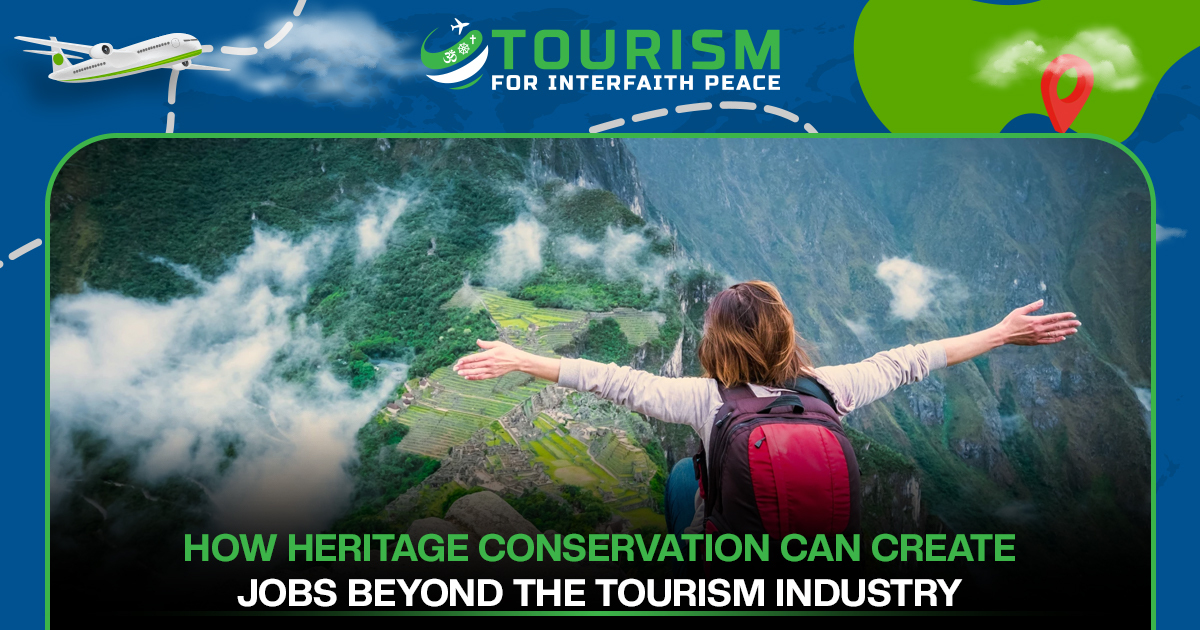
Heritage conservation is usually framed as a cultural or tourism initiative, something done to protect the past or attract visitors. That framing understates what conservation actually does to a local economy. Restoring a historic building, documenting a monument, or reviving a traditional craft sets off a chain of employment that reaches far beyond hotels and tour guides, into construction, education, technology, publishing, and small business. Understanding that chain matters for anyone assessing heritage work as a serious economic development tool, not just a preservation effort.
Heritage Conservation Creates Direct, Skilled Employment
The most immediate jobs in heritage conservation belong to the people who do the technical work: architects who assess structural integrity, archaeologists who document a site before restoration begins, conservators trained in materials science, structural engineers, and project managers who coordinate multi-year restoration timelines.
Beneath that layer sits a larger workforce of restoration labor: masons, carpenters, stone carvers, and tile workers whose skills are often specific to a region’s traditional building methods. These roles require years of training and are not easily interchangeable with standard modern construction work, which is part of why heritage restoration tends to sustain specialized employment over long periods rather than short bursts.
Jobs Beyond Tourism: Where the Employment Really Spreads
Tourism jobs, guiding, hospitality, and ticketing, are the most visible outcome of heritage conservation, but they represent only one segment of the employment a conservation project generates. The wider economic footprint includes:
- Construction and materials supply, from quarrying traditional stone to producing lime plaster and period-accurate timber.
- Education and research, including university programs, field schools, and academic positions tied to conservation science and archaeology.
- Publishing and media, covering documentation, exhibition catalogues, journalism, and heritage-focused content production.
- Design and creative industries, where restored sites and traditional motifs inform architecture, product design, and visual arts.
- Transportation and logistics supporting both construction sites and the visitor access that eventually follows.
- Food businesses and retail that grow around a restored district once foot traffic and public interest increase.
The United Nations World Tourism Organization has reported that cultural tourism, closely tied to conservation outcomes, generates hundreds of billions of dollars in global revenue annually, underscoring how much economic activity sits downstream of a well-managed heritage site.
Reviving Traditional Skills and Opening Doors for Young Workers
Many restoration projects depend on crafts that have declined in everyday use: hand-carved woodwork, traditional masonry, fresco and tile restoration, and textile or metalwork techniques passed down through generations of artisan families. When a conservation project commissions this work, it does more than complete a building. It creates paid demand for a skill that might otherwise disappear.
International programs have shown this pattern directly. UNESCO-backed heritage employment initiatives in Jordan and Iraq, for example, have paired site restoration with structured training and short-term employment for local workers, combining livelihood support with skills development in a single project. That model, pairing conservation work with formal training, is increasingly used as a way to bring young workers into skilled trades that have a shrinking pipeline of experienced practitioners.
Local Entrepreneurship Around Conserved Heritage
Once a heritage site or district is restored and stabilized, it often becomes a magnet for small business activity that has nothing to do with construction or formal tourism roles. Cafes, guesthouses, artisan workshops, galleries, and shops selling regional crafts tend to cluster around conserved areas because restored heritage districts create the kind of foot traffic and visual appeal that supports retail and hospitality at a small, community-owned scale.
This is where conservation intersects most directly with local economic development: the businesses that grow around a heritage site are frequently owned and staffed by residents of the surrounding community, which keeps a larger share of the economic benefit local rather than routed through outside investors.
Digital Technology Is Expanding Heritage Employment Further
Heritage conservation increasingly depends on digital tools, and those tools have created an entirely new category of jobs. 3D laser scanning and photogrammetry specialists document sites before and during restoration. GIS analysts map heritage landscapes for planning and conservation authorities. Archivists and digital curators manage growing collections of scanned records, photographs, and historical documents. Virtual tour developers and heritage content creators translate physical sites into digital experiences that reach audiences who may never visit in person.
These roles sit at the intersection of heritage and technology, and they are growing as more conservation authorities adopt digital documentation as standard practice rather than an optional add-on.
Why This Matters for Heritage Conservation in Pakistan
Pakistan is home to heritage landscapes spanning multiple eras and traditions, from Gandharan Buddhist sites near Taxila to Mughal-era architecture in Lahore and the ancient urban planning of Mohenjo-daro. Conservation work at sites like these carries the same layered employment potential described above: skilled restoration labor, research and documentation roles, craft revival, and the small business activity that follows once a site becomes a stable, well-managed destination.
For a country with a young workforce and a deep, varied heritage base, conservation offers a way to connect cultural preservation directly to regional economic development and skilled employment, particularly in communities located near historically significant but under-resourced sites.
Frequently Asked Questions
Does heritage conservation create jobs?
Yes. Heritage conservation creates direct jobs in architecture, archaeology, engineering, and skilled restoration trades, along with indirect employment in construction supply, education, publishing, design, and small business.
What careers are involved in heritage preservation?
Careers include conservation architects, archaeologists, structural engineers, materials conservators, project managers, traditional craftspeople, researchers, and increasingly, digital documentation specialists such as GIS analysts and photogrammetry technicians.
How does heritage conservation benefit local economies?
Beyond direct project employment, conserved heritage sites tend to attract locally owned businesses, cafes, guesthouses, and artisan workshops, that generate income and jobs for the surrounding community over the long term.
Can heritage preservation support young professionals and skilled workers?
Yes. Many conservation projects pair restoration work with formal training, giving young workers a structured path into skilled trades and technical heritage careers that might otherwise have a shrinking pipeline of practitioners.
How can communities benefit economically from heritage conservation?
Communities benefit through direct project wages, revived demand for traditional crafts, small business growth around restored sites, and long-term employment tied to research, education, and heritage-focused tourism.
Is heritage conservation only relevant to the tourism industry?
No. While tourism is the most visible outcome, conservation also drives employment in construction, materials supply, education, publishing, design, and digital technology, sectors with little direct connection to visitor traffic.
Heritage Conservation as a Long-Term Investment in People
Viewed through an economic lens, heritage conservation is not a cost set against tourism revenue. It is an investment in people: the architects and engineers who plan restoration, the artisans who carry traditional skills forward, the researchers who document what would otherwise be lost, and the small business owners who build a livelihood around a site once it is stabilized. That combination of skilled work, craft revival, and community entrepreneurship is what makes conservation a durable form of economic development, one that continues to generate value long after a restoration project is complete.
TIP works at the intersection of tourism, heritage, and cross-community understanding. Readers interested in how conservation, culture, and sustainable development connect are welcome to explore TIP’s ongoing research and initiatives to learn more.