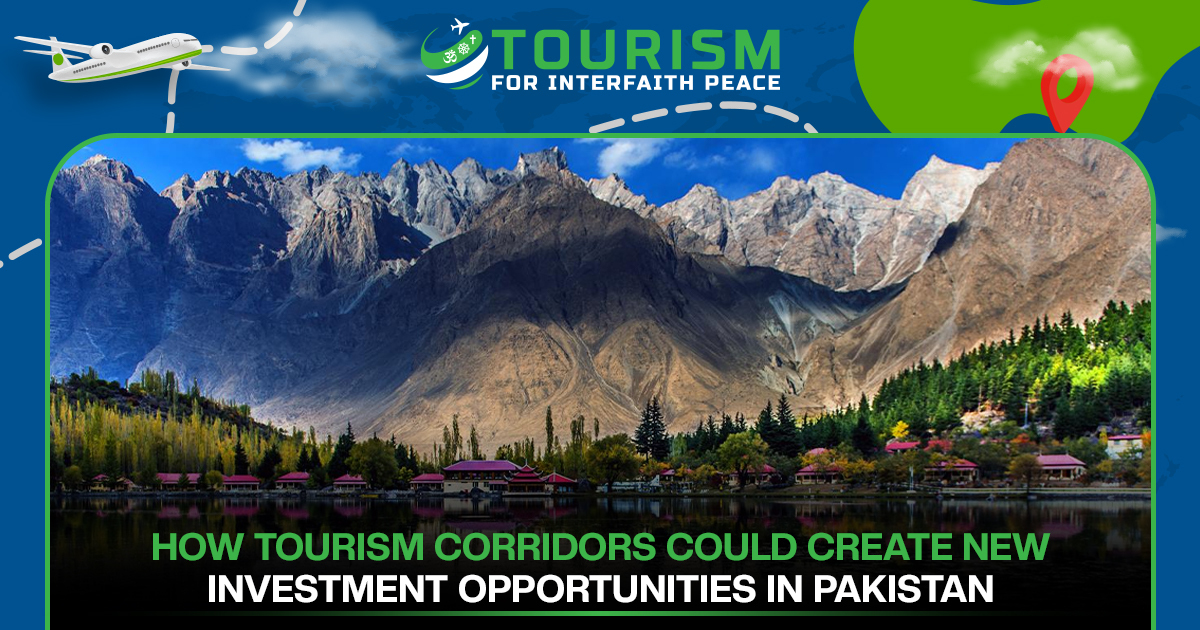
Every tourist season, the same names dominate Pakistan’s travel conversation: Hunza, Skardu, Murree, Swat, Naran, Kaghan, Neelum Valley. That popularity is not an accident. These destinations have built genuine infrastructure, transport links, hospitality networks and brand recognition over decades, and they have earned their place on Pakistan’s tourism map.
Their success proves something important: Pakistan has real, sustained tourism demand. But it also reveals a narrower truth — the country’s tourism economy is still resting on a small number of locations, while a much larger geography of mountains, deserts, coastlines, heritage cities and cultural landscapes remains underdeveloped. The opportunity ahead is not to promote new places instead of the old ones. It is to build a wider, better-planned tourism economy around both.
Pakistan Has More Tourism Potential Than Its Most Famous Destinations Suggest
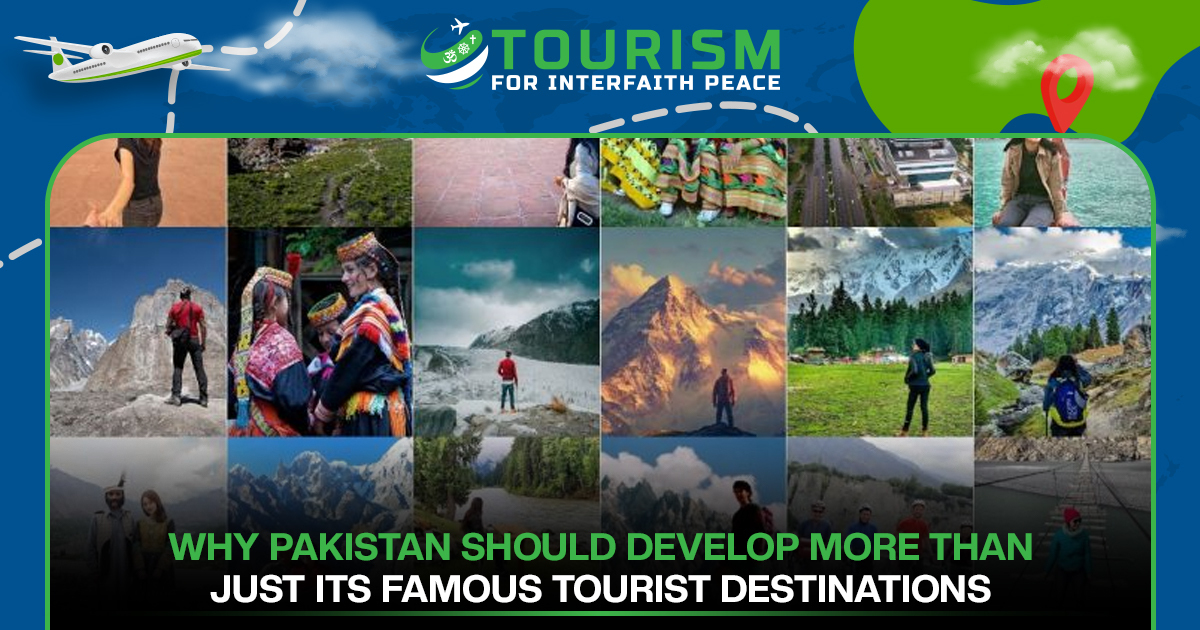
Pakistan’s tourism proposition is often reduced to alpine scenery, yet the country’s geography supports a much broader portfolio: mountain and adventure tourism in the north, desert tourism in Sindh and Cholistan, coastal tourism along the Makran and Sindh shoreline, heritage and archaeological tourism across Punjab and Sindh, religious tourism tied to Buddhist, Sikh and Hindu heritage, and rural and food tourism rooted in regional culture. Industry estimates suggest adventure tourism already accounts for roughly 45% of tourism activity nationally, with historical tourism at about 22% and religious tourism at 11% — a mix that shows demand already extends well past the northern valleys.
Why Relying on a Few Famous Destinations Can Become a Problem
What happens when thousands of visitors arrive in a destination whose roads, water systems and waste infrastructure were never designed for them?
Murree has answered that question more than once. In January 2022, roughly 100,000 vehicles entered the hill station during a snowstorm, overwhelming roads built for a fraction of that traffic; 22 people died after being trapped in stranded cars overnight. In January 2026, heavy snowfall again forced authorities to close entry routes and impose a temporary tourist ban after congestion outpaced the town’s capacity. These are not arguments against visiting Murree — they are evidence that concentrated demand, without matching infrastructure, creates real safety and environmental risk.
Developing Emerging Destinations Could Spread Tourism Income
Tourism spending that concentrates in a handful of towns tends to circulate among a limited set of hotels, transport operators and tour companies. A wider destination base allows that spending to reach guesthouses, restaurants, local guides, artisans, farmers and small transport providers in regions that currently see little tourism income. Pakistan’s travel and tourism sector already contributes an estimated 5.9% of GDP and supports around 4.7 million jobs; distributing that economic activity more evenly across provinces would extend those benefits to communities largely outside the current tourism map.
Pakistan Should Build Tourism Circuits, Not Just Individual Destinations
A single destination invites a short visit. A connected circuit — linking a mountain valley to a heritage town, a coastal stretch to a fishing village, a religious site to a nearby craft market — gives travelers a reason to stay longer. Longer stays generally translate into more hotel nights, more local transport use and more spending on food, guiding and small experiences, rather than one destination absorbing all the visitor traffic while neighboring areas see none of it.
Infrastructure Is More Important Than Social Media Promotion
A location does not become a viable tourism product simply because it trends on Instagram or YouTube. Sustainable visitation depends on roads, reliable electricity and water, mobile and internet coverage, healthcare and emergency response, sanitation and waste management, clear signage, and trained hospitality staff. Pakistan ranked 101st out of 119 economies on the World Economic Forum’s Travel and Tourism Development Index 2024, a reminder that marketing without readiness tends to produce the kind of gridlock seen in Murree rather than a lasting tourism product.
Sustainability Should Be Built Into Tourism Development From the Start
Developing new destinations without planning risks reproducing the same problems seen in established ones. Carrying capacity, water availability, waste systems, construction controls and biodiversity protection need to shape development decisions from day one. Not every scenic location is suited to mass tourism — some are better matched to low-volume, guided or seasonal visitation that protects the very qualities that make them attractive in the first place.
Local Communities Should Be Part of the Tourism Economy
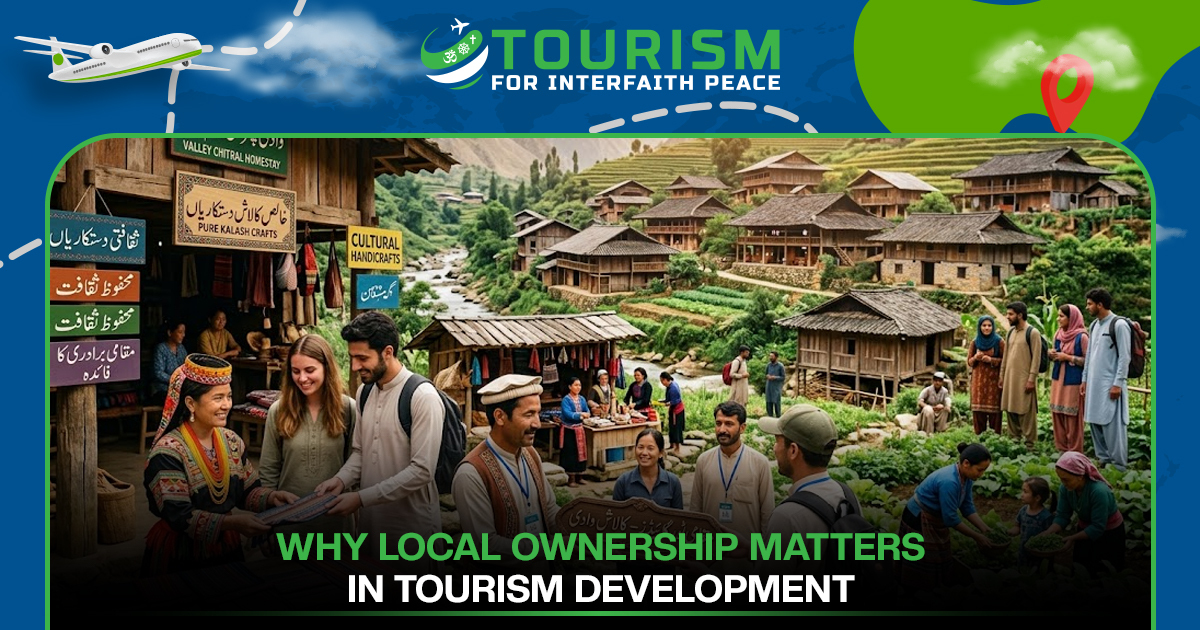
Tourism development delivers more lasting value when local residents hold a genuine economic stake in it — through locally owned guesthouses, restaurants, guiding services, transport, handicrafts and agricultural products. Where outside investors and operators capture most of the revenue, communities absorb the environmental and social costs of tourism without sharing meaningfully in its income, which weakens both local support and long-term sustainability.
Which Parts of Pakistan Could Benefit From More Tourism Development?
Rather than a list of hidden spots, it is more useful to think in terms of regions with genuine, under-realized potential: Balochistan’s coastal and Makran belt, Sindh’s heritage and archaeological sites, southern Punjab’s historic cities, Khyber Pakhtunkhwa’s lesser-visited valleys, less-developed parts of Gilgit-Baltistan, and emerging tourism areas in Azad Jammu and Kashmir. Kartarpur Corridor’s growth — drawing more than 45,000 Sikh pilgrims from India in 2025 alone — shows how a single well-planned religious tourism project can create an entirely new visitor flow.
What Pakistan Needs to Build a Broader Tourism Economy
- Identify destinations with genuine, evidence-based tourism potential.
- Improve basic infrastructure — roads, power, water and connectivity.
- Build quality, appropriately scaled accommodation.
- Train local hospitality and guiding workers.
- Improve digital and on-ground destination information.
- Develop connected tourism circuits, not isolated hotspots.
- Protect natural and cultural assets through planning and limits.
- Involve local communities as owners and stakeholders, not bystanders.
- Strengthen safety systems and emergency response capacity.
- Market destinations according to their actual, tested capacity.
The Opportunity for Pakistan’s Tourism Industry
A broader tourism base supports employment, entrepreneurship, construction, food businesses, cultural industries and handicraft manufacturing far beyond the hospitality sector itself. It also allows Pakistan to move away from treating tourism as a narrow, seasonal leisure activity concentrated in a few summer months, and toward building products for different regions, different seasons and different types of travelers — from adventure and religious tourism to heritage, coastal and rural experiences.
Final Takeaway
Pakistan does not need to choose between developing its famous destinations and discovering new ones. What it needs is a broader tourism strategy — one that develops destinations according to their unique strengths and environmental limits, rather than funnelling ever more visitors into the same few places. The measure of success for Pakistan’s tourism industry should not simply be more visitors in Hunza or Murree. It should be more destinations doing well, longer stays, wider economic participation, stronger infrastructure and development that communities can actually sustain.