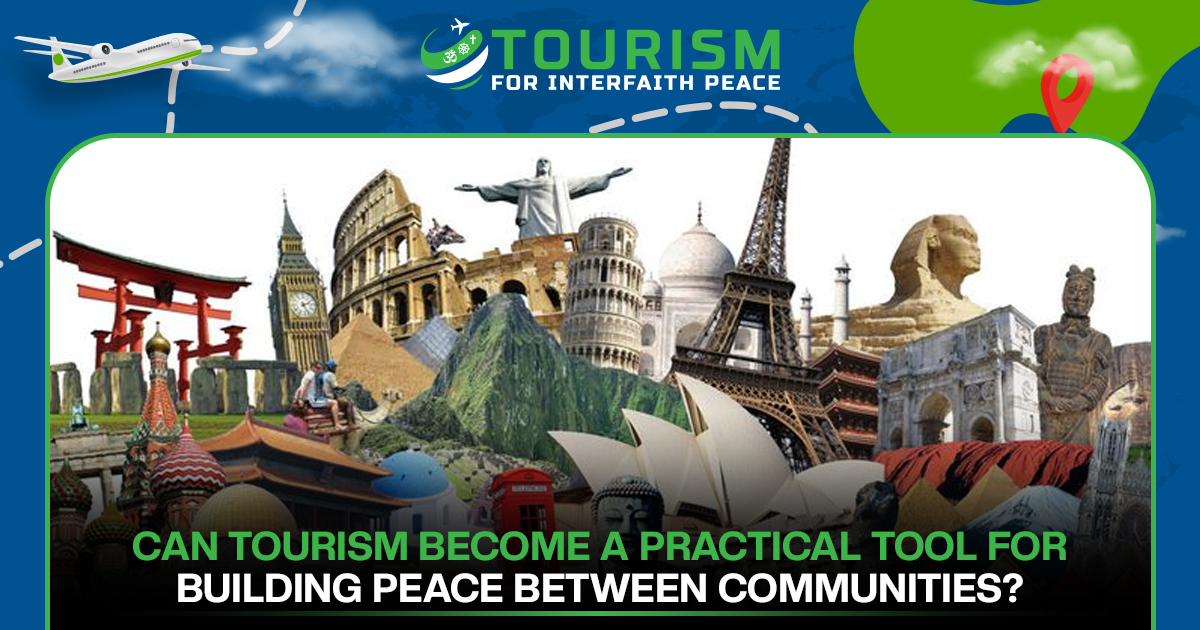
People often see a place differently after sharing a meal with someone who lives there. A border stops being an abstraction once you’ve crossed it to buy handicrafts from the family on the other side, or heard a grandmother describe a festival her own grandmother once celebrated with neighbours from a different faith. Can travel do more than move people from one point to another? Can it help communities that rarely interact begin to understand one another?
The honest answer is neither a triumphant yes nor a dismissive no. Research on tourism and peace has grown since the field was first proposed in the late 1980s, and much of it points the same direction: tourism can create conditions for dialogue, trust, and shared economic interest, but it cannot substitute for governance, justice, or political will. Tourism is a contact mechanism, not a conflict-resolution mechanism.
Why Contact Between Communities Matters
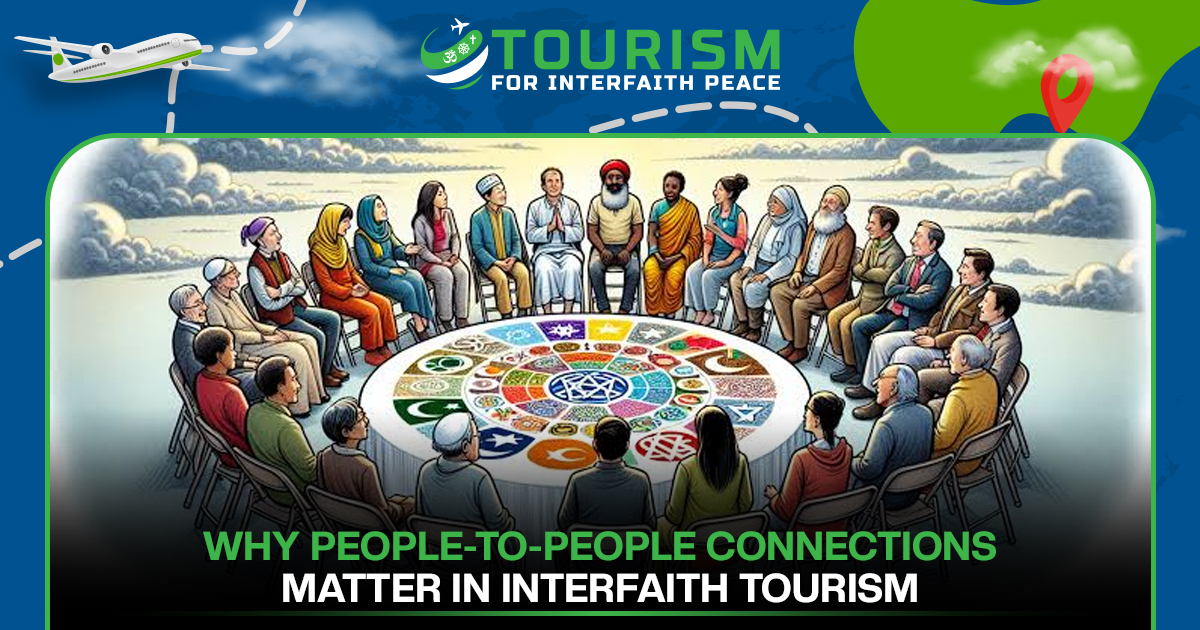
Social psychology’s contact hypothesis holds that prejudice softens when people from different groups interact under the right conditions: equal status, shared goals, cooperation, and institutional support. Tourism can, in principle, supply several of these at once. A guided walk through a neighbourhood, a homestay, or a shared meal is a different experience from passing through a destination in a coach with tinted windows. The first creates a story a visitor can retell; the second creates a photograph. Storytelling, food, craft, and shared history are what turn a transaction into an interaction.
Also Read: Why People-to-People Connections Matter in Interfaith Tourism
How Tourism Can Create Shared Economic Interests
Tourism income can flow through guesthouses, transport, guiding, food, and handicrafts, and when it reaches a wide base of local households, it gives communities a material reason to protect a shared destination rather than compete over it. Research on cross-border tourism at the militarized US–Mexico border found that communities on both sides expressed a form of binational solidarity around shared natural and cultural heritage, with a shared interest in presenting it to visitors together. A separate study of cross-border tourism between India and Myanmar found that community support linked tourism development to stronger bilateral cooperation. The mechanism is straightforward: when a destination’s income depends on cooperation, cooperation becomes rational, not just admirable. But the benefit only builds peace if it is distributed fairly; concentrated gains create resentment instead of goodwill.
Tourism as a Platform for Cultural Understanding
Exposure to another community’s food, language, and daily life can unsettle stereotypes that survive comfortably at a distance. The UN Tourism Global Code of Ethics for Tourism explicitly frames tourism’s contribution to mutual understanding and respect between peoples as a founding principle of the sector. But exposure is not automatically respectful. Turning a community’s traditions into a photo opportunity, without their involvement in how that culture is presented, tends to entrench stereotypes rather than dissolve them. The difference lies in who controls the narrative.
When Tourism Can Actually Build Peace
Evidence and practice converge on a set of conditions. Peacebuilding potential is strongest when communities participate in decisions about tourism rather than simply hosting it; when income is shared broadly rather than captured by a few operators; when cultural representation is led by the community itself; when visitor interactions are sustained rather than fleeting; when local identity is not flattened to suit outside expectations; and when governance is transparent enough that communities trust the process. A country-level study using global conflict and tourism datasets found that rising tourist arrivals were statistically associated with a reduced likelihood of civil conflict, though the authors were careful to note this reflects a stabilising association rather than proof that tourism alone prevents war.
When Tourism Can Make Tensions Worse
The same sector that can build trust can also deepen division. Unequal distribution of tourism income, displacement of residents to make way for visitor infrastructure, cultural commodification, overcrowding, and environmental strain are documented risks across the tourism-and-development literature. A “tourist bubble,” where visitors circulate through resorts and sites with minimal contact with residents, delivers few of the peacebuilding benefits associated with sustained interaction. Scholars reviewing the tourism-peace literature have also cautioned that findings remain inconclusive in many contexts, and that the field has relied heavily on case studies rather than a settled theory. Tourism does not automatically create peace; poorly managed tourism can deepen the inequalities that fuel conflict in the first place.
What Community-Based Tourism Can Teach Us
Some of the clearest examples come from community-led rather than investor-led tourism. Camp Coorong, a cultural education centre run by the Ngarrindjeri community in South Australia, has been documented as a case of “reconciliation tourism,” where Indigenous-led education for visitors became a vehicle for addressing historical injustice on the community’s own terms rather than an outsider’s. Along the Big Bend–Rio Bravo stretch of the US–Mexico border, tourism tied to conservation has given agencies and communities on both sides a shared, practical reason to coordinate across a heavily securitised boundary. In each case, the peacebuilding effect did not come from visitor numbers alone; it came from the community holding genuine authorship over how the encounter was designed.
Could Tourism Play a Greater Peacebuilding Role in Pakistan?
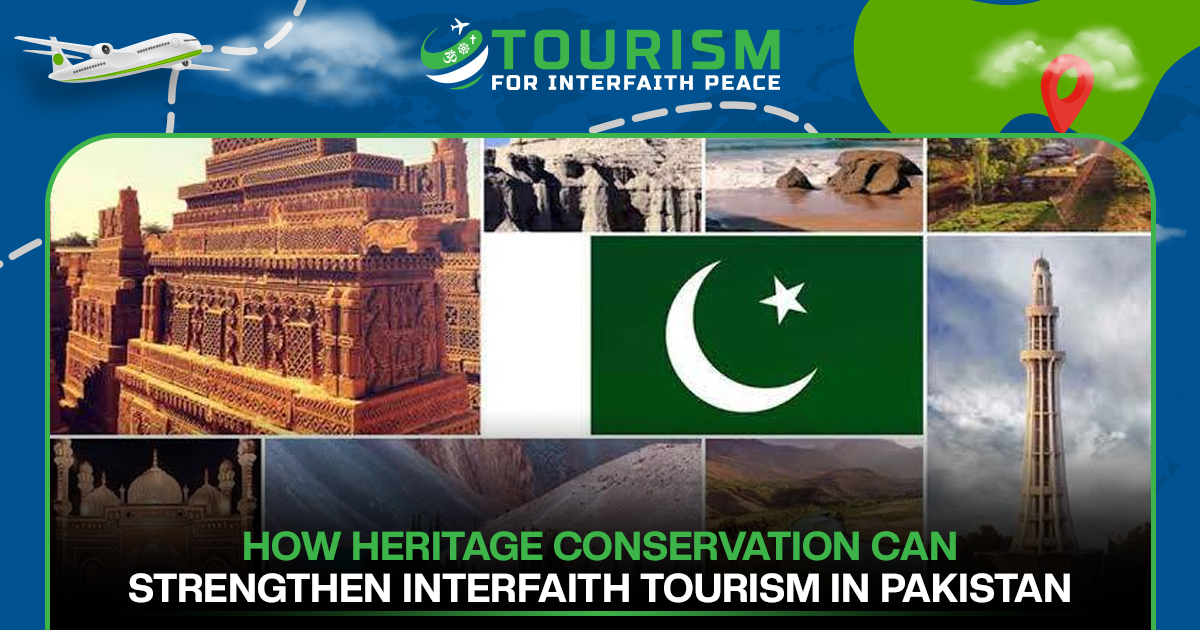
Pakistan’s religious, cultural, and heritage sites; its diverse regional cuisines and crafts; and its mountain communities offer a foundation for the same mechanisms described above, applied through community-based tourism, heritage preservation, and locally owned hospitality enterprises. The opportunity lies less in attracting more visitors and more in structuring tourism so that income and decision-making reach the communities whose heritage is being shared, and so that cultural and religious sites are presented with the involvement of the people who steward them.
What Would Responsible Tourism-Led Peacebuilding Look Like?
For tourism organisations, this means involving communities from the design stage, training local guides, and measuring who actually benefits. For governments, it means inclusive infrastructure, transparent governance, and protection against displacement. For travellers, it means spending locally, respecting cultural norms, and choosing experiences that put communities in charge of their own story.
Conclusion
Tourism is not a substitute for diplomacy, justice, or conflict resolution, and the evidence does not support claims that it can end conflicts on its own. What it can offer is something those systems also depend on: repeated, structured opportunities for people to meet, cooperate economically, and understand one another as neighbours rather than strangers. Whether that potential is realised depends less on how many people travel than on who gets to shape what happens when they arrive.
FAQs
Can tourism help build peace between communities?
Tourism can support peace by creating structured contact, shared economic interest, and cultural understanding between communities. It cannot resolve deep political, historical, or economic conflicts on its own, and its effects depend heavily on how tourism is designed and who benefits from it.
How does tourism contribute to social cohesion?
Tourism can bring people from different backgrounds into shared spaces around hospitality, food, crafts, and heritage sites. When these interactions are sustained and communities share equally in the economic benefits, research suggests they can soften stereotypes and build a degree of mutual trust over time.
What role does community-based tourism play in peacebuilding?
Community-based tourism gives local residents control over how their culture and heritage are presented to visitors. Examples such as Australia’s Camp Coorong show that peacebuilding potential is strongest when communities author their own narrative rather than having it shaped by outside operators.
Can tourism reduce cultural misunderstandings?
Direct exposure to another community’s language, food, and daily life can challenge assumptions that persist at a distance. This effect depends on genuine interaction rather than passive sightseeing, and on cultural representation being led by the community itself rather than staged for visitors.
What are the risks of using tourism as a peacebuilding tool?
Poorly managed tourism can worsen tensions through unequal income distribution, displacement, cultural commodification, overcrowding, and environmental strain. A “tourist bubble” that isolates visitors from residents delivers little of tourism’s potential peacebuilding value.
How can governments use tourism to support community development?
Governments can support inclusive infrastructure, transparent destination governance, protection of communities from displacement, and encouragement of local entrepreneurship, so that tourism development strengthens rather than sidelines the communities it depends on.
How can travelers contribute to responsible and inclusive tourism?
Travelers can spend money directly with local businesses, respect cultural and religious norms, choose community-based experiences over enclosed resort settings, and approach unfamiliar communities by listening to local histories rather than relying on assumptions.