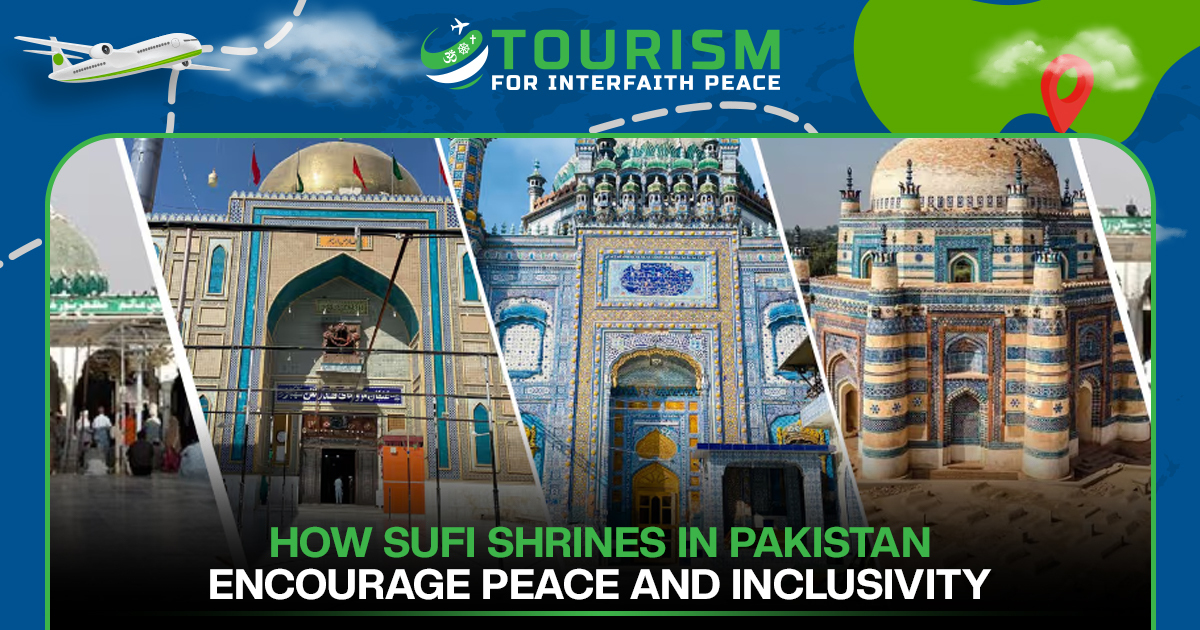
In a world fractured by division, certain places quietly hold open their doors to everyone. Sufi shrines in Pakistan are among the most powerful of these spaces. They are not simply religious monuments. They are living, breathing centers of culture, devotion, and human connection, where music fills the air, strangers become guests, and questions of faith take a back seat to the shared experience of seeking something greater than ourselves.
Pakistan is home to one of the richest Sufi traditions in the world. Rooted in centuries of South Asian mysticism, Sufi shrines stretch from the plains of Punjab to the riverbanks of Sindh, from the mountains of Khyber Pakhtunkhwa to the coastal edge of Balochistan. These sacred sites draw millions of visitors each year, not only Muslims, but Hindus, Christians, Sikhs, and travelers of no particular faith, all drawn by the atmosphere of openness that defines Sufi spiritual culture.
For the modern traveler interested in meaningful, cross-cultural experience, understanding how these shrines function as spaces of peace is both intellectually important and personally transformative. This article explores the philosophy, history, and contemporary role of Sufi shrines in fostering interfaith harmony in Pakistan.
What Are Sufi Shrines?
Sufism is the mystical dimension of Islam, a tradition that emphasizes the inward, spiritual journey toward the divine over outward ritual compliance. Sufis historically placed devotion, love, and direct experience of God at the heart of their practice. Over centuries, as Sufi masters lived, taught, and died across South Asia, their burial sites became places of pilgrimage known as dargahs or mazars.
These shrines are not static memorials. They are active spiritual hubs where followers gather for dhikr (remembrance of God), qawwali (devotional music), prayer, and community service. The shrines of celebrated saints such as Data Ganj Bakhsh in Lahore, Lal Shahbaz Qalandar in Sehwan, Shah Abdul Latif Bhittai in Bhit Shah, and Baba Farid in Pakpattan have become pillars of Pakistan’s cultural and spiritual identity.
Sufism arrived in the Indian subcontinent between the 10th and 13th centuries, carried by traveling mystics from Central Asia and Persia. These figures did not impose their faith through power. They built trust through service, poetry, music, and compassion, often learning local languages and blending spiritual wisdom across cultural traditions. That heritage of openness is embedded in the architecture of every shrine they left behind.
The Philosophy of Peace in Sufism
At its philosophical core, Sufism is a tradition of radical love. The great Sufi poet Rumi wrote: “Out beyond ideas of wrongdoing and rightdoing, there is a field. I’ll meet you there.” These lines, read across languages and faith traditions for centuries, capture something essential about the Sufi worldview: the belief that love and the search for truth are more fundamental than religious boundary lines.
Key principles found throughout Sufi teachings include:
- Ishq (Divine Love): Love is the highest form of worship, and it extends to all of creation.
- Khidmat (Service to Humanity): Caring for others, regardless of their background, is a spiritual obligation.
- Tawadu (Humility): No human being is superior to another by virtue of birth, status, or religious identity.
- Sabr (Patience and Forbearance): Wisdom comes through listening, not insisting.
- Wahdat ul Wujud (Unity of Being): Many Sufi traditions hold that all existence shares a single divine source, a belief that dissolves the barriers between faiths at their deepest level.
These are not abstract doctrines. They are practiced daily at Pakistan’s shrines through the feeding of the poor, the welcoming of strangers, and the musical traditions that draw crowds of all backgrounds together under one roof.
Why Sufi Shrines Welcome People from All Backgrounds
One of the most striking features of major Sufi shrines in Pakistan is the near-total absence of gatekeeping. Unlike some sacred spaces where entrance is restricted based on religious identity, the great Sufi shrines operate on an open-door tradition that is centuries old.
This openness is both intentional and historic. The saints revered at these shrines were themselves celebrated for welcoming people regardless of caste, class, religion, or social status. Shah Abdul Latif Bhittai, the 18th-century poet-saint of Sindh, wrote in the Sindhi language about love and longing in ways that resonate with Muslim, Hindu, and secular audiences alike. Baba Farid, the 13th-century Punjabi saint, is venerated not only by Muslims but quoted in the Sikh holy scripture, the Guru Granth Sahib, a remarkable testimony to the cross-faith reach of his spiritual vision.
Today, the cultural ecosystem around major shrines includes:
- Free langar (community kitchens) offering food to anyone who arrives hungry
- Weekly or nightly qawwali sessions that attract music lovers from all backgrounds
- Urs (annual death anniversary) festivals that transform shrine courtyards into vast, joyful gatherings
- Informal spaces for rest, reflection, and conversation
The result is a kind of organic interfaith commons, a shared public space where the usual social divisions soften and something more universal takes their place.
Famous Sufi Shrines in Pakistan That Promote Inclusivity
Data Darbar, Lahore
The shrine of Hazrat Ali Hujwiri, known as Data Ganj Bakhsh, is the largest Sufi shrine in South Asia and one of the most visited sites in Pakistan. Hujwiri arrived in Lahore in the 11th century and wrote Kashf al-Mahjub, one of the earliest and most important texts on Sufism in the Persian language. His shrine draws hundreds of thousands of visitors annually, with particularly large gatherings on Thursday evenings and during his annual Urs festival. The shrine complex includes free kitchens that operate continuously, feeding thousands of people daily without discrimination.
Shrine of Shah Abdul Latif Bhittai, Bhit Shah
Located in Sindh province, this shrine honors the greatest Sindhi poet in history, whose Risalo (poetic collection) is considered a spiritual and literary treasure. Shah Latif’s poetry speaks to universal human longing, using symbols from Sufi mysticism, Hindu legend, and everyday Sindhi life. His shrine draws an audience that crosses all religious lines and his annual Urs is one of the most musically rich festivals in Pakistan, featuring days of continuous singing from his verses.
Shrine of Lal Shahbaz Qalandar, Sehwan
Few sites in Pakistan generate the spiritual intensity of Sehwan, home to the shrine of the 13th-century mystic Syed Muhammad Usman Marwandi, known as Lal Shahbaz Qalandar. Every Thursday evening, the shrine hosts dhammal, an ecstatic form of devotional dance. The sight of thousands of people, men and women, young and old, moving in collective spiritual expression is one of the most genuinely inclusive cultural spectacles in South Asia. Visitors from Hindu, Christian, and other backgrounds frequently attend and participate.
Shrine of Baba Farid, Pakpattan
Baba Farid Ganjshakar, the 12th-century Punjabi saint, holds a unique place in interfaith history: his compositions are preserved within the Sikh scripture, the Guru Granth Sahib, making his shrine a site of veneration for both Muslims and Sikhs. This extraordinary cross-faith legacy makes Pakpattan one of the clearest examples of how Sufi shrines have historically functioned as interfaith meeting points. Sikh pilgrims, where political conditions have allowed, have journeyed to his shrine in acts of devotion that transcend the borders of religion and nation.
The Role of Sufi Shrines in Interfaith Tourism
For modern travelers, visiting a Sufi shrine is not simply tourism. It is an act of cultural immersion that offers rare insight into how faith, music, community, and hospitality can coexist at a single location. This is precisely where interfaith tourism distinguishes itself from conventional pilgrimage. To understand how interfaith tourism differs from religious tourism, consider that interfaith travel prioritizes learning and mutual understanding across faith traditions, whereas religious tourism is typically motivated by devotion within one’s own tradition.
Sufi shrines naturally support interfaith tourism goals because they:
- Provide shared cultural experiences accessible to visitors of any faith background
- Offer direct exposure to the philosophy and practice of Islamic mysticism in a welcoming environment
- Facilitate spontaneous dialogue between locals, pilgrims, and international visitors
- Demonstrate in real time how music, poetry, and hospitality can serve as bridges between communities
- Present a living counter-narrative to the idea that Islamic spaces are unwelcoming to outsiders
Heritage organizations, academic institutions, and peacebuilding NGOs have increasingly recognized Pakistan’s Sufi shrines as field sites for experiential education in interfaith relations. Guided cultural tours to these shrines, when conducted with appropriate preparation and local partnership, can be among the most impactful experiences in the interfaith travel space.
What Travelers Can Learn from Visiting Sufi Shrines
The lessons available at a Sufi shrine go well beyond religious education. Travelers who spend time at these sites report coming away with a fundamentally altered understanding of hospitality, diversity, and spiritual community.
Core lessons include:
- Hospitality as Spiritual Practice: The welcome offered to strangers at Sufi shrines, including free food, shelter, and a place to rest, is not charity. It is understood as a form of worship. This reframes what it means to welcome the other.
- The Power of Music to Cross Boundaries: Qawwali, the devotional music form most associated with Sufi shrines, has the remarkable ability to move people emotionally regardless of whether they understand the language or share the theological framework.
- Living Together Without Uniformity: Sufi shrines demonstrate that spiritual community does not require everyone to believe the same thing. Different motivations, different interpretations, and different levels of devotion coexist naturally.
- Humility Before the Unknown: The atmosphere of a major Sufi shrine invites reflection on the limits of certainty and the value of openness.
These lessons parallel, in interesting ways, what visitors encounter at sacred sites of other traditions. Much like what travelers can learn from visiting churches in Pakistan, the experience of engaging with a faith community from the outside cultivates empathy, challenges assumptions, and offers a window into how values like service, community, and transcendence are expressed across different traditions. Comparing learning experiences across faith traditions is at the heart of what makes interfaith travel so transformative.
Visitor Etiquette and Respectful Travel
Sufi shrines in Pakistan welcome visitors of all backgrounds, but respectful conduct remains essential. Understanding the cultural and spiritual context of these spaces before arrival ensures that your visit is meaningful for you and considerate toward others. This is an area where what you should know before visiting religious sites of other faiths provides invaluable guidance that applies directly to shrine visits.
Key etiquette guidelines for visiting Sufi shrines:
- Dress Conservatively: Both men and women should wear loose-fitting, modest clothing. Women should carry a scarf to cover their head upon entering. Avoid sleeveless tops, shorts, or form-fitting attire.
- Remove Footwear: Shoes are removed before entering inner sanctuaries. Look for designated areas and follow the cue of other visitors.
- Photography: Always ask before photographing individuals. Some inner areas prohibit photography, especially during prayer or ritual. Observe what others are doing and follow their lead.
- Maintain Respectful Behavior: Avoid loud conversation, disruption of ongoing prayers or music, or behavior that would seem disrespectful in any sacred space.
- Charitable Giving: It is common to make a small donation or contribute to the communal kitchen. This is entirely voluntary but deeply appreciated.
- Engage Curiously, Not Critically: Approach rituals you find unfamiliar with curiosity rather than judgment. You are a guest in a space that means a great deal to those who gather there.
How Interfaith Tourism Supports Peacebuilding
The relationship between tourism and peace is not automatic. Not all travel builds understanding. But when travel is intentional, culturally informed, and guided by genuine curiosity about the lives of others, it becomes one of the most powerful tools available for breaking down the stereotypes that fuel conflict.
Sufi shrines sit at the intersection of several forces that make them ideal peacebuilding sites:
- Counter-Narrative Power: In a global media environment that frequently associates Pakistan and Islam with extremism and exclusion, the lived reality of a Sufi shrine, open, musical, generous, multi-faith, offers a powerful and authentic alternative.
- Person-to-Person Connection: The shrine environment encourages informal interaction between visitors and local communities in ways that organized diplomacy rarely achieves.
- Shared Aesthetic Experience: Music, architecture, and communal ritual create emotional bonds that transcend language and theology.
- Historical Depth: These are not manufactured tourist attractions. They are sites of genuine historical significance that demonstrate centuries of coexistence, far more persuasive than any policy document.
UNESCO and various cultural diplomacy organizations have recognized the potential of heritage sites as tools for conflict prevention and reconciliation. Pakistan’s Sufi shrines represent an underutilized asset in this space, one that responsible interfaith tourism can help bring to global attention.
Why Sufi Shrines Matter in Modern Pakistan
In contemporary Pakistan, Sufi shrines play multiple overlapping roles. For the vast majority of Pakistan’s population, they are sites of deep personal devotion: places to pray, to seek blessings, to mark life events, and to connect with a spiritual tradition that feels authentically rooted in South Asian soil.
Culturally, they are among the most distinctive and globally significant heritage assets Pakistan possesses. The music, architecture, literature, and ritual practices associated with major shrines represent a form of intangible cultural heritage of extraordinary depth and variety.
Internationally, they offer something increasingly rare: proof, grounded in centuries of practice, that Islamic civilization has historically cultivated spaces of openness, inclusion, and cross-cultural dialogue. In a world hungry for models of peaceful coexistence, this is a story worth telling, and worth visiting.
Heritage tourism built around Sufi sites, if developed thoughtfully, could also strengthen local economies, support the custodian communities of these shrines, and fund the preservation of traditions that are genuinely irreplaceable.
Conclusion
Pakistan’s Sufi shrines are far more than beautiful monuments or pilgrimage destinations. They are living experiments in what it looks like when a spiritual tradition genuinely practices what it preaches: welcoming the stranger, feeding the hungry, making space for music, and refusing to place religious identity above human dignity.
For the international traveler, the interfaith researcher, or the curious cultural tourist, these shrines offer something increasingly difficult to find in the modern world: a real, functioning example of inclusive spiritual community rooted in centuries of tradition and still very much alive today.
Visiting a Sufi shrine in Pakistan with open eyes and a respectful heart is not simply a tourism experience. It is an encounter with a tradition that has something genuine to teach about coexistence, hospitality, and the possibility of finding common ground across the lines that divide us.
Pakistan’s spiritual heritage is rich, varied, and profoundly relevant to the conversations the world most needs to have right now. The doors of the shrines are open. The invitation is as old as the tradition itself: come, whoever you are.
Frequently Asked Questions
What is a Sufi shrine?
A Sufi shrine, known as a dargah or mazar, is a sacred site built around the tomb of a revered Sufi saint. These sites serve as centers of devotion, community gathering, spiritual music, and charitable activity. In Pakistan, Sufi shrines are among the most visited heritage sites in the country.
Why are Sufi shrines important in Pakistan?
Sufi shrines are deeply embedded in Pakistan’s cultural identity. They represent centuries of spiritual tradition, literary heritage, and community life. They are also among the few public spaces in Pakistan that regularly bring together people across class, ethnic, and sectarian lines.
Can non-Muslims visit Sufi shrines in Pakistan?
Yes. Most major Sufi shrines in Pakistan welcome visitors of all faiths. The open-door tradition of Sufi saints is a foundational part of shrine culture. International visitors, including non-Muslims, are generally received warmly, particularly if they approach the space with respect and cultural sensitivity.
How do Sufi shrines promote peace?
Sufi shrines promote peace through their core philosophical values, including love, service, and humility, as well as through practical hospitality such as communal feeding programs. Their music and ritual traditions create shared experiences across social and religious lines, and their historical associations with cross-faith veneration provide living examples of cultural coexistence.
What should visitors know before visiting a shrine in Pakistan?
Visitors should dress modestly, be prepared to remove footwear before entering inner sanctuaries, seek permission before taking photographs of individuals, and approach all rituals with respectful curiosity. A basic understanding of shrine etiquette and the broader context of Sufism will significantly enrich the experience.
What is interfaith tourism?
Interfaith tourism is a form of travel that prioritizes learning, dialogue, and mutual understanding across different faith traditions. Unlike conventional religious tourism, which is typically motivated by devotion within one’s own tradition, interfaith tourism encourages visitors to engage meaningfully with the sacred spaces and practices of traditions other than their own.