| Historical accuracy in religious heritage tourism means telling visitors what is documented, what archaeology shows, what scholars interpret and what communities believe, and labelling each one honestly. It protects visitor trust, safeguards sacred places and lets people learn about one another’s heritage without distortion. |
A guide says a shrine is two thousand years old. A signboard gives a different date. A website offers a third. Visitors rarely have the means to settle the question on the spot, so they trust whoever sounds most certain. That trust is easy to spend and hard to earn back. Historical accuracy in religious heritage tourism is the habit of earning it: saying what is known, how we know it and where knowledge ends.
Why Is Historical Accuracy Important in Religious Heritage Tourism?
Because sacred places matter to living communities as well as to visitors. Wrong information can misrepresent a faith, erase a community’s real past or leave pilgrims with a false picture. The ICOMOS Charter for the Interpretation and Presentation of Cultural Heritage Sites, ratified in 2008, names reliable information sources and the preservation of authenticity among its seven principles. ICOMOS-linked guidance also accepts that interpretation can be contentious and should acknowledge differing perspectives. Accuracy does not mean silencing belief. It means being clear about which kind of statement you are making.
How Does Accurate Information Build Visitor Trust?
Visitors who check a guide’s claims and find them sound begin to trust the rest of the experience. The reverse also holds. Once someone discovers an inflated date or an invented story, doubt spreads to everything else the site said. A destination known for confident but unreliable storytelling can lose credibility with travellers, researchers and local communities alike. Errors also travel: a mistake repeated in blogs, captions and search answers can become hard to correct.
Exaggeration is the most common culprit. Superlatives such as “oldest” or “largest” and round-number dates sound impressive, yet they are the claims most likely to fail a basic check. A modest, sourced statement serves visitors better than a spectacular one that collapses under scrutiny.
How Do Documented Evidence, Archaeology, Scholarship and Belief Differ?
Good interpretation keeps four categories apart and names them.
| Category | What it rests on | How to phrase it |
|---|---|---|
| Documented evidence | Inscriptions, dated records, official listings | “Records show…” |
| Archaeological findings | Excavated structures, layers, artefacts | “Excavation indicates…” |
| Scholarly interpretation | Experts reading the evidence; views can differ | “Historians suggest…” |
| Religious belief or tradition | Accounts held by communities of faith | “Tradition holds…” |
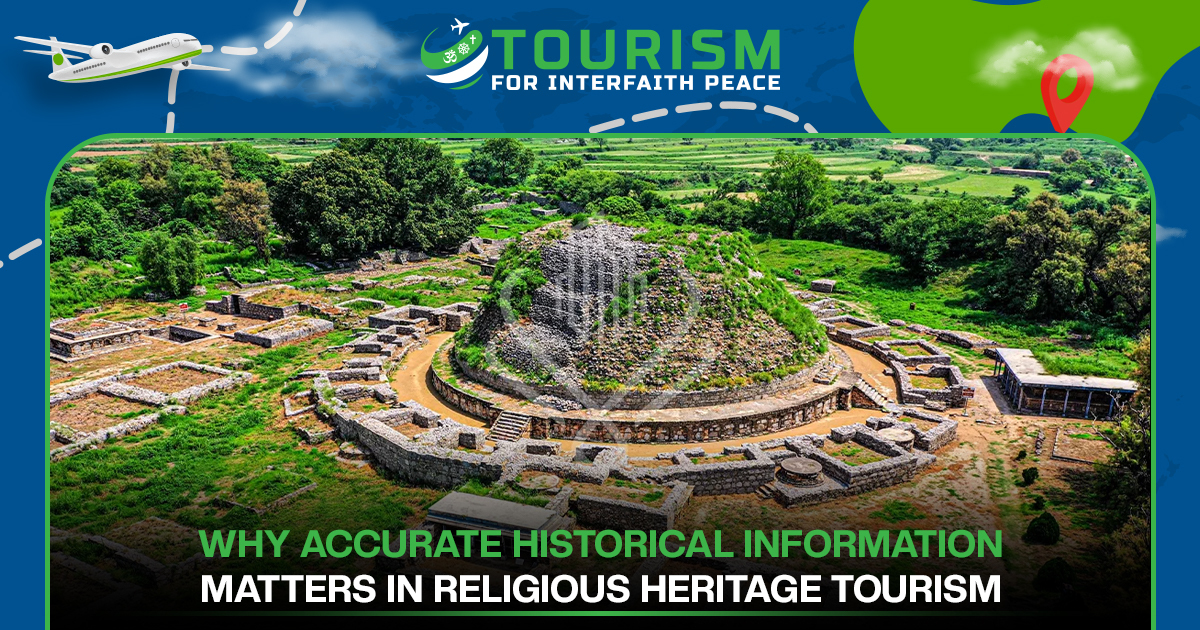
Pakistan offers clear examples. Takht-i-Bahi, a Buddhist monastic complex in Khyber Pakhtunkhwa, was inscribed by UNESCO in 1980, and UNESCO’s statement describes it as founded in the early first century CE. Other sources give different dating ranges, which is why a word like “about” belongs on a signboard. At Gurdwara Panja Sahib in Hasan Abdal, Sikh tradition holds that Guru Nanak left the handprint that names the shrine. That account is a matter of faith and deserves respect as such. The building itself is listed by Pakistan’s Department of Archaeology and Museums as a historic monument of the 1799–1849 period, as TIP’s overview of Sikh pilgrimage heritage in Pakistan notes. Pakistan’s six UNESCO World Heritage Sites, which include Taxila and Rohtas Fort, give guides a verified starting point.
What Roles Do Historians, Archaeologists, Guides and Tourism Organisations Play?
Historians test written records. Archaeologists read what the ground preserves and publish how they dated it. Conservators keep the fabric from decaying, and community custodians explain what a place means in practice. Guides carry all of this to visitors, which makes them the final and most influential link.
Tourism organisations hold responsibility for the whole chain. They should train guides on reliable sources, check signage and scripts against published research, correct errors promptly and include custodians’ voices. When an organisation cannot verify a claim, the honest choice is to say so or leave it out.
How Can Tourists Verify the History of Religious Places?
A few habits go a long way:
- Check official listings from UNESCO, national archaeology departments and site museums
- Look for qualified wording such as “about” or “traditionally”
- Ask guides how they know what they are telling you
- Compare two independent references before repeating a claim
Listen to custodians too. What they say about meaning and practice is part of the living record, even where it differs from an archaeologist’s account of the building.
How Does Authentic Interpretation Encourage Interfaith Respect?
People respect what they understand correctly. When a site’s history is told without exaggeration or rivalry, outside visitors can see a tradition on its own terms, and community members see their heritage handled with care. Accuracy also narrows the room in which false claims about whose site it is can grow. It prompts better questions, such as what this place means to those who worship here today. Historically sound storytelling therefore supports peaceful tourism and cultural understanding, without asking anyone to set their beliefs aside.
Responsible presentation also means describing a sacred site as a place of worship that may remain in active use, passing on the visiting etiquette that custodians request, and avoiding language that ranks one community’s heritage above another’s.
Conclusion: Responsible Storytelling Protects Sacred Heritage
Historical accuracy is a form of respect for the past, for the people who still keep these places alive and for the visitors who trust what they are told. Tourism for Interfaith Peace encourages travellers, guides and organisers to check sources, label tradition as tradition and support historically accurate, peaceful religious heritage tourism. To explore responsible itineraries across Pakistan, contact the team at info@tourismforinterfaithpeace.com.
Frequently Asked Questions
Why is historical accuracy important in religious heritage tourism?
It protects visitor trust and the dignity of sacred places. Accurate information prevents misrepresentation of communities and gives visitors a reliable basis for respect and understanding.
How can tourists verify the history of a religious site?
Check official sources such as UNESCO listings and archaeology departments, look for sourced or qualified dates, ask guides for their references and compare at least two independent sources.
What is the difference between historical evidence and religious tradition?
Historical evidence rests on records, inscriptions and excavation. Religious tradition is a belief held by a community of faith. Both matter, and good interpretation labels each clearly.
What can happen when a heritage site shares incorrect information?
Visitors can be misled, communities can feel misrepresented and the destination can lose credibility once errors are found. Uncorrected claims may also keep circulating online.
How can tourism organisations protect the authenticity of sacred sites?
Train guides on reliable sources, review signage against published research, consult custodians and scholars, correct mistakes openly and avoid claims that cannot be verified.